How to Cook Bacon in Water: Does It Really Work?
What Exactly Is the Water-Cooking Method?
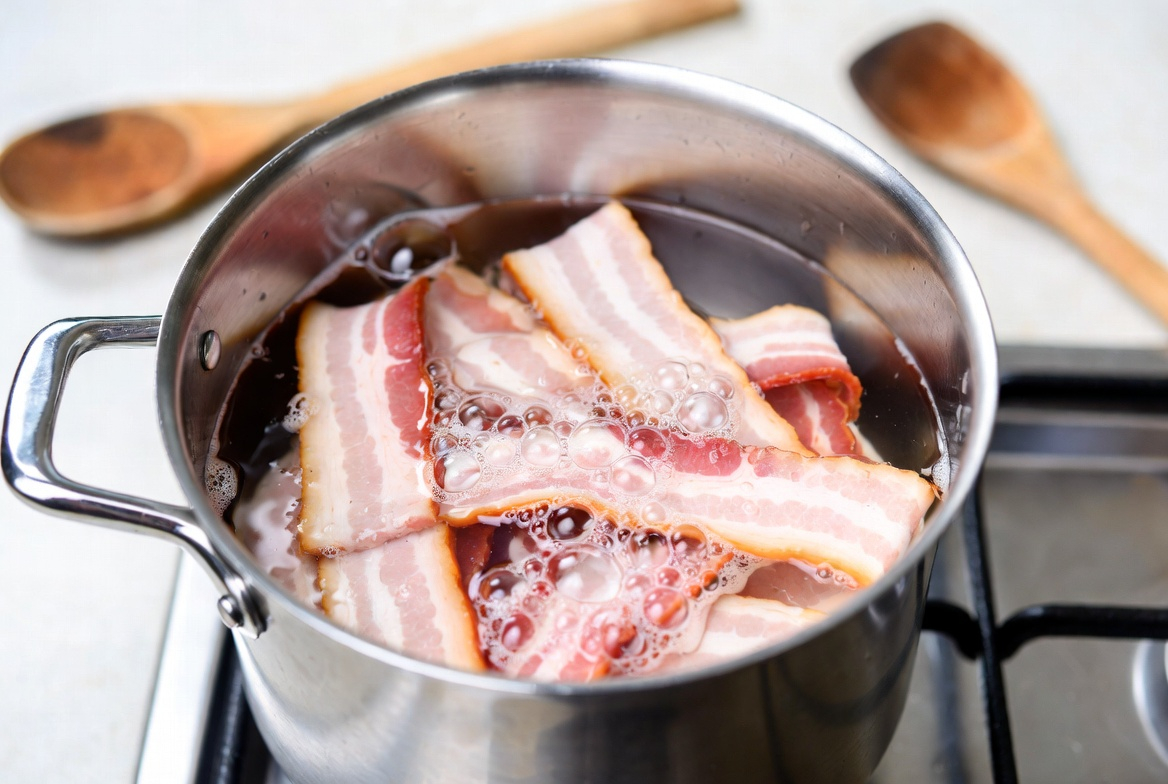
Let me start by explaining what we’re actually talking about here. Cooking bacon in water isn’t some bizarre culinary experiment gone wrong. Instead, it’s a method where you place raw bacon strips in a cold skillet, add just enough water to partially submerge the bacon, and then heat everything together. As the water heats, the bacon cooks gently in the moisture, and when the water evaporates, the bacon finishes cooking in its own rendered fat.
Think of it like a two-phase cooking process. The first phase uses water as a medium to gently heat the meat, while the second phase allows the bacon to develop color and crispy edges in the fat that it releases naturally. It’s almost like the bacon is cooking in its own juices, with water serving as the initial helper.
How Is This Different from Oven Cooking?
You might be wondering how this differs from baking bacon in the oven, which has become increasingly popular in recent years. While oven cooking is undoubtedly more convenient for large batches, the water method offers something unique. It’s faster than oven cooking for smaller quantities, uses less energy, and keeps your kitchen from heating up unnecessarily. Plus, there’s something oddly satisfying about watching the transformation happen right before your eyes on the stovetop.
The Science Behind Cooking Bacon in Water
Now, let’s talk about why this method actually works, because understanding the science makes you a better cook. Bacon is essentially cured pork belly with a layer of fat and a layer of meat. When you cook bacon traditionally in a hot pan, the heat causes the fat to render quickly, and you get splattering and uneven cooking because the heat is so intense.
When you start with cold water, something different happens. The water acts as a buffer, distributing heat more evenly across the bacon strips. As the water temperature rises slowly, the protein in the bacon denatures gradually, and the fat begins to render at a slower, more controlled pace. This gentler approach means less aggressive splattering and more even cooking throughout the strip.
Why Does the Bacon Get Crispy If It Starts in Water?
This is the key question that skeptics always ask. Here’s the magic: as the water heats up and eventually boils away, it reaches approximately 212 degrees Fahrenheit. At this temperature, the water evaporates completely, leaving behind the rendered bacon fat. Once the water is gone, the temperature in the pan rises above the boiling point, and now you have direct contact between the bacon and the hot pan. This is when the Maillard reaction occurs—that’s the chemical process that creates the browning, the crispy texture, and those delicious, complex flavors.
So you’re not sacrificing crispiness at all. You’re just approaching it from a different angle, with a gentler first phase and a more aggressive second phase.
Comparing Water Cooking to Traditional Methods
Water Cooking vs. Skillet on High Heat
Traditional skillet cooking involves dropping cold or room-temperature bacon into a hot pan. You get immediate sizzling, lots of splatter, and bacon that can sometimes cook unevenly because the initial temperature shock causes rapid fat rendering. With water cooking, you avoid much of the splatter, and the cooking is more uniform across all strips.
Water Cooking vs. Oven Baking
Oven cooking is fantastic when you’re making bacon for a crowd. You can cook entire pounds of bacon at once, it requires no attention, and the cleanup is straightforward. However, oven cooking takes longer—usually 15 to 25 minutes depending on your oven and desired crispness. Water cooking on the stovetop is faster, typically taking 10 to 15 minutes total. The trade-off is that you can only cook as much bacon as fits in your skillet.
Water Cooking vs. Microwave Cooking
Microwave bacon is quick and convenient, but the texture can be inconsistent. Some parts crisp up while others remain chewy. Water cooking on the stovetop gives you better texture control and more reliable results, plus it doesn’t tie up your microwave.
Step-by-Step Instructions: How to Cook Bacon in Water
What You’ll Need
- A large skillet or frying pan
- Raw bacon strips
- Cold water
- Optional: paper towels, tongs
The Basic Process
Step One: Arrange Your Bacon – Take your bacon strips and lay them flat in a single layer in a cold skillet. You can overlap them slightly, but try to keep them relatively flat. The key is not to stack them on top of each other.
Step Two: Add Water – Pour cold water into the skillet until it comes about halfway up the sides of the bacon strips. You’re not trying to fully submerge the bacon; you’re aiming for that sweet spot where the water will conduct heat effectively without drowning your bacon.
Step Three: Turn Up the Heat – Place the skillet on medium to medium-high heat. You’re not looking to boil water explosively; instead, aim for a steady, rolling boil. The idea is to gently cook the bacon as the water heats up.
Step Four: Monitor the Water – Watch the skillet as it heats. The water will gradually come to a boil, and the bacon will start to cook. This first phase usually takes about 5 to 7 minutes, depending on how much bacon you’re cooking and your stove’s power.
Step Five: Wait for the Water to Evaporate – After the initial boiling phase, keep the heat on medium. The water will slowly evaporate as the bacon continues cooking. This is when things get interesting. The bacon gradually transitions from cooking in water to cooking in its own rendered fat. You’ll notice the sizzling starting to intensify as the water level drops.
Step Six: Finish Cooking in Fat – Once all the water has evaporated, you’re left with bacon strips sitting in hot fat. Let them continue cooking for another 3 to 5 minutes, stirring occasionally or flipping if needed, until you reach your desired level of crispness. This is your chance to control exactly how crispy your bacon becomes.
Step Seven: Remove and Drain – Using tongs, transfer your cooked bacon to a paper towel-lined plate. The paper towels will absorb excess fat, leaving you with perfectly crispy bacon.
Pro Tips for Perfect Water-Cooked Bacon
Choose the Right Amount of Water
This is more of an art than an exact science. Too much water, and your bacon will take forever to cook. Too little, and it might not cook evenly. I’ve found that filling the skillet until the water reaches about the midpoint of the bacon strips is the sweet spot. You’re aiming for that water to evaporate right around the time the bacon is mostly cooked but not yet crispy.
Use a Larger Skillet for Even Better Results
Don’t crowd your bacon. If you pack too many strips into a small skillet, they’ll overlap and cook unevenly. A larger skillet allows better heat distribution and ensures that each strip cooks at approximately the same rate. Plus, you’ll have more water surface area, which helps with even heating.
Keep the Heat Consistent
Resist the urge to crank the heat to high. Medium heat gives you much better control over the cooking process. If your burner is too hot, the water will boil away too quickly, and the bacon won’t cook through evenly. If it’s too low, you’ll be waiting around forever. Medium is your friend here.
Don’t Walk Away Completely
While this method requires less attention than traditional skillet cooking, you shouldn’t completely abandon your bacon. Check on it periodically, especially once the water is mostly evaporated. The transition from water cooking to fat cooking happens relatively quickly, and you want to catch it at the right moment.
Experiment with Water Type
Some cooks swear that using low-sodium chicken broth or vegetable broth instead of plain water adds subtle flavor to the bacon. If you’re feeling adventurous, try it. The bacon will absorb some of those flavors during the first cooking phase.
Common Mistakes to Avoid
Starting with Hot Water or a Hot Pan
The whole point of this method is the gradual heating process. If you start with a hot pan and hot water, you’re basically just doing traditional bacon cooking, and you’ll lose all the benefits of the gentler approach. Always start with a cold skillet and cold water.
Adding Too Much Water
I mentioned this briefly, but it bears repeating. If you add water that completely submerges your bacon, you’re essentially boiling it rather than using water as a heat conductor. This can result in bacon that’s cooked through but lacking that crispy, browned exterior that makes bacon so delicious.
Cooking at Too High a Temperature
High heat is the enemy of this method. It causes the water to boil away too quickly, and you might end up with unevenly cooked bacon. Stick with medium heat and exercise patience. Good bacon is worth the wait.
Overlapping Your Bacon Strips
While a little overlap won’t ruin everything, excessive overlapping means uneven heat distribution. The overlapped portions will cook differently than the exposed portions, leading to inconsistent results. Lay your bacon as flat as possible, with minimal overlap.
Not Monitoring the Transition Phase
The moment when water evaporates and fat cooking begins is crucial. If you miss this window, you might end up with under-cooked bacon or, conversely, bacon that’s burned. Pay attention during this transition, and you’ll achieve perfect results every time.
When Should You Use Water Cooking?
Best Scenarios for This Method
Water cooking bacon is ideal when you’re cooking for two to four people. It’s quick, relatively hands-off once you understand the process, and requires minimal cleanup. It’s also great when you want to minimize splatter and mess in your kitchen. If you’re in a mood where traditional skillet bacon sounds tedious, water cooking is your answer.
This method also works wonderfully when you don’t want to heat up your oven on a hot day. In summer months, who wants their kitchen even warmer? Water cooking on the stovetop uses the same equipment you’d use for other breakfast items, so it fits naturally into your cooking routine.
When to Stick with Traditional Methods
If you’re cooking bacon for a large group or a brunch gathering, oven cooking is still your best bet. You can cook more bacon simultaneously, and the hands-off nature means you can focus on other dishes. If you absolutely love the flavor and texture of bacon cooked in a very hot pan, the traditional skillet method will give you that deeply browned crust that water cooking achieves more gradually.
The Real Benefits of Water Cooking Bacon
Reduced Splatter and Mess
This is probably the biggest advantage. Anyone who’s cooked bacon in a traditional hot skillet knows about the grease splatter. It finds its way onto your stovetop, your clothes, and sometimes even your arms. Water cooking drastically reduces this splatter because the water acts as a barrier between the bacon and the extreme heat. Your kitchen stays cleaner, and you go home with fewer burns.
More Even Cooking
The gentle heating in water ensures that thicker and thinner parts of the bacon strip cook more uniformly. You’re less likely to end up with some strips that are barely done while others are burnt to a crisp.
Faster Than Oven Cooking
For smaller quantities, water cooking beats oven cooking on time. You’re looking at 10 to 15 minutes total versus 15 to 25 minutes in the oven.
Easier Cleanup
Since there’s minimal splatter, your skillet isn’t caked with grease splatters. Cleanup is significantly easier than with traditional skillet cooking.
The Drawbacks to Consider
Smaller Batch Sizes
You’re limited by the size of your skillet. If you need to feed a crowd, water cooking requires multiple batches or multiple skillets, which could be less convenient than a single baking sheet in the oven.
Requires More Attention Than Oven Cooking
Oven cooking is truly hands-off. Water cooking requires you to monitor the process and transition the heat levels at the right moment. It’s not difficult, but it does require your presence in the kitchen.
Less Crispy Edges Than Traditional Hot-Pan Cooking
The water cooking method produces excellent bacon, but some bacon purists argue that it doesn’t develop quite the same level of deep, brown crispiness as starting in a very hot pan. The difference is subtle, but it’s worth noting if you have specific texture preferences.
Frequently Asked Questions About Water-Cooked Bacon
Does Cooking Bacon in Water Really Make It Less Fatty?
Not significantly. While water cooking might render out the fat slightly more gradually, the final bacon product contains roughly the same amount of fat as traditionally cooked bacon. The rendering process is just spread out over two phases instead of one intense phase. If you’re concerned about fat content, the paper towel draining step is more important than the cooking method.
Can You Use This Method with Thick-Cut Bacon?
Absolutely. Thick-cut bacon is actually ideal for water cooking because the gentler heating ensures it cooks all the way through without burning the outside. You might need to add a minute or two to the cooking time and ensure your water level is appropriate for the thickness, but the method works beautifully with thick-cut bacon.
What if Your Bacon Sticks to the Bottom of the Pan?
This can