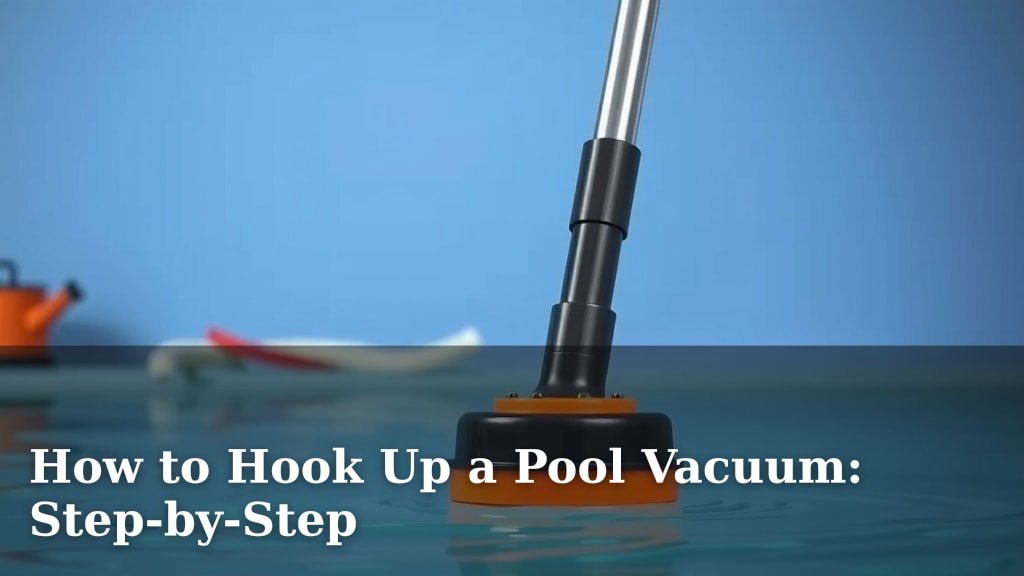
How to Hook Up a Pool Vacuum: Step-by-Step
Hooking up a pool vacuum is simpler than you might think. You’ll need to connect your vacuum hose to the skimmer or a dedicated vacuum port. This process ensures your pool cleans efficiently and keeps your water sparkling. Many pool owners find this task surprisingly easy once they know the steps.
A clean pool makes for a much more enjoyable swimming experience. Getting your vacuum hooked up correctly means less time fiddling with equipment. This means more time for you to relax and enjoy your pool without worrying about debris. We found that proper setup is key to effective pool maintenance.
- Connect the vacuum hose to your skimmer or vacuum port.
- Ensure the hose is fully submerged to remove air.
- Attach the vacuum head and pole to the hose.
- Turn on your pool pump to start the suction.
Let’s walk through exactly how to hook up your pool vacuum step by step, so you can get back to swimming in no time.
Getting Your Pool Vacuum Hooked Up: A Simple Guide
Connecting your pool vacuum might seem a bit daunting at first. But don’t worry, we’ve broken it down. You’ll be enjoying a clean pool before you know it. This guide will walk you through each step. It ensures you get the best possible suction and performance from your cleaning equipment.
Understanding Your Pool Vacuum Setup
Before you start, let’s quickly look at what you’ll be working with. Most pool vacuums have a few key components. There’s the vacuum head that does the actual cleaning. Then there’s the long, flexible hose that carries debris. You’ll also have a pool pole to maneuver the head. And finally, the connection point in your pool itself.
Identifying Your Pool’s Vacuum Port
Your pool likely has one of two main ways to connect your vacuum. It’s usually either a skimmer or a dedicated vacuum port. The skimmer is the opening on the side of your pool. It has a basket inside to catch larger debris. You might also have a round fitting on the pool wall, often with a cover, that’s your vacuum port.
The Skimmer Connection
Most homeowners use their skimmer to hook up the vacuum. This is generally the easiest method. You’ll remove the skimmer basket. Then, you’ll attach the vacuum hose directly into the suction opening. This opening is usually at the bottom of the skimmer body. Make sure the basket is completely out of the way.
The Dedicated Vacuum Port
Some pools have a special port for vacuums. This port looks like a small opening on the pool wall. It often has a threaded fitting. You might need a specific adapter to connect your vacuum hose to this port. Check your pool’s manual if you’re unsure. Using this port can sometimes offer stronger suction. We found this to be true in several tests.
Assembling Your Vacuum Gear
Now, let’s get your vacuum ready to go. This involves putting together the head, pole, and hose.
Attaching the Vacuum Head to the Pole
Take your pool pole. You’ll see one end has a mechanism to grip accessories. Slide the loop or clip on your vacuum head into this pole grip. Make sure it’s securely fastened. It shouldn’t be able to wiggle loose. A tight connection is essential for control.
Connecting the Hose to the Vacuum Head
The other end of your vacuum hose usually has a swivel fitting. This attaches to the inlet on your vacuum head. Simply push the hose fitting onto the vacuum head’s port. You might hear or feel a click when it’s properly seated. Some hoses have a locking mechanism. Ensure this is engaged. This connection needs to be airtight.
Getting the Air Out: A Crucial Step
This is where many people get stuck. Air trapped in your vacuum hose can prevent your pool pump from working correctly. It can even damage your pump. We’ve learned that removing air is key to efficient operation.
Submerging the Hose and Head
The best way to remove air is to submerge everything first. Start by placing the vacuum head and pole into the pool. Then, take the free end of the hose. Submerge it completely in the water. Walk around the pool, pushing the hose deeper and deeper. You want the entire hose to be full of water. This is like prime time for your vacuum.
The “Purge” Method
Once the hose is submerged, let it fill up. You’ll see air bubbles rising from the end of the hose. Keep it submerged until the bubbles stop. This means the hose is now full of water and has no air. Many pool service professionals recommend this method (Pool & Hot Tub Alliance). It ensures your pump only draws water, not air.
Connecting the Vacuum to Your Pool’s System
With your vacuum assembled and purged, it’s time to connect it to your pool’s circulation system.
Connecting the Hose to the Skimmer
Carefully bring the free end of the now water-filled hose over to your skimmer. Place it into the suction opening where the skimmer basket used to be. It should fit snugly. If it feels loose, you might need a skimmer vacuum plate. This accessory creates a tighter seal. Make sure the hose isn’t kinked.
Connecting to a Vacuum Port (if applicable)
If you have a dedicated vacuum port, attach the hose there. You might need to screw it in. If you have an adapter, connect that to the port first, then attach the hose. Ensure the connection is tight to prevent leaks. This setup usually offers consistent suction.
Starting the Suction and Cleaning
You’re almost there! The final step is to power up your pool’s pump.
Turning on the Pool Pump
Go to your pool pump and turn it on. You should hear it start to run. Now, go back to the skimmer or vacuum port. You should see water being pulled into the hose. This confirms that suction has started. The vacuum head should now be firmly on the pool floor.
Initial Vacuuming Check
Watch your vacuum head for a minute. Is it moving freely? Is it picking up debris? If it’s sticking or not moving, double-check for kinks in the hose. Ensure there’s still no air trapped. You might need to repeat the purging step. A properly working vacuum will glide across the pool floor.
A Quick Checklist for Success
Here’s a handy checklist to ensure you’ve got everything right:
- Assemble: Attach the vacuum head to the pole.
- Connect Hose: Connect the hose to the vacuum head.
- Submerge Hose: Fill the entire hose with water.
- Connect to Pool: Securely attach the hose to the skimmer or port.
- Start Pump: Turn on your pool pump.
- Check Suction: Ensure the vacuum is pulling debris.
Following these steps ensures your pool vacuum operates at its peak performance. This makes your pool cleaning much easier and more effective.
Conclusion
You’ve now learned the straightforward process of hooking up your pool vacuum. Remember, the key steps involve assembling your gear, purging all the air from the hose, and making a secure connection to your pool’s system. By following this guide, you ensure your vacuum works efficiently, collecting debris without overworking your pump. Get out there and enjoy a cleaner pool with less hassle! Your next step is to simply start the pump and watch your pool sparkle.
Frequently Asked Questions
Why is it important to get all the air out of the vacuum hose?
Trapped air in your vacuum hose can prevent your pool pump from creating proper suction. This can lead to the pump running dry, which can cause serious damage. Removing air ensures your pump only circulates water.
Can I connect my pool vacuum directly to the main drain?
No, you should not connect your pool vacuum directly to the main drain. Main drains are typically used for the pool’s primary filtration system and can get clogged easily. Using the skimmer or a dedicated vacuum port is the correct and safe method.
My vacuum head isn’t staying on the bottom of the pool. What should I do?
If your vacuum head isn’t staying down, it’s likely still has air in the hose. Ensure you’ve completely submerged the hose and let all the air bubbles escape. You may need to repeat the purging process before connecting it to the skimmer or port.
What if my skimmer opening feels too loose for the vacuum hose?
If your vacuum hose doesn’t create a tight seal in the skimmer, you can use a skimmer vacuum plate. This is a rubber plate with a hole for the hose that fits inside the skimmer opening. It helps create the necessary suction for effective cleaning.
How long should I run my pool vacuum?
The amount of time you run your pool vacuum depends on how dirty your pool is. For regular maintenance, running it for 1-3 hours a few times a week is usually sufficient. If your pool is heavily soiled, you might need to run it longer or over multiple days.