How Is Outer Space a Vacuum?
Outer space is a vacuum because it has an extremely low density of particles. While it’s not a perfect vacuum, it’s mostly empty space with very few atoms or molecules. This means there’s virtually no air or other matter to get in the way.
Think of it like the emptiest room you can imagine, but on a cosmic scale! Most of the universe is this near-emptiness, allowing light and other forms of energy to travel freely. This lack of matter is why space appears so dark and vast, making phenomena like starlight visible across immense distances.
- Space is a vacuum due to its very low particle density.
- It’s not a perfect void, but nearly empty space.
- This emptiness allows light to travel unimpeded.
- It’s why space appears dark and stars are visible.
Let’s dive into what makes outer space so empty and why that’s so important for everything we see in the cosmos.
Understanding Space’s Near-Emptiness
You might picture outer space as completely empty, a perfect void. But is it really? Well, it’s more accurate to say space is a vacuum because it has an incredibly low density of particles. It’s not a perfect vacuum, but it’s about as close as you can get on a cosmic scale.
Think of the emptiest room you’ve ever been in. Now imagine that room is millions of miles across, and most of the air has been removed. That’s kind of what space is like. The universe is mostly this near-emptiness, which allows light and other energy to travel across vast distances.
What Makes Space So Empty?
The reason space is so empty boils down to a few key factors. It’s not that there’s nothing there, but rather that the ‘stuff’ is spread incredibly thin.
Gravity’s Role
Gravity plays a huge part in how matter is distributed in the universe. Massive objects like stars and planets have strong gravitational pulls. They attract nearby particles, drawing them closer. This means that areas far away from any gravitational sources tend to be much emptier.
We see this effect even within our own solar system. Planets and their moons have atmospheres because their gravity is strong enough to hold onto gases. But the vast regions between planets are largely devoid of gas and dust.
Expansion of the Universe
The universe itself is constantly expanding. This expansion stretches out the fabric of space-time. As space gets bigger, the matter within it gets spread thinner and thinner. This ongoing process contributes to the overall low density of particles we observe.
Imagine a balloon with a few dots drawn on it. As you inflate the balloon, the dots move farther apart. The space between them increases, making the surface less crowded. The universe works in a similar way, but on a scale that’s hard to imagine.
The Big Bang’s Aftermath
When the universe began with the Big Bang, it was incredibly hot and dense. But as it expanded and cooled, particles began to form. Many of these particles eventually clumped together due to gravity to form stars, galaxies, and other celestial bodies. What was left behind in the vast expanses between these formations is the sparse distribution of atoms and molecules we call a vacuum.
How Empty Is “Empty”? Comparing Space to Earth
To truly grasp how empty space is, let’s compare it to something we’re familiar with – Earth’s atmosphere.
On Earth, we have a dense atmosphere. It’s packed with gases like nitrogen and oxygen. This is why we can breathe and why sound travels easily. Even at the highest altitudes, like the top of Mount Everest, there’s still a significant amount of air present.
Now, consider sea level on Earth. We have roughly 100 billion billion (1 x 10^20) air molecules per cubic meter. That sounds like a lot, and it is! It creates the pressure we feel and allows for all sorts of physical phenomena.
In stark contrast, even in what we consider “empty” outer space, there are still some particles. However, the density is dramatically lower. We’re talking about maybe one to ten particles per cubic meter. These particles are usually stray atoms of hydrogen and helium, along with some charged particles like protons and electrons.
So, while it’s not a perfect, absolute vacuum, the difference in particle density is staggering. It’s like comparing a packed stadium to a single person wandering in a desert.
| Location | Approximate Particle Density (per cubic meter) |
|---|---|
| Earth’s Surface (Sea Level) | 100,000,000,000,000,000,000 (1 x 10^20) |
| Deep Interstellar Space | 1 to 10 |
| Intergalactic Space (between galaxies) | Less than 1 |
Why Does This Near-Emptiness Matter?
This low-density environment of space has some really important consequences. It’s not just a curious fact; it shapes how the universe works.
Light and Radiation Travel
Because there’s so little matter in space, light and other forms of electromagnetic radiation can travel enormous distances without being absorbed or scattered. This is why we can see stars and galaxies that are billions of light-years away. If space were filled with a dense gas, like on Earth, that light would be blocked or diffused, and the night sky would look very different.
Sound Doesn’t Travel
You know how in space movies, you often hear explosions and laser battles? That’s not scientifically accurate! Sound waves need a medium, like air or water, to travel. Since space is a vacuum, there’s no medium for sound to propagate. So, in reality, space is completely silent.
Temperature Extremes
While space itself doesn’t have a “temperature” in the way we understand it on Earth (because temperature measures the average kinetic energy of particles, and there are so few), objects in space experience extreme temperature variations. In direct sunlight, an object can get very hot. But in shadow, with no atmosphere to trap heat, it can become incredibly cold. There’s no air to conduct or convect heat.
Challenges for Space Exploration
The vacuum of space also presents significant challenges for spacecraft and astronauts. Materials can outgas (release trapped gases) in a vacuum, and without atmospheric pressure, liquids like water would boil away instantly. This is why spacecraft are pressurized and astronauts wear specialized suits.
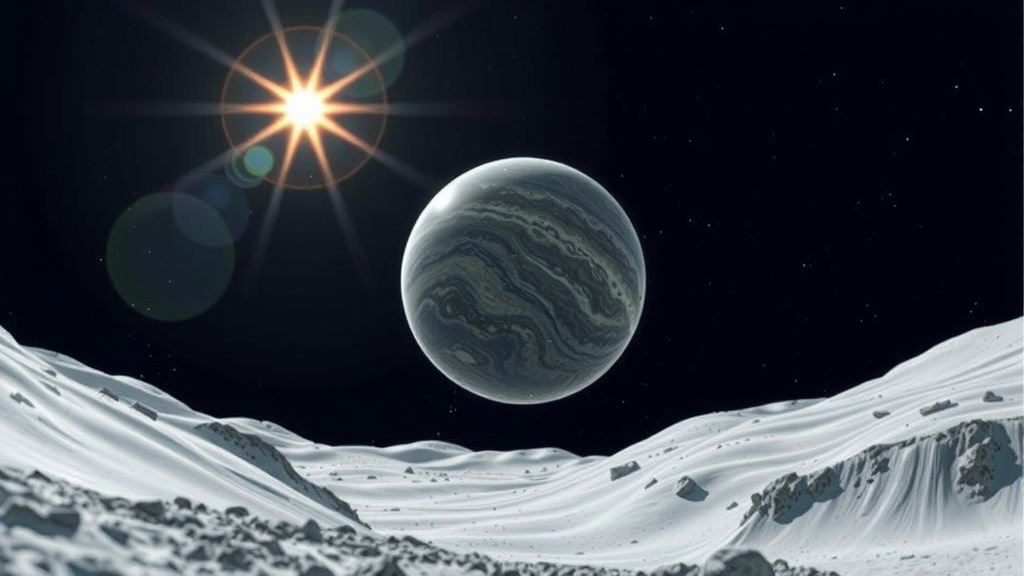
Is Space Truly a Perfect Vacuum?
As we’ve discussed, space isn’t a perfect vacuum. There are still particles present, even if they are very spread out. These include:
- Atoms: Mostly hydrogen and helium, leftover from the Big Bang.
- Plasma: Ionized gas, where electrons are stripped from atoms, often found in nebulae and around stars.
- Dust: Tiny particles of rock and ice.
- Cosmic Rays: High-energy particles traveling at near light speed.
Even the most “empty” regions, like the vast stretches between galaxies (intergalactic space), still contain a few stray atoms and particles per cubic meter. The density there is even lower than in interstellar space (within our galaxy).
Quick Space Vacuum Facts Checklist
- Space is a vacuum because of its extremely low particle density.
- It’s not a perfect void, but nearly empty.
- Gravity and cosmic expansion contribute to its emptiness.
- Sound cannot travel in the vacuum of space.
- Objects in space face extreme temperature fluctuations.
- Space exploration must account for the vacuum’s properties.
Conclusion
You’ve learned that outer space is a vacuum not because it’s a perfect void, but due to its incredibly low particle density. Gravity, the universe’s expansion, and the aftermath of the Big Bang all contribute to this near-emptiness. This sparse environment is essential for light’s journey and explains why space is silent and presents unique challenges for exploration. Understanding this vacuum helps us appreciate the vastness and mechanics of the cosmos.
So next time you look up at the night sky, remember the silent, empty expanse that allows those distant stars to shine. If you’re curious about the practicalities, research how astronauts cope with these extreme conditions during their missions!
Frequently Asked Questions
Is outer space completely empty?
No, outer space isn’t a perfect vacuum. While it’s extremely sparse, it still contains stray atoms like hydrogen and helium, plasma, dust particles, and cosmic rays. The density is just incredibly low compared to Earth’s atmosphere.
Why can’t sound travel in space?
Sound waves need a medium, like air or water, to move. Since space is a vacuum with very few particles, there’s no medium for sound to travel through. This is why space is completely silent, despite what you might see in movies.
How does the expansion of the universe make it emptier?
As the universe expands, the fabric of space-time itself stretches. This stretching causes the existing matter within the universe to spread out even further. Over time, this process naturally leads to a decrease in particle density across vast cosmic distances.
Why are temperatures so extreme in space?
Without an atmosphere to trap heat or distribute it, objects in space experience wild temperature swings. Direct sunlight can make things very hot, while being in shadow can lead to extreme cold. There’s no air to conduct or radiate heat efficiently.
What are the biggest challenges of the vacuum for spacecraft?
The vacuum poses several risks. Materials can release trapped gases (outgassing), and without external pressure, liquids like water would quickly boil and evaporate. Spacecraft and astronauts need pressurized environments and specialized equipment to survive.