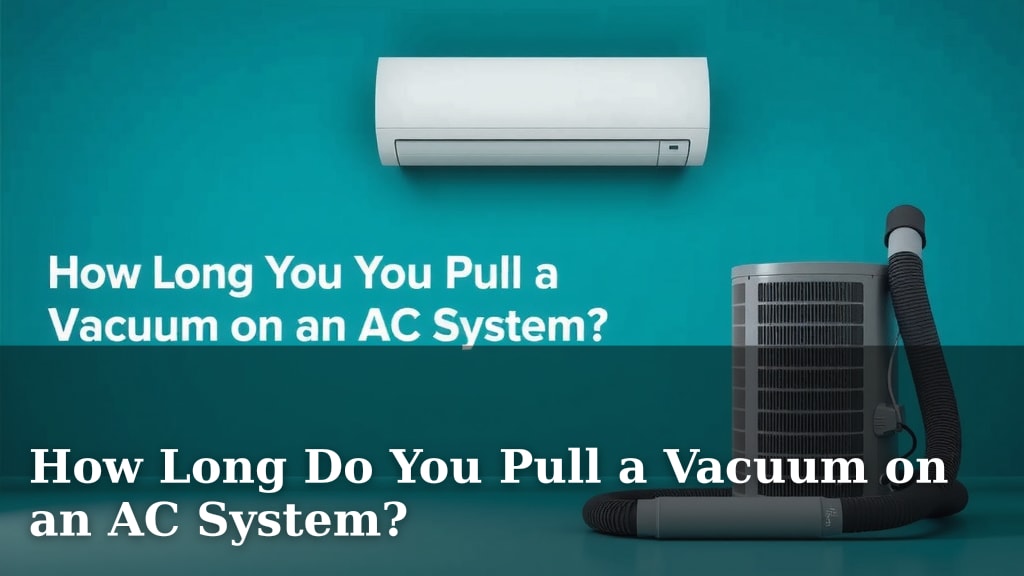
How Long Do You Pull a Vacuum on an AC System?
You should pull a vacuum on your AC system for at least 30 to 45 minutes. This process removes moisture and air, which are the enemies of your AC’s efficiency. Getting this right is key to a long-lasting and cool system.
Pulling a vacuum means creating a low-pressure environment inside your AC’s refrigerant lines. Many experts say this is a critical step after any AC service involving opening the lines. It ensures your system runs smoothly and prevents costly damage down the road.
- Pull a vacuum for 30-45 minutes.
- This removes moisture and air.
- It’s a crucial step for AC efficiency.
- Proper vacuuming prevents future issues.
- It ensures your system lasts longer.
Let’s break down exactly why this is so important and what you need to know to get it done right.
How Long Should You Vacuum an AC System?
Most HVAC professionals agree you should pull a vacuum on your AC system for at least 30 to 45 minutes. This timeframe is generally recommended for most residential AC units. However, the exact duration can depend on a few factors we’ll discuss.
Why Vacuuming Your AC System Matters
Think of your AC system like your own circulatory system. It needs clean, pure “blood” (refrigerant) to function correctly. When you open up the refrigerant lines, you risk introducing contaminants like air and moisture. These can cause serious problems.
The Enemies Within: Air and Moisture
Air and moisture are the biggest threats to your AC’s efficiency and lifespan. When air gets into the system, it can reduce the system’s ability to cool. It acts like an unwanted passenger taking up space where refrigerant should be.
Moisture is even worse. When moisture mixes with refrigerant and oil, it can form a corrosive acid. This acid can eat away at your AC’s internal components, leading to expensive repairs. It’s like rust forming inside a brand-new car engine. Many experts state that moisture is a primary cause of compressor failure (AC Doctor’s Guild).
What is “Pulling a Vacuum”?
Pulling a vacuum on your AC system means using a specialized tool, a vacuum pump, to remove air and moisture from the refrigerant lines. This process lowers the pressure inside the lines to below atmospheric pressure. It’s essentially creating a super-dry, air-free environment.
This is a critical step after any repair or installation that involves opening the sealed refrigerant system. It ensures that only pure refrigerant and oil are present. This allows your AC to operate at peak performance.
Factors Affecting Vacuum Time
While 30-45 minutes is a good rule of thumb, some situations might require more time. It’s not just about hitting a clock; it’s about achieving a specific level of dryness and air removal.
System Size and Complexity
Larger AC systems, or those with very long refrigerant lines, may take longer to pull a deep vacuum. More volume means more air and moisture to remove. Complex systems with multiple indoor and outdoor units can also require extended vacuuming times.
Environmental Conditions
The humidity in your area plays a big role. If you live in a very humid climate, there’s more moisture in the air to contend with. It will take the vacuum pump longer to draw out all that moisture. Similarly, if the lines were exposed to the elements for a long time, more moisture might have entered.
The Depth of the Vacuum
HVAC technicians use a tool called a micron gauge. This gauge measures the vacuum level in microns (a unit of length). A deeper vacuum (lower micron reading) indicates less air and moisture. Most professionals aim for a vacuum of 500 microns or less. Reaching and maintaining this level is the true goal, not just the time spent.
| Condition | Approximate Time | Target Micron Level |
|---|---|---|
| Standard Residential System | 30-45 minutes | Below 500 microns |
| Larger/Complex System | 45-60+ minutes | Below 500 microns |
| Very Humid Environments | Can extend time significantly | Below 500 microns |

How to Tell When You’re Done
Relying solely on a timer isn’t the best approach. The most reliable way to know when you’ve successfully pulled a vacuum is by using a micron gauge. This tool gives you a real-time measurement of the air and moisture content in your system.
Using a Micron Gauge: The Professional Standard
A micron gauge is essential for proper vacuuming. You connect it to the system, and it will show you the vacuum level. The goal is to get the reading as low as possible, typically below 500 microns. It’s crucial to ensure the vacuum holds steady after the pump is turned off, indicating no leaks.
Many sources recommend pulling the vacuum for 30-45 minutes, then shutting off the pump and observing the micron gauge for at least 15-20 minutes. If the micron level stays low, your system is properly evacuated. This leak test is as important as the vacuuming itself.
Signs of an Incomplete Vacuum
If you skip proper vacuuming or don’t do it long enough, you might notice a few tell-tale signs later on. Your AC might not cool as effectively as it should. You might hear strange noises from the compressor. In the worst-case scenario, you could face a premature system failure.
Checklist for a Proper AC Vacuum
- Gather your tools: Vacuum pump, micron gauge, hoses, and refrigerant.
- Connect securely: Ensure all hoses are properly connected to the AC system and pump.
- Start the pump: Let it run for the recommended time (30-45+ minutes).
- Monitor the gauge: Watch the micron gauge for a deep vacuum level.
- Perform a leak test: Turn off the pump and ensure the vacuum holds steady.
- Recharge carefully: Add the correct type and amount of refrigerant.
Conclusion
Properly pulling a vacuum on your AC system is more than just a step; it’s your best defense against costly repairs and poor performance. While 30 to 45 minutes is a common benchmark, remember that time is secondary to achieving a deep, stable vacuum. Your goal is a system free from air and moisture, which directly impacts its cooling power and longevity. Always use a micron gauge for certainty and ensure no leaks exist. Investing this time and attention now will keep your AC running efficiently for years to come. If you’re unsure, always call a qualified HVAC professional.
Frequently Asked Questions
Can I skip pulling a vacuum if I only opened the system briefly?
It’s generally not recommended to skip pulling a vacuum, even for brief openings. Any exposure to the atmosphere can introduce small amounts of moisture and air. These contaminants can still impact system efficiency and potentially lead to long-term issues over time.
What happens if I don’t pull a vacuum long enough?
If the vacuum isn’t pulled long enough, moisture and air will remain in your refrigerant lines. This can lead to reduced cooling capacity, increased energy consumption, and accelerated wear on internal components like the compressor. It can result in premature system failure.
Is a micron gauge really necessary, or can I just use a timer?
While a timer gives you a general idea, a micron gauge is the professional standard and is truly necessary. It provides a precise measurement of how much air and moisture remain. Relying only on time doesn’t account for system size, environmental humidity, or the pump’s efficiency.
How long should I vacuum if it’s very humid outside?
In very humid environments, you will likely need to pull the vacuum for a longer duration. The vacuum pump has to work harder and longer to remove the increased amount of moisture present in the air. It’s essential to monitor your micron gauge to confirm a deep vacuum has been achieved.
Can I use a regular vacuum pump for my AC system?
No, you cannot use a standard household vacuum cleaner. AC systems require a specialized vacuum pump designed to reach very low pressures (measured in microns). Using the wrong type of pump will not effectively remove moisture and air and could damage the pump itself.
![7 Best Compact Vacuum For Pet Hair [2026]](https://bathroomexplorer.com/wp-content/uploads/2026/05/7-best-compact-vacuum-for-pet-hair-2026-featured-768x432.jpg)
![7 Best Handheld Vacuum For Crumbs [2026]](https://bathroomexplorer.com/wp-content/uploads/2026/05/7-best-handheld-vacuum-for-crumbs-2026-featured-768x432.jpg)
![7 Best Hepa Vacuum For Pets [2026]](https://bathroomexplorer.com/wp-content/uploads/2026/06/7-best-hepa-vacuum-for-pets-2026-featured-768x432.jpg)