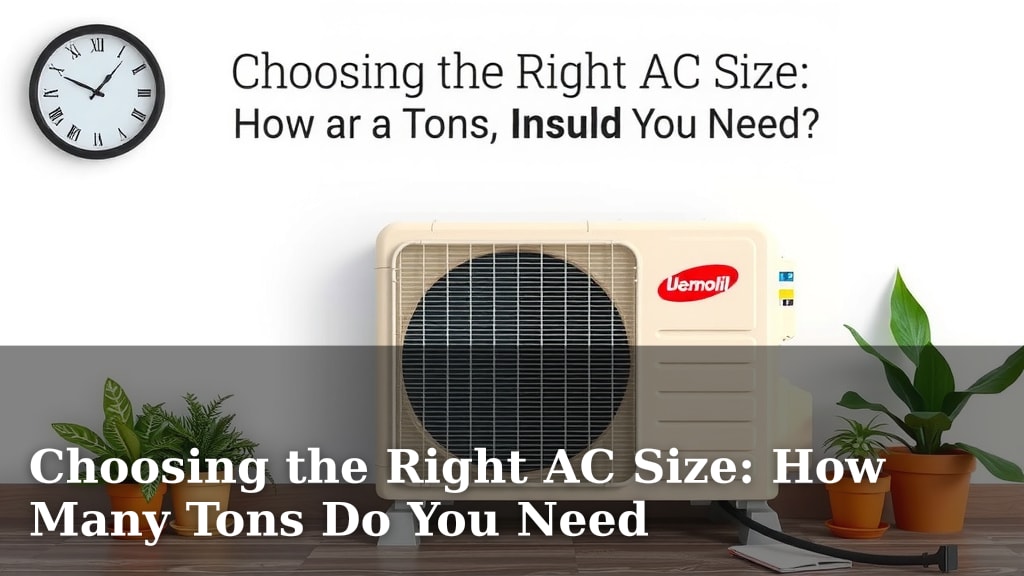
Choosing the Right AC Size: How Many Tons Do You Need
Figuring out the right size for your air conditioner can feel like a puzzle. The typical home needs an air conditioner that’s between 2 to 5 tons. This measurement is based on how much heat it can remove from your home. Getting the correct tonnage is key for comfort and efficiency. Too small and it won’t keep up, too big and it’ll short cycle and waste energy.
We found that your home’s size is the biggest factor, but other things matter too. Things like your climate, insulation quality, and even how much sun your house gets play a role. An oversized unit might cool too quickly, leaving moisture in the air. This can make your home feel clammy. We want your AC to be just right, like a cozy hug from a cloud.
- AC size is measured in tons.
- Most homes need 2 to 5 tons.
- Size depends on home square footage.
- Climate and insulation are also important.
- The right size saves energy and boosts comfort.
Let’s walk through exactly how to figure out the perfect tonnage for your unique home, so you can stay cool and comfortable all summer long.
Determining Your Home’s Ideal AC Tonnage
So, you’re wondering, “How big of an air conditioner do I actually need?” It’s a super common question, and getting it right is key to your summer comfort. The short answer is that most homes fall somewhere between 2 to 5 tons. But that’s just a starting point. We’ve found that your home’s unique characteristics play a huge role in sizing your system.
Think of your AC like a thermostat for your whole house. You want it to be just the right size – not too small that it’s always struggling, and not too big that it’s constantly stopping and starting. This balance ensures your home stays comfortably cool and your energy bills don’t skyrocket. Let’s break down what goes into finding that sweet spot for your air conditioner.
Understanding AC Tonnage
First off, what exactly is “tonnage” when we talk about air conditioners? It’s not about how much the unit weighs. Instead, one ton of air conditioning capacity is equivalent to 12,000 British Thermal Units (BTUs) of cooling power per hour. So, a 3-ton unit can remove 36,000 BTUs of heat every hour.
This measurement tells you how much heat the air conditioner can remove from your home. The hotter it is outside and the more heat your home absorbs, the more cooling power you’ll need. It’s all about balancing that heat load effectively.
Square Footage: The Primary Driver
The biggest factor experts consider when recommending AC tonnage is your home’s square footage. Generally, larger homes require larger AC units. You can get a rough idea by looking at a standard sizing chart, but this is just a baseline.
General Guidelines by Square Footage
While it’s always best to get a professional assessment, here are some general guidelines based on square footage that many HVAC professionals use:
| Home Size (Square Feet) | Approximate Tonnage Needed |
|---|---|
| 1,000 – 1,500 | 1.5 – 2 tons |
| 1,500 – 2,000 | 2 – 2.5 tons |
| 2,000 – 2,500 | 2.5 – 3 tons |
| 2,500 – 3,000 | 3 – 3.5 tons |
| 3,000 – 3,500 | 3.5 – 4 tons |
| 3,500 – 4,000 | 4 – 5 tons |
Remember, this is a general guide. Many other factors can adjust these numbers up or down.
Beyond Square Footage: Other Crucial Factors
Your home’s size is important, but it’s not the whole story. If your home has features that add to the cooling load, you might need a slightly larger unit than the square footage suggests. Conversely, if your home is very well-insulated, you might be able to get away with a slightly smaller, more efficient unit.
Climate and Your Location
Are you living in the sweltering heat of Arizona or the more moderate climate of Oregon? Your local climate plays a big part. If you live in an area with very hot and humid summers, you’ll likely need a more powerful AC unit than someone in a milder climate. The system has to work harder to fight off the heat and humidity.
Many HVAC load calculation methods, like the Manual J, account for the expected outdoor temperatures and humidity levels for your specific geographic region. This ensures your AC is sized for the worst-case scenarios your climate can throw at it.
Insulation and Air Sealing
How well your home is insulated is like putting a cozy blanket around it. Good insulation keeps cool air in and hot air out. If your attic, walls, and crawl spaces are well-insulated, your AC won’t have to work as hard. Poor insulation means more heat seeps in, demanding a bigger unit.
Similarly, air sealing is critical. Leaky windows, doors, and cracks around pipes let conditioned air escape and unconditioned air enter. We’ve found that homes with good air sealing require less cooling capacity. It’s like trying to fill a leaky bucket – you need a stronger flow just to keep the water level up!
Sun Exposure and Windows
Does your home get a lot of direct sunlight, especially during the hottest parts of the day? Those sunny windows can turn your rooms into mini-greenhouses. Homes with large, south-facing windows or older, less energy-efficient windows will absorb more solar heat. This can increase the cooling load significantly.
Shading from trees or awnings can help reduce this solar gain. If you have a lot of glass exposure, you might need to factor that into your AC size. It’s all about managing how much heat your home absorbs throughout the day.
Your Home’s Layout and Ceiling Height
The way your home is laid out matters too. Homes with open floor plans can be harder to cool evenly than homes with many smaller, closed-off rooms. High ceilings also increase the volume of air that needs to be cooled, potentially requiring a larger unit.
Think about the total cubic feet of air that needs to be conditioned. A sprawling ranch with low ceilings might need a different size than a smaller two-story home with vaulted ceilings. It’s not just about the footprint on the ground!

Why Getting the Right Size Matters So Much
Choosing the perfect AC tonnage isn’t just about comfort; it’s about efficiency and the lifespan of your system. You want your AC to run smoothly and efficiently.
The Dangers of an Oversized Unit
It might seem like bigger is always better, but with ACs, an oversized unit can actually cause problems. An AC that’s too large for your home will cool the air very quickly. It will then shut off before it has a chance to adequately remove moisture from the air.
This results in that clammy, “damp” feeling even when the temperature is low. We’ve found this can lead to mold and mildew growth. Plus, the constant starting and stopping (called short-cycling) is inefficient and puts extra wear and tear on the system’s components, potentially shortening its life. It’s like a car constantly accelerating and braking in traffic – not great for the engine.
The Frustration of an Undersized Unit
On the flip side, an AC that’s too small will struggle to keep up, especially on the hottest days. You’ll find that your home never quite reaches the desired temperature. The unit will run constantly, trying its best but ultimately failing to overcome the heat load.
This constant running leads to higher energy bills because it’s always working at maximum capacity. It also puts a strain on the system, similar to the wear and tear from short-cycling, just for a different reason. It’s like asking a tiny fan to cool a large room – it’s just not built for the job.
Your Checklist for Sizing Your AC
To help you start thinking about what you need, here’s a quick checklist:
- Measure your home’s total square footage accurately.
- Note your local climate’s typical summer temperatures and humidity.
- Assess the quality of your home’s insulation (attic, walls, etc.).
- Check for air leaks around windows, doors, and vents.
- Consider the amount of direct sunlight your home receives.
- Think about your home’s layout and ceiling heights.
These points will help you have a more informed conversation with an HVAC professional. They have the tools and expertise to perform a precise load calculation for your home.
Conclusion
So, you’ve learned that choosing the right AC tonnage is more than just picking a number. Your home’s square footage is a major guide, but don’t forget climate, insulation, and sun exposure. Getting this right means a cooler home, lower energy bills, and a longer-lasting AC system. Stop stressing about the heat and take the first step towards perfect comfort.
Your next step? Reach out to a qualified HVAC professional. They can perform an accurate load calculation to ensure your new system is perfectly sized for your unique needs.
Frequently Asked Questions
Is a 2-ton AC unit always enough for a 1,500 sq ft home?
While a 2-ton unit is a common starting point for homes around 1,500 sq ft, it’s not a guarantee. Factors like your local climate’s heat and humidity, your home’s insulation quality, and how much sun it gets can all influence the actual size needed. It’s best to get a professional assessment.
What happens if my AC is too big (oversized)?
An oversized AC cools your home too quickly and shuts off before it can remove enough humidity. This leaves your home feeling damp and clammy, and can even encourage mold growth. The constant on-and-off cycles also wear out the system faster and are less energy-efficient.
How does my home’s insulation affect AC sizing?
Excellent insulation acts like a barrier, keeping cool air inside and hot air outside. If your home is very well-insulated, your AC won’t have to work as hard. This means you might be able to use a slightly smaller, more efficient unit than the square footage alone would suggest.
Can I use a simple online calculator to size my AC?
Online calculators can offer a rough estimate, but they rarely account for all the unique factors of your home. They often don’t consider things like window efficiency, ceiling height, or specific insulation R-values. For accurate sizing, a professional load calculation is always recommended.
What’s the difference between BTU and tonnage for ACs?
Tonnage is simply a measurement of cooling capacity, where one ton equals 12,000 BTUs per hour. So, a 3-ton unit can remove 36,000 BTUs of heat from your home each hour. BTUs are the actual unit of heat removal, while tonnage is a common way HVAC professionals talk about AC size.

![7 Best Rated Stand Alone Air Conditioner [2026]](https://bathroomexplorer.com/wp-content/uploads/2026/06/7-best-rated-stand-alone-air-conditioner-2026-featured-768x432.jpg)