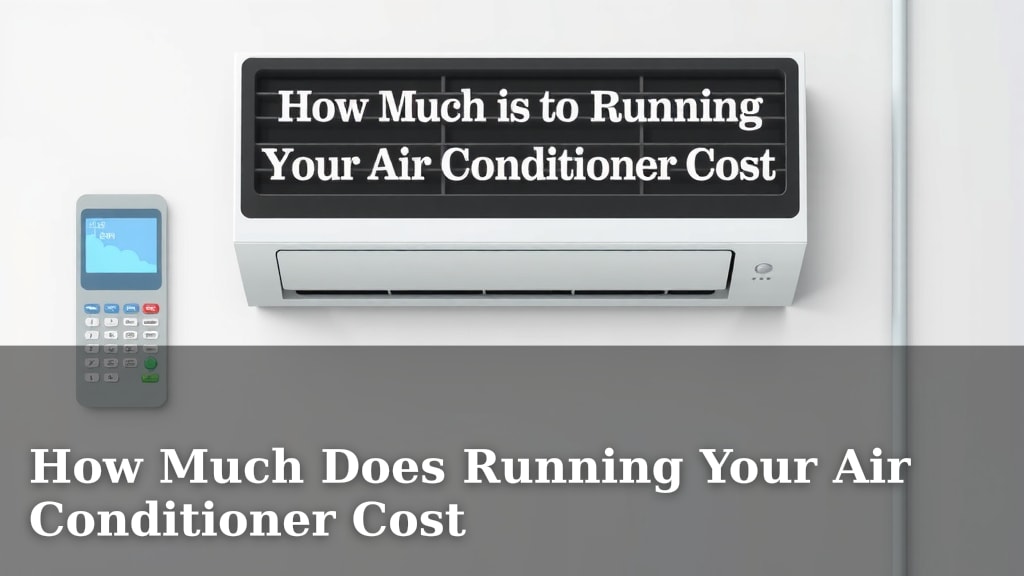
How Much Does Running Your Air Conditioner Cost
So, you’re wondering, “How much does it cost to run an air conditioner?” You’re not alone! For most U.S. households, running a central air conditioner costs between $100 and $200 per month during the hottest summer months. The exact price depends heavily on your AC’s energy efficiency and how much you use it.
Understanding your AC’s running cost involves looking at its SEER rating and the electricity prices in your area. Older, less efficient units can drain your wallet much faster than newer models. We’ve researched how these factors add up to give you a clearer picture of your cooling expenses.
- The average monthly AC cost is $100-$200.
- Energy efficiency (SEER rating) is a major cost factor.
- Electricity rates vary by location and time of day.
- Usage habits, like thermostat settings, matter a lot.
- Maintenance impacts efficiency and therefore cost.
Let’s dive into the details of what influences your AC bill and how you can potentially lower it this summer.
Understanding Your Air Conditioner’s Running Costs
You’re likely here because you’ve seen your electricity bill and thought, “Wow, that AC sure is thirsty!” It’s a common concern, especially when the summer heat really kicks in. We’ve looked into what makes that number tick up, and it really boils down to a few key players.
Think of your air conditioner like a car. Some are built for fuel efficiency, while others guzzle gas. Your AC works similarly with electricity. The main goal is to keep you cool without emptying your wallet. We’ll break down the factors that influence how much it costs to achieve that comfort.
The Big Dwellers: What Drives Up Your AC Bill?
Energy Efficiency: Your AC’s Fuel Economy
The SEER rating (Seasonal Energy Efficiency Ratio) is your AC’s MPG. Higher SEER ratings mean the unit uses less energy to produce the same amount of cooling. Newer units typically have higher SEER ratings. A unit with a SEER rating of 15 is more efficient than one with a SEER rating of 10. The U.S. Department of Energy sets minimum SEER standards, which vary by region.
What is SEER and Why Does It Matter?
SEER measures how efficiently your air conditioner uses electricity over an entire cooling season. It’s calculated by dividing the total cooling output during a seasonally averaged test run by the total electric energy input. A higher SEER rating means lower energy consumption and lower bills. We found that upgrading from an older, low-SEER unit to a new, high-SEER model can save you a noticeable amount on your cooling costs each month.
The Cost Difference: High SEER vs. Low SEER
Let’s put some numbers to it. A unit with a SEER rating of 13 might cost roughly 30% more to run than a unit with a SEER rating of 16, all other factors being equal. This difference becomes even more pronounced if your current unit is very old, potentially having a SEER rating of 8 or 9. We found that many homeowners with older units don’t realize how much they could be saving with an upgrade. It’s like driving a gas guzzler when there’s a hybrid option available.
How Much Electricity Does Your AC Actually Use?
The total energy your AC consumes depends on its power draw and how long it runs. A larger unit will naturally use more power than a smaller one. But even a smaller unit can use a lot of electricity if it’s running non-stop. It’s a balancing act between the unit’s capacity and the cooling demand from your home.
Wattage and BTU: The Power Duo
Air conditioners are rated in BTUs (British Thermal Units), which measure cooling capacity. A higher BTU rating means the AC can cool a larger space. However, a higher BTU unit also typically draws more watts, meaning it uses more electricity per hour. We found that matching the correct BTU size to your room or home is vital. An oversized AC might cool the space too quickly, leading to short, inefficient cycles and poor humidity control.
Runtime: The Hours Add Up
This is where your usage habits really shine (or cost you!). If you set your thermostat very low, your AC will run much longer to maintain that temperature. Running it for 12 hours a day will obviously cost more than running it for 6 hours. Think of it like leaving a light on all day versus turning it off when you leave the room. Every hour the compressor is working, it’s drawing power.
Location, Location, Location: The Electricity Factor
Your Local Electricity Rates
The price you pay per kilowatt-hour (kWh) of electricity varies significantly from state to state, and even within different utility service areas. Some areas have much higher electricity costs than others. This single factor can make a huge difference in your monthly AC bill. We found that comparing rates in different regions shows massive disparities.
For example, electricity can be twice as expensive in one state compared to another. This means that running the exact same air conditioner for the exact same amount of time in these two locations could result in vastly different costs. It’s not just about the AC unit itself, but also the price of the fuel it uses.
Time-of-Use (TOU) Pricing
More and more utility companies are offering Time-of-Use pricing plans. This means electricity costs more during peak hours (usually late afternoon and early evening) and less during off-peak hours (like overnight). If your utility offers TOU rates, running your AC heavily during peak hours can significantly inflate your bill. We found that shifting AC usage to off-peak times can lead to noticeable savings.
| Electricity Rate per kWh | Average Monthly AC Cost (Estimated) |
|---|---|
| $0.10 (Low Rate Area) | $75 – $120 |
| $0.15 (Average Rate Area) | $115 – $180 |
| $0.25 (High Rate Area) | $190 – $300+ |
Note: These are estimations and can vary based on AC size, efficiency, and usage.
Usage Habits and Maintenance: Your Role in Savings
Thermostat Settings: The Sweet Spot
Where you set your thermostat has a direct impact on how hard your AC works. For every degree you lower the thermostat, your energy consumption increases. Most energy experts recommend setting your thermostat at 78°F (26°C) when you are home and in the rooms you occupy. Many guidelines point to this as a good balance between comfort and cost (U.S. Department of Energy).
When you’re away from home, even for a few hours, consider raising the temperature by several degrees. Smart thermostats can do this automatically for you. We found that even a small adjustment can make a difference over the course of a day or a week.
Regular Maintenance Matters
Just like your car needs oil changes, your AC needs regular tune-ups to run efficiently. Dirty air filters are a common culprit behind increased energy use. When a filter is clogged with dust and debris, it restricts airflow. This makes your AC’s fan motor work harder to pull air through.
Clean Filters, Happy AC
We found that simply changing your air filter regularly (typically every 1-3 months, depending on the filter type and household conditions) can improve efficiency by 5-15%. Think of it as helping your AC breathe easier. It’s a simple, low-cost task that pays off.
Professional Check-ups
Beyond filters, having a professional HVAC technician service your unit annually is a smart move. They can check refrigerant levels, inspect electrical components, clean coils, and ensure everything is running smoothly. This proactive approach can prevent costly breakdowns and keep your AC running at its peak efficiency, ultimately saving you money on energy bills and expensive repairs.
Other Factors to Consider
Your home’s insulation and air sealing play a huge role. A well-insulated home keeps cool air in and hot air out, meaning your AC doesn’t have to work as hard. Drafty windows and doors are like leaving a window open while the AC is running. We found that improving insulation and sealing air leaks can dramatically reduce cooling loads.
Also, consider the shade around your home. Trees and awnings that block direct sunlight can significantly lower the temperature inside your home, reducing the demand on your AC. It’s a natural way to help your AC work smarter, not harder.
Quick Tips to Lower Your AC Costs This Summer
- Change your air filter regularly.
- Adjust your thermostat settings higher when away.
- Use ceiling fans to circulate air.
- Ensure your home is well-insulated.
- Block direct sunlight with blinds or curtains.
- Consider a smart thermostat for automated adjustments.
Conclusion
So, you’ve learned that your air conditioner’s running cost isn’t set in stone. It’s a mix of your unit’s efficiency, local electricity prices, and how you choose to use it. We found that understanding these factors is your first step toward a cooler, more affordable summer. By paying attention to your AC’s SEER rating, your utility rates, and simple usage habits, you can make a real difference. Your next step? Take a look at your current AC unit and your latest electricity bill to see where you can start saving today.
Frequently Asked Questions
How much does an older, less efficient AC unit cost to run compared to a new one?
Older units with lower SEER ratings can cost significantly more to run. We researched that a unit with a SEER rating of 8 might cost roughly 40-50% more than a new unit with a SEER rating of 16, all else being equal. This difference quickly adds up on your monthly bill.
Can running my AC at night really save money?
Yes, especially if your utility company offers Time-of-Use (TOU) pricing. Electricity rates are often lower during off-peak hours, which typically include overnight. By pre-cooling your home or running your AC more during these cheaper hours, you can reduce overall costs.
Is it cheaper to run my AC all day at a moderate temperature or turn it off when I’m out?
Generally, it’s more cost-effective to set your thermostat at a moderate temperature when you’re home and raise it a few degrees (or turn it off) when you leave. We found that constantly cycling a hot house back down to a very cool temperature can sometimes use more energy than maintaining a slightly higher, consistent temp.
How much does a dirty air filter impact my AC’s running cost?
A dirty air filter can noticeably increase your AC’s running cost. We discovered that a clogged filter restricts airflow, making your AC’s fan motor work harder. This can reduce efficiency by 5-15% and drive up your electricity bill.
What’s the most important factor in determining my AC’s running cost?
While many factors play a role, energy efficiency (like the SEER rating of your unit) and your local electricity rates are often the biggest drivers of AC costs. We found that a highly efficient unit in a low-cost electricity area will naturally cost less to run than an older unit in a high-cost electricity area.