
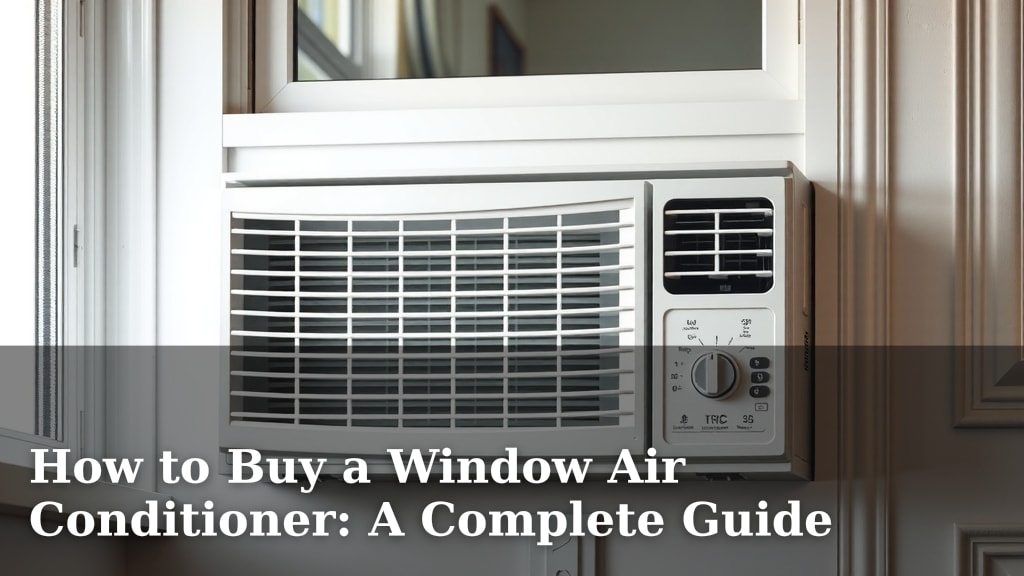
How to Buy a Window Air Conditioner: A Complete Guide
Buying a window air conditioner is a straightforward process if you know what to look for. You’ll want to focus on BTUs (British Thermal Units) to match your room size and check for an Energy Star rating for efficiency. Picking the right unit ensures your space stays cool and comfortable without breaking the bank on electricity bills.
When you’re ready to cool your home, a window AC is a popular and cost-effective choice. They are relatively easy to install yourself, unlike central air systems. We found that considering noise levels and extra features like smart controls can also make a big difference in your satisfaction with the unit.
- Measure your window and room size accurately.
- Determine the correct BTU capacity needed.
- Look for Energy Star certified models.
- Consider noise levels and ease of installation.
- Check for convenient features like remote controls.
Ready to find the perfect window air conditioner for your needs? Let’s walk through the essential steps and considerations to make sure you get the best cool air for your buck.
Choosing Your Ideal Window Air Conditioner
Selecting the right window air conditioner involves a few key steps. You’ll want to match its cooling power to your room’s size. Efficiency and ease of use are also big considerations. We found that focusing on these elements helps you get the most comfort for your money.
Understanding BTU and Room Size
BTU stands for British Thermal Unit. It’s a measure of how much heat an air conditioner can remove from a room. The bigger the room, the more BTUs you’ll need. Too small a unit will struggle to cool the space. Too large a unit can cool too quickly, making the air feel damp.
BTU Guidelines for Room Size
We found some general guidelines for matching BTUs to room size. These are a great starting point for your decision-making process.
| Room Size (Square Feet) | Recommended BTU Capacity |
|---|---|
| 100 – 150 | 5,000 BTU |
| 150 – 250 | 6,000 BTU |
| 250 – 350 | 8,000 BTU |
| 350 – 450 | 10,000 BTU |
| 450 – 550 | 12,000 BTU |
| 550 – 700 | 14,000 BTU |
Remember, these are just estimates. Factors like ceiling height, sun exposure, and the number of people using the room can affect cooling needs. A room with large windows or a lot of electronics might need a slightly higher BTU. Conversely, a very well-insulated room might get by with a bit less.
Energy Efficiency Matters: Look for Energy Star
An Energy Star certified air conditioner uses less energy than standard models. This means lower electricity bills for you. It also means you’re doing your part for the environment. The Environmental Protection Agency (EPA) awards this certification. We found that these units can save you a noticeable amount on your energy costs over time.
What Does Energy Star Mean for You?
Energy Star models are tested to meet strict energy efficiency guidelines set by the EPA. This means they’re at least 10% more efficient than non-certified units. Some are even more efficient. When you see the Energy Star label, you know you’re looking at a unit that’s built to save energy. This is a simple way to make a smart choice.
Considering the Physical Fit and Installation
Before you buy, measure your window space carefully. Window air conditioners come in standard sizes, but there’s variation. You need to know the width and height of the opening. Also, consider the depth of the window frame. A proper fit ensures the unit is secure and seals well.
Window Dimensions Are Key
Most window AC units are designed to fit double-hung windows. They often come with side curtains or panels to fill in any gaps. Double-check the dimensions listed for the unit. Make sure they match your window’s opening size. You don’t want to get a unit that’s too wide or too tall for your space.
Installation Ease and Support
Many people install window ACs themselves. We found that most units come with clear instructions and necessary mounting hardware. Some heavier units might be easier with a second person. You might also consider a support bracket for extra security, especially for larger models or upper-floor windows.
Noise Levels: What to Listen For
Air conditioners can be noisy. This is an important factor, especially if the unit will be in a bedroom or living area. Manufacturers often list a decibel (dB) rating for their units. Lower decibel ratings mean a quieter operation. We found that quieter models often come with a slightly higher price tag.
Understanding Decibels (dB)
A whisper is about 30 dB. Normal conversation is around 60 dB. Many window AC units operate between 50 and 65 dB. If quiet operation is a priority for you, aim for units in the lower end of that range. Reading user reviews can also give you a good idea of a unit’s actual noise level.
Extra Features to Enhance Your Comfort
Modern window air conditioners offer more than just cooling. Think about features that can make your life easier and your cooling more effective.
Convenient Controls and Settings
Many units come with remote controls, allowing you to adjust settings from across the room. Look for programmable timers so you can set the AC to turn on or off at specific times. This can help you save energy by not running the unit when you don’t need it.
Smart Capabilities and Connectivity
Some higher-end models offer smart features. You can control these units via a smartphone app. This means you can turn your AC on before you even get home. It’s a great convenience for busy households. Many experts say these smart features can also help optimize energy usage (U.S. Department of Energy).
Airflow and Modes
Check for multiple fan speeds and different cooling modes. Some units have a “sleep” mode that gradually increases the temperature at night. Others might have an “eco” mode to save energy. Adjustable louvers or a swing function help direct airflow where you need it most.
A Quick Checklist for Your Purchase
To make sure you don’t miss anything, here’s a quick rundown:
- Measure your window precisely.
- Calculate the correct BTU for your room.
- Prioritize Energy Star certification.
- Check the noise rating (dB).
- Consider useful features like remotes or timers.
- Read recent user reviews for real-world feedback.
Conclusion
You’ve now learned how to pick the right window air conditioner. Matching BTU to your room size is key for comfort. Don’t forget to look for that Energy Star label to save on bills. Measuring your window and considering noise levels will ensure a great fit for your space and peace. We found that focusing on these basics leads to a cooler, happier home. Take these steps, and you’ll be enjoying cool air in no time.
Frequently Asked Questions
How do I know if my window is suitable for a window AC?
You’ll need to measure your window’s height and width accurately. Most window ACs are designed for double-hung windows and include adjustable side panels. Check the unit’s specifications to ensure it fits your window opening dimensions and depth.
What’s the best way to determine the right BTU for my room?
BTU needs increase with room size. Use the general guidelines we provided, but also factor in things like sun exposure and the number of electronics or people in the room. A slightly higher BTU might be needed for sunnier rooms or those with heat-generating devices.
Are Energy Star units really worth the extra cost?
Yes, we found they often are. Energy Star certified units use less electricity, leading to lower monthly utility bills. Over the lifespan of the air conditioner, these savings can outweigh any initial price difference.
Can I install a window AC unit myself?
For most smaller to medium units, yes, self-installation is quite common. They usually come with clear instructions and hardware. For heavier units or if you’re on an upper floor, getting a second person or a support bracket is a good idea for safety and stability.
How can I ensure my window AC isn’t too loud?
Look for the decibel (dB) rating provided by the manufacturer. Lower numbers mean quieter operation. Aim for units in the 50-60 dB range if noise is a concern, especially for bedrooms. Reading user reviews can also give you real-world feedback on noise levels.


![7 Best Single Room Air Conditioner No Window [2026]](https://bathroomexplorer.com/wp-content/uploads/2026/06/7-best-single-room-air-conditioner-no-window-2026-featured-768x432.jpg)