
Choose the Right Air Conditioner for Your Room
Choosing the right air conditioner for your room is all about matching its cooling power to the space you need to chill. You need to consider the room size and how much heat it collects. Getting this balance right means a comfy room without wasting energy.
Many factors go into picking the perfect AC unit. You’ll want to think about the type of AC (window, portable, mini-split), its energy efficiency rating, and any special features you might want. We found that understanding these elements helps you make a smart choice for your home.
- Measure your room’s square footage.
- Calculate how much heat the room gets.
- Look at the AC’s BTUs (cooling power).
- Check the energy efficiency rating (EER or SEER).
Let’s walk through exactly how to figure out which air conditioner will keep your room perfectly cool all season long.
Matching Your Room’s Size to the Right AC Power
Finding the perfect air conditioner starts with understanding your room. Think of it like choosing shoes: you wouldn’t wear a hiking boot to a beach party. Your AC needs to fit the space perfectly to keep you comfy.
Measure Your Space: The Foundation of Your Choice
Before you even look at AC units, grab a measuring tape. You need to know the square footage of the room you want to cool. This is the most important step.
How to Calculate Square Footage
It’s simpler than it sounds. Just measure the length and width of your room in feet. Then, multiply those two numbers together. For example, a room that’s 10 feet long and 12 feet wide is 120 square feet.
Understanding Cooling Power: BTUs Explained
Air conditioners are measured by their cooling power, called BTUs (British Thermal Units). A higher BTU means more cooling power. The trick is finding the right balance.
BTU Needs Based on Room Size
Too little BTU, and your AC will run non-stop without ever getting cool. Too much, and it will cool the room too quickly, shutting off before it can dehumidify. This can leave your room feeling clammy. We found that most guidelines suggest a starting point:
| Room Size (Square Feet) | Recommended BTUs |
|---|---|
| 100-150 | 5,000 |
| 150-250 | 6,000 |
| 250-350 | 8,000 |
| 350-450 | 10,000 |
| 450-550 | 12,000 |
| 550-700 | 14,000 |
Factors That Increase BTU Needs
Your room’s size isn’t the only thing to consider. Certain factors can make a room hotter, meaning you might need a bit more cooling power. Think of it as adding extra blankets on a cold night.
- Sunlight: Rooms with lots of sun exposure, especially south-facing windows, get hotter. You may need to increase BTU by 10%.
- Occupancy: If more than two people regularly use the room, you’ll need to add about 600 BTUs per extra person.
- Kitchens: Kitchens generate heat from appliances. For kitchens, add 4,000 BTUs.
- Ceiling Height: Very high ceilings mean more air volume to cool. Consider a higher BTU if your ceilings are over 8 feet.
Types of Air Conditioners: Which One is Right for You?
Now that you know your BTU needs, let’s look at the different types of AC units available. Each has its own pros and cons, and the best choice often depends on your living situation and budget.
Window Air Conditioners: The Classic Choice
These are the most common type. They fit right into a window frame, offering a simple and effective cooling solution. They’re generally affordable and easy to install.
Pros of Window ACs
- Cost-effective: Often the cheapest option upfront.
- Space-saving: They don’t take up floor space.
- Efficient: Can cool a single room well when sized correctly.
Cons of Window ACs
- Block View: They can obstruct your window view.
- Installation: Can be heavy and require some effort to install safely.
- Noise: Some models can be a bit noisy.
Portable Air Conditioners: Flexibility and Convenience
Portable ACs are great if you can’t install a window unit or need to move the cooling power from room to room. They sit on the floor and have an exhaust hose that vents out a window.
Pros of Portable ACs
- Easy to Move: You can roll them to different rooms.
- No Permanent Installation: Great for renters.
- Less Intrusive: Doesn’t permanently alter your window.
Cons of Portable ACs
- Less Efficient: They can be less efficient than window units.
- Noise: The compressor is inside the room, making them noisier.
- Hose Management: The exhaust hose can be a bit cumbersome.
Mini-Split Systems: Powerful and Sleek
Mini-split systems, also called ductless ACs, are a more advanced option. They consist of an outdoor unit and one or more indoor units mounted on your wall. They require professional installation but offer excellent efficiency and quiet operation.
Pros of Mini-Split Systems
- Highly Efficient: They are very energy-efficient.
- Quiet Operation: The main noise is outside.
- Zoning: You can cool individual rooms or zones.
- No Ductwork Needed: Great for homes without existing ducts.
Cons of Mini-Split Systems
- Higher Cost: The initial investment is higher.
- Professional Installation: Requires a technician.
- Aesthetics: Indoor units are visible on walls.
Energy Efficiency: Saving Money and the Planet
An air conditioner’s energy efficiency rating is super important. It tells you how much energy the unit uses to produce its cooling power. A more efficient unit will save you money on your electricity bills.
Understanding EER and SEER Ratings
You’ll typically see two main ratings: EER (Energy Efficiency Ratio) and SEER (Seasonal Energy Efficiency Ratio).
- EER: This rating measures efficiency at a specific high outdoor temperature. Higher EER is better.
- SEER: This is more common for central air but is sometimes used for other types. It measures efficiency over an entire cooling season. Higher SEER is better.
The U.S. Department of Energy sets minimum efficiency standards. Look for units that exceed these minimums whenever possible. Many experts say that paying a little more for a highly efficient unit can pay for itself in energy savings over time.
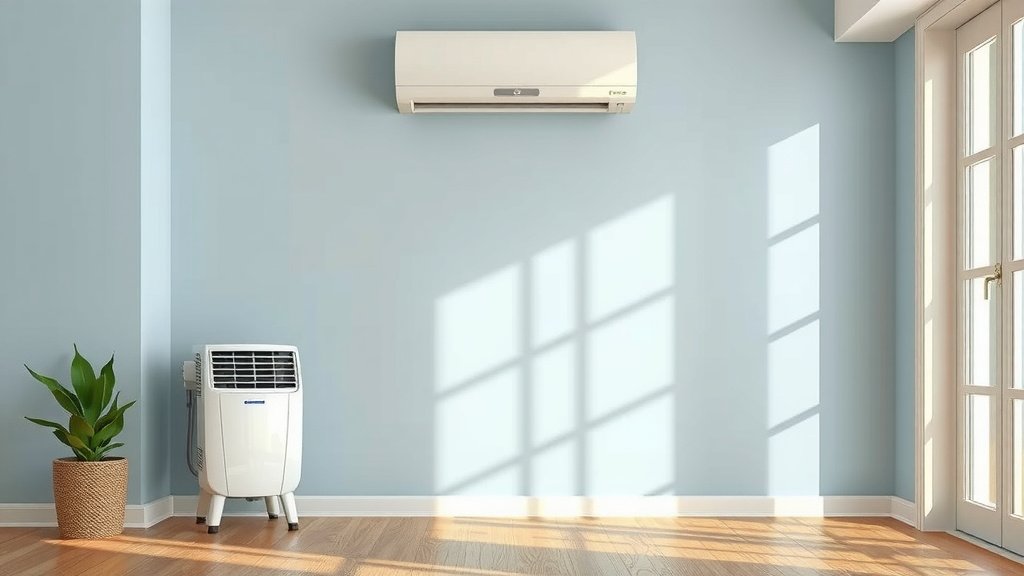
Extra Features to Consider
Beyond cooling power and efficiency, AC units come with various features. Think about what would make your life easier and your cooling experience better.
- Remote Control: Lets you adjust settings from across the room.
- Programmable Timer: Set your AC to turn on or off at specific times. This is a great energy-saving feature.
- Sleep Mode: Gradually adjusts the temperature overnight for comfort and efficiency.
- Air Filters: Some units have advanced filters that can help improve indoor air quality.
- Smart Features: Wi-Fi connectivity allows you to control your AC via a smartphone app.
Quick Checklist for Choosing Your AC
Ready to make your choice? Here’s a quick rundown to keep you on track:
- Measure your room’s square footage accurately.
- Calculate needed BTUs, factoring in sunlight and occupancy.
- Decide on the best AC type for your needs and home.
- Compare energy efficiency ratings (EER/SEER) for long-term savings.
- Consider extra features that add convenience.
- Check user reviews for reliability and real-world performance.
Conclusion
You’ve learned how to pick the perfect air conditioner for your space. It’s all about matching cooling power to room size. We found that measuring your room and understanding BTUs is key. Don’t forget to factor in sunlight and how many people use the room. Considering AC type and energy efficiency ratings will save you money too. Now you’re ready to make a smart choice for a cooler, more comfortable home. Start measuring your room today to find your ideal AC!
Frequently Asked Questions
How do I know if I need more or less BTUs than the chart suggests?
You’ll likely need more BTUs if your room gets direct sunlight all day, is on a top floor, or has more than two people regularly using it. Conversely, if the room is very shaded and rarely occupied, you might be able to use a slightly lower BTU unit.
What’s the difference between EER and SEER ratings?
EER measures efficiency at one specific high temperature, which is good for hot climates. SEER measures efficiency over a whole cooling season, accounting for fluctuating temperatures, making it a better indicator for most U.S. climates.
Can I install a window AC unit myself?
Yes, most window AC units can be installed by one person, though two might make it easier and safer, especially for larger units. Make sure it’s securely fitted and properly sealed to prevent air leaks.
Are portable ACs really less efficient than window units?
Generally, yes. Portable ACs often have an exhaust hose that can draw warm air back into the room, and the cooling unit is inside, which can make them less efficient than similarly sized window units.
What does “dehumidify” mean for an air conditioner?
Dehumidifying means removing moisture from the air. When an AC cools the air, it also removes water vapor. If your AC is too powerful, it cools the air too quickly without enough time to effectively remove moisture, leaving the room feeling damp.

![7 Best Window Air Conditioner [2026]](https://bathroomexplorer.com/wp-content/uploads/2026/07/7-best-window-air-conditioner-2026-featured-768x432.jpg)

![7 Best Cost Effective Air Conditioner [2026]](https://bathroomexplorer.com/wp-content/uploads/2026/06/7-best-cost-effective-air-conditioner-2026-featured-768x432.jpg)
![7 Best Home Office Air Conditioner [2026]](https://bathroomexplorer.com/wp-content/uploads/2026/06/7-best-home-office-air-conditioner-2026-featured-768x432.jpg)