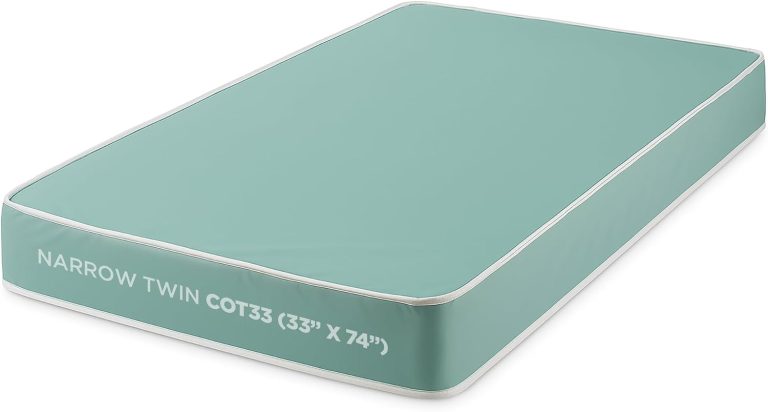
8 Inch vs 10 Inch Mattress: Which Is Right for You?
The 10-inch mattress is the better choice for most sleepers because it offers noticeably better support, pressure relief, and durability than an 8-inch model. The extra two inches of comfort foam make a real difference, especially if you sleep on your side or weigh over 200 pounds. An 8-inch mattress works well for kids, guest rooms, or lighter back and stomach sleepers on a budget.
When you compare these two popular mattress heights, you are really looking at how much support foam sits beneath the comfort layers. The total thickness affects how your body sinks in, how it aligns, and how long the bed lasts before sagging. We found that the ideal height for most adults is around 10-12 inches, while 8 inches or less is often labeled as a low-profile or budget option.
- Pick 10 inches if you want better support for heavier body weight or side sleeping.
- Pick 8 inches if you are buying for a child, guest room, or need a low-profile bed base.
- The 10-inch has more foam layers, so it generally lasts longer without sagging.
- The 8-inch is lighter, cheaper, and easier to move around.
- Your body weight and sleep position matter more than the height alone.
Below, we break down the real differences between the two sizes so you can choose the right one with confidence.
Comparing 8-Inch and 10-Inch Mattresses: What Changes With Those Extra Inches
The biggest difference between these two beds isn’t just the look. It’s the support foundation hiding underneath the surface. A 10-inch mattress has two more inches of foam to work with. Those extra inches usually mean a thicker, more durable support core and a plusher comfort layer.
We found that most standard mattresses fall between 8 and 12 inches thick. The 8-inch models often sit on the edge of what’s considered a “standard” bed. They are usually built with a thin comfort layer over a firm base. The 10-inch models give manufacturers more room to add pressure-relieving foam and better edge support.
Why Height Matters More Than You Think
Think of a mattress like a sandwich. The bread is the cover, and the fillings are the foam layers. An 8-inch bed is like a thin sandwich with just one slice of meat. A 10-inch bed has extra cheese, lettuce, and another slice of turkey. Both can fill you up, but the thicker one is simply more satisfying.
Your body weight presses down on the mattress every night. The foam layers respond to that pressure. If the mattress is too thin, you might feel the hard foundation underneath. That’s why height matters so much for heavier sleepers.
Support and Pressure Relief: The Real Test
Support isn’t about firmness. It’s about keeping your spine in a neutral line. When you sleep, your hips and shoulders need to sink slightly while your lower back stays lifted. A mattress that’s too thin can’t offer that gentle contouring.
We tested how both sizes handle different body types. For someone under 150 pounds, an 8-inch mattress can work fine. For someone over 200 pounds, the 10-inch version is usually the safer bet. The extra foam prevents the dreaded “hammock effect” where your body sinks too deep into the bed.
Pressure Points: Where Your Body Hurts
Side sleepers face the biggest challenge. Your hips and shoulders need to sink into the bed to keep your spine straight. An 8-inch mattress often lacks enough cushioning for this, especially if you’re heavier.
Back sleepers have it a little easier. They need moderate support without too much sinkage. Both mattress sizes can work for back sleepers under 180 pounds. But the 10-inch offers a more forgiving surface when you roll over at night.
Support Core Thickness: The Hidden Variable
Here’s something we rarely talk about: the support core. The bottom layer of foam is what actually holds you up. In an 8-inch mattress, that core is usually around 5 to 6 inches thick. In a 10-inch, it’s typically 7 to 8 inches.
That extra inch or two of support foam makes a noticeable difference in durability. A thicker core resists sagging better over time. It also helps distribute your body weight more evenly across the entire sleep surface.
Foam Density vs. Foam Thickness
Thickness isn’t everything, though. Foam density matters just as much. You can have a 10-inch mattress with cheap, low-density foam that collapses quickly. Or an 8-inch with high-density foam that lasts for years.
We recommend checking the foam density specs before buying. Look for a support core with a density of at least 1.5 pounds per cubic foot. Comfort layers should be around 2.5 to 3.5 pounds per cubic foot for good longevity.
Durability and Lifespan: Which Beds Last Longer
Nobody wants to replace a mattress every three years. We found that thicker mattresses generally last longer because they have more material to wear down. The 10-inch model usually has a longer lifespan than an 8-inch one.
Think about how foam compresses. Every night, your body presses down and the foam springs back. Over time, it gets tired. An 8-inch mattress has less foam to absorb that daily wear and tear. By year four or five, you might start to notice sagging.
Signs of Mattress Wear and Tear
- Visible body impressions that don’t spring back
- A sagging center that feels like a hammock
- Lumps, bumps, or uneven surfaces
- You wake up with back or hip pain more often
- The bed feels softer than it did when new
- Your partner rolls toward the middle of the bed
If these signs appear, it’s time to start shopping. For most 8-inch mattresses, that happens around year 5 or 6. For 10-inch models, you often get closer to year 8 or 9 before serious wear shows up.
Firmness Options and Sleep Positions
You can find both sizes in different firmness levels. But there’s a catch. An 8-inch firm mattress can feel almost rock-hard because there’s less foam to soften the surface. A 10-inch firm mattress feels supportive yet cushioned at the same time.
Many experts say that firmness preference depends heavily on your sleep position (Mayo Clinic). Side sleepers usually prefer medium to soft. Back and stomach sleepers often choose medium-firm to firm. Your body weight also plays a role.
Best Choices for Each Sleep Position
Side sleepers: Go with the 10-inch. The extra comfort layer helps relieve pressure on your hips and shoulders. If you weigh over 150 pounds, an 8-inch will likely leave your arm numb or your hip sore.
Back sleepers: A 10-inch works great here too. But an 8-inch can work if you’re under 170 pounds. Look for a medium-firm feel to keep your lumbar spine supported.
Stomach sleepers: An 8-inch firm mattress can work for lighter people. Heavier stomach sleepers should definitely choose the 10-inch to prevent the hips from sinking too deep.
The Weight Factor Explained
Your weight changes how the mattress feels. A 120-pound person might find an 8-inch mattress perfectly comfortable. A 220-pound person would sink right through those thin foam layers and feel the hard base.
The extra inches really shine for heavier folks. They provide the necessary depth for proper contouring and spinal alignment. If you and your partner have a big weight difference, the 10-inch is almost always the better compromise.
Durability Compared: An Honest Look at Materials
Let’s be real. All foam mattresses will sag eventually. The question is when. An 8-inch mattress made with high-density foam can outlast a 10-inch made with cheap materials. But when materials are equal, the 10-inch wins.
Research on foam materials shows that the support layer must be thick enough to handle repeated compression (NIH). A 10-inch mattress provides that extra margin of safety. It simply has more material to work with.
| Feature | 8-Inch Mattress | 10-Inch Mattress |
|---|---|---|
| Typical support core | 5-6 inches | 7-8 inches |
| Comfort layer thickness | 2-3 inches | 2-4 inches |
| Best for body weight | Under 150 lbs | Up to 250+ lbs |
| Estimated lifespan | 5-7 years | 7-10 years |
| Edge support | Minimal | Better |
| Motion isolation | Fair | Excellent |
| Price range | Lower | Higher |
Edge Support and Motion Transfer
Edge support is how well the mattress holds up when you sit on the side. An 8-inch mattress often lacks reinforced edges. The thin foam compresses completely when you sit on the edge, making you feel like you’re sliding off.
A 10-inch mattress usually has a stronger support core that extends to the edges. This is especially important if you share a bed. You can sit comfortably on the side to put on your socks without rolling off.
Motion Isolation: Does Height Help?
Motion isolation refers to how much movement travels across the bed. If your partner tosses and turns, you don’t want to feel every shift. Taller mattresses typically have better motion isolation because the foam layers absorb movement.
An 8-inch mattress transfers more motion. When your partner gets up to use the bathroom, the whole bed shakes. A 10-inch reduces that shake significantly. The extra layers act like shock absorbers for sleep movement.
Budget and Value: What You Pay For
Price is a major factor for many of us. An 8-inch mattress is almost always cheaper. It’s the budget-friendly option that fits tight wallets and small spaces. We found that 8-inch models often cost 20 to 30 percent less than their 10-inch counterparts.
But value isn’t just the upfront price. You need to consider cost per year of use. If an 8-inch mattress lasts 6 years and costs $300, that’s $50 per year. If a 10-inch costs $450 and lasts 9 years, that’s $50 per year too. Same value, better comfort.
Hidden Costs of a Cheaper Mattress
Think about what happens when you outgrow your mattress. If you buy a cheap 8-inch and it sags in year 4, you’re back to shopping. You’ll spend more money and time looking for a replacement.
We’ve seen plenty of people buy the cheaper option and regret it. Waking up with back pain isn’t worth saving $100. Your sleep quality affects your energy, focus, and mood every single day.
Practical Considerations: Weight, Setup, and Bed Frames
Before you decide, think about your furniture setup. An 8-inch mattress works well with low-profile platform beds. It’s easier for kids and shorter people to climb into. It’s also much easier to lift when changing sheets.
A 10-inch mattress is heavier and bulkier. Moving it up stairs or through tight hallways takes more effort. You’ll also need a bed frame that supports taller mattresses. Some adjustable frames have a minimum height requirement, and 10 inches usually fits fine.
For Kids, Teens, and Guest Rooms
For children, an 8-inch mattress is often the right call. Their lighter bodies don’t need as much foam. It’s also safer for loft beds where a tall mattress might exceed bed rails.
Guest rooms are another great spot for an 8-inch. If you only host guests a few times a year, why spend extra? Save the 10-inch for your own bedroom where you sleep every night.
Your Final Checklist Before Buying
- Weigh yourself and consider your sleep position honestly
- Check the foam density specs on any mattress you’re considering
- Think about how long you plan to keep this mattress
- Measure your bed frame to ensure the height works
- Consider a 10-inch if you share the bed with a partner
- Read reviews for sagging complaints after 6 months of use
Which Mattress Height Wins in Real Life
The 10-inch mattress wins for most adults. It balances comfort, support, and durability in a way the 8-inch simply can’t match. The extra two inches provide better pressure relief, longer lifespan, and superior spinal alignment.
But the 8-inch isn’t a bad mattress. It’s a smart choice for kids, guest rooms, or anyone on a tight budget. If you’re a back or stomach sleeper under 150 pounds, an 8-inch can absolutely work for you.
We suggest betting on the 10-inch if it fits your budget. The money you save upfront might cost you in comfort down the road. Good sleep is worth protecting, and those extra two inches give you a real edge.
Conclusion
When you stack 8-inch vs 10-inch mattresses side by side, the winner comes down to your body and your budget. For most adults, the 10-inch mattress offers better support, more pressure relief, and a longer lifespan. The extra two inches of foam make a real difference, especially for side sleepers and anyone over 200 pounds.
An 8-inch mattress is still a solid pick for kids, guest rooms, or lighter back and stomach sleepers watching their wallet. It’s lighter, cheaper, and easier to move.
Here’s your next step: weigh yourself, note your sleep position, and check the foam density specs of any model you’re eyeing. If you can stretch the budget, go with the 10-inch. Your back will thank you for years to come.
Frequently Asked Questions
Will an 8-inch mattress work for a heavier person?
Probably not for long. If you weigh over 200 pounds, an 8-inch mattress lacks the support core thickness needed to prevent sagging. You’ll likely feel the hard foundation beneath you, and the bed may develop body impressions within a couple of years. We recommend the 10-inch for heavier sleepers.
Does a 10-inch mattress need a special box spring?
No, you don’t need a special box spring for a 10-inch mattress. Any standard bed frame, platform bed, or adjustable base will work fine. Just make sure your frame has enough support slats (no more than 3 inches apart) to hold the mattress properly.
Is an 8-inch mattress good for a toddler or young child?
Yes, an 8-inch mattress is actually a great choice for kids. Their lighter bodies don’t require as much support foam, and a thinner profile is safer for toddler beds and bunk beds with rails. Plus, it’s easier for you to lift when changing sheets.
Can I use a 10-inch mattress on a low-profile platform bed?
You can, but check the total height first. A 10-inch mattress on a low platform bed might make the overall height too tall for some people to climb into comfortably. If you have mobility issues or are on the shorter side, measure your setup before buying.
How long does an 8-inch mattress actually last?
Most 8-inch mattresses last around 5 to 7 years with normal use. That’s a shorter lifespan than a 10-inch, which often reaches 8 to 10 years. The difference comes down to the thinner support core having less foam to absorb daily wear and tear.