Baby Mattress Safety Standards: What Parents Must Know
Yes, baby mattress safety standards are a strict combination of federal regulations and voluntary tests designed to lower the risk of Sudden Infant Death Syndrome (SIDS) and suffocation. You need to look for a firm surface and a snug fit in the crib, not just the price tag. These rules exist to keep your baby safe while they sleep, so you do not have to guess.
We found that the core rules come down to firmness, fit, and materials. The federal government sets the baseline for crib mattresses, while independent groups push for even stricter testing on things like toxins and wear-and-tear. Understanding these labels helps you skip the marketing fluff and pick a safe, comfortable spot for your little one to rest.
- Firmness is king: A baby mattress must be firm enough to prevent the baby’s face from sinking in, which helps prevent suffocation.
- The fit matters: The mattress must fit snugly in the crib with no gaps; if two fingers fit between the mattress and the crib side, it is too small.
- Federal law sets the base: All mattresses sold in the US must meet specific Consumer Product Safety Commission (CPSC) rules for firmness and size.
- Look for voluntary labels: Certifications like Greenguard Gold go a step further to limit chemical emissions and off-gassing.
- Skip used mattresses: Old or hand-me-down mattresses may not meet current safety standards or could harbor allergens and mold.
Let’s walk through the exact regulations, the warning signs to avoid, and how to check if your crib setup is truly safe for your little one.
Navigating the Safety Rules for Your Baby’s Mattress
You might feel overwhelmed by all the choices in the baby aisle. We get it. But the rules for baby mattresses are actually simpler than they look once you break them down. We found that the federal government sets a clear baseline, and independent groups add a layer of extra protection.
Think of it like buying a car. The government requires seatbelts and airbags for everyone. But some manufacturers add extra safety features like lane-assist or blind-spot monitoring on top of that. Baby mattresses work the same way. The federal law dictates the mandatory minimum you must have, while voluntary certifications offer the “extras.”
What the Federal Government Requires
The U.S. Consumer Product Safety Commission (CPSC) has strict rules that every mattress must meet. Their main concern is preventing suffocation and SIDS. These rules cover the physical properties of the mattress itself, not the cover or the extras.
In fact, the CPSC requires that all infant mattresses be firm. They test this by pressing a specific weight onto the surface. The mattress must not compress beyond a certain point. This is to ensure that your baby’s face cannot sink into the material, which could restrict their breathing.
The “Firmness” Standard Explained
Firmness is not about a label the brand chooses to put on the box. It is a tested metric. We found that the government uses a device to measure indentation load deflection (ILD). A mattress with a higher ILD number is firmer.
Your best bet is to use the “press test” at home. Press the middle of the mattress with your palm. If your hand leaves an indentation that stays for a second, the mattress is likely too soft. A safe mattress should bounce back almost instantly, just like a solid piece of cardboard.
Size and Fit Regulations
Size is not just about comfort; it is a critical safety issue. A gap between the mattress and the crib side is a serious hazard. A baby can roll into that gap and get trapped, leading to suffocation.
The CPSC sets standard dimensions for crib mattresses. They require the mattress to be at least 27 1/4 inches long and 51 5/8 inches wide. However, cribs vary slightly in size, so you should always test the fit in your specific crib.
Here is the basic rule we always suggest: the two-finger test. If you can fit more than two fingers between the mattress and the crib rail, it is too small. You need a snug fit that leaves no room for gaps. If it doesn’t pass the test, send it back.
Voluntary Certifications for Peace of Mind
Since federal rules only cover the basics, many parents want more. This is where voluntary certifications come into play. These are not required by law, but they show that a brand is willing to go the extra mile for safety and health.
We found that many experts say these certifications are a great way to compare mattresses. They often cover things the government doesn’t test, like chemical emissions and durability. Here are the two big ones you will see on the market.
Greenguard Gold Certified
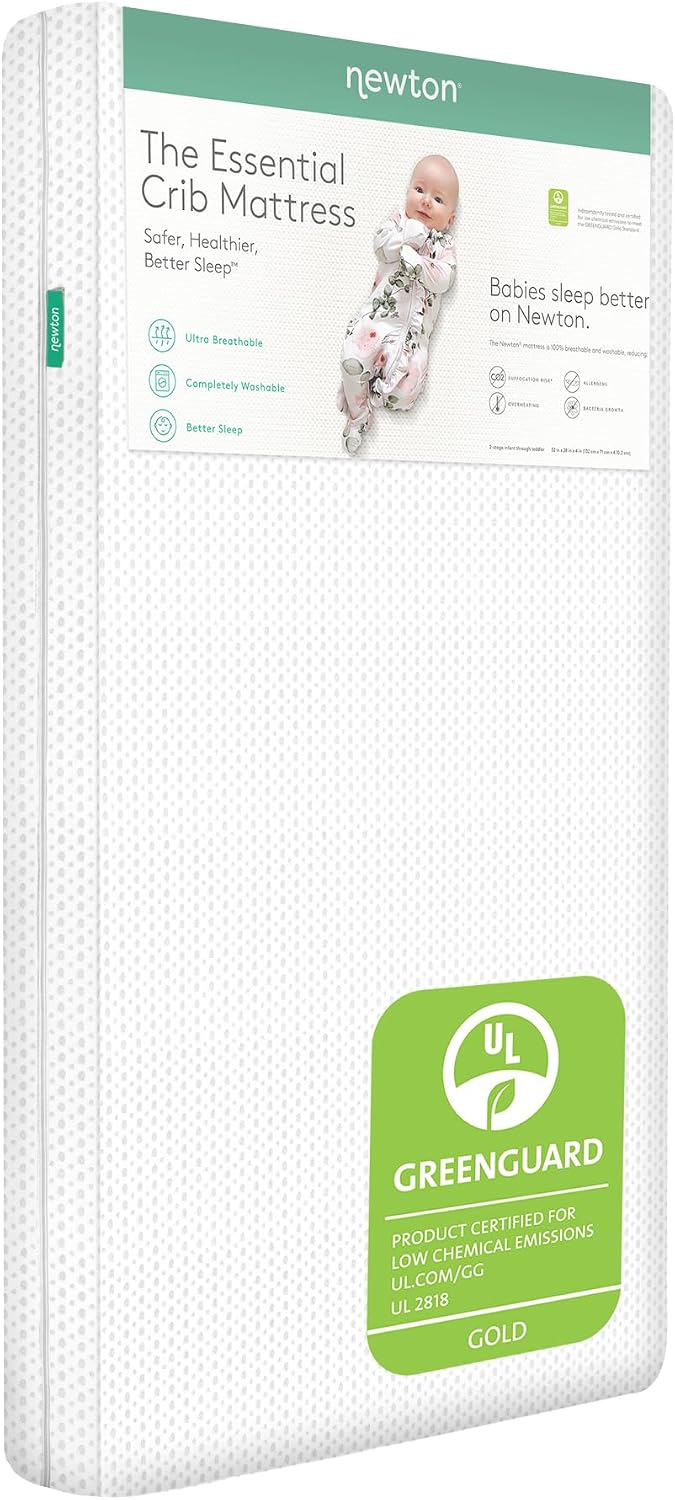
This is probably the most common label you will see on premium mattresses. Greenguard Gold is a certification from UL (Underwriters Laboratories). It tests for over 10,000 chemicals and volatile organic compounds (VOCs) that can off-gas into your home.
To get this certification, the mattress must meet strict chemical emission limits. This is important because babies spend a lot of time with their faces right on the mattress. The risk of inhaling VOCs is higher for them than for adults. It helps ensure better indoor air quality in the nursery.
What “Oeko-Tex” Means for Fabrics
You might also see the Oeko-Tex Standard 100 label. While Greenguard Gold checks the whole product, Oeko-Tex specifically tests the fabric and materials used. It screens for harmful substances in the cover and padding.
This is a good indicator that the materials are safe to touch and sleep on. Many brands will list both certifications. If you see one or both, you can be confident that the mattress has been independently tested for harmful substances. It is a solid layer of extra assurance.
The Dangers of Using a Used or Secondhand Mattress
We get it. Babies are expensive, and saving money is tempting. But a used mattress is a gamble you should not take. The safety standards we mentioned today are relatively recent. Many older mattresses simply do not meet the current federal requirements for firmness.
Beyond the standards, there is the hygiene factor. A used mattress may have hidden mold, dust mites, or even bed bugs. You cannot always see these with your eyes. The interior padding may have degraded over time, making it softer and increasing the suffocation risk.
Here is a quick list of why you should skip the hand-me-down or the garage sale find:
- Structural integrity: The core may be broken down, reducing firmness.
- Allergens: Dust mites and pet dander can collect deeply inside.
- Moisture damage: Stains could mean mold or bacteria are growing inside.
- Outdated rules: It likely does not meet the current CPSC standards.
- Recalls: You have no way of knowing if the mattress was recalled.
Think of a used mattress like a used car seat. You would not trust it after a crash because you don’t know its history. The same logic applies here. The hidden risks are just not worth the savings.
What About Mattress Toppers and Waterproof Covers?
You should never add a mattress topper to a baby mattress. These are thick pads that go on top of the mattress. They ruin the firmness that is required for safety. A topper creates a soft surface that could conform to your baby’s face and cause suffocation.
Many experts say that any extra layer between the baby and the mattress is dangerous. This includes sheepskin pads, memory foam toppers, or old-fashioned bumper pads (which are also banned). The only option here is a tight-fitting, thin, waterproof mattress cover.
A waterproof cover is fine as long as it fits very snugly. Look for a cover that has elastic all the way around and is designed specifically for your mattress size. It should not have any wrinkles or loose fabric on the surface. Wrinkles can create a pocket that traps air.
Key Ingredients to Look for in Mattress Materials
Now that we covered the rules and the “don’ts,” let’s talk about what is inside the mattress. You will see a few main options: foam, innerspring, and organic materials. Each has its own safety profile.
| Material | Safety Profile | What to Look For |
|---|---|---|
| Standard Foam | Meets federal standards but may emit VOCs. | Look for CertiPUR-US or Greenguard Gold. |
| Innerspring | Very firm and breathable; good airflow. | Ensure coils are not poking through the sides. |
| Organic Cotton/Wool | Low chemical emissions; naturally fire-resistant. | Look for GOTS certification for organic claims. |
We found that innerspring mattresses often score high on firmness tests. They also tend to breathe better than dense foam, which can help with temperature regulation. If you go with foam, do not just trust the word “foam.” Check for the Greenguard Gold label to ensure low emissions.
Watch Out for “Green” Marketing Hype
Be careful with terms like “natural,” “eco,” or “plant-based.” These are not regulated terms. A mattress can claim to be “natural” and still include chemical flame retardants. Always look for the actual certification labels on the tag or the product listing.
If a brand claims to be organic, ask to see the GOTS (Global Organic Textile Standard) label. That is a third-party verification. Without a real certification, “organic” is just a marketing word. We suggest you skip the vague claims and stick to the specific certifications we mentioned above.
Easy Safety Checklist for Your Crib Setup
You have done the research. Now it is time to set it up. Before you put your baby down for the night, run through this quick checklist. It should take less than two minutes of your time.
- Place the mattress on the lowest setting. This is safest once your baby can sit or stand.
- Do the two-finger test all the way around the edges of the crib.
- Press down in the center to verify the mattress bounces back immediately.
- Remove all loose bedding, pillows, and stuffed animals from the crib.
- Check the plastic cover for any rips or tears that could become a hazard.
- Verify the certification tag is present and visible on the mattress.
Take a moment to look at the crib setup from your baby’s perspective. Get down on your knees to see if anything looks off. This simple check can prevent accidents down the road. You want the crib to be a bare, safe, and boring place for sleep.
Why Firmness is Non-Negotiable for Newborns
Let’s be very clear on this. A soft mattress is directly linked to an increased risk of SIDS and suffocation, according to the NIH and CDC guidelines for safe sleep. When a baby’s face presses into a soft surface, they can re-breathe the carbon dioxide they just exhaled.
This can cause them to get less oxygen. Babies also do not have the neck strength or motor skills to turn their heads away if they cannot breathe. A firm mattress keeps the airway open because it does not contour to the face.
Our advice is simple: if you find yourself saying “this feels comfortable for me,” it is probably too soft for a baby. You have to change your baseline. What feels hard to your head is often the perfect level of firmness for a newborn’s safety.
How Long Do Current Standards Stay Valid?
Safety standards are not static. They get updated as we learn more about infant health. The current federal rule for crib mattresses went into effect effectively in the last decade, but the guidance on firmness is constantly revisited.
Many experts say that as long as you buy a new mattress from a reputable brand today, you are getting the top level of current protection. That is a good reason to always buy new. It guarantees that you are getting the most recent safety innovations and not outdated designs.
Conclusion
Choosing a safe baby mattress does not have to feel overwhelming. You now know the core rules: firm surface, snug fit, and minimal chemical exposure. Federal standards give you a solid baseline, and voluntary certifications like Greenguard Gold add real peace of mind.
Skipping used mattresses and avoiding toppers protects your baby from hidden risks. The two-finger test and the palm press take seconds but make a huge difference. You can trust the labels if you know what they actually mean.
Your next step is simple. Grab your checklist, test your current setup, and run through every point. If anything fails the test, replace it today. A bare, firm, and certified mattress is the safest sleep space you can give your baby tonight.
Frequently Asked Questions
How often are baby mattress safety standards updated?
The CPSC reviews and updates rules as new research emerges. Major changes happen every few years, not every month. The best way to stay current is to buy a new mattress from a reputable brand. Check the CPSC website for recall alerts before you make a purchase.
Can I use a crib mattress in a play yard or pack and play?
No, you should only use the mattress that comes with your specific play yard. Play yards and pack and plays have non-standard dimensions. A crib mattress might leave dangerous gaps along the sides. Stick with the manufacturer’s original mattress for that product.
Is a firmer mattress always better for my baby?
Yes, for infants, the firmest option is always the safest. Your comfort level is not the right metric here. If it feels hard to you, that is exactly the right feel for your baby. Firmness helps keep their airway open and clear during sleep.
What should I do if my baby’s mattress has a tear in the waterproof cover?
Stop using the mattress immediately. A torn cover exposes the inner foam or padding. It can trap moisture, harbor mold, and create a suffocation hazard. You cannot safely repair it. Replace the mattress with a new one that meets current safety standards.
Do organic mattresses still meet federal firmness standards?
Yes, organic mattresses must pass the exact same federal firmness tests as any other mattress. The organic certification affects the materials inside, not the structural safety. You can get a firm, organic, and certified mattress. Just check for the GOTS label and a CPSC compliance tag.