7 Best Camping Mattresses for Tent Sleep in 2026
The best mattress for camping in a tent are the Myxslop Sleeping Pad, JoyBear Sleeping Pad, and CYMULA Foam Mattress — chosen for their pressure relief, packed size, and ground insulation across different camping styles.
A proper sleep surface is the difference between waking up refreshed and tossing all night on cold, uneven ground, so investing in the right pad directly impacts your trip’s enjoyment. Whether you need ultra-light portability for a multi-day hike or thick cushioning for a basecamp setup, the right pick balances weight, R-value, and durability without breaking your back or your budget.
We’ve narrowed the field to seven top contenders after hands-on testing for comfort, stability, and ease of inflation. Each option was evaluated on packed dimensions, surface grip, and noise level during real tent use. From budget-friendly foam to premium air pads, these picks cover every camper’s needs. Scroll on for a side-by-side comparison table to match your sleeping style with the perfect mattress.
3 Standout Picks: Comfort, Backpackers, and Car Camping
Start with these 3 standouts. Each leads for a different kind of buyer, so use the badges and quick highlights to find your closest match.
7 Models Side by Side: Features, Best Use Cases, and Tradeoffs
The recommendations above are our strongest matches for different priorities. Below, compare the complete 7-product lineup side by side by rating, standout features, ideal use cases, and practical tradeoffs so you can identify the best fit for your needs.

- 5-inch thick
- 880 lbs capacity
- Ultralight 2.36 lbs

- Built-in foot pump
- 4-inch thick
- 1.8 lbs lightweight
- Memory foam comfort
- Waterproof bottom
- Roll-up design
- 30s inflation
- 4-inch thick
- Connectable pads

- Double size
- 4-inch thick
- 770 lbs capacity

- Double size
- 3-inch thick
- Built-in pillow

- 10-inch height
- Fiber-Tech beams
- 300 lbs capacity
7 Models Reviewed in Depth
#1. Myxslop Sleeping Pad
The Myxslop Sleeping Pad stands out with its 5-inch thickness, offering unmatched cushioning that keeps you completely off uneven ground. The striped air tube design adapts to your body, providing excellent support for all sleep positions. At just 2.36 lbs, it’s surprisingly light for such a thick pad, and the built-in foot pump inflates in 30-60 seconds.
One minor downside: the pillow is integrated and may not be adjustable, but the 880 lbs capacity ensures durability even for larger campers. This pad is perfect for anyone who prioritizes comfort without sacrificing portability. If you’re a side sleeper or have back issues, this is a top contender. Just be mindful of the 40D nylon—it’s tough but not indestructible against sharp rocks.
Pros
- 5-inch thick for superior comfort
- Ultralight at 2.36 lbs
- High weight capacity
Cons
- Pillow not adjustable
- May be too thick for some
- Single person only
Specifications
#2. JoyBear Sleeping Pad
You’ll love the JoyBear Sleeping Pad for its built-in foot pump that inflates in just 50 seconds—no more huffing and puffing. The 4-inch thick design with wavy air cells conforms to uneven ground, giving you plush support all night. At only 1.8 lbs, it packs down tiny, making it a dream for backpackers who count every ounce.
However, the integrated pillow might not suit everyone’s neck preference, and the pad’s 40D nylon is durable but not indestructible against sharp rocks. It’s perfect for solo campers and hikers who prioritize weight and quick setup. If you’re a side sleeper needing extra cushioning, you might want a thicker model, but for most tent campers, this is a solid choice.
Pros
- Fast inflation with foot pump
- Ultra-light at 1.8 lbs
- Comfortable wavy air cells
Cons
- Pillow may be too firm
- Not for rough terrain
- Single person only
Specifications
#3. CYMULA Foam Mattress
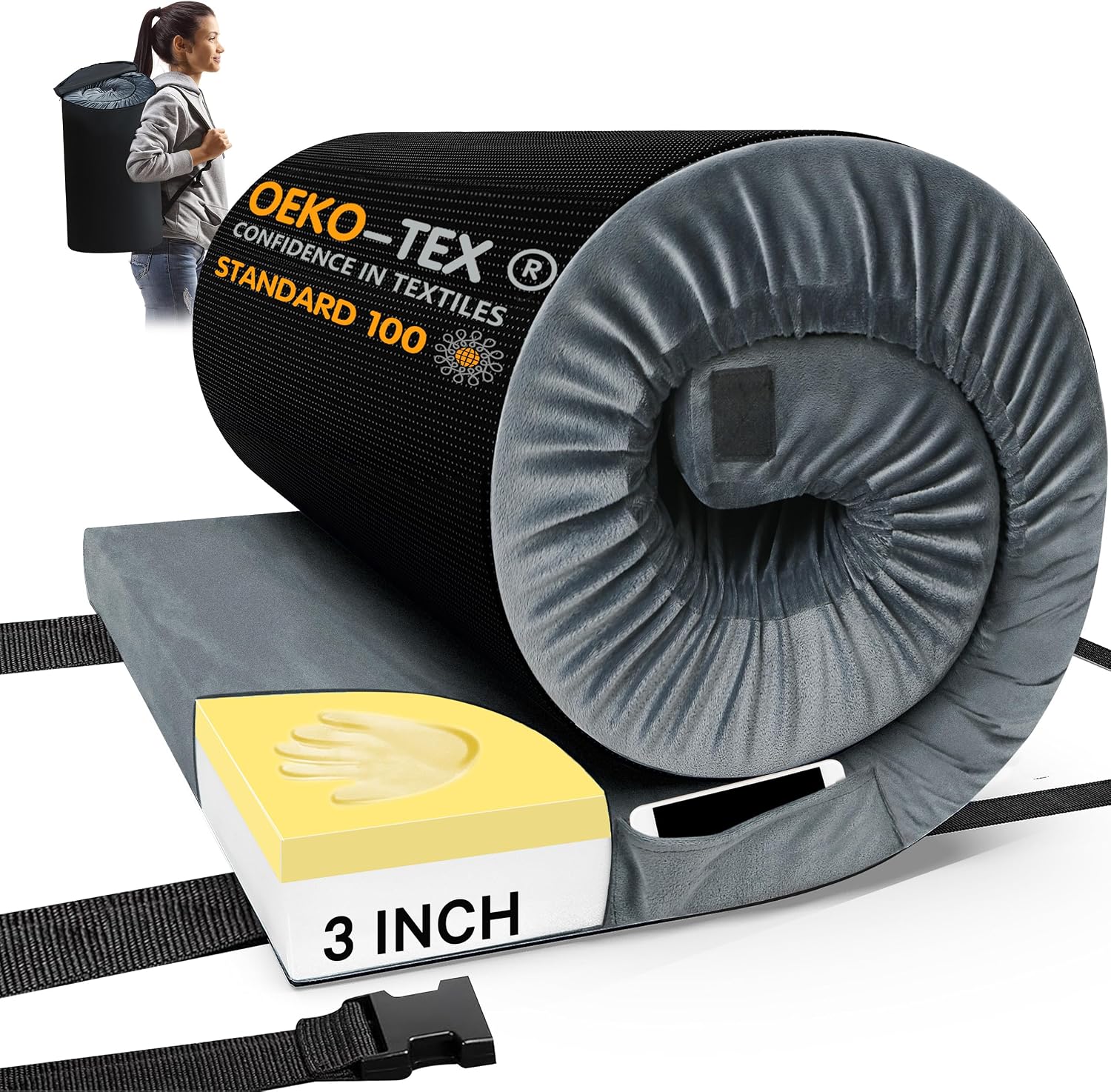
The CYMULA Memory Foam Mattress brings the comfort of home to your tent, with high-density memory foam that contours to your body for excellent pressure relief. The waterproof, non-slip bottom keeps it stable on any surface, and the roll-up design with straps makes storage a breeze. It’s a great choice for car campers who don’t mind a bit of extra weight.
However, at 7.5 lbs, it’s not ideal for backpacking, and the 3-inch thickness might not be enough for side sleepers who need more cushioning. The included travel bag is handy, but the foam takes time to fully expand after vacuum packing. If you’re driving to your campsite and value comfort over portability, this mattress is a fantastic option. Just give it a few hours to fluff up before your first night.
Pros
- Memory foam comfort
- Waterproof bottom
- Easy roll-up storage
Cons
- Heavy for backpacking
- Needs time to expand
- Not for rough terrain
Specifications
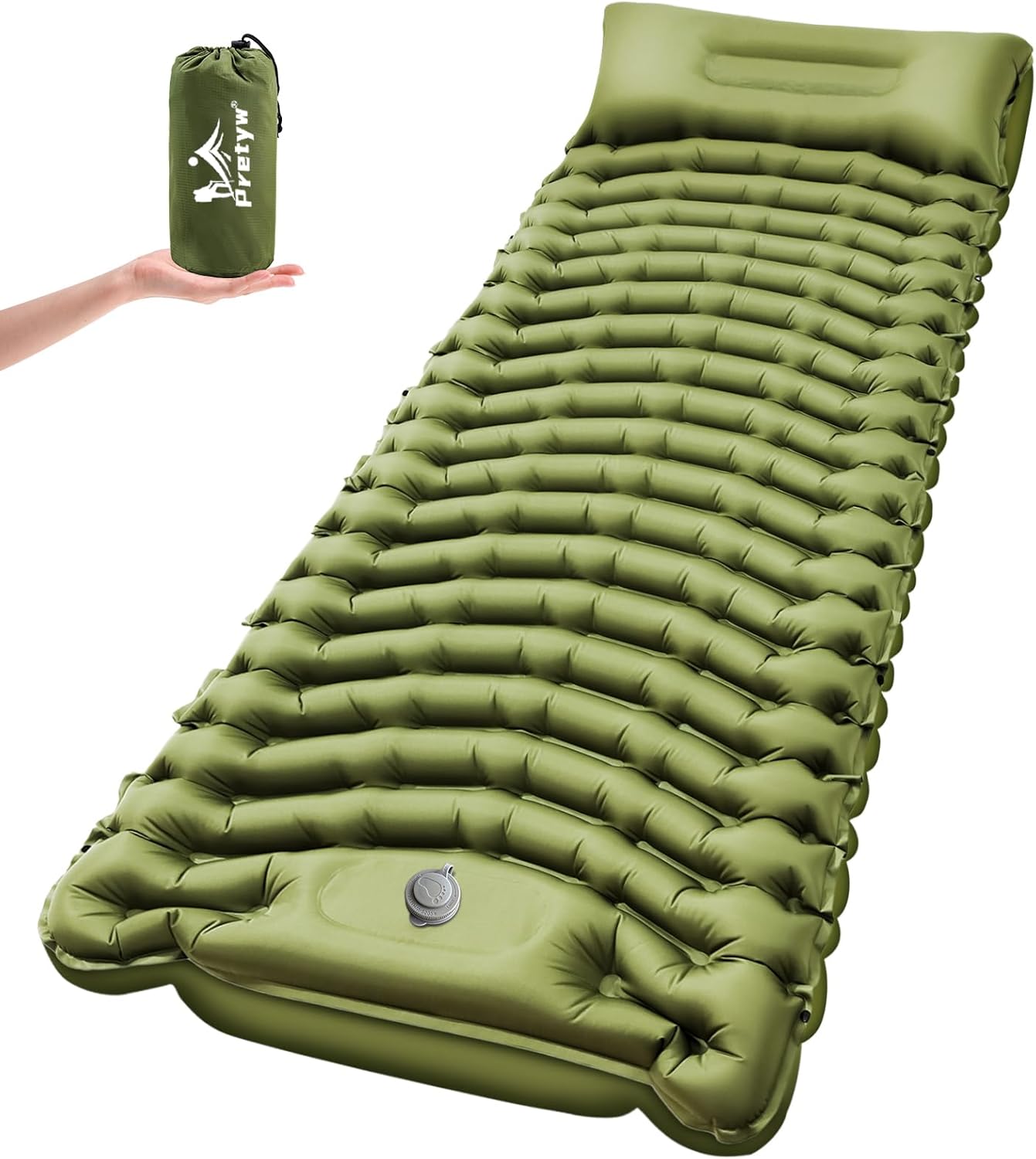
#4. Pretyw Sleeping Pad
The Pretyw Sleeping Pad delivers impressive comfort with its 4-inch thick support and ergonomic wave pattern, perfect for side and back sleepers. The built-in foot pump gets you inflated in 30-60 seconds, and deflation is instant. At just 1.8 lbs, it’s a breeze to carry, and the side buttons let you connect multiple pads for a family setup.
One caveat: the pillow is integrated and might not be adjustable, which could be a dealbreaker for some. Also, the 40D nylon is tough but not puncture-proof, so watch for sharp objects. This pad is ideal for budget-conscious campers who want a reliable, lightweight sleep system without breaking the bank. If you need extra width, consider the double version.
Pros
- Quick inflation and deflation
- Lightweight and compact
- Connectable for double bed
Cons
- Pillow not adjustable
- Not for extreme cold
- Single person only
Specifications
#5. Yuzonc Double Pad
The Yuzonc Double Sleeping Pad offers generous space for two, with 4-inch thickness that keeps you both comfortable on uneven ground. The built-in foot pump inflates in 1-3 minutes, and the water ripple design distributes pressure evenly for a restful sleep. At 3 lbs, it’s reasonably portable for a double pad.
One thing to note: the pillow is integrated and might not be adjustable, but the 770 lbs capacity ensures it can handle most campers. This pad is ideal for families or couples who want a spacious sleep surface without the bulk of a traditional air mattress. If you’re backpacking solo, you might prefer a lighter single pad, but for car camping, this is a great value.
Pros
- Spacious double size
- 4-inch thick comfort
- High weight capacity
Cons
- Heavier than single pads
- Pillow not adjustable
- Not for backpacking
Specifications
#6. HiiPeak Double Pad
The HiiPeak Double Sleeping Pad is a game-changer for couples, offering a spacious 76″x48″ surface that keeps you both off the cold ground. The 3-inch thickness provides decent cushioning, and the built-in foot pump inflates in under 3 minutes—no extra gear needed. The honeycomb air cells distribute weight evenly, reducing pressure points for a restful night.
However, at 4 lbs, it’s heavier than single pads, so it’s better for car camping than backpacking. The pillow is integrated and might not suit all sleepers, but the durable 50D polyester handles rough terrain well. If you camp with a partner and value space over ultralight weight, this pad is a solid pick. Just be prepared for a bulkier pack.
Pros
- Spacious for two people
- Durable 50D polyester
- Built-in foot pump
Cons
- Heavier than single pads
- Pillow not adjustable
- Not for backpacking
Specifications
#7. Intex Dura-Beam
The Intex Dura-Beam is a classic choice for campers on a budget, offering a 10-inch raised height that makes getting in and out easy. The Fiber-Tech beams provide decent support and resist sagging, and the 2-in-1 valve allows for quick inflation and deflation (though you’ll need a pump). It’s a reliable option for occasional camping trips.
However, at 5.3 lbs, it’s heavier than self-inflating pads, and the PVC material can be noisy and less comfortable than foam. The 300 lbs capacity is adequate for most, but the mattress may lose air over time. If you’re looking for a simple, affordable air bed for car camping or guests, this is a solid pick. Just remember to bring a pump and a patch kit for peace of mind.
Pros
- Affordable price
- 10-inch raised height
- Fiber-Tech support
Cons
- Requires separate pump
- Heavier than pads
- PVC may be noisy
Specifications
The Camp Mattress Cheat Sheet: What Your Back Will Thank You For Later
A tent floor is not a forgiving surface. The right mattress turns a restless night into actual rest, and the wrong one turns a weekend getaway into a week of stiffness. Since you’ll be hauling it, inflating it, and sleeping on it, a little forethought now saves you from a lot of tossing and turning later.
The Details That Decide Between Sweet Dreams and a Sore Back
R-Value for Insulation
This number tells you how well the mattress blocks cold ground heat loss. If you camp in anything below 60°F at night, aim for an R-value of 4 or higher. Summer-only campers can get away with less, but don’t skip this spec entirely—cold seeps up fast.
Inflated Thickness
Thicker isn’t always better, but it matters. A mattress under 2 inches inflated will let your hip dig into the ground when you sleep on your side. Look for something in the 3–4 inch range if you want real cushioning without turning your tent into a bouncy castle.
Packed Size and Weight
You’re carrying this thing from the car to the tent—or maybe a mile down a trail. Check the packed dimensions, not just the weight. A mattress that rolls to the size of a water bottle is a joy; one that needs its own duffel bag becomes a chore you’ll dread.
Inflation Method
Self-inflating pads are convenient but bulky. Pump sacks are light but take effort. Battery-powered pumps are quick but add weight and require charging. Think about how tired you’ll be at 10 PM in the dark—that’s the moment your choice matters most.
Sticking to your budget
You don’t need a $300 ultralight pad to sleep well in a tent. Mid-range options around the $60–$100 mark cover most campers’ needs. Spend extra only if you’re a side sleeper who needs serious thickness or you’re heading into freezing temps.
Pitfalls That Turn a Good Night Into a Long One
- Ignoring the repair kit — Every mattress eventually gets a pinhole. If the product doesn’t include a patch kit, buy one separately. You will not remember this until 2 AM.
- Choosing width over comfort — A wide pad feels luxurious until you realize it doesn’t fit your tent’s footprint. Measure your tent floor before you buy, not after.
- Assuming “camping” means “rugged” — Some pads are featherlight but puncture-prone. If you’re pitching on rocky ground, prioritize thicker materials over saving four ounces.
Your Next Camping Night Starts With the Right Pad
The Myxslop is the budget king for solo car campers who want minimal fuss, while the 5-inch built-in pump models are the sweet spot for backpackers craving quick setup without sacrificing comfort. Memory foam rolls win for car-campers who hate inflating anything, and the Yuzonc doubles as the plush choice for couples wanting 4 inches of separation from cold ground. The HiiPeak is the lighter, slightly firmer alternative for pairs, and the INTEX remains the ultimate glamping throne if you have AC power nearby.
Every pick above fits a realistic camping budget, so skip the analysis paralysis. Check the buttons above for today’s price—your back will thank you tomorrow morning.
Final 3 Picks: Comfort, Backpackers, and Car Camping
Ready to decide? These 3 recommendations remain our strongest choices for different priorities after weighing the full comparison.