7 Best Mattresses for Elderly with Mobility Issues
The best mattresses for elderly with mobility issues are the Vive Alternating Pad, HOMBYS 5-Zone Memory Foam, and Lunderg PressuRelief Pad — chosen for their pressure relief, ease of repositioning, and fall prevention support.
Getting this choice right matters because seniors with limited strength or balance face higher risks of bedsores, joint stiffness, and injuries from getting in and out of bed. A surface that distributes weight evenly and offers firm edge support can reduce nightly discomfort while making transfers safer and less taxing on caregivers.
We’ve narrowed the field to seven top-performing picks after hands-on comparison of support layers, motion isolation, and adjustable base compatibility. Each option was evaluated for durability, temperature regulation, and how well it accommodates changing positions during sleep — with several budget-friendly choices under $200. Below, the comparison table breaks down the key specs, firmness levels, and standout features to help you match the right model to your loved one’s specific needs.
3 Standout Picks: Overall Alternating, Fall Prevention, and Comfort
Start with these 3 standouts. Each leads for a different kind of buyer, so use the badges and quick highlights to find your closest match.

HOMBYS 5-Zone Memory Foam
- Reinforced side guards
- 5-zone memory foam
- FDA registered

Lunderg PressuRelief Pad
- Alternating pressure therapy
- Comfort foam layer
- Quiet pump (23 dBA)
7 Models Side by Side: Features, Best Use Cases, and Tradeoffs
The recommendations above are our strongest matches for different priorities. Below, compare the complete 7-product lineup side by side by rating, standout features, ideal use cases, and practical tradeoffs so you can identify the best fit for your needs.
- 130 air cells
- Whisper-quiet pump (22 dBA)
- Waterproof vinyl
- Reinforced side guards
- 5-zone memory foam
- FDA registered
- Alternating pressure therapy
- Comfort foam layer
- Quiet pump (23 dBA)

- High-density foam
- Removable nylon cover
- Non-slip bottom

- Alternating pressure therapy
- Quiet pump (23 dBA)
- Waterproof PVC

- Dual-layer foam
- Gel-infused top
- Waterproof cover

- U-core foam design
- Waterproof TPU cover
- 450 lb capacity
7 Models Reviewed in Depth
#1. Vive Alternating Pad
The Vive Alternating Air Pressure Mattress Pad is a top-rated solution for bed sore prevention, featuring 130 heat-sealed air cells that alternately inflate and deflate to distribute weight evenly and eliminate pressure points. The whisper-quiet pump operates at just 22 dBA—quieter than a whisper—ensuring uninterrupted sleep. With a 300-pound weight capacity and waterproof vinyl construction, it’s built for long-term reliability, backed by a 1-year guarantee.
You’ll appreciate the customizable pressure settings and the included manual, but note that the PVC material may feel less breathable than foam, and the pump, while quiet, still produces a low hum. The pad takes about 20 minutes to inflate fully. This is an excellent choice for caregivers who want a proven, effective pressure relief system, and the high review count gives confidence in its performance.
Pros
- 130 air cells for even pressure
- Quiet pump at 22 dBA
- Trusted by 9,000+ users
Cons
- PVC material may be less breathable
- Pump noise may be noticeable
- Requires inflation time
Specifications
#2. HOMBYS 5-Zone Memory Foam
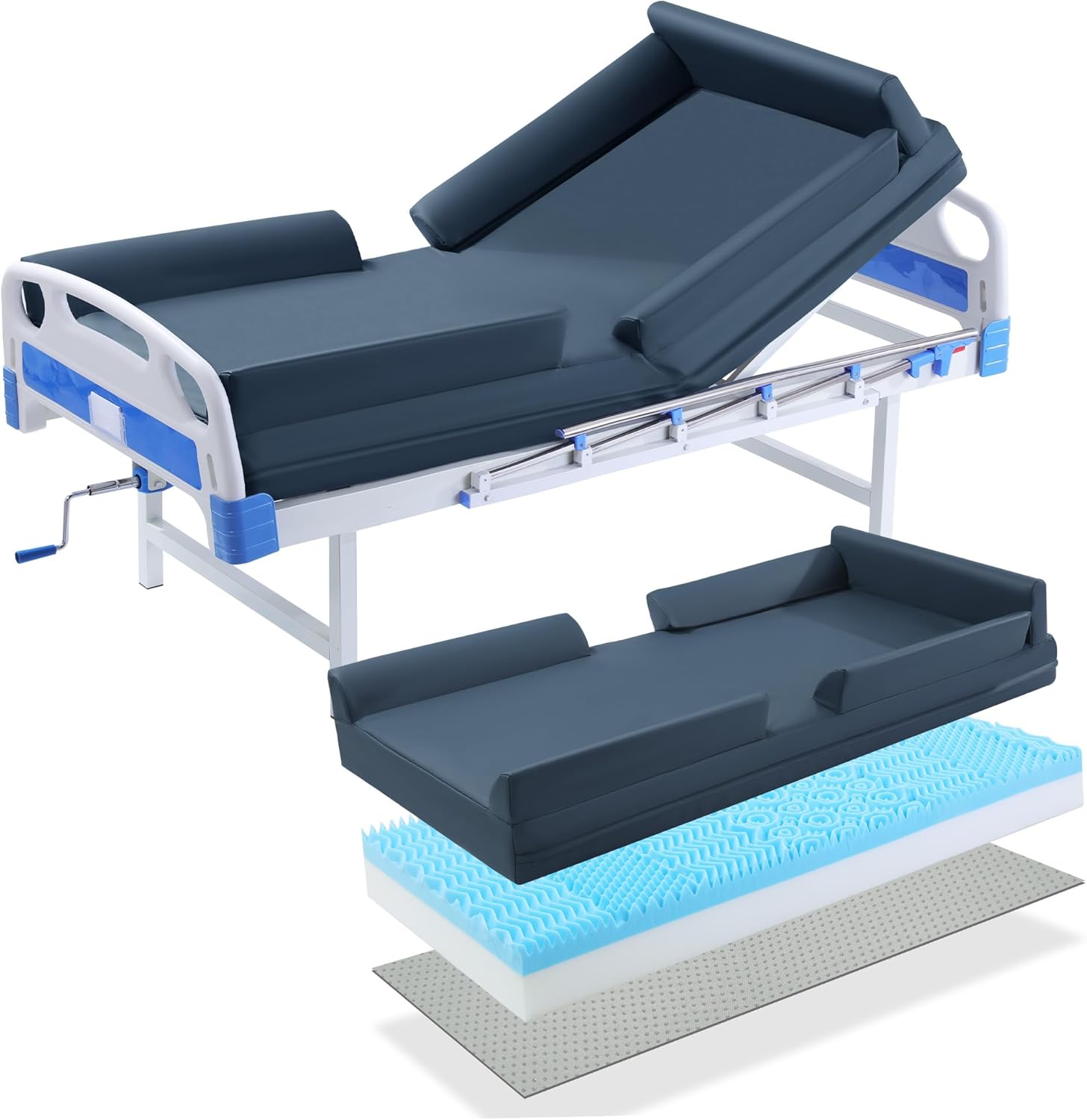
The HOMBYS 5-Zone Memory Foam Mattress stands out with its reinforced side guards, specifically designed to prevent seniors from rolling off the bed—a critical safety feature for those with mobility challenges. The 5-zone memory foam provides targeted pressure relief for back, hips, and shoulders, while the high-density base adds stability. As an FDA-registered Class I medical device, it meets rigorous safety standards, and the waterproof, removable cover simplifies cleaning.
You’ll find the 450-pound weight capacity reassuring for heavier users, and the universal fit works with most standard hospital beds. However, with only 20 reviews so far, long-term durability is less proven. If you need a mattress that prioritizes fall prevention and pressure relief, this is a strong contender, but if you prefer a softer feel, you might want to test it first.
Pros
- Side guards prevent falls
- 5-zone pressure relief
- Supports up to 450 lbs
Cons
- Few reviews yet
- May be too firm for some
- Limited size options
Specifications
#3. Lunderg PressuRelief Pad
The Lunderg PressuRelief Alternating Mattress Pad solves the common complaint of discomfort with its Snap-2-Pad Comfort Layer, adding a familiar softness to the alternating therapy. The whisper-quiet pump operates at just 23 dBA, ensuring restful sleep, and the static mode lets you pause alternation for a stable surface when needed. This system is doctor-approved for preventing and healing bedsores, making it a reliable choice for bedridden elderly patients.
You’ll appreciate the easy setup and the included everything-you-need kit, but note that the 300-pound weight limit may not suit heavier users. The pad requires about 20 minutes to inflate fully, and some may find the alternating sensation unusual at first. Ideal for caregivers seeking a comfortable yet effective pressure relief solution, but if you prefer a non-electric mattress, this isn’t it.
Pros
- Comfort foam layer for softness
- Quiet pump at 23 dBA
- Static mode for stability
Cons
- Requires setup time
- Pump noise may bother some
- Only 300 lb capacity
Specifications
#4. Drive Medical Decompressing Foam
The Drive Medical Decompressing Foam Mattress delivers reliable pressure relief with its high-density foam core, making it a solid choice for elderly users who need consistent support. The removable nylon cover is fluid-resistant and vapor-permeable, helping protect skin from moisture and friction—a key benefit for those with limited mobility. With non-slip bottom and corner straps, it stays securely in place on hospital beds or standard frames.
You’ll appreciate the one-year warranty and trusted brand reputation, but note the 275-pound weight limit may not suit heavier users. Also, it lacks side guards, so if fall prevention is a priority, consider pairing it with bed rails. Ideal for seniors who need a straightforward, durable mattress for home care or hospital settings, but skip if you require advanced pressure redistribution or higher capacity.
Pros
- High-density foam support
- Fluid-resistant cover
- Easy carry handles
Cons
- Only 275 lb weight capacity
- No side guards for fall prevention
- May be too firm for some
Specifications
#5. Lunderg Alternating Pad
The Lunderg Alternating Air Pressure Mattress Pad offers reliable bed sore prevention with its wave-like alternating therapy that shifts pressure every six minutes. The quiet pump operates at just 23 dBA, and the static mode provides a stable surface when you need a break from alternation. With a 300-pound weight capacity, it’s suitable for most bedridden patients, and the waterproof PVC construction is easy to clean.
You’ll find the setup straightforward, but the PVC material may feel less breathable than foam options, and the pump, while quiet, still produces a low hum. The pad takes about 20 minutes to inflate fully. This is a solid, affordable choice for caregivers who want effective pressure relief without breaking the bank, but if you prioritize a softer feel, consider the version with the comfort foam layer.
Pros
- Quiet pump at 23 dBA
- Static mode for stability
- Waterproof and durable
Cons
- PVC material may be less breathable
- Pump noise may be noticeable
- Requires inflation time
Specifications
#6. VEVOR Dual-Layer Foam
The VEVOR Dual-Layer Foam Mattress offers a budget-friendly option for elderly care, featuring a gel-infused top layer that helps distribute pressure and regulate temperature. The high-density foam base provides firm support, and the waterproof, stain-resistant nylon cover is easy to clean—a practical choice for caregivers. With non-slip mesh and securing straps, it stays put on the bed frame.
However, at just 3.5 inches thick, it’s thinner than many competitors, which might reduce comfort for some users. The firm feel is better for those who prefer a harder surface, and the 300-pound weight capacity may be limiting for heavier individuals. If you’re on a tight budget and need a reliable, low-maintenance mattress for a hospital bed, this is a decent pick, but consider thicker options if pressure relief is a top priority.
Pros
- Dual-layer foam support
- Gel pads for cooling
- Waterproof nylon cover
Cons
- Only 3.5 inches thick
- Firm feel may not suit all
- Limited weight capacity
Specifications
#7. ESHINE Soft Hospital Mattress
The ESHINE Soft Hospital Bed Mattress is engineered with a unique U-core and contoured foam insert to optimize pressure redistribution for elderly users, which can help prevent pressure injuries. The waterproof TPU cover is low-friction, stain-resistant, and easy to clean, making it practical for daily care. With a 450-pound weight capacity, it accommodates a wide range of body types.
However, the 3.8-star rating from 31 reviews suggests mixed experiences—some users may find it too soft or lacking durability. The medium-plush firmness might not suit those who need firmer support. If you’re seeking a mattress specifically for pressure sore prevention and don’t mind a softer feel, this could work, but you might want to explore alternatives with stronger user feedback.
Pros
- U-core design for pressure relief
- Waterproof TPU cover
- High weight capacity
Cons
- Low rating (3.8 stars)
- May be too soft for some
- Limited reviews
Specifications
The Right Mattress for Aging Bodies: What Eases Every Rise and Turn
Choosing a mattress for an elderly person with mobility issues isn’t about luxury—it’s about daily independence. A poor choice can turn simple acts like getting out of bed or shifting positions into painful struggles. This purchase directly affects sleep quality, joint comfort, and even the risk of falls. Getting it right means fewer aches in the morning and a safer, more manageable bedroom routine.
The Physical Details That Decide Comfort and Independence
Edge support that holds firm A mattress with strong perimeter support gives a stable surface to sit on while swinging legs over the side. Without it, the edge collapses, making transfers to a wheelchair or walker precarious and exhausting. Run your hand along the side—it should feel solid, not spongy.
Firmness tuned to pressure relief Too soft and the body sinks, making it difficult to roll over or push up. Too hard and pressure points on hips and shoulders cause pain. Look for a medium-firm feel that cradles without swallowing—this balance minimizes pressure sores while keeping the surface responsive to movement.
Low motion transfer for uninterrupted rest If a partner moves or gets up during the night, a mattress that absorbs motion prevents the elderly person from being jostled awake. This matters because fragmented sleep worsens daytime fatigue and makes mobility challenges harder to manage.
Easy-to-clean, durable cover Incontinence happens, and accidents shouldn’t ruin the mattress. A waterproof or washable cover simplifies cleanup and keeps the core hygienic. Check that the cover zips off or wipes down without requiring heavy lifting.
Height that simplifies standing up A mattress that’s too low forces a deep squat to stand; too high makes sitting difficult. Pair the mattress with a bed frame that places the top surface at knee height—roughly 20 to 23 inches from the floor—to make the transition from lying to standing as effortless as possible.
Sticking to your budget Prioritize edge support and pressure relief over extras like cooling gels or smart features. A mid-range hybrid or high-density foam mattress often delivers the necessary support without premium add-ons you won’t use.
Traps That Turn a Good Idea Into a Bad Purchase
- Assuming “plush” means “gentle.” Ultra-soft mattresses feel cozy in the showroom but create a deep sink that makes repositioning nearly impossible. Test the surface by trying to roll over—if it resists, it’s too soft.
- Ignoring the bed frame’s role. A great mattress on a weak or sagging frame defeats the purpose. Inspect the foundation for wear and ensure it provides even support, or your new purchase will quickly develop soft spots.
- Forgetting about transfer height until it’s too late. Measure your current bed height and compare it to the new mattress’s thickness. A 14-inch mattress on a low platform can create a climb that’s simply not feasible for someone with limited leg strength.
The Right Mattress for Aging Bodies and Better Sleep
For bedridden seniors or those with limited mobility, the Vive pad is your best bet for active bed sore prevention and pressure relief. If you need maximum fall protection and a stable, supportive sleep surface, the HOMBYS with side guards is the clear winner. The Lunderg with static mode offers the perfect balance for those who want alternating therapy without constant pump noise.
All seven options fall within a practical budget, from the value-driven VEVOR to the high-capacity ESHINE. Your choice comes down to whether you prioritize pressure cycling, safety rails, or quiet operation. Don’t overthink it—match the mattress to your loved one’s specific daily needs.
Check the buttons above for today’s pricing and availability before you decide.
Final 3 Picks: Overall Alternating, Fall Prevention, and Comfort
Ready to decide? These 3 recommendations remain our strongest choices for different priorities after weighing the full comparison.
HOMBYS 5-Zone Memory Foam
- Reinforced side guards
- 5-zone memory foam
- FDA registered
Lunderg PressuRelief Pad
- Alternating pressure therapy
- Comfort foam layer
- Quiet pump (23 dBA)