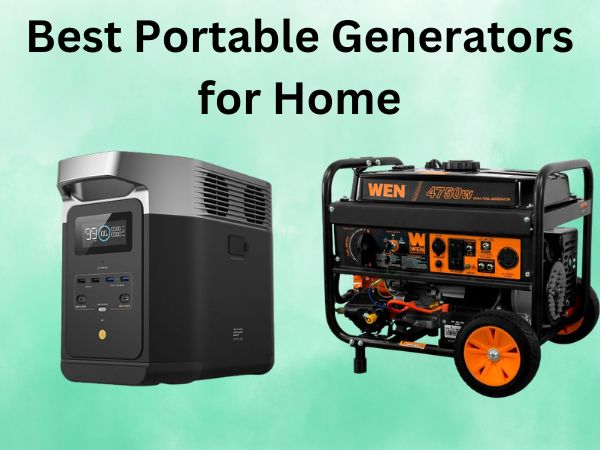
10 Best Portable Generators for Home Of 2025
Have you ever experienced the frustration of a sudden power outage? Whether it’s a storm, planned maintenance, or unexpected grid failure, losing electricity can disrupt your entire household. That’s where portable generators come in as your reliable power backup solution. These versatile machines have evolved significantly, offering cleaner energy, quieter operation, and more fuel options than ever before.
In today’s world, a portable generator isn’t just a luxury—it’s a necessity for maintaining your family’s comfort and safety during emergencies. From keeping your refrigerator running to powering essential medical equipment, the right generator can make all the difference when the lights go out.
Our Top 3 Picks


Quick Selection Guide
1. Choose EcoFlow DELTA 2 if: you want zero emissions, ultra-fast charging (0-80% in 50 minutes), solar compatibility, and silent operation—perfect for indoor backup, frequent use, apartment living, and environmentally conscious users needing reliable 1800W power without noise or fumes.
2. Choose WEN DF480iX if: you need whisper-quiet operation with dual-fuel flexibility, clean inverter power for sensitive electronics, and robust CO safety features—ideal for suburban neighborhoods, RV enthusiasts, and families requiring 4000W backup power without disturbing neighbors.
3. Choose WEN DF475T if: you’re seeking the best value dual-fuel generator with 120V/240V output for transfer switch installation, offering extended 11-hour runtime and reliable home backup—perfect for budget-conscious homeowners wanting whole-house emergency power capability.
4. Choose Westinghouse 14500 if: you demand maximum power with tri-fuel versatility (gas/propane/natural gas), remote start convenience, and the capacity to power entire large homes including air conditioning—ideal for comprehensive whole-house backup with 19-hour runtime and professional installation.

5. Choose AFERIY P310 if: you want massive 3840Wh capacity with lightning-fast 2.5-hour charging, expandable power up to 11.5kWh, and 30% tax credit eligibility—perfect for serious off-grid living, extended camping trips, and users seeking premium battery backup with solar capability.

6. Choose Honda EU2200i if: you prioritize legendary reliability, exceptionally quiet operation, smartphone app control, and premium build quality—ideal for discerning users, RV owners, tailgating enthusiasts, and anyone wanting the best compact 2200W inverter generator money can buy.
7. Choose EBL 1000W if: you need the lightest option at just 22 pounds with wireless charging capability and 999Wh capacity—perfect for frequent travelers, camping enthusiasts, outdoor photographers, and anyone requiring highly portable, emission-free power for moderate device charging needs.

8. Choose Oxseryn 4000W (Model 1) if: you’re looking for excellent budget performance with 14-hour runtime, pure sine wave output, and RV-ready outlets—ideal for cost-conscious buyers needing reliable emergency backup, construction sites, and outdoor events without breaking the bank.

9. Choose Oxseryn 4000W ECO Mode if: you want extended fuel efficiency with intelligent ECO mode technology and easy portability at 56 pounds—perfect for users prioritizing maximum runtime, minimal refueling, and lightweight design for camping, tailgating, and moderate home backup.

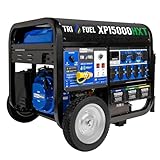
10. Choose DuroMax XP15000HXT if: you need the ultimate powerhouse with 15,000 watts, tri-fuel capability, remote start, and whole-house backup including central air conditioning—ideal for large properties, serious preppers, and homeowners demanding professional-grade power with no compromises.
Top 10 Best Portable Generators for Home
EF ECOFLOW Portable Power Station DELTA 2 – Best Solar-Ready Power Station
The EcoFlow DELTA 2 represents the cutting edge of portable power station technology with its impressive 1024Wh LiFePO4 battery capacity and lightning-fast charging capabilities. This solar generator charges from zero to eighty percent in just fifty minutes using AC input, making it incredibly convenient for emergency situations. The unit delivers 1800 watts of continuous AC output with fifteen different outlets, powering up to ninety percent of household appliances without producing fumes or noise. Its expandable capacity allows users to add extra batteries reaching up to 3kWh total power. The sophisticated battery management system ensures safety while the LFP battery chemistry provides over 3000 charge cycles for approximately ten years of reliable service before capacity reduction.
Pros
- Ultra-fast charging (0-80% in 50 minutes)
- Expandable capacity up to 3kWh
- Clean, silent operation
- 15 versatile outlets
- Long-lasting LiFePO4 battery (3000+ cycles)
- Solar charging capable
- Compact and portable at 27 lbs
Cons
- Higher upfront cost
- Solar panels sold separately
- Limited to 1800W continuous output
- Requires recharging (no continuous fuel-based runtime)
2. WEN Quiet Dual Fuel Inverter Generator (DF480iX) – Best for Quiet Operation
The WEN DF480iX combines power and convenience with its dual-fuel capability running on both gasoline and propane. This inverter generator produces 4800 surge watts on gasoline and 4320 on propane, with 4000 running watts on both fuels. The unit operates remarkably quietly, comparable to normal conversation levels, making it neighborhood-friendly during extended outages. It features the WEN Watchdog CO Shutdown Sensor for family safety, automatically turning off when dangerous carbon monoxide levels are detected. The electric start system, four 120V receptacles, TT-30R RV receptacle, and dual USB ports provide versatile power options. Its fuel shut-off feature helps minimize maintenance while onboard wheels and telescoping handle ensure easy portability despite its 78.5-pound weight.
Pros
- Extremely quiet operation
- Dual-fuel flexibility (gas/propane)
- Clean power for electronics
- CO safety shutdown sensor
- Electric start with fuel shut-off
- RV-ready with TT-30R outlet
- Three-year warranty
Cons
- Heavier at 78.5 lbs
- Higher price point
- Requires regular maintenance
- Outdoor use only due to emissions
3. WEN Dual Fuel Portable Generator (DF475T) – Best Value Dual-Fuel Option
The WEN DF475T delivers exceptional value as a dual-fuel generator with both 120V and 240V output capabilities, making it perfect for transfer switch installations and emergency home backup. This generator produces 4750 surge watts and 3800 running watts on gasoline, while propane delivers 4350 surge and 3500 running watts. The powerful 224cc four-stroke OHV engine starts easily with electric ignition, eliminating frustrating pull-cord struggles during emergencies. Its four-gallon tank provides up to eleven hours of half-load runtime, ensuring extended operation during prolonged outages. The unit includes two 120V GFCI outlets, a 120V/240V NEMA 30A twist lock perfect for whole-home applications, and a 12V DC outlet. The included wheel kit and handle make transportation manageable despite its substantial 105.8-pound weight.
Pros
- Dual-fuel operation (gas/propane)
- 120V/240V output for transfer switches
- Electric start convenience
- 11-hour runtime at half load
- Includes wheel kit
- 2-year warranty
- Excellent price-to-power ratio
Cons
- Heavy at 105.8 lbs
- Louder than inverter models
- Requires outdoor placement
- Basic features compared to premium models
4. Westinghouse 14500 Peak Watt Tri-Fuel Generator – Best for Whole Home Backup
The Westinghouse 14500-watt tri-fuel generator stands as a powerhouse for comprehensive home backup, offering unmatched fuel flexibility with gasoline, propane, and natural gas compatibility. This heavy-duty unit produces 14,500 peak watts and 11,500 running watts on gasoline, with slightly lower outputs on propane and natural gas. The robust 550cc four-stroke OHV Westinghouse engine features durable cast iron sleeve construction for longevity. With its massive 9.5-gallon fuel tank, it runs up to nineteen hours, while propane operation provides approximately seven hours on a 20-pound tank. The generator incorporates automatic voltage regulation producing low THD power safe for sensitive electronics. Remote electric start via key fob adds convenience, while built-in CO sensor, hour meter, and fuel gauge provide essential monitoring. This EPA-compliant unit successfully powers entire homes including four-thousand-square-foot residences.
Pros
- Tri-fuel capability (gas/propane/natural gas)
- Massive 14,500 peak watts
- Remote electric start
- 19-hour runtime on gasoline
- Low THD for electronics
- Transfer switch ready
- 3-year warranty
- CO sensor included
Cons
- Extremely heavy at 230 lbs
- High initial investment
- Loud operation
- Requires professional installation for natural gas
5. AFERIY 3840Wh Portable Power Station – Best High-Capacity Power Station
The AFERIY P310 portable power station impresses with its massive 3840Wh capacity and powerful 3600W AC output, rivaling traditional fuel-powered generators without emissions or noise. This LiFePO4 battery-powered unit features remarkably fast charging, reaching full capacity in just 2.5 hours via AC input or with five 400W solar panels. The battery management system provides six levels of safety protection while the premium LiFePO4 chemistry ensures over 3500 charge cycles representing approximately ten years of service life. With fifteen output ports including five AC outlets, four USB-C ports, two USB-A ports, and wireless charging capability, it simultaneously powers multiple devices. The unit qualifies for thirty percent residential clean energy tax credit, potentially reducing effective cost. Despite its substantial 104.7-pound weight and 3840Wh capacity, it provides reliable backup for home emergencies and outdoor activities with expandable power up to 11.5kWh.
Pros
- Massive 3840Wh capacity
- Ultra-fast 2.5-hour charging
- 15 output ports with wireless charging
- 3500+ cycle lifespan
- Expandable to 11.5kWh
- 7-year warranty
- 30% tax credit eligible
- Silent operation
Cons
- Very heavy at 104.7 lbs
- Premium pricing
- Some reports of display issues
- Solar panels sold separately
6. Honda EU2200ITAN – Best Premium Compact Generator
The Honda EU2200i represents premium quality in compact portable generators, delivering 2200 watts with legendary Honda reliability and remarkably quiet operation. This inverter generator operates so quietly that users can barely hear it inside their RVs or homes, requiring minimal volume adjustment for television viewing. The advanced inverter technology produces clean power safe for sensitive electronics while the eco-mode throttles engine speed based on load, extending runtime up to eight hours. The innovative smartphone app allows convenient remote shutdown, eliminating nighttime trips outside to manually turn off the unit. At 51 pounds with built-in handles, it’s surprisingly portable for its power output. The unit starts reliably on first pull and includes CO-Minder safety technology. Though carrying a premium price, the EU2200i delivers exceptional build quality, fuel efficiency, and whisper-quiet performance that justifies the investment for discerning users.
Pros
- Exceptionally quiet operation
- iPhone app for remote control
- Eco-mode for extended runtime
- Clean inverter power
- Lightweight at 51 lbs
- Legendary Honda reliability
- CO-Minder safety feature
- Easy first-pull start
Cons
- Higher price point
- Limited 2200W output
- Gasoline only
- May require parallel kit for higher power needs
7. EBL Portable Power Station 1000W – Best Lightweight Power Station
The EBL 1000W portable power station combines impressive 999Wh capacity with remarkably lightweight design at just 22 pounds, making it forty-three percent lighter than comparable models. This lithium battery power station delivers 1000W continuous output with 2000W peak capacity, sufficient for powering laptops up to sixteen charges, mini refrigerators for twenty hours, or projectors for nine hours. The versatile nine-port design includes two 500W AC outlets, USB-C PD port, three USB-A ports, DC ports, car socket, and innovative 10W wireless charging pad—a feature found in only five percent of power stations. Triple charging options provide flexibility with solar panel charging in six to eight hours, car outlet charging in eight to ten hours, or AC wall charging in six to nine hours. The ergonomic folding handle design and space-saving profile make transportation effortless. High-quality battery construction supports over 3000 life cycles with fifteen-layer safety system ensuring reliable, worry-free operation.
Pros
- Extremely lightweight at 22 lbs
- Wireless charging capability
- 9 versatile output ports
- Triple charging options
- 3000+ cycle lifespan
- Space-saving design
- Gasoline-free operation
- Ergonomic folding handle
Cons
- Limited to 1000W continuous output
- Requires vehicle awareness when car charging
- Shorter runtime than larger stations
- Solar panels not included
8. Oxseryn 4000W Inverter Generator – Best Budget Gas Generator
The Oxseryn 4000W inverter generator delivers impressive value with 4000 peak watts and 3200 running watts, providing reliable power for RV camping, emergency home backup, and power tools. This gas-powered unit features advanced inverter technology producing clean, stable power with low THD, making it safe for sensitive electronics including laptops, phones, and cameras. The generous two-gallon fuel tank with built-in fuel gauge provides up to fourteen hours runtime at twenty-five percent load, ensuring long-lasting power during storms or blackouts. Operating at just 72 decibels from twenty-three feet away, it’s relatively quiet for an open-frame design. The sturdy construction withstands tough environments while weighing only 59.8 pounds, making transportation manageable. Multiple output options include 12V DC port, two 120V AC ports, and 30A RV port. Users particularly appreciate its pure sine wave inverter performance and excellent running cost efficiency, with one customer successfully using it through four weeks without power following Hurricane Melissa.
Pros
- Excellent value for money
- 14-hour runtime at 25% load
- Low THD for electronics
- Built-in fuel gauge
- RV-ready 30A outlet
- Relatively quiet at 72 dBA
- Sturdy portable design
- Pure sine wave output
Cons
- Gasoline smell from factory testing
- Heavier than inverter models
- Louder than premium inverters
- Requires outdoor use
9. Oxseryn 4000W Generator with ECO Mode – Best for Extended Runtime
The Oxseryn 4000-watt generator with ECO mode technology maximizes fuel efficiency while delivering reliable 4000 peak watts and 3200 running watts from its 208cc four-stroke OHV engine. This gas-powered unit excels in extended runtime scenarios, operating up to fourteen hours at twenty-five percent load thanks to its intelligent ECO mode that adjusts engine speed based on power demand. The two-gallon fuel tank includes convenient fuel gauge for at-a-glance monitoring, preventing unexpected shutdowns. Multiple output options accommodate various needs with two 120V AC ports, 12V DC port, and dedicated RV port. At 56 pounds, it’s surprisingly lightweight and portable despite its power output. The generator operates under 72 decibels from twenty-three feet away, making it suitable for residential use during power outages. Users report easy one or two-pull starting and efficient operation, though opinions vary on noise levels with some finding it very quiet while others note moderate volume.
Pros
- ECO mode for fuel efficiency
- 14-hour maximum runtime
- Lightweight at 56 lbs
- Easy one-pull starting
- Built-in fuel gauge
- RV-ready output
- Includes tools and funnel
- Good value proposition
Cons
- Mixed reviews on noise level
- Gas smell from factory testing
- Requires skinny funnel for oil changes
- Basic feature set
10. DuroMax XP15000HXT Tri-Fuel Generator – Best Heavy-Duty Option
The DuroMax XP15000HXT tri-fuel generator represents ultimate power and flexibility with its massive 15,000-watt output capability and three fuel options including gasoline, propane, and natural gas. This heavy-duty powerhouse features a robust 500cc OHV DuroMax engine designed for maximum power delivery, easily handling whole-house air conditioning, water heaters, and electric stoves simultaneously. The advanced computer interface with large LED display provides real-time monitoring of gas gauge, load gauge, voltage, frequency, and runtime at a glance. Convenient push-button and remote start capabilities eliminate manual starting hassles during emergencies. The fully-loaded power panel offers extensive outlet variety including four 120V 20A GFCI outlets, twist locks, and heavy-duty 50-amp outlet perfect for transfer switch integration. Users report smooth, strong operation running continuously for fifteen hours plus, effortlessly managing whole-house power demands. While the electric start occasionally requires multiple attempts after sitting idle on propane, the automatic electric choke system intelligently adjusts during startup.
Pros
- Massive 15,000-watt capacity
- Tri-fuel flexibility
- Remote and push-button start
- Transfer switch ready (50A outlet)
- Advanced LED display
- CO Alert safety system
- Automatic electric choke
- Powers entire homes
Cons
- Extremely heavy and bulky
- Very loud open-frame design
- Occasional starting issues on propane
- Professional installation recommended
- Premium price point
How to Choose the Right Generator
Selecting the perfect generator requires honest assessment of your actual needs. Start by creating a list of essential appliances you must keep running during outages. Do you just need the refrigerator and a few lights, or must you power air conditioning and well pumps too?
Calculate Your Power Needs
Add up the running watts of your must-have appliances, then factor in the highest starting wattage. This prevents buying inadequate power capacity. Remember, it’s better to have excess capacity than struggle with an undersized unit.
Consider Your Fuel Availability
What fuel sources are readily available in your area? If you have natural gas service, a tri-fuel generator offers ultimate flexibility. Living rurally with propane? Dual-fuel models make perfect sense. Gasoline is universally available but requires proper storage and rotation.
Evaluate Noise Restrictions
Check local ordinances and consider your neighbors. Inverter generators and power stations operate much quieter than conventional models, making them ideal for suburban settings where noise complaints might arise.
Safety Tips for Generator Use
Never compromise on generator safety—improper use can be deadly. Always operate fuel-powered generators outdoors, at least twenty feet from your home, with exhaust directed away from windows and doors. Carbon monoxide poisoning kills silently and quickly.
Proper Grounding and Connections
Ground your generator properly to prevent electrical shock. Never backfeed power into your home’s electrical panel without a proper transfer switch—this can electrocute utility workers and damage your generator.
Fuel Storage Safety
Store gasoline in approved containers away from living spaces. Never refuel a hot generator—allow cooling first to prevent fire hazards. Keep a fire extinguisher nearby and ensure adequate ventilation.
Maintenance Guidelines
Your generator is only reliable if properly maintained. Think of it like your car—regular oil changes and checkups prevent breakdowns when you need it most.
Regular Testing Schedule
Run your generator monthly under load for at least thirty minutes. This prevents fuel degradation, keeps parts lubricated, and ensures it’ll start during emergencies. Mark your calendar—this isn’t optional.
Seasonal Preparation
Before storm season, inspect all connections, change oil if needed, test the battery, and ensure you have adequate fuel supplies. After extended storage, perform thorough inspection before operation.
Frequently Asked Questions (FAQs)
Q1: How long can a portable generator run continuously?
Most portable generators can run between 8-24 hours continuously depending on fuel tank size, load, and whether they have eco-mode features. Gas-powered models typically run 8-12 hours on a full tank at 50% load, while propane and natural gas models may run longer. Power stations require recharging but involve no refueling downtime. Always allow generators to cool periodically and never exceed manufacturer recommendations for continuous operation.
Q2: Can I run my portable generator in the rain?
While most generators can handle light rain, you should never operate them in heavy downpours or flooding conditions without proper weather protection. Use a generator tent or canopy specifically designed for this purpose, ensuring adequate ventilation to prevent carbon monoxide buildup and engine overheating. Never cover generators with tarps or blankets as this blocks critical airflow. Always keep the generator on dry, level ground away from puddles.
Q3: What size generator do I need to power my entire house?
Most homes require between 5,000-7,500 watts for essential circuits (refrigerator, lights, furnace, well pump) or 10,000-15,000 watts for whole-house backup including air conditioning. Calculate your needs by adding running watts of all desired appliances plus the highest starting wattage. A licensed electrician can perform a load calculation and recommend the appropriate size. Remember that larger isn’t always better—oversized generators waste fuel and cost more upfront.
Q4: Are portable power stations better than gas generators?
Each type excels in different scenarios. Portable power stations offer silent operation, zero emissions, indoor use capability, and solar charging options, making them perfect for frequent use, apartments, and environmentally conscious users. However, gas generators provide longer continuous runtime, higher power output, and quick refueling, making them superior for extended outages and high-wattage demands. Your choice depends on your specific needs, living situation, and how you’ll primarily use the equipment.
Q5: How often should I maintain my portable generator?
Perform basic maintenance every 50-100 hours of operation or at least annually, whichever comes first. This includes changing oil, replacing air filters, checking spark plugs, and inspecting fuel systems. Run your generator monthly for 20-30 minutes under load to prevent fuel degradation and keep components lubricated. Before storm season, conduct thorough inspection including battery testing and fuel system cleaning. Following manufacturer maintenance schedules extends generator lifespan significantly and ensures reliable emergency operation.