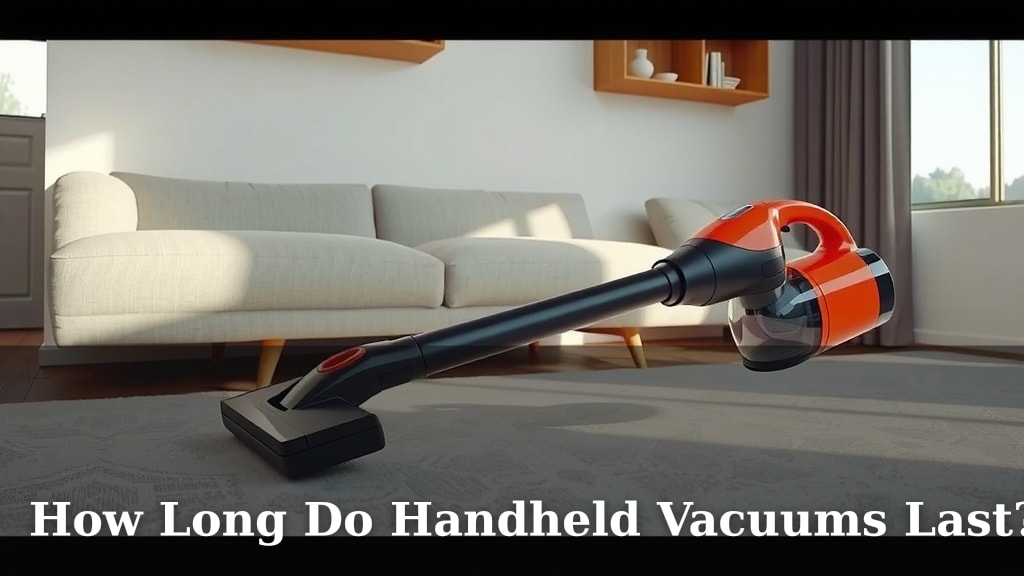
How Long Do Handheld Vacuums Last?
When wondering how long handheld vacuums last, the answer is typically between 3 to 7 years. This lifespan depends heavily on the model you choose and how well you care for the device. Some high-quality units might even last a decade with proper maintenance, while cheaper ones may struggle to reach two years.
Several factors influence your handheld vacuum’s longevity. The battery type and usage frequency play a big role, as do the cleaning habits you maintain. Understanding these elements can help you get the most out of your compact cleaning companion. We’ve researched various models and user experiences to give you the clearest picture.
TL;DR:
- Handheld vacuums generally last 3-7 years.
- Battery type, usage, and maintenance are key.
- High-end models can last longer.
- Proper care extends lifespan.
Let’s get into the details of what affects your handheld vacuum’s life expectancy and how you can maximize it.
Understanding Your Handheld Vacuum’s Lifespan
So, how long can you expect your trusty handheld vacuum to keep cleaning? You’re likely looking at a general lifespan of about 3 to 7 years. Of course, this isn’t set in stone! Think of it like a good pair of shoes; some last ages with care, while others wear out too quickly. Your handheld vacuum is no different. Several things play a part in how long it will be your go-to cleaning tool.
Factors That Dictate How Long Handheld Vacuums Last
Several key elements influence the lifespan of your compact cleaner. These aren’t just random variables; they are things you can often control or at least influence with your choices. Let’s break down what really matters.
Battery Type: The Powerhouse’s Potential
The heart of your cordless handheld vacuum is its battery. We found that battery technology significantly impacts how long the vacuum will last. Older Nickel-Cadmium (NiCad) batteries tend to degrade faster. They also suffer from “memory effect,” meaning they lose capacity if not fully discharged before recharging.
Modern handhelds often use Lithium-ion (Li-ion) batteries. These are generally superior. They hold a charge longer and don’t have the same memory effect issues. A Li-ion battery can typically handle more charge cycles before its capacity noticeably drops. We found that the quality of the Li-ion battery also matters. Higher-end models often use more robust battery cells.
Usage Frequency and Intensity: How Often You Clean
Just like your car, the more you use your vacuum, the more wear and tear it experiences. A vacuum used daily for big messes will likely have a shorter lifespan than one used only a few times a month for small spills. Heavy-duty use, like vacuuming up pet hair from multiple rooms every day, puts more strain on the motor and battery.
Consider your cleaning needs. If you only need it for quick cleanups on the couch or in the car, it will probably last longer. If you’re tackling larger, more frequent cleaning tasks, you might need to manage your expectations regarding its eventual lifespan.
Build Quality and Brand Reputation: Investing in Durability
Not all handheld vacuums are created equal. We found that the materials used and the overall construction quality play a huge role. Cheaper models might use flimsier plastics and less robust internal components. These are more prone to breaking, both physically and functionally.
Reputable brands often invest more in engineering and quality control. They aim for durability. While these might come with a higher upfront cost, they often deliver a longer service life. Think of it as buying a sturdy tool versus a disposable one. Many experts suggest that investing a bit more upfront can save you money and hassle in the long run.
Maintenance: The Secret to Longevity
This is perhaps the most critical factor within your control. Regular maintenance can significantly extend the life of your handheld vacuum. It ensures the machine runs efficiently and reduces strain on its components.
Keeping the Filters Clean: Breathing Easy
Clogged filters are a major culprit behind reduced performance and motor strain. We found that regularly cleaning or replacing your vacuum’s filters is essential. Most handheld vacuums have washable filters. Simply rinse them under water and let them dry completely before putting them back.
Refer to your vacuum’s manual for specific instructions. Some filters need replacement every 3-6 months, depending on usage. A clean filter allows for better airflow, which means the motor doesn’t have to work as hard. This reduces heat buildup and prolongs motor life.
Emptying the Dustbin: A Simple Step
Don’t let the dustbin overflow. A full dustbin restricts airflow, much like a clogged filter. We found that emptying it after each use, or when it’s about two-thirds full, is a good habit. It’s a quick task that makes a big difference.
Checking for Blockages: Keeping it Clear
Periodically check the nozzle, hose (if applicable), and internal pathways for any debris that might be causing a blockage. Blockages force the motor to work harder, leading to overheating and premature wear. Gently remove any obstructions you find.
Storage Conditions: Where You Keep It Matters
How you store your handheld vacuum can also impact its lifespan. Extreme temperatures can degrade battery performance and damage plastic components. It’s best to store your vacuum in a cool, dry place, away from direct sunlight.
Avoid leaving it in a hot car or a freezing garage. Most manufacturers recommend storing it indoors at room temperature. This simple practice helps maintain the integrity of both the battery and the vacuum’s body.
Recognizing Signs of Wear and Tear
Even with the best care, your vacuum will eventually show signs of age. Paying attention to these can help you manage expectations or decide when it might be time for a replacement.
Decreased Suction Power
This is often the first sign. If your vacuum isn’t picking up dirt as effectively as it used to, even after cleaning the filters and checking for blockages, it could indicate a weakening motor or battery.
Reduced Battery Life
Does the battery die much faster than it used to? If you used to get 20 minutes of runtime and now only get 5, the battery is likely nearing the end of its life. For many, this is the most common reason for replacement.
Strange Noises or Smells
If your vacuum starts making unusual grinding noises or emitting a burning smell, it’s a sign something is seriously wrong, likely with the motor. These symptoms often mean the unit is on its way out.
Maximizing Your Handheld Vacuum’s Life: A Quick Checklist
Want to get the most out of your cleaning buddy? Follow these simple steps:
- Keep your filters clean and dry.
- Empty the dustbin regularly.
- Check for and clear any blockages.
- Store it in a cool, dry place.
- Avoid overcharging the battery (for older NiCad models).
- Use it for its intended purpose – quick cleanups!
Conclusion
You’ve learned that your handheld vacuum’s lifespan usually falls between 3 to 7 years. This isn’t set in stone, though. The battery type, how often you use it, and the quality of its build all play a big part. Most importantly, consistent, simple maintenance is your best friend for extending its life. Keeping filters clean and the dustbin empty are easy wins. Pay attention to signs of wear like fading suction or a rapidly draining battery. By following these tips, you can ensure your compact cleaning companion serves you well for as long as possible. Take these steps today to give your vacuum its best chance at a long and useful life.
Frequently Asked Questions
Can I make my handheld vacuum battery last longer?
Yes, you can! For modern Li-ion batteries, try to avoid completely draining them regularly and don’t store it fully charged for extended periods. For older NiCad batteries, fully discharging and recharging cycles can help maintain capacity. Proper storage in moderate temperatures also aids battery health.
What if my handheld vacuum’s suction power decreases?
A drop in suction is often the first sign of an issue. Before assuming the worst, thoroughly clean or replace the filters, and check the dustbin and pathways for any blockages. If these are clear and suction is still weak, it might indicate a weakening motor or battery nearing the end of its life.
Is it worth buying a more expensive handheld vacuum for longevity?
Generally, yes. Higher-end models from reputable brands often use better materials and more durable components. While the initial cost is higher, they tend to last longer and perform better over time, potentially saving you money on replacements and offering a better cleaning experience.
How often should I clean the filters in my handheld vacuum?
This depends on your usage, but we found that cleaning them at least once a month is a good practice for most users. If you vacuum frequently or deal with a lot of dust and pet hair, you may need to clean them more often, perhaps even weekly, to maintain optimal performance.
Can I repair a handheld vacuum that’s stopped working?
For minor issues like a clogged tube or a dirty filter, yes, you can often fix it yourself. However, if the motor fails or the battery completely dies, repairs can be costly and may not be cost-effective compared to buying a new unit, especially for less expensive models.