
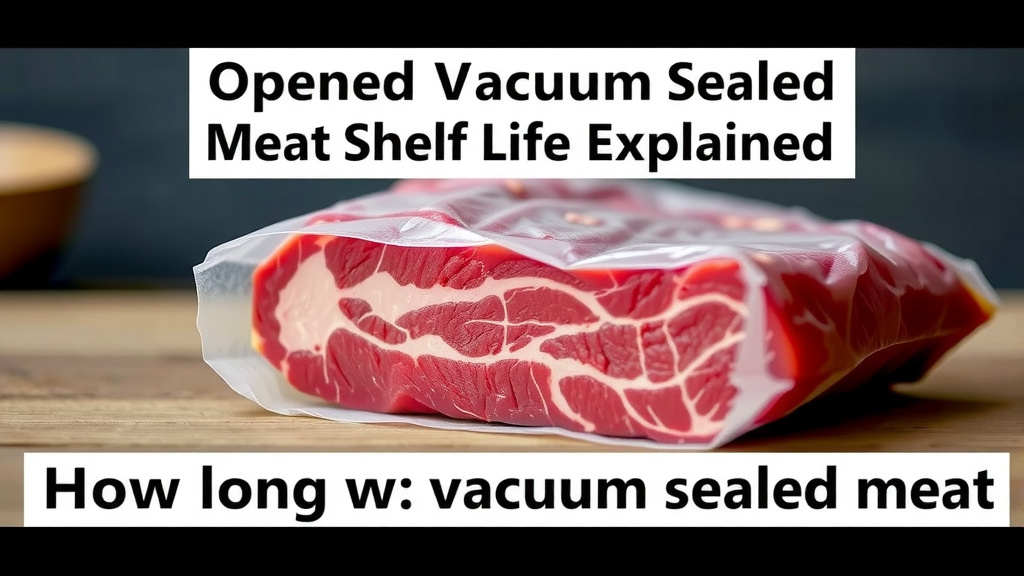
Opened Vacuum Sealed Meat Shelf Life Explained
Opened vacuum-sealed meat typically lasts 3-5 days in the refrigerator. This timeframe is contingent on proper storage after breaking the seal. If you’re wondering about the shelf life of your opened vacuum-sealed meat, you’re in the right place. We’ll cover the key factors that influence its freshness.
Once the vacuum seal is broken, your meat is exposed to air. This exposure starts a countdown for spoilage. Factors like the type of meat and its initial quality play a big role. We’ve researched common guidelines to help you make informed decisions about your food.
- Opened vacuum-sealed meat usually lasts 3-5 days in the fridge.
- Proper refrigeration is key after opening.
- The type of meat affects how long it stays fresh.
- Always check for signs of spoilage before cooking.
Let’s break down what affects how long your opened vacuum-sealed meat will stay good in the fridge and how to best store it.
How Long Can You Keep Opened Vacuum-Sealed Meat?
So, you’ve broken the seal on that perfectly vacuum-packed meat. Now, the big question is: how long does it stay good in the fridge? Generally, once you’ve opened that airtight package, you’re looking at about 3 to 5 days for most types of meat. Think of it like taking off a protective helmet; suddenly, your meat is exposed to the world (or at least, your refrigerator). This means it’s more susceptible to bacteria and spoilage.
The Clock Starts Ticking: Why Opening Matters
That vacuum seal does a fantastic job of keeping oxygen out. Less oxygen means slower spoilage. It’s like giving your meat a little hibernation chamber. But the moment you break that seal, oxygen rushes in. This is when the clock really starts ticking. Bacteria, which are pretty much everywhere, can now start to multiply. It’s not that the meat instantly goes bad, but its shelf life shrinks considerably.
Factors Affecting Freshness After Opening
It’s not just a simple “one size fits all” answer. Several things influence how long your opened vacuum-sealed meat will stay fresh and safe to eat. Understanding these can help you avoid unnecessary food waste and tummy troubles.
Type of Meat is Key
Different meats have different lifespans, even after being opened. Red meats like beef and lamb tend to last a bit longer than poultry or fish. Why? Well, the way they are processed and their natural composition plays a role. For example, ground meats, regardless of the animal, tend to spoil faster than whole cuts because more surface area is exposed to oxygen and potential contaminants during grinding.
Initial Quality and Handling
Was the meat fresh when it was vacuum-sealed? Was it handled properly before sealing? These initial conditions matter a lot. If the meat was already close to its expiration date or if there was any cross-contamination during processing, it might not last as long even in the fridge. Good handling practices from the start are super important for extended freshness.
Refrigeration Temperature: The Cold Truth
Keeping your refrigerator at the right temperature is non-negotiable. The U.S. Department of Agriculture (USDA) recommends keeping your fridge at or below 40°F (4°C). If your fridge is warmer, bacteria will multiply much faster, significantly reducing the safe consumption window for your meat. A consistent, cold environment is your best friend here.
Storing Opened Vacuum-Sealed Meat Properly
Simply tossing the opened package back into the fridge might not be enough. To maximize the freshness and safety of your opened meat, proper storage is essential. You want to create a barrier against air and contamination as much as possible.
Airtight Containers or Wrap
Once opened, it’s best to transfer the meat to an airtight container. If you don’t have one, heavy-duty plastic wrap or aluminum foil can work. Make sure you wrap it tightly, pressing out as much air as possible. This mimics the protection the vacuum seal provided. For ground meats, consider portioning them into smaller containers before sealing.
Separate from Other Foods
Raw meat juices can drip and contaminate other foods. Always store raw meat on the bottom shelf of your refrigerator. This way, if anything leaks, it won’t drip onto ready-to-eat items like produce or cooked leftovers. Using a plate or tray under the container adds an extra layer of security.
What About Freezing Opened Meat?
If you know you won’t use the meat within that 3-5 day window, your next best option is freezing. You can freeze opened vacuum-sealed meat, but you’ll want to re-package it for optimal freezer life. Transfer it to a freezer-safe bag or container, again, squeezing out as much air as possible. This helps prevent freezer burn, which can affect the texture and flavor. Frozen meat can last for several months, but quality is best within 4-6 months.
Recognizing Signs of Spoilage: When in Doubt, Throw It Out!
Even with the best storage, meat can go bad. Your senses are your first line of defense. Trust them! Here’s what to look out for:
- Smell: Fresh meat has a mild, neutral smell. If it has a strong, sour, or “off” odor, it’s time to say goodbye.
- Texture: Fresh meat is typically firm and a little moist. If it’s slimy, sticky, or unusually mushy, that’s a red flag.
- Color: While color can change slightly (e.g., beef turning brownish) due to oxidation, a dull, grayish, or greenish hue can indicate spoilage, especially if accompanied by other signs.
Remember, foodborne illnesses can be serious. The USDA emphasizes that when in doubt, it’s always safest to discard the meat. It’s not worth the risk!
Quick Checklist for Opened Meat Safety
To keep your opened vacuum-sealed meat safe and fresh, follow these simple steps:
- Store in the refrigerator at 40°F (4°C) or below immediately after opening.
- Transfer to an airtight container or re-wrap tightly.
- Place raw meat on the bottom shelf to prevent drips.
- Use within 3-5 days for most meats.
- When in doubt about freshness, discard it.
- Consider freezing if you can’t use it within the safe timeframe.
Conclusion
You’ve learned that opened vacuum-sealed meat typically stays fresh in the refrigerator for 3 to 5 days. Remember, this timeframe depends heavily on proper storage after breaking that seal. Always prioritize keeping your fridge at or below 40°F (4°C) and transferring meat to an airtight container or re-wrapping it tightly. Trust your senses to spot any signs of spoilage, and when in doubt, it’s always safest to discard the meat to avoid health risks. If you can’t use it within the safe window, freezing is your next best option to preserve quality.
Frequently Asked Questions
Can I reseal vacuum-sealed meat after opening it for later use?
While you can’t perfectly recreate the original vacuum seal at home without special equipment, you can try to minimize air exposure. Transferring the meat to a high-quality freezer bag and squeezing out as much air as possible before sealing it is your best bet for short-term fridge storage or long-term freezing. This helps slow down oxidation.
What’s the difference in shelf life for opened red meat versus poultry?
Generally, opened red meats like beef and lamb can last closer to the 5-day mark in the fridge, while opened poultry, such as chicken or turkey, is best used within 3-4 days. This difference is due to the fat content and cellular structure of the meats, which affect how quickly bacteria can multiply.
If the vacuum-sealed meat looks a little darker after opening, is it spoiled?
A slight color change, especially darkening or a more brownish hue in red meats, can sometimes occur due to oxidation after the seal is broken. This doesn’t automatically mean it’s spoiled. Always check for off-putting smells and slimy textures as more reliable indicators of spoilage.
How do I know if ground meat from a vacuum-sealed package has gone bad?
Ground meats, even when vacuum-sealed, are more prone to spoilage due to increased surface area. After opening, if the ground meat has a strong sour or “off” smell, feels sticky or slimy to the touch, or has a dull, grayish, or greenish color, you should discard it immediately.
Is it safe to eat vacuum-sealed meat that has been left out of the fridge for a couple of hours after opening?
Once the vacuum seal is broken and the meat has been exposed to room temperature for more than two hours, its safety is compromised. Bacteria multiply rapidly in the “danger zone” (between 40°F and 140°F). It’s best to refrigerate opened meat promptly or freeze it if you’re not planning to use it within the safe 3-5 day window.
![7 Best Manual Vacuum For Pool [2026]](https://bathroomexplorer.com/wp-content/uploads/2026/06/7-best-manual-vacuum-for-pool-2026-featured-768x432.jpg)

![7 Best Cordless Hand Vacuum For Stairs [2026]](https://bathroomexplorer.com/wp-content/uploads/2026/05/7-best-cordless-hand-vacuum-for-stairs-2026-featured-768x432.jpg)
![7 Best Lightweight Vacuum Cleaner For Pet Hair [2026]](https://bathroomexplorer.com/wp-content/uploads/2026/06/7-best-lightweight-vacuum-cleaner-for-pet-hair-2026-featured-768x432.jpg)