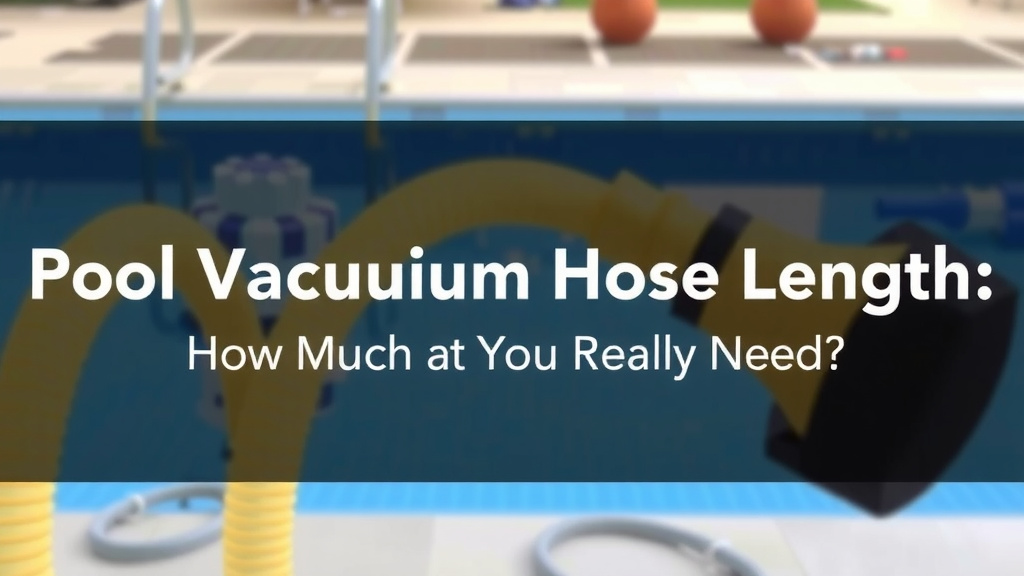
Pool Vacuum Hose Length: How Much Do You Really Need
The ideal pool vacuum hose length is typically about 1.5 times the longest distance of your pool. This ensures your vacuum can reach every corner. Having the right hose length prevents frustration and makes cleaning much faster.
A hose that’s too short means you’ll struggle to cover the entire pool floor. A hose that’s excessively long can become a tangled mess. We found that choosing the correct length is a simple step that greatly improves your pool maintenance routine.
- Hose should be 1.5x your pool’s longest dimension.
- Too short means missed spots.
- Too long means tangles and hassle.
- Measure your pool first.
- A good length saves time.
Let’s get your pool sparkling! Below, we’ll show you exactly how to figure out the perfect pool vacuum hose length for your backyard oasis.
Choosing the Right Pool Vacuum Hose Length
Finding the perfect pool vacuum hose length is simpler than you think. It’s all about making sure your vacuum can comfortably reach every inch of your pool. We found that the general rule of thumb is to aim for a hose that’s about 1.5 times the longest dimension of your pool. This ensures you won’t be stretching or struggling.
Why Hose Length Matters So Much
Think of your pool cleaning hose like a leash for your pool vacuum. If it’s too short, your vacuum can’t roam freely to clean the entire pool floor. You’ll end up with missed spots and dirtier water. That’s definitely not the sparkling oasis you’re dreaming of!
On the other hand, a hose that’s way too long can be a real pain. It’s like trying to walk a dog with a leash that’s twenty feet too long. It just gets tangled up everywhere. This can lead to frustrating knots and make the vacuuming process take twice as long. We’ve heard plenty of stories about tangled hoses causing more work than they save.
The “Too Short” Problem
When your pool vacuum hose is too short, you’ll notice it right away. You might find yourself constantly repositioning the vacuum or having to get into awkward positions. This makes the job much more tiring. You’ll probably leave dirty patches near the walls or steps.
This often means you’ll need to do a second pass over the pool. It’s like trying to paint a wall with a tiny brush. You keep going over the same spots. We found that this inefficiency adds unnecessary time to your pool maintenance. It’s easy to get discouraged when the chore takes too long.
The “Too Long” Headache
A hose that’s excessively long can be just as annoying, if not more so. It can easily get caught on ladders, steps, or even the pool’s main drain. You might spend more time untangling the hose than actually vacuuming. It feels like wrestling an octopus sometimes!
Long hoses are also harder to store. They tend to coil up in large, bulky masses. This can take up a lot of space in your garage or shed. Many pool owners have told us that a hose that’s too long becomes a tripping hazard. Safety is always important around the pool.
How to Measure Your Pool for Hose Length
Measuring is the key to getting this right. You’ll want to know the basic dimensions of your pool. Grab a tape measure and head out to your pool area. It’s a quick step that pays off big time.
Measure the Longest Distance
The most important measurement is the longest distance across your pool. This usually means measuring from one end of the pool to the other along its longest axis. If your pool is a simple rectangle, this is just its length. For freeform or kidney-shaped pools, find the longest straight line you can draw across its widest part.
Don’t forget to include any steps or shallow areas that need cleaning. If your pool has a long, winding shape, measure that longest point. This gives you the total reach your vacuum needs.
Consider Your Pool Type
The shape of your pool plays a role. Rectangular pools are straightforward. You just measure the length. For circular pools, measure the diameter. For kidney or freeform pools, try to find the absolute longest stretch across the water. We found that many people simply measure the length and width and take the larger number.
| Pool Shape | Measurement Needed | How to Measure |
|---|---|---|
| Rectangle | Length | Measure the longest side. |
| Square | Side Length | Measure any side. |
| Circle | Diameter | Measure straight across the center. |
| Oval | Longest Length | Measure the longest part. |
| Freeform/Kidney | Longest Stretch | Measure the widest, longest straight line. |
Applying the 1.5x Rule
Once you have your longest measurement, multiply it by 1.5. For example, if your pool is 30 feet long, you’ll want a hose that is 45 feet long (30 x 1.5 = 45). This gives you that extra reach needed for corners and edges.
We found that some people prefer a little extra slack. If your pool has a lot of complex features like benches or multiple levels, consider adding an extra 5 feet. It’s better to have a little too much than not enough. You can always coil up extra hose.
Common Hose Lengths and When to Use Them
Pool vacuum hoses come in standard lengths. Knowing these can help you make a quick choice. Most hoses are sold in 25, 30, 35, 40, and 50-foot lengths. Which one is right for you?
Short Pools (Under 20 Feet Long)
If your pool is on the smaller side, a 25-foot or 30-foot hose is likely sufficient. For a 15-foot pool, a 25-foot hose would be plenty (15 x 1.5 = 22.5). This prevents excess hose from cluttering your cleaning process.
Medium Pools (20-30 Feet Long)
For most standard backyard pools, a 30-foot to 40-foot hose is a good bet. A 25-foot pool would need about a 37.5-foot hose (25 x 1.5). You might opt for a 40-foot hose here to be safe. This covers a wide range of common pool sizes.
Large Pools (Over 30 Feet Long)
If your pool is on the larger side, you’ll need a longer hose. For a 35-foot pool, you’re looking at around 52.5 feet (35 x 1.5). A 50-foot hose is a common choice for these larger pools. For very large or complex pools, you might even need two shorter hoses connected together.
Pro Tips for Perfect Hose Length
Beyond the basic measurement, a few extra tips can help. These small adjustments can make your pool cleaning much smoother. We’ve gathered some advice that many pool owners find helpful.
Measure Twice, Buy Once
It sounds simple, but double-checking your pool’s longest dimension is important. Don’t just guess. A quick measurement will save you the hassle of returning a hose. This is especially true for irregularly shaped pools.
Consider Hose Connectors
If you have a very large pool or need extra reach, you can connect two hoses together. Most pool hoses have a connector fitting on each end. This allows you to extend your reach as needed. We found that using a quality connector ensures a tight seal.
Factor in Accessories
Sometimes, pool accessories like large slides or diving boards can create obstacles. While you won’t vacuum *under* these, you need to maneuver around them. Ensure your hose has enough length to comfortably work around these features without getting snagged.
Think About Storage
While not directly related to cleaning performance, consider where you’ll store the hose. A very long hose might be unwieldy. If storage is tight, you might lean towards the minimum required length. A hose reel can be a great investment for longer hoses.
What If I’m Still Unsure?
If you’re on the fence between two sizes, it’s usually better to go with the slightly longer option. You can always coil up the extra length. This prevents the frustration of realizing your hose is just a few feet too short. We found that most people are happier with a bit of extra hose.
Ready to get that perfect fit? Follow these steps, and you’ll be one step closer to a cleaner pool with less effort. Happy vacuuming!
Conclusion
You’ve now learned the secret to a frustration-free pool cleaning experience: the right vacuum hose length. Remember, aiming for about 1.5 times your pool’s longest dimension is your golden rule. This simple measurement ensures you can reach every nook and cranny without a struggle. Avoid the headaches of hoses that are too short or too long by measuring carefully. Taking this one step means less time wrestling with your equipment and more time enjoying your sparkling clean pool. Ready to make pool maintenance a breeze? Grab your tape measure and find that perfect hose length today!
Frequently Asked Questions
What’s the easiest way to measure my pool for hose length?
The simplest method is to find the longest straight line across your pool. For a rectangle, this is just its length. For freeform or circular pools, measure the widest point from edge to edge. Don’t forget to include any shallow areas you need to reach.
Can I connect two pool vacuum hoses together?
Yes, you absolutely can connect two hoses. Most pool vacuum hoses come with fittings that allow you to join them. This is a great solution for very large pools where a single hose might not be long enough.
Should I buy a longer hose than I technically need?
It’s often a good idea to have a little extra hose length. You can always coil up excess hose if it’s too long. This flexibility prevents you from ending up with a hose that’s just a few feet too short, which can be very frustrating.
How does pool shape affect the hose length I need?
Pool shape matters because you need to reach the furthest points. A rectangular pool’s length is key. For circular pools, measure the diameter. For irregular shapes, find the longest possible stretch across the water’s surface. This ensures your vacuum can cover all areas.
What if my pool has steps or benches that need cleaning?
When measuring, make sure your longest dimension calculation accounts for cleaning these features. The 1.5x rule generally covers most needs, but if your steps are far out or in a difficult spot, consider adding a few extra feet to your calculation. It’s better to have a bit more reach than not enough.
![7 Best Handheld Vacuum Cleaner For Carpeted Stairs [2026]](https://bathroomexplorer.com/wp-content/uploads/2026/05/7-best-handheld-vacuum-cleaner-for-carpeted-stairs-2026-featured-768x432.jpg)