How Many Dyson Air Purifiers Do I Need? A Complete Guide to Optimal Home Air Quality
Ever found yourself gazing around your home, debating if one Dyson air purifier is enough or if you should place them everywhere? That’s a critical question many homeowners face. The solution isn’t a straightforward “one per room” rule, and I’m ready to assist you in finding the ultimate arrangement for your specific needs.
Think of air purifiers like speakers in your home—one in the corner might fill a small bedroom adequately, but it won’t reach the kitchen down the hall with the same intensity. Your air quality needs depend on several factors, and understanding them will save you money while ensuring your family breathes the cleanest air possible.
Understanding Room Size and Air Purifier Coverage
The first thing you need to know is that Dyson air purifiers come with specific coverage ratings. Each model is designed to effectively clean the air in a room of a certain square footage. This is measured in what’s called “CADR” (Clean Air Delivery Rate) and room size recommendations.
When manufacturers say a purifier works for a 400-square-foot room, they’re giving you a realistic expectation based on how many times the device can cycle the entire room’s air in an hour. If your living room is 500 square feet and the purifier is rated for 400 square feet, you’re pushing it, and the device won’t perform as efficiently.
Checking Your Dyson Model’s Specifications
Before you make any purchasing decisions, grab your Dyson’s manual or check the manufacturer’s website. Different models have different capabilities. Some Dyson purifiers are designed for smaller spaces like bedrooms or home offices, while others are beast-mode machines meant for large open-concept living areas.
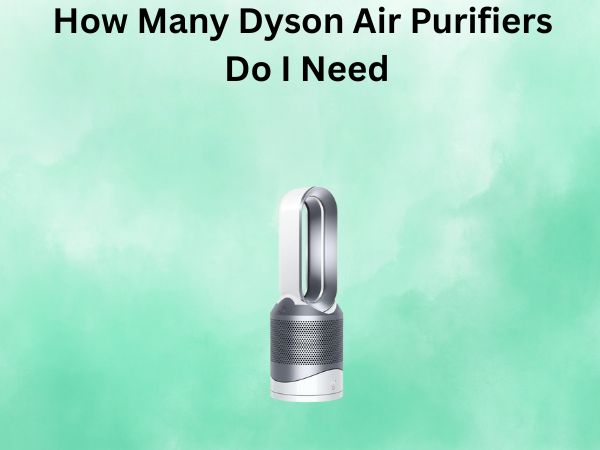
The Dyson Pure Hot + Cool, for instance, handles larger spaces differently than the Dyson Pure Cool Me, which is more of a personal air purifier. Knowing what you’ve got—or what you’re considering buying—is absolutely crucial.
Factors That Determine How Many Purifiers You Actually Need
1. The Layout of Your Home
Your home’s layout plays a massive role in determining how many air purifiers you need. An open-concept home where your kitchen, dining room, and living room flow into one another is vastly different from a traditional home with separate rooms and closed doors.
In an open layout, air circulates more freely. One strategically placed purifier might handle a 1,000-square-foot open space reasonably well. But if you have a home with multiple separate rooms, hallways, and doors that close, that same purifier will leave some areas underserved.
2. Indoor Air Quality Challenges
Do you have pets? Are there smokers in your home? Do you live in an area with high outdoor pollution? Do family members suffer from allergies or asthma? These aren’t just comfort questions—they’re performance indicators.
If you’re dealing with significant air quality challenges, you might need more purifiers than someone living in a cleaner environment. Heavy-duty air cleaning demands more firepower, and sometimes that means additional units working in harmony.
3. Budget Considerations
Let’s be honest—Dyson air purifiers aren’t cheap. One unit might run you $300 to $750 depending on the model. Two units means doubling that investment. Before you commit to multiple purifiers, think about what you can realistically afford and how you’ll prioritize your spaces.
Sometimes buying one high-performance unit for your primary living area and one smaller unit for your bedroom is smarter than spreading your budget thin across three mediocre purifiers.
4. Where You Spend the Most Time
You don’t need perfect air quality everywhere simultaneously. Your garage probably doesn’t need the same attention as your bedroom where you sleep eight hours every night. Prioritize the spaces where you and your family spend the most time.
Many people find that one Dyson in the master bedroom and one in the living room covers their most critical needs without breaking the bank.
Calculating Your Exact Needs
The Square Footage Method
Here’s a practical approach: measure your main living spaces and add up the square footage. If you have a 300-square-foot bedroom, a 400-square-foot living room, and a 200-square-foot kitchen, you’re looking at 900 square feet in your most-used areas.
Check whether one Dyson model can handle 900 square feet. If not, you’ll need two units. If yes, one might be enough, though placement becomes critical. You’d want to position it centrally to ensure air circulation reaches all three spaces.
The Air Changes Per Hour Approach
Some experts recommend that your air purifier should cycle the entire room’s air four to five times per hour for optimal purification. This is especially important if you’re dealing with allergens or pollutants.
If a Dyson purifier is rated to handle 400 square feet but your room is 600 square feet, it might only cycle the air 2-3 times per hour in your space. This is why knowing your room size and your purifier’s specifications matters so much.
One Dyson Air Purifier: When This Is Enough
For many homes, a single Dyson air purifier is genuinely sufficient. Here’s when one unit makes sense:
- You live in an apartment or condo with limited square footage
- You have an open-concept living space under 600 square feet
- You’re primarily concerned with one room (bedroom or living area)
- Your indoor air quality issues are mild to moderate
- You don’t have multiple pets or serious allergies
- You’re willing to move the purifier between rooms as needed
If most of these points apply to you, investing in one quality Dyson unit might be the smart move. You can always add another later if you find yourself wanting more coverage.
Two Dyson Air Purifiers: The Sweet Spot for Most Homes
Two Dyson air purifiers represent the optimal setup for a typical household. Here’s why this works so well:
One purifier can handle your primary living area—usually the living room or open kitchen/dining combination. The second purifier goes in your bedroom, the space where you spend your second-longest period of time and where air quality directly affects your sleep and health.
This setup ensures that in your two most important zones, you’re getting excellent air purification. It’s like having air quality insurance for the spaces that matter most. You’re breathing clean air where it counts most.
Strategic Placement With Two Units
If you go with two purifiers, think strategically about placement. Position one in your main living space, preferably centrally located and away from walls or furniture that might block airflow. Put the second one in your primary bedroom, again considering air circulation patterns.
Avoid placing purifiers in corners where they’ll work inefficiently. These devices need space to pull in air from all directions and push cleaned air back out.
Three or More Dyson Air Purifiers: When You Really Need This
Going beyond two purifiers makes sense in specific situations. Multiple units become necessary when:
- You have a large home exceeding 2,000 square feet
- You have separate living spaces that don’t share air circulation
- Multiple family members suffer from serious allergies or asthma
- You have several pets creating significant dander and odor
- Someone in your home smokes or has respiratory issues
- You live in an area with severe outdoor air pollution
- You want a purifier in every main room of your home
In these cases, multiple Dyson units working together create what I like to call a “whole-home air purification ecosystem.” Each unit handles its designated zone, and the cumulative effect significantly improves your overall indoor air quality.
Understanding Dyson’s Different Models and Their Coverage Areas
Compact and Personal Models
The Dyson Pure Cool Me is essentially a personal air purifier. It’s designed for small spaces—think a dorm room, small office, or a specific corner of a larger room. This isn’t a replacement for whole-room purification, but it’s fantastic as an addition if you want extra protection where you sit most often.
Mid-Range Tower Models
Models like the Dyson Pure Cool Tower are the workhorses of the Dyson lineup. These handle medium to large rooms effectively and represent the sweet spot in terms of performance and price. Most homes can get adequate coverage with one or two of these units.
Premium Multi-Function Models
The Dyson Pure Hot + Cool combines heating, cooling, and purification. These are statement pieces in your home and handle substantial square footage. If you’re already investing in a premium model that handles 600+ square feet, you might need fewer units overall than with basic models.
Air Circulation and Placement Strategies
Having enough purifiers means nothing if they’re not positioned correctly. Air needs to flow through your space, and your purifier needs to be in a location where it can work efficiently.
Place your purifier away from walls and obstacles. If it’s shoved into a corner, it’s working against itself. Put it where air can be drawn in from multiple directions. This usually means somewhere in the middle of a room, or at least a few feet away from walls and furniture.
Think about how air currently circulates in your space. Do you have ceiling fans? HVAC vents? Windows that open? Your purifier will work best when it complements these existing air movement patterns rather than fighting against them.
Seasonal Considerations and Flexibility
Your air quality needs might change seasonally. During pollen season, you might want purifiers running full-time in bedroom and living areas. In winter when windows are closed and homes are sealed tight, your purification demands increase because outdoor air isn’t refreshing your indoor space.
Some people with seasonal allergies start with one purifier but find they need a second during high pollen months. It’s worth considering whether you’d want this flexibility when deciding how many units to buy.
Smart Features and App Control
Many modern Dyson air purifiers come with smart features and app control. This matters when you have multiple units because you can monitor all of them from your phone and adjust settings centrally.
You might run your living room purifier more aggressively during cooking hours and your bedroom purifier at a whisper-quiet level at night. These smart controls make managing multiple units much easier than it would have been a few years ago.
Maintenance Costs and Filter Replacement
Here’s something people sometimes overlook: the real cost of air purifiers isn’t just the upfront purchase. Each unit requires filter replacements, typically every 12-18 months depending on usage.
A Dyson filter might cost $50-100. If you have three purifiers, you’re potentially looking at $150-300 in replacement filters every year or so. Factor this into your decision about how many units make sense for your situation.
Testing Your Current Setup
If you already own one Dyson air purifier, before rushing out to buy another, live with it for a few months. Notice how your air quality feels in different rooms. Do some areas seem noticeably stale or smelly compared to where the purifier sits? That’s a sign you’d benefit from another unit.
Check if your allergies improve when you’re in the purified space versus other areas. If the difference is dramatic, additional units could make a significant impact on your overall comfort and health.
Practical Recommendations Based on Home Size
Studio Apartments and Small One-Bedrooms (Under 600 Square Feet)
One quality Dyson purifier should adequately serve your entire space. Position it in your living area or bedroom, and it will handle most of your air purification needs.
Medium Homes (600-1,200 Square Feet)
Two Dyson units are ideal. One for your primary living space and one for your bedroom will provide excellent coverage where it matters most. You might find that investing in one premium model instead of two basic ones gives you better performance in your main areas.
Large Homes (1,200-2,000 Square Feet)
Two units can work if your home is open-concept, but you’ll likely see better results with three. Consider one for your living area, one for your bedroom, and one for a third high-traffic space like a kitchen or home office.
Very Large Homes (Over 2,000 Square Feet)
Three to four purifiers ensure comprehensive coverage. You’re essentially treating each major zone of your home as its own space requiring dedicated air purification.
Making Your Final Decision
Deciding how many Dyson air purifiers you need ultimately comes down to balancing several factors. Start with your budget—be realistic about how much you can spend. Then consider your home’s layout, your air quality challenges, and where you spend the most time.
If you’re unsure, start with one quality unit. You can always add another if you find yourself wanting better coverage in other areas. It’s easier to expand your setup than to realize you’ve bought more than you need.
Remember that one excellent purifier running 24/7 in your bedroom will probably improve your health more than three mediocre units scattered throughout your home. Quality matters as much as quantity when it comes to air purification.
Conclusion
The question of how many Dyson air purifiers you need doesn’t have a one-size-fits-all answer, but now you have the framework to figure it out for your specific situation. Most households find that one or two units provide the sweet spot between comprehensive air purification and reasonable investment.
Start by measuring your spaces, understanding your air quality challenges, and identifying where you spend the most time. One purifier is often enough for smaller homes or specific rooms, while two units typically provide optimal coverage for medium-sized homes where you want excellent air quality in your primary living and sleeping areas.
Larger homes or those with significant air quality challenges might benefit from three or more units. Don’t just focus on total square footage—think about how air circulates, where you’re most concerned about quality, and what your budget allows.
Whether you end up with one, two, or three Dyson air purifiers, the most important thing is that you’re taking action to improve your indoor air quality. Your lungs will thank you, and you’ll notice the difference in how you feel, especially during sleep and in your most-used spaces.
Frequently Asked Questions
Can one Dyson air purifier work for my entire house?
It depends on your home’s size and layout. If you have an open-concept apartment under 600 square feet, one Dyson purifier can likely handle everything. For larger homes with separate rooms, one unit will primarily clean the room it’s in, though some air circulation might reach adjacent spaces. Most homes benefit from multiple units for comprehensive coverage, particularly if you want excellent air quality in your bedroom and living areas simultaneously.
Should I run my Dyson air purifier 24/7?
Yes, running your Dyson continuously ensures constant air purification. However, you can adjust fan speed based on your needs—lower speeds at night for quieter operation or when you’re away, higher speeds when air quality is poor or during times of higher activity. The device is designed for continuous operation, so don’t hesitate to leave it running roun