How Many Square Feet Does a Dyson Air Purifier Cover? A Complete Guide to Room Coverage
As you explore air purifiers, a key concern often emerges: ‘Is this model right for my room?’ This is a critical inquiry, and understanding its implications is essential before committing to a purchase. An air purifier’s stated coverage area is the ultimate indicator of whether it will truly improve your air or simply circulate air without real benefit.
If you’re eyeing a Dyson air purifier, you’re looking at one of the premium options on the market. But here’s the thing—Dyson makes several different models, and each one covers a different square footage. So let’s dive deep into what you actually need to know about Dyson air purifier coverage and help you figure out which model is right for your home.
Understanding Dyson Air Purifier Coverage Areas
Dyson’s air purifier lineup is actually quite diverse, and the coverage area varies significantly depending on which model you choose. Think of it like buying a car—just because it’s from the same manufacturer doesn’t mean a compact model will perform the same way as a luxury sedan. The same principle applies to air purifiers.
The coverage area of an air purifier is measured in square feet and typically refers to the maximum room size the device can effectively clean. This measurement is crucial because it tells you how many times per hour the unit can cycle through all the air in that space. Most reputable air purifier manufacturers aim for at least four to five complete air changes per hour, which is considered the standard for effective air purification.
What Does Square Footage Coverage Actually Mean?
Let me break this down in simple terms. When a manufacturer says their air purifier covers 1000 square feet, they’re essentially saying that the unit can filter all the air in a 1000-square-foot room multiple times per hour. But here’s where it gets interesting—and slightly complicated.
The coverage rating assumes certain conditions. These include a ceiling height of about eight feet (the standard in most homes), relatively open floor plans, and minimal obstacles like heavy furniture or closed doors that would block airflow. If your room has vaulted ceilings, heavy drapes, or lots of obstacles, the effective coverage might be less than what the spec sheet claims.
This is why understanding square footage coverage is more of an art than a science. It’s a helpful starting point, but you also need to consider your specific living situation.
Popular Dyson Air Purifier Models and Their Coverage
Dyson has released several air purifier models over the years, and each one has its own coverage specifications. Let’s look at the main players in their lineup.
Dyson Pure Cool Tower
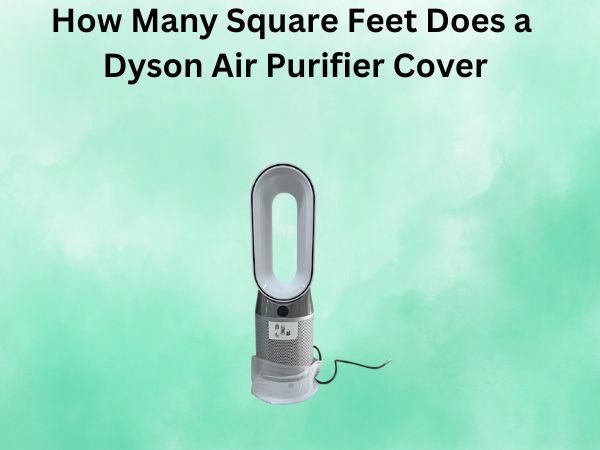
The Dyson Pure Cool Tower is one of their most popular models, and for good reason. This sleek tower-style purifier is designed for rooms up to 400 square feet. Now, this might sound modest compared to some competitors, but remember—Dyson focuses on quality and performance rather than just casting a wide net.
The Pure Cool Tower uses Dyson’s HEPA and activated carbon filter combination to capture pollutants and odors. It’s perfect for bedrooms, home offices, or smaller living rooms. If you live in an apartment or a smaller home, this model is typically sufficient.
Dyson Pure Hot+Cool
If you want a multi-functional device that purifies, heats, and cools, the Dyson Pure Hot+Cool is worth considering. This model also covers approximately 400 square feet and adds the bonus of temperature control. It’s an excellent choice for people who want one device to handle multiple tasks throughout the year.
The heating feature is particularly useful during colder months, while the cooling function helps during summer. So you’re getting air purification plus climate control, all in one elegant device.
Dyson Pure Cryptomic
This is where Dyson really stepped up their game. The Pure Cryptomic is designed to handle larger spaces and covers up to 600 square feet. The key difference with this model is the inclusion of cryptomelane technology, which captures formaldehyde—a volatile organic compound that many other air purifiers miss.
If you have a larger bedroom, den, or open-concept kitchen and living area, the Pure Cryptomic is a solid choice. It’s particularly beneficial if you’re concerned about formaldehyde from furniture, carpeting, or other household items.
Dyson Pure Cool Link
The Pure Cool Link is another tower-style purifier that covers around 400 square feet. What makes this model interesting is its smart connectivity features. You can control it from your smartphone and check real-time air quality data. It’s a great option if you want to monitor your air quality remotely or schedule purification cycles.
Dyson Purifier+Humidify Cool
This is Dyson’s most versatile offering to date. The Purifier+Humidify Cool covers up to 600 square feet and combines air purification with humidification and cooling. If you live in a dry climate or have respiratory concerns, the humidification feature can be a game-changer.
The three-in-one functionality makes this an exceptional choice for people who want comprehensive air and humidity control without buying multiple devices.
Factors That Affect Coverage Effectiveness
Now here’s something important that many people overlook. The square footage rating is just one piece of the puzzle. Several other factors can dramatically impact how well your Dyson air purifier actually performs in your space.
Room Layout and Airflow Patterns
The shape and layout of your room matters more than you might think. An open-concept living room will allow the purifier to work more efficiently because air can circulate freely. But if you have a long, narrow hallway or a room with lots of nooks and crannies, the air might not reach every corner effectively.
Think of airflow like water flowing through pipes. If there are obstacles and turns, it doesn’t move as smoothly. Similarly, furniture placement, doorways, and architectural features can all affect how the purified air reaches every part of your room.
Ceiling Height Considerations
Most square footage ratings assume standard eight-foot ceilings. If your home has vaulted ceilings, cathedral-style architecture, or unusually low ceilings, the effective coverage changes. Higher ceilings mean more air volume to process, so you might need a more powerful unit than what a basic square footage calculation suggests.
Air Leaks and Ventilation
If your room has gaps around doors, window air conditioning units, or inadequate sealing, you’re constantly introducing new unfiltered air into the space. This means your Dyson is working harder to maintain air quality. Proper room sealing is essential for maximizing the effectiveness of any air purifier.
Filter Maintenance and Replacement
No air purifier performs at its rated coverage if the filters are dirty or clogged. Dyson filters need regular maintenance and replacement—typically every 12 months depending on usage and air quality. A clogged filter reduces airflow and coverage effectiveness significantly.
Air Quality and Pollutant Load
If you live in an area with heavy air pollution, smoke from nearby fires, or other significant air quality challenges, you might need a more powerful unit or multiple units. The coverage rating assumes normal air quality conditions, not extreme pollution scenarios.
Multiple Rooms and Open Floor Plans
Here’s a common mistake people make. They buy a 400-square-foot purifier and expect it to cover their entire 800-square-foot open floor plan. While some air will drift between rooms, the purifier won’t be as effective as it would be in a single, properly-sized space.
Choosing the Right Dyson Model for Your Space
So how do you actually pick the right Dyson air purifier? Here’s a practical approach that works well.
Measure Your Space First
Start by measuring your room length and width, then multiply those numbers together to get your square footage. If you have multiple rooms or an open floor plan, measure the entire area where you want clean air. This gives you a baseline to work with.
Consider Going Slightly Larger
I’d recommend choosing a Dyson model that’s rated for slightly more square footage than your actual room size. This gives you some buffer for non-ideal conditions like high ceilings, obstacles, or heavy pollution. It’s better to have a unit that’s slightly oversized than one that’s constantly struggling.
Evaluate Your Specific Needs
Do you need cooling, heating, or humidification in addition to purification? Are formaldehyde concerns a factor? Do you want smart home integration? These questions will help you narrow down which specific Dyson model makes sense for your lifestyle.
Think About Placement
Where you position your Dyson air purifier affects its coverage. Central placement in your room allows air to circulate more evenly. Avoid putting it in corners or against walls where airflow is restricted. Some people find placing it in a central location on a small table works best.
Comparing Dyson Coverage to Competitors
To give you perspective, let’s see how Dyson’s coverage ratings stack up against other premium air purifier brands. This is helpful context as you’re making your decision.
Some competitors offer models covering 800 to 1000 square feet at similar price points to Dyson. However, coverage is only part of the equation. You should also consider filter quality, noise levels, design, and overall air quality improvement. Dyson’s reputation for engineering excellence and design means you’re often paying for premium build quality and performance, not just coverage area.
Real-World Performance vs. Rated Coverage
Here’s something important to understand. The square footage rating is a guideline, not a guarantee. Real-world performance depends on the conditions I mentioned earlier. Many users report that their Dyson performs well even beyond the rated coverage in smaller, well-sealed spaces with proper placement.
Conversely, some users find that in less-than-ideal conditions, a Dyson model rated for 400 square feet works best in spaces closer to 300 square feet. This is normal and doesn’t indicate a problem with the unit—it just reflects the complex nature of air purification.
User Reviews and Real-World Feedback
Reading reviews from people who own Dyson air purifiers in spaces similar to yours is incredibly valuable. They can give you honest feedback about whether a particular model worked well for their room size and conditions. Look for reviews that mention both positive experiences and honest limitations.
Installation and Optimization Tips
Once you’ve chosen your Dyson model, how you set it up matters. Here are some practical tips for maximizing coverage and effectiveness.
- Place it centrally: Position your purifier in a central location rather than against a wall. This allows air to circulate around it and reach all corners of your room.
- Elevate when possible: Placing your purifier on a small table rather than the floor can improve air circulation and coverage.
- Keep doors open: If you want clean air throughout your home, keep interior doors open to allow the purifier to affect multiple rooms.
- Seal gaps: Use weatherstripping or caulk to seal gaps around doors and windows, preventing unfiltered air from entering.
- Run it continuously: For best results, run your Dyson purifier continuously, especially during high-pollution periods. Many models have quiet, energy-efficient settings for 24/7 operation.
- Maintain filters regularly: Check filters monthly and replace them according to manufacturer recommendations, typically annually.
- Keep the unit clean: Dust the exterior and air intake regularly to prevent clogs.
Energy Consumption and Running Costs
Coverage isn’t just about square footage—it’s also about efficiency. Dyson air purifiers vary in their energy consumption. Some models use more power to achieve their coverage rating, while others are more energy-efficient. This affects your monthly electricity costs.
Most Dyson purifiers use between 20-40 watts on their lower settings, ramping up to 50-60 watts on higher settings. Running one continuously for a month typically costs between five and fifteen dollars in electricity, depending on your local rates and the specific model.
Smart Modes for Efficiency
Many newer Dyson models include smart modes that adjust purification intensity based on detected air quality. This means you’re not constantly running the unit at maximum power, reducing energy consumption and extending filter life. It’s a win-win for both your wallet and the environment.
The Noise Factor in Coverage
Here’s something people often forget about. A larger coverage area doesn’t matter much if you can’t stand the noise. Dyson purifiers are generally quieter than many competitors, but noise levels do vary.
The Pure Cool Tower operates at around 40 decibels on lower settings—about as loud as a quiet office. On maximum power, it can reach the mid-60s in decibels. For a machine that’s actively cleaning your air throughout the day, Dyson’s noise levels are quite acceptable.
Warranty and Support Considerations
Dyson typically offers a two-year warranty on its air purifiers, which is solid in the industry. Their customer support is also known for being responsive and helpful. When evaluating coverage and performance, it’s worth knowing that if something isn’t working as expected, you have solid backup support.
Conclusion
So, how many square feet does a Dyson air purifier cover? The answer depends entirely on which model you choose. Most Dyson purifiers cover between 400 and 600 square feet, with some variation based on specific models. The Pure Cool Tower and Pure Cool Link handle around 400 square feet, while the Pure Cryptomic and Purifier+Humidify Cool extend to 600 square feet.
But here’s what I really want you to understand. Coverage area is just one factor in choosing the right air purifier. You also need to consider your specific room layout, ceiling height, placement options, additional features you need, and your budget. Dyson doesn’t necessarily offer the largest coverage area in its price range, but what you’re getting is premium engineering, excellent design, and reliable performance.
Take time to measure your space accurately, consider the factors that affect real-world performance, and choose a model that slightly exceeds your actual square footage needs. Do that, and you’ll have a Dyson air purifier that genuinely improves your indoor air quality for years to come. The investment in clean air is an investment in your health and comfort—and that’s something worth getting right.
Frequently Asked Questions
Can a Dyson air purifier rated for 400 square feet effectively cover a 500 square foot room?
It depends on your specific situation. If the room has minimal obstacles, good airflow, and standard eight-foot ceilings, you might get acceptable performance, though not ideal. However, the purifier would be working at maximum capacity constantly, which stresses the motor and reduces filter lifespan. I’d recommend choosing a model rated for at least 500-600 square feet to ensure adequate performance and longevity. Pushing any appliance beyond its design specifications typically leads to reduced effectiveness and shorter lifespan.
How does a Dyson air purifier’s coverage compare to the CADR rating on other brands?
CADR (Clean Air Delivery Rate) measures how quickly an air purifier can remove pollutants from air, typically expressed as cubic feet per minute. It’s a different metric than square footage coverage. Dyson doesn