

How Many Watts to Run Your Home Air Conditioner
Running a home air conditioner typically requires between 2000 to 5000 watts of power. The exact wattage depends heavily on the size of the unit and its cooling capacity. Smaller window units might only need 500 watts, while larger central air systems can easily consume 3500 watts or more.
When you’re figuring out how many watts your AC needs, think about its BTU rating. Higher BTUs mean more cooling power and generally more electricity usage. It’s wise to check the energy guide label on your AC unit. This label provides an estimated yearly energy consumption in kilowatt-hours (kWh).
- AC wattage varies greatly by size and BTU.
- Expect 2000-5000 watts for many home units.
- Window ACs use less power than central systems.
- Check the energy guide label for specifics.
Let’s walk through how to figure out the right wattage for your home and what factors influence it.
“`htmlUnderstanding Your Air Conditioner’s Power Needs
Figuring out how many watts your home air conditioner actually uses can feel like a puzzle. You’re probably wondering, “Just how much electricity does this thing suck up?” It’s a fair question, especially with energy bills looming. We’re here to break it down for you. Most home air conditioners operate somewhere in the 2000 to 5000 watt range. But that’s a big window, isn’t it? Let’s look at what makes that number change.
The Key Factor: Cooling Capacity (BTUs)
The main driver behind your AC’s wattage is its cooling power. This is measured in BTUs (British Thermal Units). Think of BTUs as the AC’s muscle for fighting off heat. A higher BTU rating means the unit can cool a larger space or cool it down faster. And more cooling power generally means more electricity needed to do the job.
So, a tiny window AC designed for a small bedroom might have a BTU rating of only 5,000. Your large central air system, cooling your entire house, could be rated at 36,000 BTUs or even more. This difference in BTUs directly translates to a big difference in power consumption.
Matching BTUs to Your Room Size
Using an AC that’s too small for your space is like trying to push a boulder uphill. It’ll run constantly and still not cool properly. Too big, and it’ll short-cycle, meaning it turns on and off too frequently. This isn’t energy efficient either and can lead to humidity issues. You want to find that sweet spot.
We found that for typical room sizes, these BTU guidelines are a good starting point:
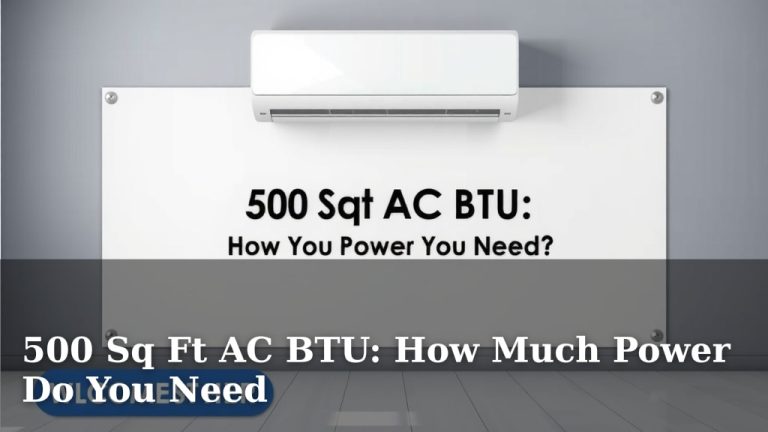
- Small rooms (100-150 sq ft): 5,000 BTUs
- Medium rooms (150-250 sq ft): 6,000-8,000 BTUs
- Larger rooms (250-400 sq ft): 10,000-12,000 BTUs
- Very large rooms or open areas (400-550 sq ft): 14,000-18,000 BTUs
Remember, these are just general ideas. Factors like ceiling height, insulation, and how much sun your room gets can influence the BTU needs.
Types of Air Conditioners and Their Wattage
Not all air conditioners are created equal when it comes to power usage. The type of unit you have plays a big role. Let’s look at the common ones.
Window Air Conditioners
These are often the most accessible and budget-friendly option. They sit right in your window or a sleeve in the wall. Because they’re designed for single rooms, their BTU ratings are lower. Consequently, their wattage is also on the lower side. You’ll often find these units using anywhere from 500 to 1500 watts, depending on their size and cooling capacity. A 5,000 BTU window unit might only draw 500 watts, while a 12,000 BTU model could use up to 1500 watts.
Portable Air Conditioners
Similar to window units, portable ACs cool a single room. They sit on the floor and vent out a window through a hose. Their power consumption is generally in a similar range to window units, typically 700 to 1500 watts for models ranging from 8,000 to 14,000 BTUs. They can sometimes be a bit less efficient than window units due to the hose setup and potential for air leaks.
Ductless Mini-Split Systems
These are a fantastic option for cooling specific zones or entire homes without existing ductwork. A mini-split has an outdoor unit and one or more indoor units. They are known for being quite energy efficient. Their wattage can vary widely. A single-zone system might use 1000 to 2000 watts. Multi-zone systems, cooling several rooms, will use more. The total wattage depends on the combined BTU output of all indoor units.
Central Air Conditioning Systems
This is the king of whole-house cooling. Central AC uses a system of ducts to distribute cool air throughout your home. Because they handle the biggest jobs, they require the most power. A typical central air conditioner can draw anywhere from 3000 to 5000 watts or even more. For larger homes or units with higher efficiency ratings (like SEER 16 or higher), the wattage can push past 5000 watts.
Where to Find Your AC’s Wattage Information
So, how do you get the exact numbers for *your* AC? Don’t guess! There are a few reliable places to look.
The Unit’s Rating Plate
Almost every appliance has a small sticker or metal plate attached to it. This is the unit’s rating plate. It contains vital information, including the electrical requirements. You’ll often see numbers for volts (V), amps (A), and sometimes watts (W) or a calculation to figure it out. If you see volts and amps, you can calculate the wattage: Watts = Volts x Amps.
The EnergyGuide Label
This is the yellow and black label you’ve probably seen on appliances. It provides an estimate of the unit’s annual energy consumption in kilowatt-hours (kWh). While it doesn’t give you the immediate “running watts,” it’s a great indicator of overall efficiency. The U.S. Department of Energy (DOE) requires these labels to help consumers compare energy usage. This label is your friend for understanding long-term costs.
Your Owner’s Manual
The manual that came with your air conditioner is a treasure trove of information. It will detail the recommended power requirements, installation specifications, and operating instructions. If you’ve misplaced the physical copy, you can usually find a digital version on the manufacturer’s website by searching for your AC model number.
Understanding Startup Surge vs. Running Watts
Here’s something many people don’t realize: your AC needs more power when it first kicks on than when it’s just running. This initial jolt is called the startup surge or starting watts. It’s necessary to get the motor and compressor going. This surge can be 2-3 times higher than the normal running watts.
For example, an AC that runs at 1500 watts might need a surge of 3000-4500 watts for a split second. Most home electrical systems and generators are designed to handle this brief surge. However, it’s something to keep in mind if you’re using a portable generator. You’ll need a generator that can handle both the running watts of your AC and its startup surge.
How Many Watts Do You Need for a Generator?
Planning to run your AC during a power outage with a generator? You need to do some math. First, find your AC’s running watts. Then, estimate its starting watts. You’ll need a generator that can provide at least the starting watts.
Many generator manufacturers provide charts or calculators to help. For instance, if your AC runs at 3500 watts and has a startup surge of 6000 watts, you’ll want a generator that can supply at least 6000 watts, ideally with a little extra headroom for other appliances.
Here’s a quick checklist to ensure you’re prepared:
- Locate your AC’s rating plate or owner’s manual.
- Note the running wattage (or calculate it from Volts x Amps).
- Identify the approximate startup surge wattage (often 2-3x running watts).
- Add the running watts of any other essential appliances you might need.
- Ensure your generator’s surge capacity exceeds your AC’s startup surge.
- Confirm your generator’s continuous output meets the total running watts.

Conclusion
Understanding your air conditioner’s wattage is key to managing energy costs and ensuring it runs efficiently. You’ve learned that AC power needs vary greatly based on unit size, cooling capacity (BTUs), and type. From smaller window units drawing around 500 watts to whole-home central systems needing 3500 watts or more, the range is wide. Always check the unit’s rating plate or owner’s manual for precise figures, especially if you’re planning to use a generator.
Your next step is to locate your specific AC unit’s information. This simple action will give you the clear power figures you need for informed decisions about your home’s electrical system or generator setup.
Frequently Asked Questions
What’s the difference between running watts and starting watts for an AC?
Running watts are the continuous power your AC needs to keep cooling. Starting watts, or surge watts, are the much higher power your AC requires for a brief moment to start its motor and compressor. This surge can be two to three times the running wattage.
Can a standard home outlet power most air conditioners?
Most smaller window or portable AC units that use under 1500 watts can run on a standard 110-120V household outlet. However, larger units or central air systems often require a dedicated 240V circuit and higher amperage outlet.
How does the SEER rating affect AC wattage?
SEER (Seasonal Energy Efficiency Ratio) measures how efficiently an AC unit uses energy to cool over a season. A higher SEER rating generally means the unit will use fewer watts to achieve the same amount of cooling compared to a unit with a lower SEER rating.
Will running my AC affect other appliances on the same circuit?
Yes, if your AC and other appliances share the same circuit, especially if they run simultaneously, it could overload the circuit. This might cause tripped breakers or issues. It’s best to check your circuit breaker panel and ensure your AC has adequate power, possibly on its own dedicated circuit.
How can I reduce the wattage my air conditioner uses?
You can reduce wattage by ensuring your AC is properly sized for your space, maintaining it regularly (cleaning filters, checking coils), sealing air leaks in your home, using blinds or curtains to block sun, and setting your thermostat a few degrees higher when possible.



![7 Best Small Ventless Air Conditioner [2026]](https://bathroomexplorer.com/wp-content/uploads/2026/06/7-best-small-ventless-air-conditioner-2026-featured-768x432.jpg)