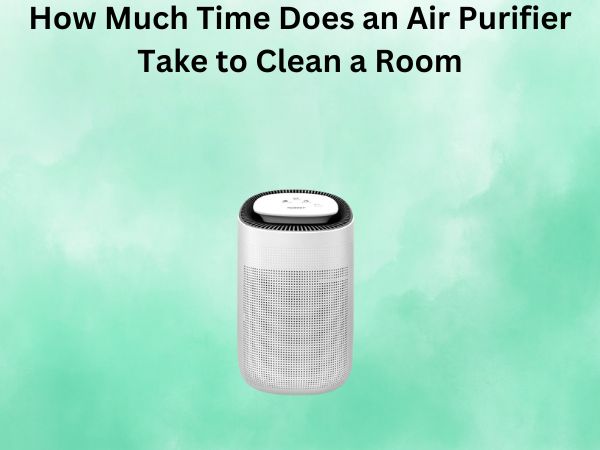
How Much Time Does an Air Purifier Take to Clean a Room?
You’ve just plugged in your shiny new air purifier, and like many others, you’re probably asking: when will I notice a real difference in my room’s air quality? This is a frequent concern, and it turns out the solution isn’t always obvious. The duration an air purifier needs to effectively clean your room hinges on a few key variables, all of which we’ll unpack here.
Understanding Air Purifier Basics Before We Talk Time
Before jumping into specific timeframes, let’s talk about what an air purifier actually does. Think of it like a bouncer at a club, but instead of checking IDs, it’s filtering out unwanted particles from the air. Your air purifier works by pulling air in, passing it through various filters, and then releasing clean air back into your room. The speed at which this happens? That’s what we’re here to discuss.
The ACH Rating: Your Key to Understanding Cleaning Time
Here’s where things get interesting. Every air purifier has something called an ACH rating, which stands for Air Changes Per Hour. This number tells you how many times the air purifier completely cycles through all the air in your room in one hour. If a purifier has an ACH of 4, it means the entire volume of air in your room gets filtered four times in 60 minutes.
What Does ACH Really Mean for Your Room?
Imagine your room as a swimming pool full of polluted water. An ACH of 1 means you’re draining and refilling the entire pool once per hour. An ACH of 4 means you’re doing it four times. The higher the number, the faster your room gets clean. Most air purifier manufacturers recommend an ACH of at least 4 for effective air cleaning, though 5 or higher is even better.
Room Size Matters More Than You Think
Here’s the reality: a 300-square-foot bedroom isn’t the same as a 2,000-square-foot living room. The size of your space is absolutely crucial in determining how long it takes to clean. A smaller room will get clean much faster than a larger one using the same air purifier.
Small Rooms: The Fast Track to Fresh Air
If you’re working with a room that’s roughly 200-300 square feet, like a typical bedroom, a decent air purifier can noticeably improve the air quality in as little as 30 minutes. Some high-powered models might do it in just 15 to 20 minutes. The key here is matching your purifier’s CADR (Clean Air Delivery Rate) to your room size.
Medium-Sized Rooms: The Goldilocks Zone
Medium rooms, ranging from 400 to 700 square feet, typically need between 45 minutes to two hours for noticeable improvement. This is where most living rooms and open-concept kitchen areas fall. The air purifier needs more time because there’s simply more cubic feet of air to process.
Large Spaces: Patience Is Required
Once you’re talking about rooms larger than 800 square feet, you’re looking at multiple hours for thorough cleaning. Some large spaces might need 4 to 8 hours to achieve significant air quality improvement. In these cases, running your purifier continuously might be your best bet.
CADR Rating: The Real Measurement You Should Care About
While ACH gives you part of the picture, the CADR rating is what really matters for practical purposes. CADR stands for Clean Air Delivery Rate, and it tells you how much clean air your purifier actually produces per minute. It’s measured separately for three types of particles: smoke, dust, and pollen.
Decoding Your CADR Numbers
Let’s say your air purifier has a CADR of 200. That means it delivers 200 cubic feet of clean air per minute. Higher CADR numbers mean faster air cleaning times. A purifier with a CADR of 400 will clean your room roughly twice as fast as one with a CADR of 200. Pretty simple, right?
The EPA recommends that your CADR for smoke and dust should be at least two-thirds of your room’s square footage. So for a 400-square-foot room, you’d want a CADR of at least 267 for optimal cleaning times.
The Type of Pollutants Matters: Different Particles, Different Times
Here’s something many people don’t realize: not all air pollution is created equal. The type of particles your air purifier needs to tackle affects how long it takes to clean your room effectively.
Fighting Dust and Large Particles
Dust particles are relatively large and heavy, which means air purifiers can catch them more easily. If dust is your main concern, you might see a noticeable difference in your room within 30 to 45 minutes, even with a moderate purifier.
Tackling Pollen and Allergens
Pollen is trickier than dust. These particles are smaller and can linger in the air longer. You’re typically looking at 1 to 2 hours for noticeable improvement in pollen levels during allergy season.
The Smoke Challenge
Smoke particles are sneaky. They’re incredibly fine, and they like to stick to surfaces. Getting smoke out of a room is the most time-consuming task for an air purifier. Even with a high-quality unit, you might need 4 to 6 hours for significant improvement, and multiple passes to get near-complete removal.
Battling Odors and VOCs
Volatile Organic Compounds and odors require activated carbon filters, and these take even longer to become effective. Sometimes you’re looking at 8 to 12 hours for a noticeable reduction in stubborn odors.
Filter Quality and Maintenance Impact Cleaning Time
Here’s where many people make a critical mistake: they expect their air purifier to work at peak performance indefinitely. That’s just not how it works. As your filters get dirty, the cleaning time increases significantly.
New vs. Used Filters: The Performance Drop
A brand-new HEPA filter might get your room clean in one hour. That same filter, after six months of heavy use? It might take two hours or more. The airflow diminishes as particles accumulate, which slows everything down. This is why replacing your filters on schedule isn’t just a suggestion—it directly impacts how quickly your air purifier can do its job.
Pre-filters and Their Role
The pre-filter is like the bouncer’s first checkpoint. It catches larger particles and extends the life of your more expensive HEPA filter. A clogged pre-filter can reduce your air purifier’s efficiency by 20 to 30 percent, which translates directly to longer cleaning times.
Room Setup and Air Circulation Patterns
Where you place your air purifier and how your room is arranged affects cleaning time more than you might expect. This isn’t just about the purifier itself—it’s about physics and air flow.
Placement Strategies for Optimal Performance
Placing your purifier in a central location, away from walls and obstacles, allows air to circulate more freely. If you tuck it in a corner behind furniture, the air has to work around barriers, which slows the overall cleaning process. Think of it like traffic flow on a highway—when there are obstacles, everything moves slower.
Door and Window Sealing
If you’re trying to clean a room with doors and windows open, you’re essentially trying to fill a bucket with a hole in the bottom. The air purifier will work much slower because it’s constantly fighting against new pollutants entering the space. Keeping doors and windows closed during operation can cut your cleaning time in half.
Humidity and Temperature Considerations
Environmental factors play a subtle but real role in how efficiently your air purifier works. High humidity and temperature can affect particle behavior in the air.
How Humidity Affects Air Purification Speed
In very dry conditions, particles tend to float around more easily, which should mean faster cleaning times. In high-humidity environments, particles can clump together and settle faster, which sounds good but can also mean they’re harder for the purifier to capture as they tend to adhere to surfaces more readily.
Real-World Time Estimates for Different Scenarios
Let me give you some practical, real-world estimates based on common situations people face.
Bedroom Deep Clean
A typical bedroom of 300 square feet with moderate air quality issues: 45 minutes to 1.5 hours for noticeable improvement. For a more thorough clean: 2 to 3 hours running continuously.
Living Room Refresher
A 500-square-foot living room: 1.5 to 3 hours for standard improvement. If you’ve got pets or smokers in the house, add another 2 to 4 hours.
Kitchen Odor Removal
A 300-square-foot kitchen after cooking: 2 to 4 hours to remove cooking odors effectively. For particularly stubborn food smells, overnight running might be necessary.
Post-Party Freshening
After a gathering with smoke or stale air: 3 to 6 hours for a room to feel noticeably fresher. The more people and activities, the longer it takes.
Continuous vs. Intermittent Operation: Which Is Faster?
Some people run their air purifiers intermittently, while others leave them running constantly. What’s actually more effective for cleaning time?
The Continuous Approach
Running your purifier continuously means steady, uninterrupted cleaning. You’ll reach your target air quality level faster, and you’ll maintain it throughout the day. This is the most straightforward path to clean air.
Intermittent Operation
If you run your purifier for a few hours, turn it off, and new pollutants enter your space, you’ve essentially reset your progress. This is less efficient for overall cleaning time compared to continuous operation.
How to Know When Your Room Is Actually Clean
You might be wondering: how do I know when the cleaning is done? Beyond just waiting for the estimated time, there are some practical indicators.
What Your Senses Tell You
You might notice the air feels fresher, odors have diminished, or there’s less visible dust settling on surfaces. These are good signs, but they’re subjective.
Air Quality Monitors
If you really want precision, an air quality monitor can tell you the exact AQI (Air Quality Index) in your room. Many modern air purifiers come with built-in monitors that show real-time air quality. When the reading drops from “poor” to “good,” you know your purifier is doing its job.
Factors That Speed Up or Slow Down Cleaning Time
Let me summarize the key factors that directly impact how long your air purifier takes to clean a room:
- Room size and cubic footage
- Air purifier CADR rating
- Type of pollutants present
- Filter age and condition
- Room seal and door/window closure
- Placement and air circulation
- Continuous versus intermittent operation
- Environmental humidity and temperature
- Existing air quality level
- Ceiling height
Common Mistakes That Extend Cleaning Time
I’ve seen people make the same errors over and over. Let me help you avoid them.
Unrealistic Expectations
Expecting a $50 budget purifier to clean a 1,000-square-foot open space quickly is setting yourself up for disappointment. Match your equipment to your needs.
Neglecting Filter Changes
This is the biggest one. People ignore filter replacement schedules and then wonder why their purifier has slowed down. It’s like expecting your car to run smoothly without ever changing the oil.
Poor Placement Choices
Shoving your purifier in a closet or behind furniture might make it less visible, but it absolutely destroys efficiency. Placement matters tremendously.
Conclusion
So, how much time does an air purifier take to clean a room? The honest answer is: it depends on several factors working together. A small bedroom might be noticeably fresher in 30 minutes with the right equipment, while a large living space with significant pollution issues might need 6 to 8 hours of continuous operation.
The key is understanding your specific situation: your room size, the type of pollutants you’re dealing with, and your air purifier’s capabilities. Match a purifier with an appropriate CADR rating to your space, maintain your filters religiously, and place it strategically in your room. Do all that, and you’ll see meaningful improvements in your air quality much faster than someone who just plugs it in randomly and crosses their fingers.
Remember, an air purifier is an investment in your health and comfort. Taking the time to use it correctly means you’ll actually see the results you paid for. Your lungs will thank you.
Frequently Asked Questions
How long does it take for an air purifier to work on smoke?
Smoke is one of the most challenging pollutants for air purifiers to tackle. You’re typically looking at 4 to 8 hours of continuous operation to see significant improvement. Some residual smoke smell might require overnight running or multiple days of operation. The fine particles in smoke are difficult to capture, which is why this takes longer than dust or pollen removal.
Can I speed up the air purification process?
Yes, several strategies can help. First, ensure your air purifier’s CADR rating matches your room size—higher is always better. Second, keep doors and windows closed to prevent new pollutants from entering. Third, place the unit centrally away from obstacles. Fourth, run it on the highest setting initially, then you can lower the speed once air quality improves. Finally, make sure your filters are fresh and not clogged.
Does running an air purifier 24/7 actually help clean my room faster?
Not necessarily faster in terms of initial cleaning, but continuous operation prevents pollution levels from rising again. If you run it for 3 hours to clean, then turn it off, new pollutants will gradually reaccumulate. Running it 24/7 maintains the clean air you’ve achieved. For fastest initial cleaning, run it continuously at high speed, but for maintenance, you can use lower speeds when quality is good.
What’s the difference between air purifier CFM and CADR?
CFM (Cubic Feet per Minute) is the total airflow volume, while CADR (Clean Air Delivery Rate) is the amount of *clean* air being delivered. A purifier might move 300 CFM of air, but

![What Is The best air purifier for home dust [In 2026]](https://bathroomexplorer.com/wp-content/uploads/2025/11/Best-air-purifier-for-home-dust-1.jpg)