How to Drain a Washer Full of Water: A Complete Guide to Solving Your Laundry Emergency
There’s nothing quite like the panic that sets in when you open your washing machine to find it completely full of water. Whether you’ve got a stuck cycle, a malfunctioning drain pump, or just an unexpected mechanical hiccup, dealing with a water-logged washer can feel overwhelming. But here’s the good news: you don’t need to call a repair technician right away. In most cases, you can handle this situation yourself with some basic knowledge and a little patience.
I’ve been there myself. My washing machine decided to keep its water one random Tuesday morning, and I had to quickly figure out what to do. After going through the process, I realized there are several straightforward methods to drain your washer safely and effectively. Let me walk you through each one so you’ll know exactly what to do if this ever happens to you.
Understanding Why Your Washer Won’t Drain
Before we jump into the solutions, let’s talk about why this problem happens in the first place. Think of your washing machine like your body’s circulatory system—everything needs to flow properly for things to work right. When something blocks that flow, you get a backup.
Common Causes of a Full Washer
Several issues can prevent your washer from draining completely. The drain pump might be broken, the drain hose could be kinked or clogged, or perhaps the filter is packed with lint and debris. Sometimes the control board malfunctions, which is basically your machine’s brain telling it to ignore the drain cycle. In other cases, a stuck valve prevents water from leaving the tub.
Understanding the root cause helps you prevent it from happening again, but right now, your priority is getting that water out of there.
Method One: Using the Manual Drain Valve
Most washing machines come equipped with a manual drain valve, and this is often your quickest solution. Think of it as a little emergency exit for water.
Locating Your Machine’s Drain Valve
The drain valve is usually located at the bottom front of your washing machine. You might need to remove a front panel or look behind a removable lower access cover. Some machines hide it completely, while others make it readily accessible. Check your user manual first—it’s your best friend in this situation.
Step-by-Step Process for Using the Drain Valve
Here’s how to use the manual drain valve safely:
- First, unplug your washing machine from the electrical outlet. Safety comes first, always.
- Place old towels or a shallow pan beneath the valve to catch water. Trust me, that water will come out faster than you expect.
- Slowly turn the valve counterclockwise. You’re not trying to rip it off—just gently open it.
- Let gravity do the work. The water will flow out steadily.
- Once the flow slows to a trickle, close the valve by turning it clockwise again.
- Wipe up any spilled water thoroughly to avoid slipping hazards.
This method usually works within five to ten minutes. It’s clean, straightforward, and doesn’t require any special tools.
Method Two: The Drain Hose Approach
If your washer doesn’t have an accessible manual drain valve, or if you prefer another option, using the drain hose itself can be equally effective.
Locating and Preparing the Drain Hose
Your washing machine’s drain hose typically runs from the back of the unit to either a wall outlet or a standpipe. It’s usually a ribbed plastic or rubber hose that’s gray or black in color. Before you touch it, place towels on the floor—when you disconnect this hose, water will spill out immediately.
Disconnecting the Hose Safely
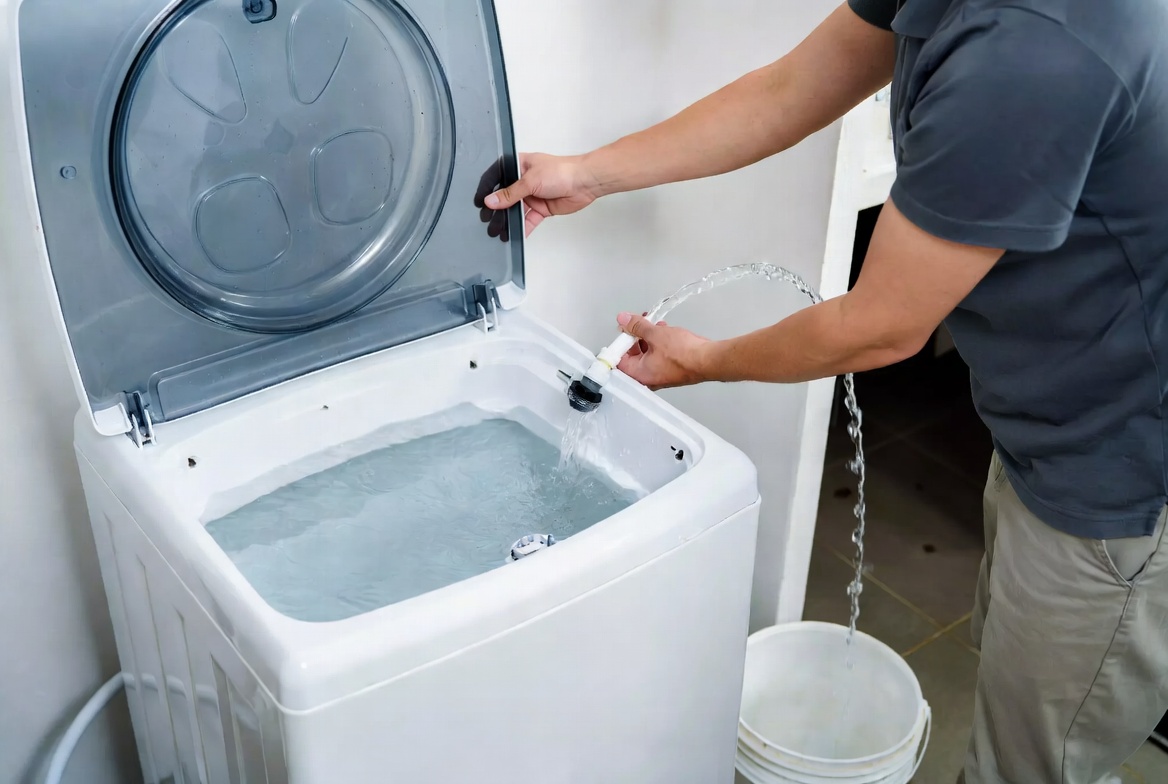
Unplug your machine first. Then locate where the hose connects to the back of the washer. You’ll see either a hose clamp that needs loosening with a flathead screwdriver, or the hose might just push on with a connector that you can gently wiggle off. Have a bucket ready immediately—the moment that hose comes free, water starts pouring.
Lower the hose into your bucket or down into your bathtub if you’re doing this in the bathroom. Let the water drain completely. This method gives you the advantage of being able to catch all that water in one place, which you might want to do if you suspect there’s something blocking the hose.
Checking for Blockages While Draining
As the water drains, watch it carefully. If the water flows slowly or stops intermittently, there’s likely a blockage inside the hose. Once empty, you can run a plumbing snake through the hose to clear any obstructions. This is often when people discover why their machine wouldn’t drain in the first place.
Method Three: The Drain Pump Filter Cleaning
Many modern washers have a drain pump filter that catches lint, coins, and other debris. When this filter gets too full, water can’t pass through properly.
Finding Your Drain Pump Filter
This filter is usually located behind a small panel at the bottom front of your machine. It looks like a small cylindrical canister with a cap on the end. Your manual will show you exactly where yours is located.
How to Access and Clean the Filter
Place towels underneath before you start—there’s always some residual water. Slowly turn the filter cap counterclockwise. Water will dribble out as you do this. Once you’ve removed the cap, you can pull out the filter basket itself. Look inside and you’ll be amazed at what you find. I once pulled out three coins, a hair clip, and enough lint to make a small stuffed animal.
Clean the filter under running water, rinse it thoroughly, and wipe out the cavity where it sits. Reinstall it, making sure it’s tight, and you’re done. This simple maintenance often solves drainage problems immediately.
Method Four: Using a Plumbing Snake
If you suspect the clog is deeper in your drainage system, a plumbing snake is your weapon of choice.
What You’ll Need
- A plumbing snake or drain auger (you can rent these inexpensively at hardware stores)
- A bucket to catch water
- Towels for cleanup
- Gloves to protect your hands
Using the Snake Effectively
After you’ve manually drained as much water as possible using one of the previous methods, you can feed the snake into the drain hose. The augering action breaks up clogs and pushes debris through. It’s like using a mechanical toothbrush to clean a stubborn stain—the constant turning motion dislodges whatever’s stuck.
Push the snake slowly and steadily. You’ll feel resistance when you hit the clog. Keep turning and pushing until you feel it break through. Then reverse the snake and pull it back out, bringing the debris with it.
Method Five: Checking the Drain Standpipe
Sometimes the problem isn’t your washer at all—it’s the standpipe or wall drain where the hose connects.
What Is a Standpipe?
A standpipe is that plastic or metal pipe that sticks up behind or near your washing machine. The drain hose slides into it, and water flows down into your home’s plumbing system. If this pipe gets clogged, your washer can’t drain properly even though the machine itself is working fine.
Clearing a Blocked Standpipe
Disconnect your drain hose from the standpipe and look down inside it. You might see lint, debris, or a solid blockage. Use a plumbing snake or even a bent wire coat hanger to reach down and pull out whatever’s blocking the pipe. Sometimes it’s just a mass of lint that’s accumulated over years of laundry.
Once clear, reconnect your hose and test your washer. Many people are surprised to discover this was their problem all along.
Method Six: Testing the Drain Pump
If you’ve tried everything else and water still won’t drain, your drain pump might be genuinely broken.
Signs of a Failed Drain Pump
A broken pump usually makes unusual sounds—grinding, squealing, or complete silence when the drain cycle should be running. If your machine sounds normal but just won’t drain, the pump is a likely culprit.
When to Call a Professional
Replacing a drain pump requires some technical skill and often involves partially disassembling your washing machine. This is where I’d recommend bringing in a professional repair technician. Attempting this yourself without experience could damage other components.
Important Safety Precautions
Before you start draining your washer, let’s talk safety because prevention is always better than dealing with accidents.
Electrical Safety First
Always—and I mean always—unplug your washing machine before attempting any drainage method. Water and electricity are a dangerous combination. Even if you’re just using the manual drain valve, it’s not worth the risk.
Water Temperature Considerations
Depending on what cycle your washer stopped on, that water might be hot. Be careful when working around the drain. If you’re draining into a bucket, make sure it’s heatproof. Wear gloves if the water feels warm to the touch.
Protecting Your Home’s Floors
Water damage is expensive. Lay down plenty of towels and consider using a wet vac to capture water quickly. If you’re draining several gallons, directing it toward a floor drain or your bathtub is much safer than letting it pool on your kitchen or laundry room floor.
Preventing Future Drainage Problems
Once you’ve dealt with your current situation, you’ll want to make sure it doesn’t happen again. Here’s what regular maintenance looks like.
Routine Maintenance Tasks
Clean your drain pump filter every few months if you do a lot of laundry. Check your drain hose periodically for kinks or damage. Use drain cleaning tablets designed for washing machines to keep everything flowing smoothly. These simple steps can add years to your machine’s life and prevent emergency drainage situations.
Using Lint Traps Effectively
Most experts recommend using a laundry bag for delicate items that shed lint. This dramatically reduces the amount of debris that reaches your drain pump filter. It’s like putting a goalie in front of your filter—it catches the problem before it becomes a problem.
Conclusion
Dealing with a washer full of water can definitely feel stressful in the moment, but as you can see, you have several practical solutions at your disposal. Most of the time, the issue can be resolved in under an hour using simple techniques and basic tools you probably already have at home. Start with the simplest method first—the manual drain valve—and work your way through the other options if needed. Remember to always prioritize safety by unplugging your machine and being cautious of hot water. With a little bit of troubleshooting and the steps outlined in this guide, you’ll have your washer draining normally again and be back to doing laundry without worry. And who knows? You might just save yourself a few hundred dollars in repair costs by solving this yourself.
Frequently Asked Questions
Is it safe to use my washing machine if water won’t drain completely?
No, you shouldn’t continue using your washer if it’s not draining properly. Operating it repeatedly while full of water can damage the drum, motor, and other internal components. The stagnant water can also develop mold and mildew, creating health hazards and unpleasant odors. Fix the drainage issue first, then run a cleaning cycle before resuming normal use.
How much does it cost to fix a washer that won’t drain?
If you’re doing it yourself, the cost could be minimal—maybe just the cost of renting a plumbing snake if needed, which runs about ten to twenty dollars. If you call a repair technician, expect to pay anywhere from one hundred fifty to four hundred dollars depending on the problem and your location. A new drain pump typically costs between two hundred and five hundred dollars installed.
Can I use bleach to unclog my washer’s drain?
While bleach can help with bacterial or mold growth, it won’t clear physical blockages like lint or debris. If you want to use bleach for cleaning purposes, only use it after the water has drained successfully. Never pour bleach into a washer that’s already full of water and not draining, as this can create an unsafe situation and won’t solve your actual problem.
Why does my washing machine drain slowly even though it technically works?
A slow drain usually indicates a partial blockage rather than a complete failure. This is commonly caused by lint buildup in the filter, a kinked hose, or debris in the standpipe. Start by cleaning the drain pump filter and checking your hose for kinks. If that doesn’t improve things, running a plumbing snake through the system should resolve it.
Should I attempt drain pump replacement myself?
Unless you have experience with appliance repair, I’d recommend leaving drain pump replacement to the professionals. The process varies significantly between washer models and often requires removing multiple panels and disconnecting electrical connectors. One mistake could damage your machine further. The labor cost is worth the peace of mind and the guarantee that comes with professional work.
“`