How to Emulsify Oil in Water Successfully: A Complete Guide
Have you ever wondered why oil and water don’t mix? It’s one of nature’s most fundamental rules, yet we’ve found clever ways to break it. Emulsification is the secret sauce that lets us combine these two opposing liquids into something stable and useful. Whether you’re making mayonnaise in your kitchen, creating a skincare product, or working in a commercial food processing facility, understanding how to emulsify oil in water is a skill worth mastering.
Outline of This Article
- Understanding the Science Behind Oil and Water
- What Exactly Is an Emulsion?
- The Role of Emulsifiers in the Process
- Methods for Emulsifying Oil in Water
- Step-by-Step Emulsification Process
- Common Mistakes to Avoid
- Temperature and Its Impact
- Equipment You’ll Need
- Practical Applications and Examples
- Troubleshooting Failed Emulsions
- Natural Versus Synthetic Emulsifiers
- Storage and Stability Tips
- Advanced Techniques for Better Results
- Conclusion
- Frequently Asked Questions
Understanding the Science Behind Oil and Water
Before we dive into the mechanics of emulsification, let’s talk about why oil and water are like two stubborn friends who refuse to sit at the same table. Water molecules are polar, meaning they have a positive charge on one end and a negative charge on the other. Oil molecules, on the other hand, are non-polar. They don’t have this electrical imbalance. Think of it like trying to fit puzzle pieces from two completely different puzzles together—they’re just not designed to work with each other.
Water molecules love sticking to other water molecules through hydrogen bonding. This creates an invisible barrier around the water, pushing away anything that doesn’t match its polarity. Oil, being non-polar, feels like an outsider at a water party. This fundamental incompatibility is what makes emulsification such an interesting challenge. Yet, with the right approach and understanding, we can force these two reluctant partners to work together beautifully.
What Exactly Is an Emulsion?
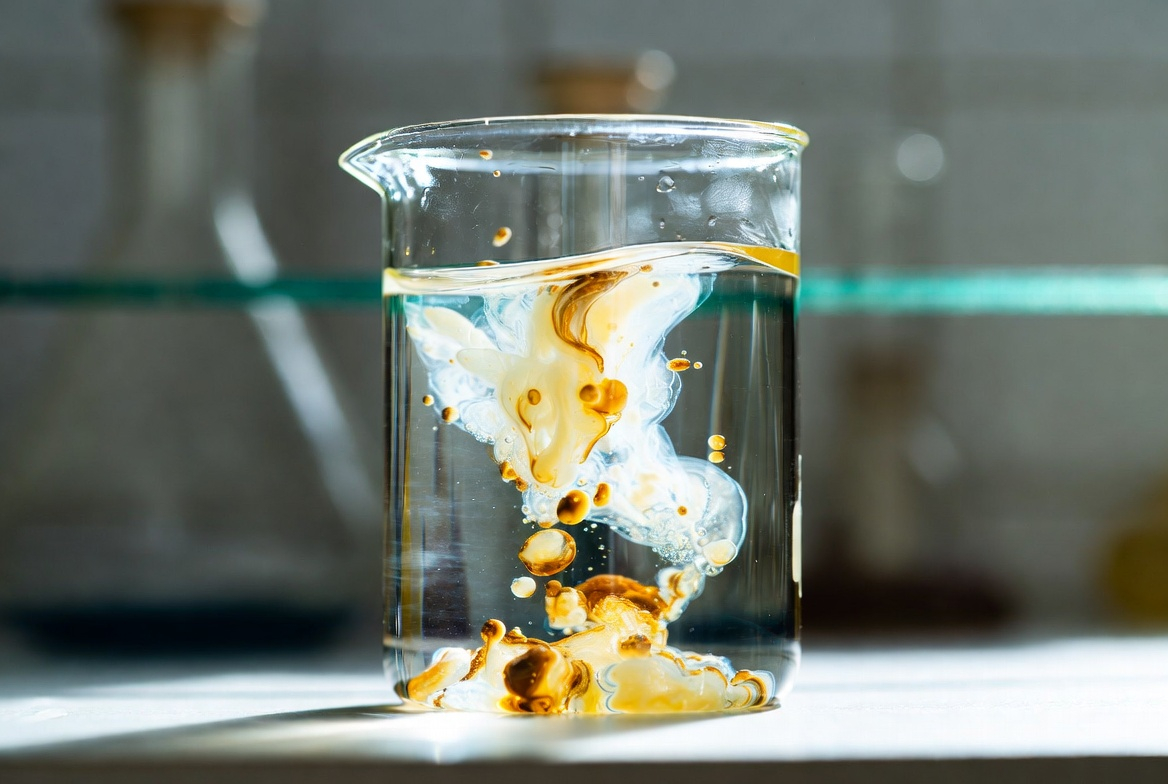
An emulsion isn’t just mixing oil and water together and hoping for the best. It’s a specific type of mixture where one liquid is dispersed as tiny droplets throughout another liquid. Imagine a cloud floating in the sky—those are water droplets suspended in air. Similarly, in an emulsion, we’re suspending tiny oil droplets throughout a water base, or sometimes the reverse.
Types of Emulsions
There are two main types of emulsions you should know about. The first is oil-in-water (O/W), where oil droplets float around in a water base. This is what you find in milk, mayonnaise, and most skincare creams. The second type is water-in-oil (W/O), where water droplets are dispersed in an oil base. Butter and some heavy moisturizers are great examples of this type.
The key difference between these types matters because it determines how your final product will feel, spread, and perform. Oil-in-water emulsions tend to feel lighter and more spreadable. Water-in-oil emulsions feel richer and more occlusive.
The Role of Emulsifiers in the Process
This is where the magic really happens. Emulsifiers are like diplomatic ambassadors between the oil and water worlds. They have a molecular structure that’s partly hydrophilic (water-loving) and partly lipophilic (oil-loving). One end of the emulsifier molecule waves at water, while the other end waves at oil.
How Emulsifiers Work
When you add an emulsifier to a mixture of oil and water, it positions itself at the boundary between the two liquids. The water-loving part faces the water phase, while the oil-loving part faces the oil phase. This creates a protective barrier around each tiny oil droplet, preventing them from clumping together and separating from the water. It’s like having tiny bodyguards stationed around each oil droplet, keeping unwanted oil neighbors from merging together.
The strength of an emulsifier is measured by something called its Hydrophilic-Lipophilic Balance, or HLB number. A lower HLB means the emulsifier prefers oil, while a higher HLB means it prefers water. For oil-in-water emulsions, you typically want emulsifiers with higher HLB numbers, usually between 8 and 18.
Methods for Emulsifying Oil in Water
There are several approaches you can take to create a stable emulsion. Let me walk you through the most practical methods that work in different settings.
The Manual Method
This is the classic approach that’s been used for generations. You’ve probably done this when making vinaigrettes or preparing homemade salad dressing. While this method is labor-intensive, it teaches you the fundamentals of emulsification and gives you excellent control over the process.
The Mechanical Method
Using equipment like blenders, food processors, or hand mixers speeds up the emulsification process dramatically. The mechanical action breaks oil droplets into smaller and smaller pieces while the emulsifier coats each one. This is the preferred method in professional kitchens and cosmetic laboratories.
The Ultrasonic Method
For industrial applications and advanced kitchen work, ultrasonic emulsification uses sound waves to disrupt the oil droplets. This creates incredibly fine, stable emulsions with very small particle sizes. However, this equipment is expensive and mainly used in professional settings.
Step-by-Step Emulsification Process
Now let’s get practical. Here’s how to successfully emulsify oil in water using the most accessible method—mechanical emulsification with a blender or mixer.
Step One: Gather Your Ingredients
First, assemble your emulsifier. Common choices include egg yolk (lecithin), mustard, gums like xanthan gum, or commercial emulsifiers like polysorbate 80. Choose based on what you’re making and your dietary preferences. Have your oil ready—any type will work depending on your final product goals. And prepare your water, which can be plain water, broth, juice, or any water-based liquid.
Step Two: Start with Water and Emulsifier
Pour your water-based ingredient into your blender or mixing bowl first. Add your emulsifier and blend or mix thoroughly for about 30 seconds. This ensures the emulsifier is evenly distributed through the water phase. This is a crucial step many people skip, but it sets you up for success.
Step Three: Add Oil Slowly
Here’s the patience-testing part. Turn on your mixer or blender to a medium speed and begin adding oil in a thin, steady stream. Start with just a few drops if using a blender. Too much oil too fast overwhelms the emulsifier’s capacity to coat the droplets, and your emulsion will break apart. Think of it like adding guests to a party—if you invite too many too quickly, chaos erupts.
Step Four: Monitor Consistency
As you add oil, watch the mixture. You should see it thickening and becoming paler as the emulsion forms. This visual feedback tells you the process is working. If it starts looking grainy or separating, you’ve added oil too quickly. Stop adding oil and blend at higher speed to try salvaging it, or start over.
Step Five: Continue Adding Oil Gradually
Once your emulsion has thickened to a noticeable degree—usually after the first few tablespoons of oil—you can increase the rate at which you add oil slightly. However, keep the stream gradual. The final mixture should be smooth, creamy, and homogeneous.
Common Mistakes to Avoid
Learning what not to do is just as important as learning the correct method. I’ve seen countless emulsions fail because of these preventable errors.
Adding Oil Too Quickly
This is the number one culprit. When oil is added too fast, there isn’t enough emulsifier available to coat all the oil droplets. They collide with each other and merge back into a separated mass. Your emulsion breaks, and you’re left with a greasy, separated mess.
Using Room Temperature Ingredients
Temperature stability matters more than you’d think. If your ingredients are at very different temperatures, the emulsion struggles to form properly. Room temperature or slightly warm ingredients (around 70 to 75 degrees Fahrenheit) work best for most applications.
Forgetting to Fully Incorporate the Emulsifier
Some emulsifiers need time to hydrate or activate. If you don’t give them this time before adding oil, they won’t perform optimally. Always do a brief mixing step with just water and emulsifier first.
Using Insufficient Emulsifier
There’s a limit to how much oil one molecule of emulsifier can handle. Too much oil relative to your emulsifier amount means inadequate coverage, leading to separation. Use the correct proportions for your specific emulsifier.
Temperature and Its Impact
Temperature isn’t just about comfort; it directly affects how well emulsification works. Let me explain why this matters.
The Ideal Temperature Range
Most emulsions form best at room temperature, between 65 and 75 degrees Fahrenheit. At these temperatures, both oil and water have optimal viscosity for mixing. The emulsifier molecules move at a speed that allows them to settle at the oil-water interface effectively.
Heat and Emulsion Stability
Heating an emulsion can actually help in some cases. Gentle warmth increases molecular movement, which can help the emulsifier position itself better. However, excessive heat can damage some emulsifiers, particularly natural ones like egg yolk. The proteins denature, and your emulsion breaks.
Cold Temperature Challenges
Cold temperatures make both oil and water more viscous. This thicker consistency slows down emulsifier migration and can prevent proper emulsion formation. If you’re working in a cold environment, let your ingredients come to room temperature first.
Equipment You’ll Need
You don’t need fancy or expensive equipment to emulsify oil successfully. Here’s what works well at different levels.
Basic Home Kitchen Setup
- A blender or food processor for mechanical mixing
- A whisk and bowl for manual emulsification
- Measuring spoons and cups for accurate proportions
- A thermometer to monitor temperature
- Clean utensils and containers
Intermediate Setup
- An immersion blender for more controlled mixing
- A stand mixer with paddle attachment
- Glass or stainless steel bowls (avoid plastic which can absorb oils)
- A scale for precise measurements
Professional Setup
Commercial operations use industrial emulsifiers, homogenizers, and specialized equipment. These machines create incredibly uniform, stable emulsions through precise control of shear forces and droplet size.
Practical Applications and Examples
Let’s look at real-world examples of emulsification to understand how this science plays out in your daily life.
Mayonnaise: The Classic Emulsion
Mayonnaise is essentially an oil-in-water emulsion where egg yolk acts as the emulsifier. The lecithin in egg yolk has the perfect HLB balance for this application. When made correctly, mayonnaise is about 70 to 80 percent oil, suspended in egg yolk and water. This shows just how effective a good emulsifier can be.
Salad Dressings and Vinaigrettes
Some vinaigrettes stay emulsified (like creamy ranch), while others separate and need shaking before use (like basic vinaigrette). The difference? Creamy versions contain emulsifiers like mustard or mayo, while basic vinaigrettes don’t.
Skincare and Cosmetics
Moisturizing creams, lotions, and serums are all emulsions. The feel of these products—whether light and absorbing or rich and occlusive—depends on whether they’re oil-in-water or water-in-oil emulsions. The emulsifiers used must be skin-safe and stable at various temperatures.
Food Products
Milk, cream, ice cream, and even some chocolates are emulsions. The food industry relies heavily on stable emulsions for texture, mouthfeel, and shelf stability. Commercial emulsifiers used in food production are carefully regulated and tested for safety.
Troubleshooting Failed Emulsions
Sometimes things go wrong, and your mixture refuses to emulsify. Here’s how to diagnose and fix common problems.
The Grainy, Separated Mixture
If your emulsion looks grainy or you see visible separation, you’ve likely added oil too quickly. Try this fix: Start fresh with a new batch of water and emulsifier. Slowly drizzle in your broken emulsion while blending. Sometimes, this re-emulsification works because you’re starting over with proper conditions.
The Too-Thin Emulsion
If your emulsion never thickened as expected, you probably didn’t use enough emulsifier or didn’t blend for long enough. Add a tiny bit more emulsifier and blend for several minutes longer. Sometimes patience is the solution.
The Separated Emulsion That Was Fine Initially
If your emulsion separated after you thought it was done, temperature changes are often the culprit. Keep the emulsion at a stable temperature. If separation has already occurred, gentle reblending might bring it back together temporarily, but you may need to start fresh for a permanently stable result.
Natural Versus Synthetic Emulsifiers
You have choices when it comes to emulsifiers, and each option has distinct advantages and limitations.
Natural Emulsifiers
Natural options include egg yolk, mustard powder, gums like xanthan gum or guar gum, and plant-based ingredients. These are great if you’re looking for clean labels and natural products. However, they can be less stable, particularly when exposed to heat, and they may impart flavor or color to your final product.
Synthetic Emulsifiers
Manufactured emulsifiers like polysorbates, sorbitan esters, and lecithin derivatives offer superior stability and consistency. They’re odorless, flavorless, and perform predictably across different conditions. The trade-off is they’re more processed and some consumers prefer to avoid them.
Choosing Between Options
Your choice depends on your goals. Making homemade mayo for lunch? Use