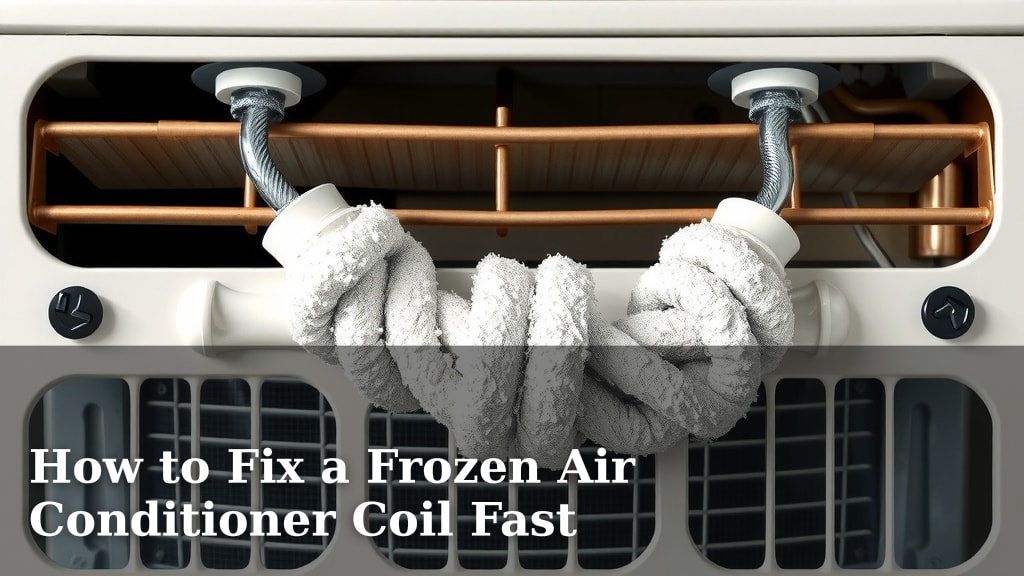
How to Fix a Frozen Air Conditioner Coil Fast
Yes, you can fix a frozen air conditioner coil yourself by turning off your AC, finding the blockage, and allowing the ice to melt. This common AC problem usually stems from **poor airflow** or a **low refrigerant charge**. Addressing these issues promptly can save you from a costly breakdown.
A frozen AC coil means your air conditioner isn’t working as efficiently as it should. You might notice **weak airflow** from your vents or water pooling around your indoor unit. This often happens when your air filter is clogged, preventing warm air from reaching the coil. We found that a simple filter change can sometimes solve this.
- Turn off your AC to let the ice melt.
- Check and replace your air filter.
- Look for obstructions around the indoor unit.
- Monitor for leaks or low refrigerant.
- Call a professional if the problem persists.
Let’s walk through the simple steps you can take to thaw out that frosty coil and get your AC blowing cold air again.
Troubleshooting Your Frozen Air Conditioner Coil
A frozen AC coil is a common headache for homeowners. You might notice your air conditioner isn’t cooling effectively. Or maybe you hear strange noises. Seeing ice on your indoor unit is a sure sign something is wrong. But don’t panic! You can often fix this yourself.
Why Does My AC Coil Freeze Up?
Several factors can lead to a frozen AC coil. The most frequent culprits are poor airflow and a low refrigerant charge. Think of your AC like your body. It needs good circulation to function well. When airflow is restricted, the coil can’t absorb heat properly. It gets too cold and ice forms.
The Airflow Obstruction Problem
Poor airflow is probably the most common reason for a frozen coil. Your AC’s indoor unit, the evaporator coil, needs a steady stream of warm air to pass over it. This warm air transfers its heat to the refrigerant inside the coil. If something blocks this airflow, the coil gets too cold.
The most frequent offender is a **dirty air filter**. We found that a clogged filter is responsible for many AC issues. Dust and debris build up, preventing air from moving freely. Other airflow issues can include blocked vents or a malfunctioning blower motor. Keeping these clear is vital.
Low Refrigerant Levels
Another major reason for freezing is low refrigerant. Refrigerant is the substance that absorbs heat from your home. It travels through the system in a closed loop. If there’s a leak, your refrigerant level drops. This causes the pressure in the system to fall. Lower pressure means lower temperatures. The coil can get so cold that ice forms on it.
Unlike a dirty air filter, low refrigerant is not a DIY fix. It usually indicates a leak that needs professional repair. Many experts suggest checking for this if other solutions don’t work (HVAC.com).
Steps to Safely Thaw Your AC Coil
The first and most important step is to turn off your air conditioner. You do not want the unit running while it’s frozen. This can cause further damage. It can also lead to water damage as the ice melts.
Step 1: Turn Off Your AC System
Find your thermostat and switch it to the “Off” setting. It’s also a good idea to turn off the power to your indoor unit at the breaker box. This ensures no accidental start-ups occur. Safety first, always!
Step 2: Let the Ice Melt
Now, you just need to be patient. It can take several hours for a thick layer of ice to completely melt. You can speed up the process slightly by opening up your system’s access panels, but be careful not to damage anything. Ensure you place towels or a shallow pan underneath to catch the melting water. We found that leaving the system off overnight is often the easiest way to ensure it’s fully thawed.
Step 3: Check and Replace Your Air Filter
Once the ice is gone, it’s time to investigate the cause. The most common culprit is a dirty air filter. Locate your air filter – it’s usually near your indoor unit or in a return air vent. Pull it out and inspect it. If it looks clogged with dust and debris, it’s time for a new one. Many manufacturers recommend replacing filters every 1-3 months, depending on your home environment (Energy Star).
Installing a new filter is simple. Just slide the old one out and slide the new one in, making sure it’s oriented correctly. Your AC will thank you with better airflow.
Step 4: Inspect for Airflow Blockages
Besides the air filter, other things can block airflow. Walk around your home and check all your supply and return air vents. Are they clear of furniture, curtains, or anything else? Make sure they are open and unobstructed. Sometimes, debris can get pulled into the system and block the fan or the coil itself.
If you’re comfortable, you can gently inspect the area around the indoor unit’s coil. Look for any obvious obstructions. Remember, be extremely careful if you open any panels. If you’re unsure, it’s best to leave this to a professional.
When to Call a Professional HVAC Technician
If you’ve gone through these steps and your AC coil freezes up again soon after, it’s time to call in the experts. Persistent freezing often points to more serious issues that require specialized tools and knowledge.
Signs You Need Professional Help
Here are some clear indicators that you should contact an HVAC technician:
- Your AC coil freezes up again shortly after thawing and changing the filter.
- You notice a hissing sound, which could indicate a refrigerant leak.
- There’s visible damage to your indoor unit or the refrigerant lines.
- You suspect a refrigerant leak but aren’t sure how to proceed.
- Your system continues to blow warm air despite your efforts.
What a Technician Will Do
A qualified technician has the equipment to accurately diagnose the problem. They can measure refrigerant levels and check for leaks. They can also test your system’s components, like the blower motor and capacitors. If they find a refrigerant leak, they can repair it and recharge your system. Many experts agree that dealing with refrigerant requires EPA certification (ACCA).
Here’s a quick checklist to help you remember the key steps:
- Turn off your AC immediately if you see ice.
- Allow the coil to melt completely.
- Check and replace your air filter.
- Ensure all vents are open and clear.
- If the problem returns, call a professional.
Taking these steps can help you get your air conditioner back in working order. It can save you money and keep your home comfortable. Remember, regular maintenance is key to preventing future issues like a frozen coil.
Conclusion
You’ve learned that a frozen AC coil isn’t the end of the world. Often, it’s a sign of simple issues like a dirty air filter or blocked vents. By following the steps to safely thaw your system and identify potential causes, you can often get your AC running smoothly again. Remember to turn off your system first, allow it to melt completely, and always check that air filter. If the problem pops up again, don’t hesitate to call a professional. Taking these steps ensures your home stays cool and your AC unit stays healthy.
Frequently Asked Questions
How long does it take for an AC coil to thaw?
It can take several hours for a frozen AC coil to thaw completely. The exact time depends on how much ice has built up. You can speed up the process by ensuring the AC system is off and air can circulate around the unit. Patience is key here; turning the system on too soon can cause damage.
Can I use a fan to speed up the thawing process?
Yes, you can use a fan to help circulate air around the frozen coil and speed up the thawing. Point a regular room fan towards the indoor unit. Make sure your AC system is still turned off at the thermostat and breaker. This helps the ice melt more quickly and safely.
What happens if I don’t fix a frozen AC coil?
Ignoring a frozen AC coil can lead to bigger problems. The ice can expand and damage the delicate fins on your evaporator coil. A continuously frozen unit works harder, increasing energy bills and wear and tear. In severe cases, it can even lead to compressor failure, a very expensive repair.
Should I clean the AC coil while it’s frozen?
It’s best not to clean the AC coil while it’s frozen. Your priority should be to turn off the system and let the ice melt completely. Attempting to clean it while frozen can be ineffective and may damage the coil or other components. Once it’s thawed, you can inspect for dirt buildup.
How often should I check my air filter to prevent freezing?
You should check your air filter at least once a month. Depending on your home’s environment, you might need to replace it more often. Homes with pets, allergies, or high dust levels often require filter changes every 30-60 days. Regular checks are a simple way to prevent airflow issues that cause freezing.
![7 Best Energy Efficient Room Air Conditioner [2026]](https://bathroomexplorer.com/wp-content/uploads/2026/06/7-best-energy-efficient-room-air-conditioner-2026-featured-768x432.jpg)
![7 Best Indoor Air Conditioner No Window [2026]](https://bathroomexplorer.com/wp-content/uploads/2026/06/7-best-indoor-air-conditioner-no-window-2026-featured-768x432.jpg)