Install AC in Vinyl Window: Step-by-Step Guide
Yes, you can absolutely install an air conditioner in a vinyl window, and it’s a common and achievable DIY project. The key is to use the right support brackets and sealing methods to ensure a secure fit and prevent drafts. We found that many homeowners successfully tackle this task with a few basic tools and careful attention to detail.
Vinyl windows offer a bit more flexibility than older styles. Installing an AC unit involves carefully measuring the opening and preparing the window frame for the unit. Proper support is essential because ACs can be quite heavy, and you want to avoid putting too much stress on the vinyl. We found that ensuring a tight seal is also vital for efficiency and comfort.
- Measure your window opening carefully.
- Gather the necessary AC unit and support hardware.
- Prepare the vinyl window frame for installation.
- Secure the AC unit firmly in place.
- Seal any gaps to prevent air leaks.
Let’s walk through exactly how to get your air conditioner installed in your vinyl window, step by step.
Installing an Air Conditioner in Your Vinyl Window: A Step-by-Step Guide
You’re ready to beat the heat, and your vinyl window is the perfect spot for your new air conditioner. This isn’t a job you need a contractor for! We found that with a little preparation and the right approach, installing a window AC in vinyl is totally doable. Let’s get your cool air flowing.
Preparing Your Window for the AC Unit
Before you even think about lifting that AC, let’s make sure your window is ready for the job. Vinyl windows are a bit more forgiving than older metal or wood frames, but you still need to be prepared. We found that proper preparation prevents headaches later.
Measuring for a Perfect Fit
This is arguably the most important step. You don’t want to buy an AC only to find out it’s too big or too small. Measure the width and height of the opening where the AC will sit. Also, measure the depth of the window frame. This ensures you select an AC unit that fits snugly.
We recommend measuring at least twice. A small error here can lead to a much bigger problem. Think of it like cutting fabric; measure twice, cut once!
Gathering Your Tools and Materials
You’ll need a few things to get this done right. Having everything ready beforehand saves time and frustration. We found that a well-stocked toolbox makes any DIY project smoother.
- Your window air conditioning unit
- Support brackets (often included, but sometimes sold separately)
- Foam insulation strips or weatherstripping
- Screwdriver set
- Level
- Measuring tape
- Pencil
- Possibly a drill and drill bits (check bracket instructions)
- Safety glasses (always important!)
Assessing Your Vinyl Window Frame
Vinyl windows are generally sturdy, but they can flex. You need to make sure the frame can support the weight of the AC. Older vinyl frames might show signs of wear. If your window frame feels loose or wobbly, you might need to reinforce it first. We found that most modern vinyl frames are designed to handle this, but a quick inspection is wise.
Installing the Air Conditioner: The Main Event
Now for the exciting part – getting the AC into its new home! This involves carefully placing the unit and securing it properly.
Positioning the Air Conditioner
Most window AC units are designed to tilt slightly towards the outside. This allows condensation to drain away. Check your AC’s manual for the recommended tilt angle. You’ll want to place the unit so it’s level side-to-side and has the correct downward tilt from front to back. We found that a slight angle is key for proper drainage.
Using Support Brackets for Safety and Stability
This is where vinyl windows can be a bit tricky. The weight of the AC needs to be distributed correctly. Support brackets are your best friend here. They take the load off the window frame itself.
Types of Support Brackets
There are several types of brackets available. Some are simple L-shaped brackets that screw into the windowsill. Others are more robust, designed to brace against the exterior wall. Always follow the manufacturer’s instructions for the brackets you choose. We found that external support brackets offer the most stability for heavier units.
Attaching the Brackets
Position the brackets according to the AC unit’s weight and your window type. For many vinyl windows, you’ll screw one part of the bracket into the bottom of the window frame and another part to the exterior sill or wall. Make sure to drill pilot holes if necessary, especially with vinyl, to prevent cracking. We found that using a level during this process is non-negotiable.
Securing the AC Unit in Place
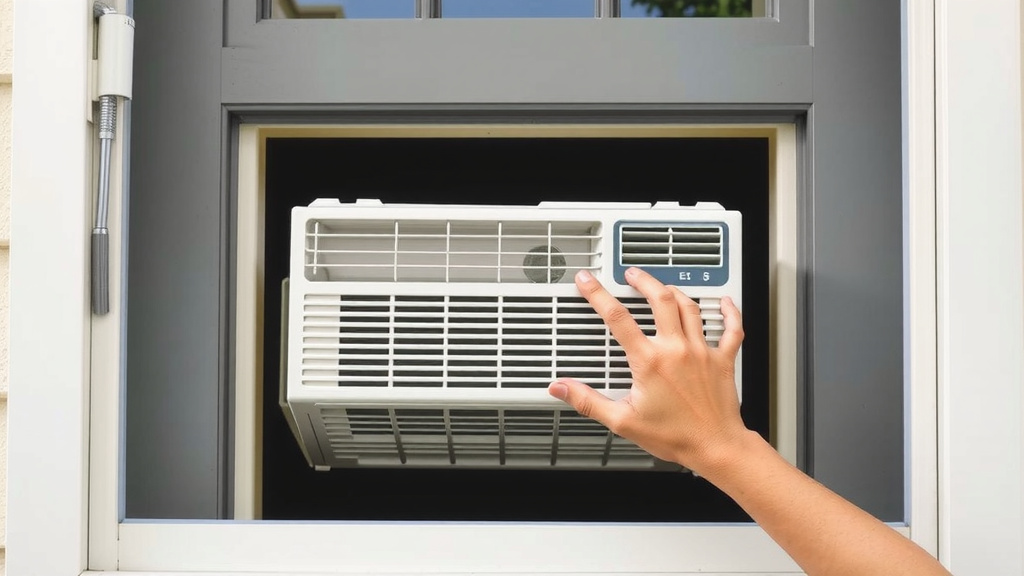
With the brackets in place, it’s time to slide the AC into the window opening. You might need a helper for this, as AC units can be awkward and heavy. Slide the unit until it rests securely on the bottom frame and is supported by your brackets. It should feel stable.
Next, extend the side panels of the AC unit to meet the window frame. These panels fill the gaps on either side. Secure them according to the AC unit’s instructions, usually with small screws or clips. We found that ensuring these panels are snug helps prevent warm air from entering.
Sealing Gaps for Maximum Efficiency
Even with the side panels in place, there might be small gaps. You need to seal these to keep cool air in and hot air out. This is crucial for your AC’s efficiency and your energy bill. We found that proper sealing can make a big difference.
Using Foam Insulation and Weatherstripping
Cut pieces of foam insulation or weatherstripping to fit any remaining gaps between the AC unit and the window frame, and between the side panels and the window itself. These materials are easy to work with and create an effective barrier against drafts. Push them firmly into place.
You can also use expandable foam spray for larger gaps, but use it sparingly, as it expands significantly. Be careful not to overfill, as this could damage your vinyl window frame. We found that foam tape is often the easiest DIY solution for small gaps.
Testing for Air Leaks
Once everything is installed and sealed, turn on your AC. Feel around the edges of the unit and the window frame. Can you feel any cool air escaping or warm air entering? If so, you might need to add a bit more insulation or adjust the side panels. A simple test is to hold a lit incense stick or a damp hand near the edges; you’ll see or feel the draft. We found that a thorough seal is key to optimal performance.
Your AC Installation Checklist
Here’s a quick rundown to make sure you’ve covered all your bases:
- Confirm AC unit fits your window opening.
- Install sturdy support brackets correctly.
- Ensure AC unit is level side-to-side and has a slight outward tilt.
- Secure side panels snugly.
- Seal all gaps with foam or weatherstripping.
- Test for air leaks and reinforce seals if needed.
Conclusion
You’ve got this! Installing an air conditioner in your vinyl window is a manageable DIY project that can bring sweet relief from the heat. Remember, proper measurements and sturdy support brackets are your foundation for success. Taking the time to seal all gaps thoroughly ensures your AC runs efficiently and keeps your home cool without wasting energy. With careful attention to these steps, you’ll be enjoying chilled air in no time. Now, go ahead and enjoy that cool breeze!
Frequently Asked Questions
Will installing an AC in my vinyl window damage the frame?
Generally, no, if done correctly. Vinyl frames are flexible, but excessive force or improper support can cause issues. Always use appropriate support brackets designed for window AC units and follow the bracket manufacturer’s installation instructions carefully to avoid stressing the vinyl.
How important is the outward tilt for a window AC in vinyl?
That slight downward tilt towards the outside is very important. It allows condensation to drain properly, preventing water buildup inside your home. We found that without the correct tilt, you might experience leaks or reduced cooling efficiency.
Can I install a heavy window AC unit in vinyl without extra support?
We strongly advise against this. Even though vinyl can be somewhat flexible, window AC units are heavy. External support brackets are essential to bear the weight and prevent stress on your vinyl window frame. Your AC’s manual and bracket instructions will specify the best support method.
What’s the best way to seal gaps around an AC in a vinyl window?
Foam insulation strips and weatherstripping are your best friends here. Cut them to size and press them firmly into any gaps between the AC unit, its side panels, and the window frame. For larger gaps, a bit of expandable foam can work, but use it sparingly.
Do I need a second person to install a window AC in vinyl?
Yes, having a helper is highly recommended. Window AC units can be awkward and surprisingly heavy. Lifting and positioning the unit safely is much easier and safer with an extra pair of hands to help manage its weight and alignment.
![7 Best Coil Cleaner For Air Conditioner [2026]](https://bathroomexplorer.com/wp-content/uploads/2026/06/7-best-coil-cleaner-for-air-conditioner-2026-featured-768x432.jpg)