Buying a Washing Machine: Your Complete Guide
Purchasing a washing machine can feel overwhelming, but the best way to buy one is by understanding your laundry needs and budget first. We found that considering drum size, spin speed, and energy efficiency will guide you to a reliable and cost-effective appliance that fits your home perfectly.
Before you dive into model numbers, think about the types of loads you typically wash and how often. We researched that front-loaders are generally more energy-efficient and gentler on clothes, while top-loaders often offer faster wash cycles and are easier to load. Don’t forget to check the water usage and noise levels, too.
- Assess your laundry habits.
- Compare front-load vs. top-load.
- Check energy and water ratings.
- Consider special features you need.
Ready to find the perfect fit for your laundry room? Let’s walk through the key factors to consider when buying a washing machine, step by step.
Choosing Your Next Washing Machine
Finding the right washing machine is more than just picking a shiny appliance. It’s about finding a workhorse that fits your life. We’ve researched what truly matters so you can make a smart choice. Let’s dive into the details.
Understanding Washing Machine Types
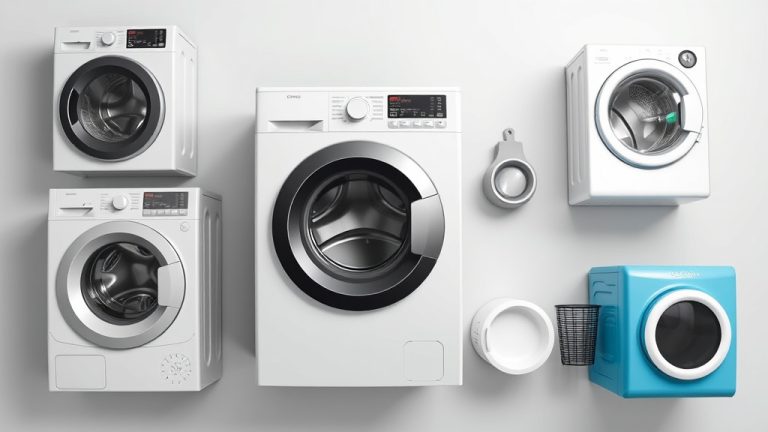
The first big decision you’ll make is choosing between a front-load or a top-load washing machine. Both have their fans and their quirks. Understanding these differences is key to finding the best fit for your laundry room.
Front-Load Washers: The Efficient All-Stars
Front-load washers have a door on the front, like a dryer. You load clothes into the drum horizontally. We found that these machines are often praised for their energy efficiency. They typically use less water than top-loaders.
They also tend to be gentler on your clothes. This is because they use an impeller or paddles to tumble clothes rather than an agitator. Many experts suggest this can help your garments last longer (Consumer Reports).
The downside? They can sometimes have longer cycle times. Also, you can’t easily add a forgotten sock mid-cycle without stopping the machine. Bending down to load and unload can also be a strain for some.
Top-Load Washers: The Classic Choice
Top-load washers have a lid on top, and you load clothes vertically. They are what most people grew up with. There are two main types: those with an agitator in the center and those with an impeller at the bottom.
Washers with an agitator are very common. They use a central post to move clothes around. These can be tough on fabrics, but they often clean very well. Many find them to be a reliable workhorse for heavily soiled items.
Washers with an impeller use a low-profile cone or disc to move clothes. We found these are generally gentler on fabrics than agitator models. They also tend to offer more capacity, letting you wash larger loads. Plus, you can usually add items mid-cycle without issue.
Top-loaders are often quicker to load and unload, as there’s no bending required. Many also have faster cycle times, which is great if you’re always in a rush. However, they can sometimes use more water and energy than their front-load counterparts.
Capacity: How Much Laundry Do You Actually Do?
Washing machine capacity is measured in cubic feet. This tells you how much laundry the drum can hold. Think about the size of your household and how often you do laundry. This will help you pick the right capacity.
Matching Capacity to Your Needs
For a single person or a couple, a smaller capacity machine (around 2-3 cubic feet) might be enough. You’ll likely do laundry once a week or so. These machines are generally more affordable and use less water and energy.
If you have a family of three or four, or you tend to let laundry pile up, a medium capacity (around 3.5-4.5 cubic feet) is often a good choice. This will allow you to wash larger loads, like bedding or towels, with ease.
For larger families (five or more people) or those who wash bulky items like comforters frequently, a high-capacity machine (5 cubic feet or more) is probably best. We found these can handle bigger loads, saving you time and trips to the laundromat.
Key Features to Consider
Beyond the basic type and capacity, washing machines come with a host of features. Some are essential, while others are nice-to-haves. Let’s break down the most important ones.
Spin Speed: The Faster, The Drier
Spin speed is measured in revolutions per minute (RPM). A higher RPM means the drum spins faster. This extracts more water from your clothes. Many experts recommend looking for a machine with a spin speed of at least 1000 RPM (Energy Star).
Higher spin speeds mean your clothes will come out of the washer drier. This can significantly reduce drying time, whether you use a dryer or hang them to air dry. It can also lead to energy savings if you use a clothes dryer.
Energy and Water Efficiency: Saving Money and the Planet
Look for the Energy Star label. This means the washing machine meets strict energy efficiency guidelines set by the U.S. Environmental Protection Agency. These machines use less energy and water, saving you money on utility bills.
Water usage is also a big factor. Many newer machines are designed to use much less water than older models. This is good for your wallet and for conserving a precious resource. Check the water factor (WF) rating, which indicates gallons of water used per cubic foot of capacity.
Noise Levels: A Peaceful Laundry Room
Do you live in an apartment, or is your laundry room close to living spaces? If so, noise levels are important. Some washing machines can be quite loud during their spin cycle. We found that many manufacturers now design machines with noise reduction technology.
Look for reviews that mention noise levels. Some machines even have vibration reduction systems. These can make a big difference in keeping your home peaceful.
Specialized Wash Cycles and Features
Most machines come with standard cycles like normal, delicate, and heavy-duty. But many offer specialized options. Consider if these are a good fit for your laundry habits.
- Sanitize cycles: Use high heat to kill bacteria. Great for bedding or baby clothes.
- Steam cycles: Can help remove wrinkles and freshen clothes.
- Allergen cycles: Designed to remove pet dander and other allergens.
- Quick wash cycles: For lightly soiled items you need in a hurry.
- Smart features: Wi-Fi connectivity to control your washer from your phone.
Think about what you *actually* need. Do you have a lot of delicate items? Do you often need to do a quick wash? Don’t pay for features you’ll never use.
Budgeting for Your Washing Machine
Washing machines range in price from a few hundred dollars to over a thousand. Your budget will heavily influence your choices. We found that setting a clear budget upfront can help narrow down your options quickly.
Cost vs. Long-Term Savings
While it’s tempting to go for the cheapest option, remember to consider long-term costs. A more energy-efficient machine might cost more initially but will save you money on utility bills over its lifespan. This is often a smart investment.
Don’t forget to factor in delivery and installation costs. Some retailers include these, while others charge extra. Also, consider the warranty offered. A longer warranty can provide peace of mind and protect you from unexpected repair costs.
Before You Buy: A Quick Checklist
Ready to make your decision? Run through this quick checklist to make sure you haven’t missed anything:
- Have you assessed your typical laundry loads and frequency?
- Do you prefer a front-load or top-load machine?
- Is the capacity large enough for your household?
- Does it have the spin speed you need?
- Is it Energy Star certified?
- Does it fit comfortably within your budget?
Conclusion
You’ve now got the knowledge to choose your next washing machine wisely. By focusing on your household’s laundry habits and budget, you can pinpoint the perfect type, capacity, and features. Remember that a higher initial cost can often mean greater long-term savings on energy and water bills. Take your time, use our checklist, and soon you’ll be enjoying a reliable appliance that makes laundry day a little easier.
Frequently Asked Questions
How do I know what washing machine capacity is right for my family?
Consider the number of people in your household and how often you do laundry. For smaller families or couples, a medium capacity might suffice. Larger families or those who wash bulky items often will benefit from a high-capacity machine.
Are front-load washers really more energy-efficient than top-load washers?
Generally, yes. Our research found that front-load washers typically use less water and less energy per cycle. They also tend to be gentler on clothes, which can extend garment life.
What does “spin speed” mean for a washing machine?
Spin speed is measured in revolutions per minute (RPM). A higher RPM means the machine spins faster, extracting more water from your clothes. This leads to shorter drying times, saving you energy and time.
Should I prioritize special wash cycles like steam or sanitize?
Think about your typical laundry needs. If you often wash delicate items, sanitize baby clothes, or deal with allergens, these cycles are beneficial. If not, you might save money by opting for a model with standard cycles only.
Are more expensive washing machines always better?
Not necessarily. While premium models offer advanced features, a mid-range machine with the right capacity and efficiency ratings can be perfectly adequate. Focus on your needs and long-term cost savings, not just the price tag.