Stacked Washer Dryer Width: What You Need to Know
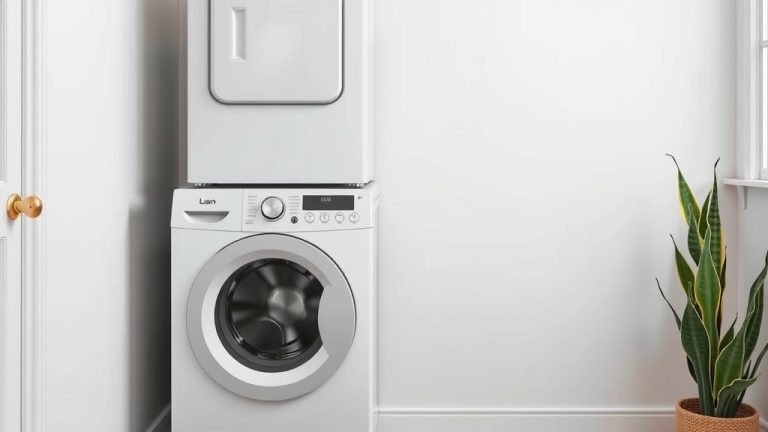
A stacked washer and dryer typically measures about 27 to 30 inches wide. This compact design makes them perfect for small laundry rooms or apartments. You’ll find most models are around 27 inches across, but it’s wise to measure your space carefully. Knowing the standard width helps you budget your laundry area effectively.
When considering a stacked unit, remember that width isn’t the only dimension. You also need to think about the height and depth. Stacking units combine a washer and a dryer into one tall appliance. This saves considerable floor space compared to side-by-side models. Many homeowners are surprised by how much room they can reclaim.
- Stacked washer and dryers are usually 27-30 inches wide.
- The most common width is around 27 inches.
- Always check the exact dimensions before buying.
- Consider height and depth too, not just width.
- They save a lot of floor space.
Let’s dive into the specific dimensions and what you need to measure for your own home.
Understanding Stacked Washer and Dryer Width
You’re likely wondering about the width of a stacked washer and dryer. This is a key measurement. Most stacked units measure between 27 and 30 inches wide. The most common size you’ll find is around 27 inches.
Think of it like buying a piece of furniture. You need to know if it will fit your space. This width is similar to a standard refrigerator. It’s designed to be space-efficient. This makes them a popular choice for smaller homes.
The Standard Dimensions You Can Expect
When you look at stacked washer and dryer units, they are engineered to be quite slim. The 27-inch width is quite standard across many brands. This is the width of the appliance itself, from one side to the other. It’s a very common footprint.
Some manufacturers offer models that are slightly wider. These might push closer to 30 inches. This extra width could mean a slightly larger drum capacity. But for most people, the difference is minimal. It’s always best to check the specific model you’re interested in.
Why Width Matters for Your Laundry Space
The width is crucial for several reasons. First, it determines if the unit will physically fit through doorways and into your laundry area. You don’t want to buy a new appliance only to find it can’t get into your home. Measuring your doorways and hallways is essential pre-shopping work.
Second, the width impacts how much room you have left around the unit. Even if the appliance fits, you need clearance. This allows for ventilation and easy access. It also makes cleaning behind and around the unit much simpler. A little extra space can make a big difference in usability.
Beyond Width: Other Critical Dimensions to Measure
While width is your primary concern for fitting the unit into your home, don’t forget about height and depth. Stacked units are tall. They are designed to utilize vertical space. This is their main advantage.
The combined height can be significant. It’s often over 6 feet tall. You need to ensure it fits under any cabinets or shelving. You also need to consider the depth. This is how far the unit juts out from the wall. It affects how much floor space it truly occupies.
Height: Reaching for the Sky (and Your Ceiling)
The height of a stacked washer and dryer is substantial. You’re essentially combining two appliances. Most models are between 70 and 80 inches tall. Some can even reach up to 85 inches.
Before buying, measure the ceiling height in your laundry space. Also, check for any obstructions like light fixtures, vents, or low-hanging cabinets. You need enough room to stand comfortably in front of it. You might also need clearance for installation and service.
Depth: How Far Will It Stick Out?
The depth of a stacked unit is generally consistent with standard washers and dryers. You’ll typically see depths ranging from 30 to 35 inches. This measurement includes the main body of the appliance and any protruding parts like the door and control panel.
Think about your existing laundry room layout. Does the depth of the stacked unit interfere with walkways? You want to avoid a unit that sticks out too far. This can make the space feel cramped. It’s wise to measure the available depth in your room.
Comparing Stacked Units to Side-by-Side Models
It’s helpful to compare stacked units to their side-by-side counterparts. Side-by-side setups require much more floor space. They are typically 54 to 60 inches wide. This is almost double the width of a stacked unit.
For small apartments or tight laundry areas, side-by-side units are often not an option. Stacked units solve this problem. They offer a vertical laundry solution.
Space Savings: The Big Advantage
The primary benefit of a stacked washer and dryer is space efficiency. They take up the same floor space as a single appliance. This is a huge win for smaller homes. You gain significant usable floor area.
Imagine having more room for storage shelves or even a small folding station. That’s the power of going vertical. Many homeowners find they can reclaim a closet or a corner of a room. It transforms a cramped space.
When a Stacked Unit Might Not Be Ideal
However, stacked units aren’t for everyone. Their height can be a drawback. If you have mobility issues, reaching the top controls might be difficult. Also, servicing the dryer, which is on top, can sometimes be trickier for technicians.
Capacity can also be a factor. Some stacked units might have slightly smaller drums than their larger, side-by-side siblings. This is especially true for the dryer. If you do very large loads, you might want to consider this carefully.
Quick Checklist for Measuring Your Space
Before you hit the stores or browse online, make sure you have these measurements handy:
- Width of your laundry area opening: Measure the narrowest point.
- Height of your laundry space: Ensure clearance from floor to ceiling or cabinets.
- Depth of your laundry space: Measure from the wall to the furthest obstruction.
- Width of doorways and hallways: Make sure the unit can get into your home.
- Electrical outlet and water hookup locations: Check if they align with potential placements.
| Dimension | Typical Range | Notes |
|---|---|---|
| Width | 27 – 30 inches | Most common is 27 inches. |
| Height | 70 – 85 inches | Can be over 6 feet tall. |
| Depth | 30 – 35 inches | Includes door and controls. |
Conclusion
You’ve learned that stacked washer and dryers are a fantastic space-saving solution. Their width typically falls between 27 to 30 inches, with 27 inches being the most common. Remember, this efficient design allows you to maximize your laundry room’s floor space. Don’t forget to also check the height and depth, as these dimensions are just as important for a perfect fit. Now that you’re armed with this knowledge, you’re ready to measure your space carefully. Take those measurements before you shop. This will ensure your new stacked unit fits beautifully.
Frequently Asked Questions
Are all stacked washer and dryer units the same width?
No, they are not all exactly the same width. While most stacked units measure around 27 inches wide, some models can be slightly wider, reaching up to 30 inches. It’s always best to check the specific product dimensions for any unit you consider.
Will a standard stacked washer and dryer fit through my doorway?
Generally, a 27-inch wide unit should fit through standard doorways. However, it’s essential to measure your doorways and hallways before purchasing. Sometimes, the unit might be narrow, but the path to get it into your home could have tighter spots.
Can I place a stacked washer and dryer in a closet?
Yes, stacked washer and dryers are ideal for closets, especially when space is limited. You’ll need to ensure the closet is wide enough for the unit and provides adequate ventilation. Also, check that there’s enough height for the appliance and potentially for servicing.
How much clearance do I need around a stacked washer and dryer?
While the unit itself might be a certain width, you need extra space for airflow and access. Aim for at least an inch or two on the sides and back for ventilation. More space around the front is helpful for opening doors and loading/unloading laundry.
Does the width include the hoses or power cords?
The stated width of a stacked washer and dryer typically refers to the main appliance body. It does not usually include the depth added by hoses or power cords sticking out from the back. You may need to account for a few extra inches of depth for these connections.