Best King Size Memory Foam Mattresses of 2026
A king size memory foam mattress is a large bed (76 inches wide and 80 inches long) that uses viscoelastic foam to contour to your body shape while you sleep. You buy one when you want deep pressure relief, motion isolation for a partner, and a cooler, more supportive night’s rest. The best part is that you don’t need a box spring—the foam sits directly on a solid base or slatted frame.
We found that modern memory foam has come a long way from the sinking, heat-trapping mattresses of the past. Today, most king options feature gel-infused layers and breathable covers that keep you cool, plus zoned support that keeps your spine aligned. Whether you share your bed with a restless partner or a couple of dogs, this material absorbs movement like a champ, so you won’t feel every toss and turn.
- King size dimensions: 76” x 80” – perfect for couples who want personal space.
- Memory foam benefits: Contours to your curves, eases joint pain, and isolates motion.
- Cooling technology: Look for gel infusions or copper-infused foam to prevent overheating.
- No box spring needed: Use a platform bed, slats, or any firm, flat surface.
- Budget range: Expect to pay $400 to $1,500 depending on density and brand reputation.
Below, we’ll walk you through exactly how to pick the right king size memory foam mattress, what firmness you truly need, and which features are actually worth your money.
How to Choose a King Size Memory Foam Mattress That Actually Fits Your Life
Picking the right king bed starts with your sleep style, your body type, and how you share the space. We found that most people overthink this. You want a mattress that supports your hips and shoulders while keeping your spine in a straight line.
Your weight matters too. A heavier person needs a denser foam to avoid sinking to the base. A lighter person needs softer foam to get enough contour. Many experts say to look for a density around 3 to 5 pounds per cubic foot for lasting support (Mayo Clinic).
Match the Firmness to Your Sleep Position
Side sleepers usually do best with a medium-soft feel, around a 3 to 5 on the firmness scale. This lets your shoulders and hips press in just enough to keep your neck aligned.
Back sleepers need a medium feel, around a 5 to 6. This balances support for your lower back with enough give for your torso. Stomach sleepers should go firmer, around a 6 to 7, to stop your hips from sinking too far.
If you toss and turn, pick a medium. It works for most positions without feeling too hard or too soft. We found that a medium king is the safest bet for couples with different preferences.
What About Weight and Body Type?
Your body weight shifts how a foam mattress feels. A 130-pound person will find a firm mattress much softer than a 230-pound person will.
Look for high-density foam if you weigh over 200 pounds. It prevents that “bottoming out” feeling. Research from the National Institutes of Health suggests firmer support surfaces help reduce pressure points in heavier individuals (NIH).
Under 150 pounds? Go with a softer or medium feel. You need enough give to get proper contour. A dense, firm foam may feel like sleeping on a board if you are lighter.
Key Features That Matter in a King Memory Foam Bed
Not all memory foam mattresses are built the same. We broke down the features you should actually pay for. Skip the fancy marketing terms and focus on what changes your sleep.
Cooling Technology Is Non-Negotiable
Old memory foam trapped heat. That is history now. Modern king size memory foam options use gel beads, copper infusions, or open-cell foam to pull heat away from your body.
Look for a cover that breathes, like a cotton or bamboo blend. These fabrics help airflow, so you do not wake up sweaty. Many experts say temperature regulation is one of the top reasons people return a mattress (Harvard Medical School).
If you sleep hot, also consider a foam with a phase-change material. That actively absorbs heat and releases it when you cool down. It is a worthy upgrade.
Motion Isolation for Restless Partners
A king bed is roomy, but you still feel movement. Memory foam absorbs motion like a sponge. That is its superpower.
We found that a good memory foam layer keeps 90% of motion on one side. Your partner can get up, check the kids, or scroll on their phone without you feeling a thing. That is a game-changer for light sleepers.
Check the mattress layers. The thicker the memory foam layer, the better the motion isolation. One to two inches of viscoelastic foam is usually enough.
Zoned Support for Spine Alignment
One firmness across the whole mattress does not fit all body parts. Newer king mattresses use zoned support.
This means firmer foam under your midsection and softer foam under your head and feet. It keeps your lower back from collapsing while letting your shoulders sink slightly. Many guidelines point to zoned support as a good way to reduce back pain (Johns Hopkins Medicine).
Look for a mattress that markets “triple zone” or “three-zone” construction. That is a sign it has this feature.
Budget and Price Ranges for a King Memory Foam Mattress
You can spend anywhere from $300 to $2,500 on a king size memory foam bed. Price matters, but it is not everything. We found that the sweet spot is between $600 and $1,300 for a quality mattress that lasts 8 to 10 years.
| Price Range | What You Get | Who It Is For |
|---|---|---|
| $300 – $500 | Basic foam, lower density, may sleep warm | Guest rooms, short-term use |
| $600 – $1,200 | Gel-infused foam, zones, breathable covers | Most couples and daily sleepers |
| $1,300 – $2,500 | Premium foam, luxury covers, extended trials | People with chronic pain or special needs |
The cheaper options are tempting. But they often sag within two years. Spend a little more on density and cooling, and you save money in the long run.
Cheaper Vs. Premium: Where to Splurge
Do not waste money on a fancy brand name. Spend on the foam density and the cooling layer. Those two things decide comfort and lifespan.
Skip the “extra quilted pillow top” unless you like a plush feel. Quilting wears down fast. A clean, breathable cover is the better bet.
We found that a 10-year warranty is standard. Anything shorter than that is a red flag.
How to Set Up Your King Memory Foam Mattress Without a Box Spring
Memory foam does not need a box spring. That is an old-school habit for innerspring beds. You just need a flat, firm base.
Platform Beds and Slatted Frames
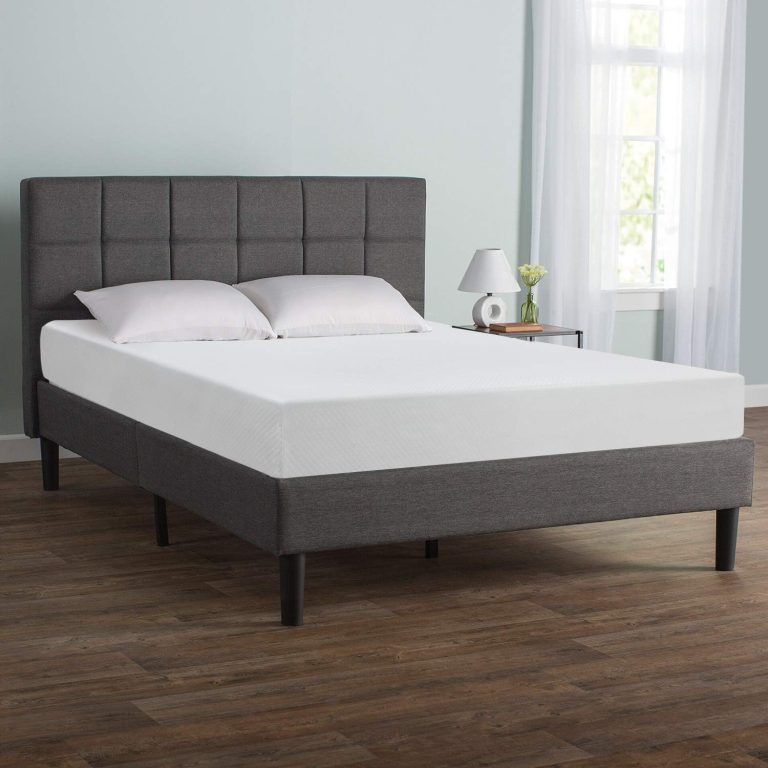
A platform bed is the easiest option. It has a solid or slatted surface. Just place the mattress right on top.
Slatted frames work great too. The slats should be no more than 3 inches apart. If they are farther apart, the foam will sag between them. That ruins your support over time.
Many experts say to skip the box spring completely. It adds height and can make foam feel too soft, since there is no structure under it (Cleveland Clinic).
Mattress Foundation Tips
Some brands sell their own foundation. It is basically a low, flat platform with legs. That is worth it if your bed frame is old.
Use a solid piece of plywood over slats if you have a wide gap. This gives your king mattress a stable base.
Do not put your mattress directly on the floor. That traps heat and moisture, which breeds mold. Keep it elevated.
Warranties, Trials, and Return Policies: What to Watch For
Every online mattress brand offers a trial period. Most are 100 nights. Some go up to 365 nights. We found that 100 nights is enough to decide if a bed works.
Read the warranty carefully. A 10-year warranty is standard. Look for a “non-prorated” warranty, which means full coverage, not a depreciating value each year.
The Fine Print
Indentations over one inch deep are covered by most warranties. Smaller dips are considered normal foam break-in.
Return policies vary. Some brands charge a restocking fee of $50 to $100. Others offer free returns and full refunds. Check before you buy.
Make sure the trial period is truly risk-free. You should not pay for return shipping. That is a hidden cost that some brands sneak in.
Be careful about “white glove” delivery. It is nice for setup, but it often adds $100 or more. You can set the mattress up yourself in 10 minutes.
Final Checklist Before You Buy Your King Size Memory Foam Mattress
Before you hit that checkout button, run through this quick checklist. It will save you from a headache and a bad night of sleep.
- Measure your room: Make sure you have at least 2 feet of clearance on each side of the bed.
- Check your base: Confirm you have a solid platform or slats no more than 3 inches apart.
- Pick the right firmness: Match it to your sleep position and body weight.
- Look for cooling: Gel infusion or breathable fabric is a must if you sleep warm.
- Verify the warranty: You want 10 years, non-prorated, with free return shipping.
- Read the return policy: Make sure you have at least 100 nights to test it.
Take your time. A king size memory foam mattress is a big purchase. You will sleep on it for a decade, so choose like it matters. It does.
Conclusion
You now know what to look for in a king size memory foam mattress. Focus on the foam density, cooling layers, and zoning. These three features decide how well you sleep.
Your weight and sleep position should guide your firmness choice. And do not forget your base. A solid platform with tight slats keeps your mattress supported for years.
Stick to your budget, but do not buy the cheapest option. A mid-range bed between $600 and $1,300 gives you the best value. Check the warranty and trial period before you pay.
Your next step is simple. Measure your room, pick a shortlist of three mattresses, and order one with a 100-night trial. You will know within a few weeks if it is the right one.
Frequently Asked Questions
How long does a king size memory foam mattress last?
Most quality memory foam mattresses last between 7 and 10 years with proper care. High-density foam holds its support longer than cheaper, low-density options.
Rotate your mattress head-to-foot every six months. That helps it wear evenly. You will know it is time for a new one when you wake up sore or see deep, permanent indentations.
Is a king size memory foam mattress good for back pain?
Yes, it can be. Memory foam contours to your spine’s natural curve and relieves pressure on your lower back.
You need the right firmness though. Medium-firm works best for most back pain sufferers. It gives enough support without letting your hips sink too deep.
Can you flip a king size memory foam mattress?
No, you should not flip most memory foam mattresses. They are designed with specific layers and a comfort layer on top.
Flipping it would put the firm support foam on top. That changes the feel completely. Instead, rotate the mattress 180 degrees every few months to promote even wear.
Does a king size memory foam mattress sleep hot?
Older models did, but modern ones are much cooler. Look for gel-infused foam, copper infusions, or open-cell technology.
A breathable cover made from cotton or bamboo also helps airflow. If you naturally sleep hot, pick a mattress that advertises cooling features. That makes a real difference.
What is the difference between a king and California king memory foam mattress?
A standard king is 76 inches wide and 80 inches long. A California king is 72 inches wide and 84 inches long.
The California king is better for tall people who need extra length. The standard king offers more width for couples who want personal space. Measure your bedroom to see which one fits your room and your body best.