Mattress Durability Compared by Type: 2026 Guide
The most durable mattress types are latex, hybrid, and high-density memory foam, with latex lasting 15–20 years, hybrids 7–10 years, and quality memory foam around 7–8 years when you choose models made from high-density support cores. Standard innerspring beds fall short at 5–7 years, which makes them the least durable option for most sleepers. When you compare mattress types by durability, the foam and coil materials inside the bed matter more than the brand name on the label.
We looked at how each mattress type holds up under daily use, and found that weight distribution, material breakdown, and sagging patterns differ significantly between designs. Your body weight, how often you rotate the bed, and the foundation you use also play a big role in how long your mattress actually lasts. Many experts say that edge support and comfort layer thickness are the first things to check when you want a bed that won’t wear out quickly.
- Latex mattresses last 15–20 years — the clear winner for longevity
- Hybrids hold up 7–10 years — good balance of comfort and durability
- Memory foam lasts 7–8 years — only if you pick high-density foam (4+ lbs)
- Innerspring beds last 5–7 years — coils wear out and sag first
- Your weight and care routine can add years to any mattress type
Below, we break down the durability of every mattress type so you can pick the one that fits your budget and sleep style. Let’s walk through which beds are worth the investment and which ones will leave you shopping again too soon.
Comparing Mattress Lifespans by Bed Type
You want a bed that lasts, not one that sags by year three. We dug into how each mattress type breaks down over time. The materials inside the bed, not the marketing, decide how long it will support you properly.
Your weight, sleep position, and how well you care for the mattress all shift the timeline, too. Let’s look at the real-world lifespan of each style so you can spend your money once and sleep well for years.
Why Some Beds Wear Out Faster Than Others
Every mattress has two main parts: the comfort layer on top and the support core underneath. The comfort layer takes the daily pounding. The support core keeps your spine aligned.
Foam density matters more than thickness. Coil gauge (wire thickness) matters more than coil count. We found that cheaper materials compress and lose their shape quickly, while higher-grade components bounce back for years.
The Role of Your Body Weight and Sleep Position
Heavier sleepers (over 230 pounds) put more pressure on a mattress. That pressure compresses foam and coils faster. Side sleepers create a narrow, concentrated pressure point that can dent a soft comfort layer over time.
Stomach sleepers spread weight more evenly, which is easier on the bed. Back sleepers fall somewhere in the middle. Knowing your profile helps you predict how long a mattress will hold up for you personally.
Latex Mattress Durability: The Long-Term Champion
Latex is the clear winner when we compare mattress types by durability. We found that natural latex beds commonly last 15 to 20 years with proper care. That’s nearly triple the lifespan of a standard innerspring.
The rubber material resists compression better than any foam. It also bounces back faster and doesn’t develop body impressions as easily. Many experts say latex is the closest thing to a “buy it for life” mattress.
Natural vs. Synthetic Latex Lifespan
Natural latex comes from rubber tree sap. It’s the most durable option. Synthetic latex is made from petroleum-based materials. It lasts a few years less but costs a fraction of the price.
Blended latex sits in the middle. We found that a good blend still outlasts memory foam by a wide margin. If you want maximum longevity, choose natural or blended latex with a density rating above 4 pounds per cubic foot.
How Latex Beds Age Over Time
Instead of sagging, latex slowly loses its springiness. You might notice the bed feels slightly firmer or less “alive” after a decade. The material can also dry out and become brittle in very hot or dry climates.
Quality latex beds use a heavier base layer under the comfort layer. That extra support core is what gives the bed its impressive lifespan. Cheap latex beds skip this layer and show wear much sooner (National Sleep Foundation).
Hybrid Mattress Durability: Comfort Meets Support
Hybrids combine foam comfort layers with coil support cores. They’re built to last between 7 and 10 years on average. That makes them a solid middle ground between memory foam and latex.
The coil core does the heavy lifting for durability. The foam on top is replaceable in some models, which can extend the bed’s overall life. We found that hybrid durability depends heavily on the quality of both materials.
Coil Gauge and Edge Support Matter Most
Lower coil gauge numbers mean thicker, stronger wire. A 13-gauge coil is sturdier than a 15-gauge coil. Many hybrids with gauges above 14 start to show sagging within a few years.
Edge support is another key indicator of hybrid durability. Beds with reinforced foam rails around the perimeter resist sagging longer. Those with just a thin wire border tend to collapse and roll you off the side.
The Comfort Layer Breakdown
Most hybrids use 2 to 4 inches of foam or latex on top. That top layer will compress before the coils give out. When comfort foam wears thin, you feel the coil layer poking through.
You can extend hybrid life by choosing a model with a removable, replaceable comfort layer. This design lets you swap out the soft top without buying a whole new bed. It’s a smart investment if you want 10+ years out of the mattress.
Memory Foam Mattress Durability: Density Is Everything
Memory foam beds last anywhere from 5 to 10 years. The density of the foam is the single biggest factor. We found that high-density foam (4 pounds per cubic foot or more) performs best over time.
Budget memory foam mattresses use 1.5 to 2.5 pounds per cubic foot. Those beds lose support quickly and often develop permanent body impressions within a year or two. The price difference reflects the material quality.
Why Low-Density Foam Sags Fast
Low-density foam has more air pockets and less material to hold its shape. It compresses like a sponge that never fully rebounds. You’ll notice a visible dip where you sleep before the bed’s second birthday.
High-density foam, on the other hand, feels sleepier but far more supportive. It resists compression and distributes body weight evenly. Many experts say that foam density above 4 pounds is the minimum threshold for real durability.
Heat Retention and Foam Breakdown
Memory foam traps body heat by design. That trapped heat actually accelerates the breakdown of foam cells over time. The hotter the foam gets, the faster it loses its elastic properties.
You can counteract this with gel-infused or copper-infused foam, which dissipates heat better. These materials stay cooler and, as a bonus, tend to hold their shape longer. Look for copper-infused options if heat is a concern for you.
Innerspring Mattress Durability: The Classic That Fades
Traditional innerspring beds are the least durable of all types. They typically last only 5 to 7 years before coils start to sag or poke through. That’s the shortest lifespan of any mattress category we reviewed.
The comfort layer on top is usually just 1 to 2 inches of thin foam or fiber. Once that compresses, you feel the hard coil network directly. Many sleepers report waking up with sore pressure points long before the bed fails completely.
How Coils Fail Over Time
Coils lose their temper (spring strength) after millions of compressions. The steel gradually weakens and loses its bounce. Eventually, the coil network develops a permanent dip in the middle of the bed.
Offset and continuous coils are slightly more durable than Bonnell coils. But even the best innerspring can’t compete with foam or latex on longevity. If you love the bouncy feel, consider a hybrid instead.
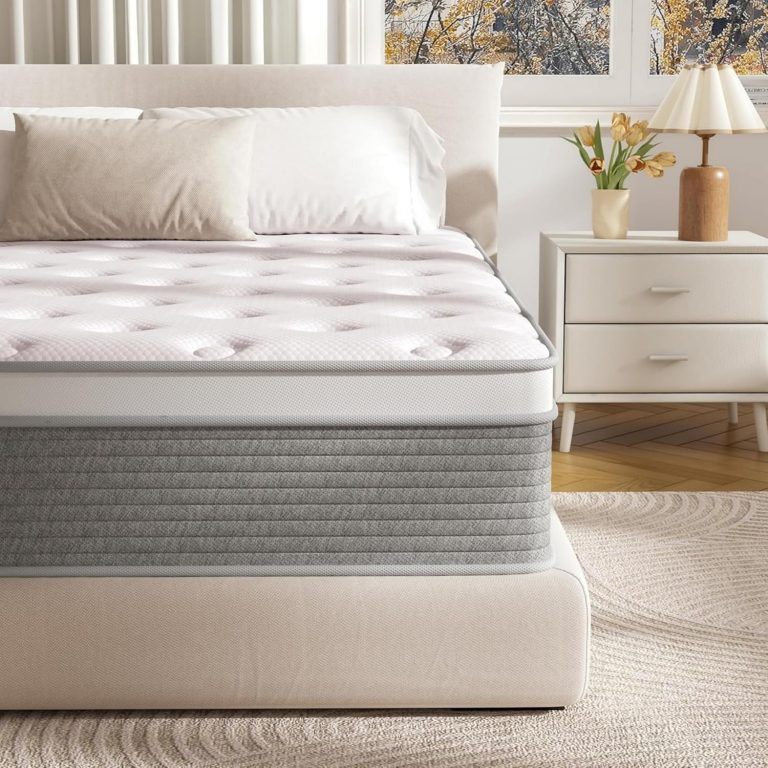
Pillow-Top Mattresses: A Durability Warning
Pillow-tops are a layer of soft padding sewn directly onto the mattress surface. They look and feel plush at first. But we found that pillow-tops are the first thing to wear out on any mattress type.
The sewn-on padding compresses and flattens within 2 to 3 years. You can’t flip or rotate a pillow-top to equalize the wear. Once the padding is flattened, the bed feels hard and uncomfortable, even if the core is still good.
If you want a plush feel that lasts, skip the pillow-top. Instead, choose a firmer base mattress and add a separate, replaceable mattress topper. That way, you can swap out the plush layer without buying a new bed.
Which Mattress Type Lasts Longest for Your Budget
Your budget and preference matter as much as raw lifespan. Here’s a quick comparison table to help you weigh the trade-offs between initial cost and years of use:
| Mattress Type | Average Lifespan | Typical Cost | Cost Per Year of Use |
|---|---|---|---|
| Latex | 15–20 years | $1,500–$3,500 | $75–$230/year |
| Hybrid | 7–10 years | $800–$2,500 | $80–$350/year |
| Memory Foam (high density) | 7–8 years | $600–$1,800 | $75–$260/year |
| Memory Foam (budget) | 4–5 years | $200–$500 | $40–$125/year |
| Innerspring | 5–7 years | $300–$1,200 | $45–$240/year |
Look at the cost-per-year column. A $2,000 latex bed used for 18 years costs less per year than a $600 budget foam bed used for 4 years. Buying the cheaper bed isn’t always the smarter financial move.
Signs Your Mattress Is Failing: When to Replace
You shouldn’t wait for a visible sag to replace your mattress. Here are the early warning signs we found that indicate your bed is losing its support:
- You wake up with new aches or stiffness in your back, hips, or shoulders
- You can see a visible dip or body impression when the sheets are off
- You feel the coil springs or support core through the comfort layer
- Your allergies or asthma flare up more at night than during the day
- Your partner’s movements wake you up constantly (poor motion isolation)
- Your mattress is older than the expected lifespan for its type
If you check off three or more of these, it’s time to shop for a replacement. Sleeping on a worn-out mattress can worsen back pain and disrupt your sleep quality (Cleveland Clinic).
Proven Ways to Extend Your Mattress Lifespan
You can add years to any mattress with the right habits. The most important thing is a solid, supportive foundation. We found that box springs are fine for innersprings, but foam and latex beds need a slatted or solid platform base.
Rotating your mattress head-to-foot every 3 to 6 months helps distribute wear. Flipping only works on double-sided models, which are rare today. Modern mattresses are single-sided, so rotate don’t flip.
A waterproof mattress protector is your best defense against sweat, spills, and dust mites. It keeps the core clean and dry, which prevents mold and material breakdown. Buy one before you bring the mattress home, not after.
How to Rotate and Care for Each Type
Latex beds are heavy and awkward to rotate, but it’s worth doing every 6 months. Hybrids and foam beds are lighter and easier to handle. Innersprings benefit from rotation more than other types, given their shorter lifespan.
Vacuum your mattress every few months with a hose attachment to remove dust and skin cells. Air it out by stripping the sheets for a few hours on a sunny day. These simple steps slow down material degradation significantly.
Final Thoughts on Durability by Mattress Type
Your perfect mattress type comes down to how long you want to own it and how much you’re willing to spend. Latex is the durability champion, but not everyone loves how it feels. Hybrids give you comfort and a reasonable lifespan at a better price.
Memory foam is fine if you stick to high-density models with a good warranty. Innersprings are the most budget-friendly upfront but will need replacing sooner than any other type. Consider the total cost of ownership before you swipe your card.
We recommend you set your budget, measure your room, and then prioritize the materials that fit your weight and sleep position. The right durable mattress is a long-term investment in your daily energy and long-term health. Choose wisely, and you won’t be mattress shopping again anytime soon.
Conclusion
You now know exactly how each mattress type holds up. Latex wins for longevity. Hybrids give you a solid 7-10 years with good materials. High-density memory foam is a smart pick if you stick to 4+ pounds per cubic foot.
Innersprings and pillow-tops will leave you shopping again sooner than you want.
Here’s your next step: decide what matters more — your budget today or your cost per year of ownership. Measure your room, weigh your sleep position, and put your money into the materials that matter.
Pick a bed with a strong support core and a replaceable comfort layer. You’ll sleep better knowing you won’t need to replace it anytime soon.
Frequently Asked Questions
What mattress type lasts longest?
Latex mattresses last the longest by a wide margin. Natural latex beds commonly hold their support for 15 to 20 years with proper care. That’s more than double the lifespan of most other mattress types.
Is a hybrid mattress more durable than memory foam?
Yes, hybrids typically outlast memory foam by a couple of years on average. A quality hybrid with thick coils (13-gauge or lower) and a replaceable comfort layer can last 7 to 10 years. High-density memory foam usually tops out around 7 or 8 years.
Does mattress density really matter for durability?
Density is the biggest factor in foam mattress durability. Foam rated at 4 pounds per cubic foot or higher holds its shape much longer than budget foam. Cheap foam (1.5 to 2.5 pounds) often sags within a year or two.
Can a mattress topper extend the life of my bed?
A mattress topper can add comfort but won’t fix a failing support core. If your bed sags or you feel coils poking through, a topper only masks the problem temporarily. It works best as a proactive layer on a mattress that still has good support.
How often should I rotate my mattress to prevent sagging?
Rotate your mattress head-to-foot every 3 to 6 months. This distributes the wear evenly across the surface. Only flip the mattress if it’s a true double-sided model, which is rare in modern beds.