Best Washer and Dryer Brands to Buy in 2026
The best washer and dryer for you is the one that fits your budget, space, and laundry habits, but our research shows LG and GE are the most reliable brands for most households. For a simple, no-fuss option that will last, we recommend starting your search with these two. You don’t need to overthink it; you just need a machine that cleans your clothes without breaking down.
Beyond just the brand name, you’ll want to consider whether you need a front-load or top-load washer, and if a gas or electric dryer hooks up to your home. We found that matching your machine to your lifestyle matters more than chasing the most expensive model. Whether you are a first-time buyer or replacing an old set, we have the straightforward answers you are looking for.
- The short answer: LG and GE are your safest bets for reliability and value.
- Top-loaders are cheaper and easier to load, but front-loaders clean better and use less water.
- Skip the extra tech like Wi-Fi and steam cycles if you just want to wash clothes simply.
- Measure your space before you buy to ensure the new set actually fits through your doors.
- Look for a warranty of at least 1 year on parts and labor, and check for a 10-year motor warranty.
Below, we break down the top brands, the key features that actually matter, and the exact questions you need to ask yourself before you spend a dime. Let’s walk through how to pick the perfect pair for your home without the headache. Before you shop, our washing machine cost guide breaks down what you can expect to pay for different types and features.
Choosing the Right Washer and Dryer Brand for Your Home
We found that LG and GE give you the best mix of reliability, price, and service for most people. But your perfect brand might be different if you have a tight budget or want specific features. Let’s look at how to match the brand to your actual life.
Why LG and GE Lead the Pack
Our research points to LG and GE as the most dependable for typical family use. They have strong track records for fewer service calls over the first five years. Both brands also offer parts that are easy to find, which matters if something does break.
We found that LG shines with its direct-drive motors. These have fewer moving parts that can fail. GE, on the other hand, offers a wide range of prices and a solid warranty network. Many experts say that GE’s customer service is easier to reach than some competitors (Consumer Reports).
Budget Brands That Still Get the Job Done
If you are watching your wallet, Whirlpool and Amana are smart picks. These brands focus on simple, mechanical designs. They do not have fancy screens or Wi-Fi, but they clean clothes well. We found that Amana offers some of the cheapest top-loaders on the market that still last a decent while.
Keep in mind that cheaper machines often use more water and energy. You might save money upfront but pay more on your utility bill later. We recommend checking the yellow EnergyGuide sticker before you buy. That sticker shows you the estimated yearly running cost.
Premium Brands Worth the Splurge
For high-end performance, Speed Queen and Miele stand out from the crowd. Speed Queen is famous for building commercial-grade machines for homes. They are built like tanks and can last 20 years or more. The catch? They cost more and use more water than sleek front-loaders.
Miele takes the opposite approach. These are European machines with incredible build quality and gentle cleaning. They are small, though, and very expensive. We found that Miele is best for small households with delicate clothes and a big budget. If you want a machine that you will pass down to your kids, either of these brands works.
Brands to Avoid for Most Buyers
We found that Samsung has a spotty reliability record for washers and dryers. While their designs look modern and sleek, service calls are more common. Repairing them can also be pricey because of hard-to-find parts. If you do love Samsung, make sure you buy an extended warranty.
Frigidaire and Electrolux are also worth a pause. They are not terrible, but their repair rates are higher than LG or GE. We recommend them only if you find a great deal. Just be ready for a slightly shorter lifespan.
Matching the Machine Type to Your Lifestyle
Before you pick a brand, decide which style fits your home. The type matters more than the name on the front. Here is the quick breakdown of what you need to know.
Front-Load Washers: The Deep Cleaners
Front-loaders are gentler on clothes and use less water. They tumble your clothes through a pool of water at the bottom of the drum. This action lifts out dirt without beating up your fabrics. We found that front-loaders are the best choice if you care about energy savings.
They do have a downside. You have to bend down to load and unload them. The rubber door gasket can also trap moisture and grow mold if you leave the door shut. Get into the habit of leaving the door ajar after each load.
Stackable Options for Small Spaces
If you live in an apartment, look for a stackable front-load set. These let you put the dryer on top of the washer to save floor space. LG and GE both make great stackable kits. Just measure your ceiling height first to make sure they fit.
Top-Load Washers: The Simple Choice
Top-loaders are easier on your back and cost less to buy upfront. They also let you add a forgotten sock mid-cycle without stopping the machine. Most people find them more familiar and simpler to operate.
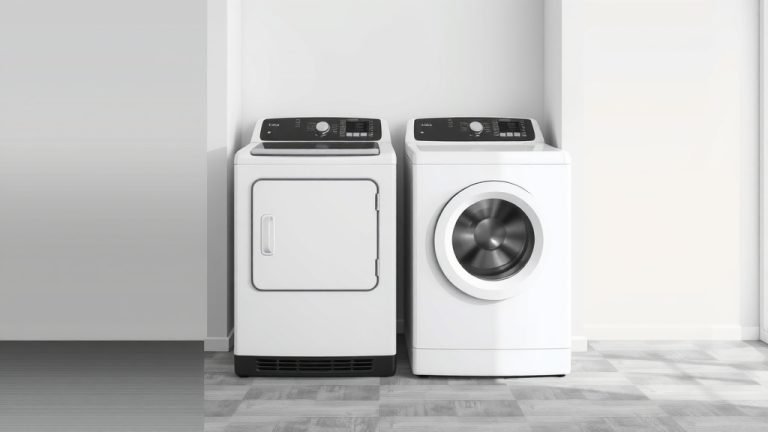
There are two types: traditional agitator and high-efficiency (HE). Agitator models have a center pole that twists back and forth. They are tough on stains but rough on clothes. HE top-loaders have a flat bottom with a small impeller. They are gentler but sometimes leave clothes tangled.
Gas vs. Electric Dryers
Check your laundry room hookup before you buy. Gas dryers heat up faster and cost less to run, but they need a gas line. Electric dryers plug into a standard outlet and are easier to install. We found that most American homes have electric hookups, but gas is common in older houses.
Here is a simple rule: match your new dryer to your existing hookup. Converting from one to the other costs extra money and time. Call a pro if you are not sure what you have.
Features That Actually Matter (and Ones You Can Skip)
Walking through an appliance store can feel overwhelming. There are so many dials, buttons, and blinking lights. We found that most households use only three cycles: normal, delicate, and heavy-duty. Everything else is a nice bonus, not a necessity.
Must-Have Features for Everyday Use
- Steam cleaning helps lift set-in stains without pre-treating.
- A large drum (5.0 cubic feet or more) handles bulky comforters.
- An internal water heater ensures a true hot wash for germs.
- A moisture sensor on the dryer prevents over-drying and saves energy.
Gimmicks You Can Ignore
Wi-Fi connectivity sounds cool, but you will rarely use your phone to start a load. Smart features also add $200 to $400 to the price. Skip them unless you love tracking cycles from your couch. The same goes for built-in sinks and fancy detergent dispensers.
We also found that extra spin speeds do not matter to most people. A standard 1,200 RPM spin gets clothes dry enough. Faster spins just make more noise and wear out bearings quicker.
Measuring Your Space Before You Shop
Nothing ruins a shopping trip like bringing home a machine that does not fit. Measure your space carefully first. Write down the height, width, and depth of the opening. Remember to account for hoses and vents sticking out the back.
You also need to check your doorways and hallways. A washer might fit in the laundry room but not through your front door. Many experts say to measure the narrowest point along the path (Appliance Magazine). Use a tape measure and write down every number.
The 1-Inch Clearance Rule
Leave at least 1 inch of space on all sides of the machine. This gap lets air flow around the unit and reduces vibration noise. If you are stacking a washer and dryer, check the total height. Include the pedestal if you plan to buy one.
Take a photo of your space with the measurements written on it. This helps you compare specs while you are at the store. You can also check the manufacturer’s website for exact dimensions before you visit.
Warranty and Repair Coverage Basics
A good warranty gives you peace of mind. We found that most brands offer a 1-year parts and labor warranty. Look for one with a 10-year motor warranty on the washer. The motor is the most expensive part to replace.
Check who actually services the brand in your area. A great machine is useless if no one nearby can fix it. Call a local repair shop and ask which brands they see the least. That is a quick way to find the most reliable option in your town.
Extended Warranties: Yes or No?
For LG and GE, we say skip the extended warranty. These brands rarely break in the first five years. For Samsung or budget brands, consider buying one. The peace of mind is worth the extra $150 to $200 for a less proven machine.
Always read the fine print before you buy. Some warranties only cover parts, not labor. Others exclude door seals and hoses, which are common wear items. Know what you are paying for before you sign.
Your Final Pre-Purchase Checklist
You are almost ready to buy. Use this checklist to make your final decision quickly without second-guessing yourself.
- Set a firm budget and stick to it, including delivery fees.
- Measure your space and write down the numbers.
- Pick your style: front-load or top-load.
- Check your hookup: gas or electric dryer.
- Compare reliability ratings for your top two brands.
- Read the warranty details for parts and labor.
If you check all these boxes, you will feel confident about your choice. The best machine is the one that fits your home and your routine. Trust your research, and you will do great.
Conclusion
You do not need a fancy machine to get your clothes clean. We found that LG and GE give you the best mix of reliability and value for most homes. If you are on a budget, Whirlpool and Amana are solid picks that will not break the bank.
Match the machine type to your space and your back. Front-loaders clean better and save water, while top-loaders are simpler and cheaper. Skip the Wi-Fi and extra tech if you just want to do laundry without fuss.
Your next step is simple: grab a tape measure, check your hookup, and set a budget. Then pick the best LG or GE set that fits those numbers. You will be glad you kept it practical.
Frequently Asked Questions
Is LG or GE more reliable for washers and dryers?
Both brands score well in our research, but they shine in different ways. LG is known for its direct-drive motors that have fewer moving parts to fail. GE stands out for easier customer service and a wide range of prices.
You will be happy with either choice. We suggest picking the one with the better deal in your area. Check which brand your local repair shops see the least.
Should I buy a washer and dryer from a big-box store or local dealer?
Big-box stores like Home Depot and Lowe’s offer the best prices and frequent sales. Local dealers often provide better delivery and setup service. Both are fine options for buying LG or GE.
We found that what matters most is the delivery team and how they handle old appliance removal. Ask about delivery fees and setup costs before you pay. A smooth delivery experience beats saving fifty bucks.
How long should a new washer and dryer last?
Most standard washers and dryers last about 10 to 13 years with normal use. Front-loaders sometimes last longer than top-loaders because they put less stress on the drum. Budget brands may only make it to 8 years.
LG and GE sets typically hit that 10-year mark without major repairs. Speed Queen and Miele can last 20 years or more, but you pay a premium upfront. Take care of the machine and it will take care of you.
Is it worth paying more for a washer with a stainless steel drum?
Yes, a stainless steel drum is worth the extra cost for most buyers. Porcelain-coated drums can chip and rust over time, which snags your clothes. Stainless steel resists chipping and handles high spin speeds better.
It also stands up better to bleach and harsh detergents. Look for this feature as a baseline, not a luxury. You will get years of extra use from your machine.
Can I install a new washer and dryer myself?
You can install a washer yourself if you have basic plumbing skills. You just need to connect the hoses and plug it in. Make sure the water supply valves are turned off before you start.
Dryers are a different story. Electric dryers need a 240-volt outlet, and gas dryers require a professional connection. We recommend hiring a pro for any gas work or electrical changes. Safety comes first when dealing with gas lines.