How to Clear Up Green Pool Water: A Complete Guide to Restoring Your Swimming Pool
There’s nothing quite like the disappointment of walking out to your backyard expecting to take a refreshing swim, only to find your once-pristine pool transformed into a murky green mess. I’ve been there, and I know exactly how frustrating it can be. But here’s the good news: a green pool isn’t a permanent disaster. With the right approach and some elbow grease, you can transform that algae-infested water back into crystal-clear paradise.
In this comprehensive guide, I’m going to walk you through everything you need to know about clearing up green pool water. Whether you’re dealing with a slightly cloudy pool or one that’s turned into what looks like a swamp, you’ll find practical solutions that actually work.
Understanding Why Your Pool Turned Green in the First Place
Before we jump into the fixes, let’s talk about why your pool went green. Understanding the root cause is like being a detective—you need to know what you’re dealing with before you can solve the case.
The Culprit: Algae Growth
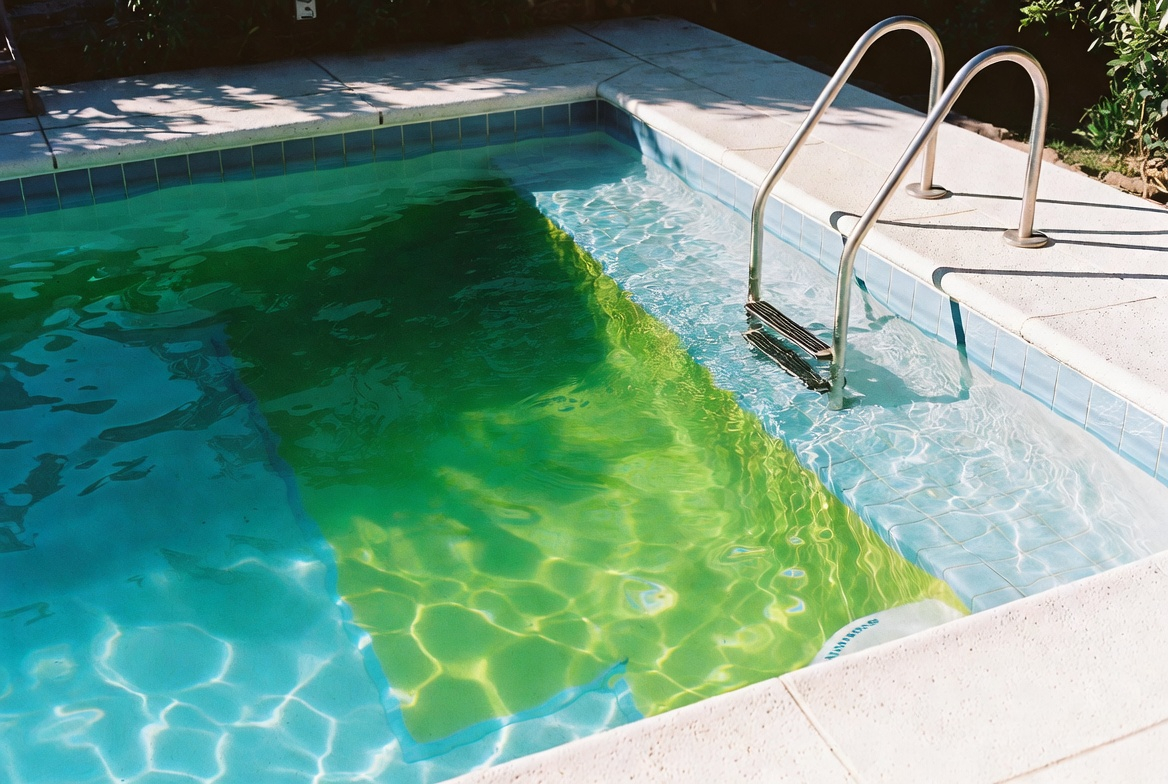
Green pool water is almost always caused by algae. Think of algae as uninvited guests that have crashed your backyard party. These microscopic plants thrive in warm water with plenty of sunlight and insufficient chlorine. When conditions are just right, they multiply rapidly and turn your crystal-clear water into a thick, green soup.
There are three main types of algae you might encounter:
- Green algae: The most common type, which floats freely in the water and makes it cloudy and green
- Yellow or mustard algae: More resistant to treatment and often clings to pool surfaces
- Black algae: The troublemaker of the bunch, appearing as dark spots and being extremely stubborn to remove
What Causes Algae to Thrive?
Several factors create the perfect storm for algae growth. When your pool’s chlorine levels drop too low, you’ve essentially rolled out a welcome mat for algae. Extended periods of hot, sunny weather accelerate algae growth exponentially. Neglecting regular maintenance, skipping filter cleaning, and not testing water chemistry regularly are like leaving your front door unlocked—you’re just inviting trouble.
Heavy rain can also dilute your chlorine and introduce contaminants that feed algae. If you’ve had a pool sitting dormant for weeks or months without proper care, don’t be surprised to find it has turned green.
Assessing Your Green Pool Situation
Not all green pools are created equal. Some are just slightly off, while others are so green you can barely see the bottom. Let me help you figure out where you stand.
Mild Green Water: Light Green Discoloration
If your pool is just slightly green and you can still see the bottom clearly, you’re in the best-case scenario. This usually means the algae growth is still in its early stages, and you have a relatively quick fix ahead of you.
Moderate Green Water: Noticeable Cloudiness
When your pool is noticeably green but you can still make out some pool floor details, you’re dealing with a moderate algae bloom. This requires more aggressive treatment but is still very manageable with dedicated effort.
Severe Green Water: Completely Opaque
If you can’t see the bottom at all and the water looks like pea soup, you’ve got a serious algae problem. This is the toughest situation, but don’t worry—it’s still solvable with determination.
Step-by-Step Process to Clear Green Pool Water
Now for the main event—the actual steps to get your pool back in shape. Follow these methodically, and you’ll see improvements quickly.
Step 1: Test and Adjust Your Water Chemistry
Before adding any chemicals, you need to know what you’re working with. Grab a water testing kit—you can find these at any pool supply store—and test your water for chlorine, pH, and alkalinity.
Your ideal water chemistry levels should be:
- Chlorine: 1-3 parts per million (ppm)
- pH: 7.2-7.6
- Alkalinity: 80-120 ppm
If your chlorine level is critically low (which it almost certainly is if your pool is green), that’s your first priority to address. The chlorine is what’s going to do the heavy lifting in killing the algae.
Step 2: Perform a Thorough Cleaning
You’ll want to give your pool a good physical cleaning before chemical treatments kick in. Skim the surface with a net to remove leaves, debris, and any floating algae. Use a pool brush to scrub the walls and floor, which helps dislodge algae clinging to surfaces.
This step is crucial because physical removal gets rid of some algae before it can multiply further. It’s like clearing out the weeds before spraying herbicide.
Step 3: Add Algaecide Treatment
Algaecide is a chemical specifically designed to kill algae. Think of it as the specialized tool for this particular job. Follow the dosage instructions on your algaecide carefully—more isn’t always better. Typically, you’ll add it directly to the pool water and let it circulate through your filter system.
Different algaecides work differently. Some are copper-based, while others are copper-free. If you have sensitive skin or prefer avoiding copper entirely, check the label and choose accordingly.
Step 4: Shock Your Pool
Pool shock is like calling in reinforcements. It’s a high-dose chlorine treatment that rapidly kills algae and other contaminants. This is typically done in the evening and should be your second major chemical treatment.
The standard dosage is usually around 1-2 pounds per 10,000 gallons, but always follow your specific product instructions. After shocking, keep your filter running continuously for at least 24 hours.
Fair warning: your water might get cloudier before it gets clearer. This is normal and usually means the treatment is working. The cloudiness is actually dead algae particles that need to be filtered out.
Step 5: Keep Your Filter Running Non-Stop
Once you’ve treated your pool chemically, your filter becomes your best friend. Running it continuously for 24 to 48 hours will trap dead algae particles and help clarify the water dramatically. This is where patience really pays off.
Check your filter pressure regularly during this time. If it rises too much, you might need to backwash your filter to clear out the accumulated algae particles and restore proper flow.
Step 6: Test and Re-treat as Needed
After 24 hours, test your water chemistry again. If your chlorine levels have dropped significantly, add more. Algae-fighting is an ongoing process that requires multiple treatments, especially for severely green pools.
Continue brushing the pool walls and vacuuming the floor daily. This manual effort, combined with chemical treatment, is what creates the winning combination against algae.
Quick Treatment Methods for Different Severity Levels
Treating Mildly Green Pools
For light green discoloration, you might actually get away with just a shock treatment and proper filtration. Sometimes increasing your filtration time to 24-48 hours and maintaining proper chlorine levels is enough. Regular brushing and skimming daily should clear it within a few days.
Treating Moderately Green Pools
Moderate cases typically need both algaecide and shock treatment. Apply algaecide first, wait several hours, then shock the pool. Run your filter continuously and brush daily. You’re usually looking at 3-5 days for noticeable improvement.
Treating Severely Green Pools
Severe green pools might require multiple rounds of algaecide and shock treatments over several days. You might also need to consider cleaning or replacing your filter cartridge if it becomes too clogged with algae particles. In extreme cases where nothing seems to work, calling a professional pool service is a reasonable option.
Essential Tools and Chemicals You’ll Need
Let me break down what you should have in your arsenal:
- Pool brush: For scrubbing walls and floor
- Skimmer net: For removing surface debris
- Pool vacuum: For cleaning the pool floor
- Water testing kit: For monitoring chemistry
- Algaecide: Chemical algae killer
- Pool shock: High-dose chlorine treatment
- pH increaser/decreaser: For adjusting pH levels
- Alkalinity increaser: For adjusting total alkalinity
Preventing Green Pool Water in the Future
Regular Maintenance Is Your Best Prevention
The best way to handle a green pool is to never let it happen. Consistent maintenance is far easier than a major algae recovery. Test your water chemistry at least twice a week during summer. This takes maybe five minutes and saves you enormous headaches.
Keep Your Chlorine Levels Consistent
Maintaining adequate chlorine levels is the foundation of pool health. Use a chlorine floater or automated system to maintain steady levels. Think of chlorine as your pool’s immune system—when it’s strong, algae can’t gain a foothold.
Run Your Filter Regularly
Your filter should run at least 8-10 hours daily during swimming season. This keeps water circulating and removes particles before they become problems. It’s like having a cleaning crew that works while you sleep.
Brush and Skim Weekly
Weekly brushing and skimming remove debris and algae before they multiply. This preventive maintenance is the secret weapon that pool owners who never have problems use consistently.
Clean Your Filter Regularly
A clogged filter can’t do its job effectively. Backwash your filter when the pressure rises or clean cartridges according to manufacturer recommendations. A clean filter is a happy filter.
When to Call a Professional
Sometimes despite your best efforts, a pool problem persists. If you’ve been treating your green pool for over a week with no improvement, it might be time to call in the professionals. They have access to stronger chemicals and equipment that can handle stubborn situations.
Additionally, if your filter seems broken or you suspect equipment issues beyond chemistry problems, a professional can diagnose and fix things properly.
Timeline: How Long Does It Take to Clear Green Pool Water?
The timeframe depends on severity. Mildly green pools can clear in 3-5 days with consistent treatment. Moderately green pools typically take 5-10 days. Severely green pools might require 2-3 weeks of dedicated effort.
The key factor is consistency. If you’re treating it daily with proper chemicals and running your filter 24/7, you’ll see faster results than if you treat it sporadically.
Common Mistakes People Make When Clearing Green Pools
I’ve seen these mistakes trip up countless pool owners:
- Adding too much chemical at once: This can actually harm water balance and slow your progress
- Not running the filter continuously: The filter is just as important as the chemicals
- Giving up too early: Green pools take time to clear; patience is essential
- Skipping the brush work: Chemical treatment alone isn’t enough; physical cleaning matters
- Not testing water chemistry: You’re essentially flying blind without testing
Safety Considerations When Treating Your Pool
Pool chemicals are powerful and deserve respect. Always wear gloves and eye protection when handling chemicals. Never mix different chemicals together in a bucket—add them to the pool separately. Read all product instructions carefully before use.
Keep chemicals stored in a cool, dry place away from children and pets. Never leave your pool unattended during treatment, and keep everyone out of the water until chlorine levels return to safe swimming levels (usually 1-3 ppm).
Conclusion
A green pool might seem like a disaster, but it’s actually one of the most manageable pool problems you can face. By following the systematic approach I’ve outlined—testing your water, cleaning physically, treating chemically, and maintaining proper filtration—you’ll be able to restore your pool to sparkling clarity.
The key is patience and consistency. Don’t expect overnight miracles, but do expect steady improvement if you’re doing things right. Once you’ve cleared your green pool, commit to the preventive maintenance habits that keep pools healthy. Regular testing, brushing, skimming, and proper chlorine levels will ensure you never face this problem again.
Remember, pool ownership is a partnership between you and your pool. Give it the attention it deserves, and it will reward you with countless hours of enjoyment. Now get out there and reclaim your crystal-clear swimming pool!
Frequently Asked Questions
How much algaecide do I need to add to my green pool?
The amount of algaecide needed depends on your pool’s volume, which you can calculate based on length, width, and average depth. Most algaecides provide dosage charts on the label. As a general rule, follow the manufacturer’s instructions precisely—typically it’s around 1-2 quarts per 10,000 gallons. Adding more won’t speed up the process and may cause water balance issues. Always measure carefully and add gradually while monitoring results.
Can I shock my pool during the day, or must I do it at night?
While shocking at night is traditionally recommended, it’s not absolutely required. The advantage of nighttime treatment is that chlorine is more effective in the dark and won’t be broken down by sunlight as quickly. However, if your situation demands immediate action, daytime shocking is acceptable. Just be aware that you might need slightly larger doses since some will be degraded by UV rays. Keep everyone out of the pool for at least 24 hours after shocking regardless of the time of day.
What if my pool is still green after two weeks of treatment?
Persistence beyond two weeks with no improvement suggests either incorrect chemical dosing, a filter malfunction, or a particularly stubborn algae strain like black algae. First, verify your testing kit is working correctly by testing water you know should be clean. If chemicals aren’t being added properly or your filter isn’t running, address those issues immediately. If everything seems correct, black algae or a filter problem might require professional intervention. Don’t continue treating blindly—it’s time for professional help.
Is it safe to swim in a pool while treating it for algae?
No, you should not swim while actively treating your pool with algaecide or shock. Wait until chlorine levels return to safe swimming ranges of 1-3 ppm, which typically takes 24 hours after treatment. Your water testing kit will show you when it’s safe. Swimming in a pool with elevated chlorine levels can cause skin irritation, eye discomfort, and respiratory issues. Patience here is essential for your family’s health