How Is a Vacuum Measured? Units & Methods
A vacuum is measured by the pressure difference it creates. This tells you how much air has been removed from an area. We typically use units like pascals (Pa) or inches of mercury (inHg) to describe these measurements.
Understanding vacuum levels is key for many applications, from industrial processes to simple home cleaning. It’s not just about how much air is gone, but how much has been pushed out. This difference is what gives a vacuum its pulling power. We found that knowing your units helps you choose the right equipment.
- Vacuums are measured by pressure difference.
- Common units include pascals (Pa) and inches of mercury (inHg).
- Pressure difference indicates how much air is removed.
- Correct measurement helps in choosing the right tools.
Let’s walk through exactly how vacuums are measured and what those units actually mean for you.
Understanding Vacuum Measurements: What the Numbers Mean
So, you want to know how a vacuum is measured? It’s all about pressure. Specifically, it’s the difference between the atmospheric pressure around you and the pressure inside the vacuumed space. This difference tells you how much air has been removed. You’ll often see this expressed in various units, each telling a slightly different story about the vacuum’s strength.
The Core Concept: Pressure Difference
Think of it like pushing air out of a room. The more air you push out, the lower the pressure becomes inside. This pressure difference is the key. A bigger difference means a stronger vacuum. It’s like the difference between a gentle breeze and a strong gust of wind. The wind has a much higher pressure pushing against you.
Common Units of Vacuum Measurement
You’ll run into a few common units when dealing with vacuums. Knowing these will help you understand what equipment you might need or what a certain vacuum can do. The most frequent ones are pascals and inches of mercury.
Pascals (Pa) and Kilopascals (kPa)
The pascal is the standard international unit for pressure. One pascal is a very small amount of pressure. You’ll often see vacuums measured in kilopascals (kPa), which is 1,000 pascals. For really deep vacuums, you might even see megapascals (MPa), though that’s less common for typical vacuum applications.
Research shows that pascals are great for scientific and industrial settings. They offer a consistent way to measure across different countries. Many engineering fields rely on this unit for precision.
Inches of Mercury (inHg)
This unit is more common in North America, especially in refrigeration and HVAC work. Inches of mercury measure how much the atmospheric pressure is reduced. A mercury barometer works by measuring how high atmospheric pressure can push a column of mercury. So, a vacuum measurement in inHg tells you how much lower the pressure is compared to the normal atmosphere.
A measurement of 30 inHg, for instance, means the vacuum has removed almost all the air, creating a pressure equal to that of a perfect vacuum under standard atmospheric conditions. Lower numbers mean less vacuum. Many found this unit more intuitive when first learning about vacuums.
Torr and Millibar (mbar)
You might also encounter Torr and millibar. Torr is very similar to millimeters of mercury (mmHg), where one Torr is approximately equal to 1 mmHg. It’s often used in scientific research for high-vacuum systems. Millibar is another metric unit, with 100,000 mbar equaling standard atmospheric pressure. It’s also frequently seen in meteorology and some industrial vacuum processes.
Types of Vacuum Gauges Used
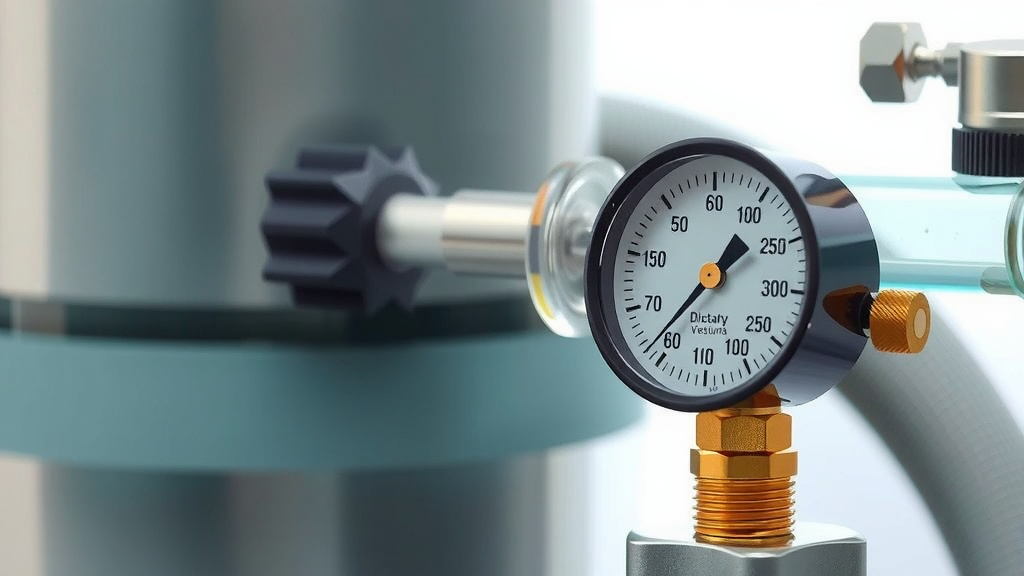
How do we actually get these numbers? That’s where vacuum gauges come in. They are the instruments that detect and display the pressure. Different gauges are suited for different pressure ranges.
Mechanical Gauges
These are often simpler and don’t require electricity. A Bourdon gauge is a common example. It uses a curved tube that straightens as pressure increases. This movement is connected to a needle that indicates the pressure on a dial. They are good for rough vacuums but aren’t very precise.
Electronic Gauges
Electronic gauges are much more accurate and can measure a wider range of pressures, from rough vacuums to ultra-high vacuums. They work by converting pressure into an electrical signal. These are what you’ll find in most professional and scientific applications.
Diaphragm Gauges
These use a thin, flexible diaphragm that deflects under pressure. This deflection is then measured electronically. They are reliable for medium vacuum ranges.
Capacitance Manometers
These are highly accurate and measure pressure by detecting changes in capacitance. A diaphragm forms one plate of a capacitor. As pressure changes, the diaphragm moves, altering the distance between the plates and thus the capacitance. Many experts say these are among the most accurate for precise measurements.
Thermal Conductivity Gauges
These gauges measure pressure based on how well a gas conducts heat away from a heated filament. In a vacuum, less gas is present to conduct heat, so the filament stays hotter. This change in temperature is measured and converted to a pressure reading. They are good for the medium vacuum range (from atmospheric down to about 10^-3 Torr).
Ionization Gauges
For very low pressures (high vacuum), ionization gauges are used. They work by ionizing gas molecules and measuring the resulting ion current. The number of ions created is directly proportional to the gas pressure. These are essential for deep vacuum applications in research and manufacturing.
Comparing Vacuum Levels: A Quick Look
It can be helpful to see how different vacuum levels stack up. Think about everyday examples to put the units into perspective.
| Vacuum Level (Approximate) | Pressure (inHg) | Pressure (Pa) | Typical Use/Example |
|---|---|---|---|
| Atmospheric Pressure | ~29.92 | 101,325 | Sea level, normal air pressure |
| Rough Vacuum | 10 – 29 | ~33,860 – 98,063 | Household vacuum cleaners, vacuum packaging |
| Medium Vacuum | 1 – 10 | ~3,386 – 33,860 | Refrigeration service, some industrial processes |
| High Vacuum | < 1 | < 3,386 | Electron microscopes, vacuum coating |
| Ultra-High Vacuum (UHV) | Very close to 0 | < 10^-4 | Particle accelerators, specialized research |
Why Does Measuring Vacuum Matter to You?
Knowing how vacuums are measured is more than just trivia. It directly impacts your work and hobbies. If you’re buying a vacuum cleaner, understanding suction power (often related to vacuum pressure) helps you pick the right one for your carpets or floors.
For professionals, like those in HVAC or manufacturing, the correct measurement is critical. It ensures equipment operates efficiently and safely. Many research papers point to proper vacuum levels for successful experiments. Incorrect measurements can lead to failed processes, damaged equipment, and wasted resources. It’s about getting the job done right the first time.
Your Vacuum Measurement Checklist
To help you keep track of what you’ve learned, here’s a quick rundown:
- Understand that vacuum is measured by pressure difference.
- Know the common units: pascals (Pa) and inches of mercury (inHg).
- Recognize that different gauges measure different pressure ranges.
- Differentiate between rough, medium, high, and ultra-high vacuums.
- Realize accurate measurement ensures proper equipment function.
- Connect vacuum measurements to the performance you expect.
Conclusion
You’ve learned that vacuum strength is all about pressure difference. Whether you’re using pascals (Pa) or inches of mercury (inHg), the core idea is how much air has been removed. Understanding the different units and the types of gauges available helps you select the right tools for your needs. This knowledge ensures your equipment performs as expected, saving you time and resources.
Next time you’re faced with a vacuum application, you’ll be better equipped to understand its performance. Take a moment to check the specifications and ensure they match your requirements for the best results.
Frequently Asked Questions
What’s the simplest way to think about vacuum measurement?
Think of it like sucking air out of a container. The more air you remove, the lower the pressure inside. This difference in pressure between the inside and outside is what we measure as vacuum. It’s a measure of how empty the space is getting.
Are pascals or inches of mercury better for home use?
For most home applications like vacuum cleaners, you’ll see performance described in terms of suction power rather than precise units. However, if you’re working with home HVAC systems, you might encounter inches of mercury. Pascals are more common in scientific and industrial settings.
Can I use any vacuum gauge for any situation?
No, different gauges are designed for specific pressure ranges. Mechanical gauges work for rough vacuums, while electronic gauges like capacitance manometers or ionization gauges are needed for very low pressures. Using the wrong gauge will give you inaccurate readings.
How does atmospheric pressure affect vacuum measurements?
Vacuum is always measured as a difference from atmospheric pressure. Standard atmospheric pressure is your baseline. When you create a vacuum, you are reducing the pressure below this baseline. So, your measurement tells you how much lower the pressure is than it is outside.
What is considered a “deep” vacuum?
A “deep” vacuum, often referred to as high vacuum or ultra-high vacuum (UHV), means very little air or gas molecules are left in the space. These are measured using specialized gauges and can be below 1 inHg or very small fractions of a pascal. They are essential for advanced scientific research and manufacturing.