
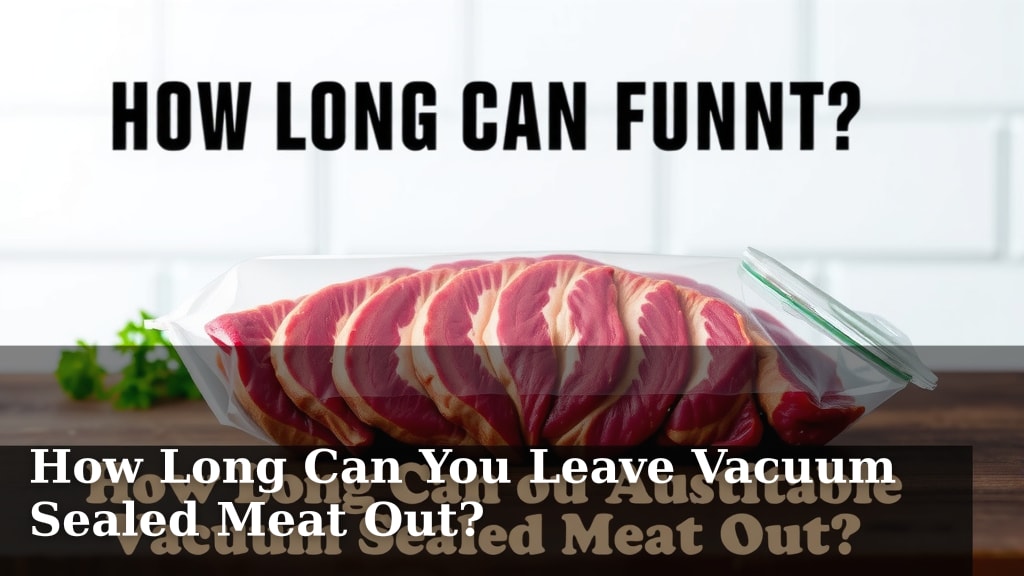
How Long Can You Leave Vacuum Sealed Meat Out?
You can leave vacuum sealed meat out for a very limited time, generally no more than 2 hours at room temperature. This is because vacuum sealing doesn’t stop bacterial growth; it only slows it down by removing oxygen. For prolonged safety, refrigeration or freezing is essential.
Leaving vacuum sealed meat out too long can lead to rapid spoilage. Bacteria love warm environments, and once they start multiplying, they can produce harmful toxins. We’ve found that understanding the temperature danger zone is key to keeping your food safe and delicious.
- Vacuum sealed meat is only safe at room temperature for up to 2 hours.
- Vacuum sealing slows bacterial growth, but doesn’t eliminate it.
- Bacteria thrive in the “danger zone” between 40°F and 140°F.
- Always refrigerate or freeze vacuum sealed meat for longer storage.
Let’s dive into the specifics of how long your vacuum sealed meat can safely be out, and what to do to keep it fresh.
How Long Can Vacuum Sealed Meat Stay Out?
You’ve probably wondered about this. You just got some groceries, or maybe you prepped some meals. The meat is vacuum sealed, so it feels extra safe. But can you leave it on the counter for a bit? We found that the answer is a resounding “not for long.”
The general rule of thumb, supported by food safety guidelines, is that perishable food, including vacuum sealed meat, should not be left at room temperature for more than two hours. If the ambient temperature is above 90°F (32.2°C), this time limit shrinks to just one hour.
Understanding the “Danger Zone” for Meat
Why such a strict time limit? It all comes down to something called the “temperature danger zone.” This is the range of temperatures where bacteria, the microscopic culprits behind food spoilage and foodborne illnesses, multiply rapidly.
We found that this danger zone is generally considered to be between 40°F and 140°F (4.4°C and 60°C). Think of it as a cozy incubator for bacteria.
How Vacuum Sealing Affects Bacterial Growth
Now, you might be thinking, “But it’s vacuum sealed! Doesn’t that kill the bacteria?” That’s a common misconception. Vacuum sealing works by removing oxygen from the package. Many types of spoilage bacteria and pathogens need oxygen to grow.
So, by removing oxygen, vacuum sealing slows down the growth of those specific bacteria. However, it doesn’t eliminate them, especially anaerobic bacteria, which can thrive without oxygen. This is why even vacuum sealed meat isn’t safe indefinitely at room temperature.
The Two-Hour Rule: A Universal Food Safety Guideline
The FDA and other food safety organizations consistently recommend the two-hour rule for perishable foods. This rule applies whether the food is vacuum sealed or not. The packaging can slow things down a bit, but it doesn’t make the meat invincible to the conditions outside the refrigerator.
We found that this rule is critical because bacteria can multiply to dangerous levels without any visible signs like odor or texture changes. So, you can’t rely on your senses alone to tell if the meat is still safe.
What Happens When Meat Sits Out Too Long?
When meat spends too much time in the temperature danger zone, bacteria get to work. They don’t just make the meat smell bad; they can produce toxins that aren’t destroyed by cooking.
Rapid Bacterial Multiplication
In the temperature danger zone, bacteria can double in number in as little as 20 minutes. Within a couple of hours, a small number of bacteria can become a large, potentially harmful population. This is why that two-hour window is so important.
The Risk of Foodborne Illness
Consuming meat contaminated with high levels of bacteria or their toxins can lead to food poisoning. Symptoms can range from mild nausea and vomiting to severe abdominal pain, diarrhea, and fever. Some strains of bacteria, like E. coli or Salmonella, can cause serious health complications.
Many health experts emphasize that prevention is key when it comes to foodborne illnesses. Following safe food handling practices, like the two-hour rule, is the best defense (CDC).
Factors That Influence Safe Room Temperature Storage
While the two-hour rule is a good general guideline, a few factors can make the situation even more critical. It’s always better to err on the side of caution.
Ambient Temperature Matters
As we mentioned, temperature plays a huge role. If you’re in a hot climate or your kitchen is particularly warm, the bacteria will multiply even faster. In temperatures above 90°F (32.2°C), the safe time drops to just one hour.
The Type of Meat
Some meats might be more susceptible to rapid spoilage than others, though all perishable meats need careful handling. Ground meats, for instance, have a larger surface area for bacteria to attack. However, for our purposes, treating all fresh or raw meat similarly is the safest bet.
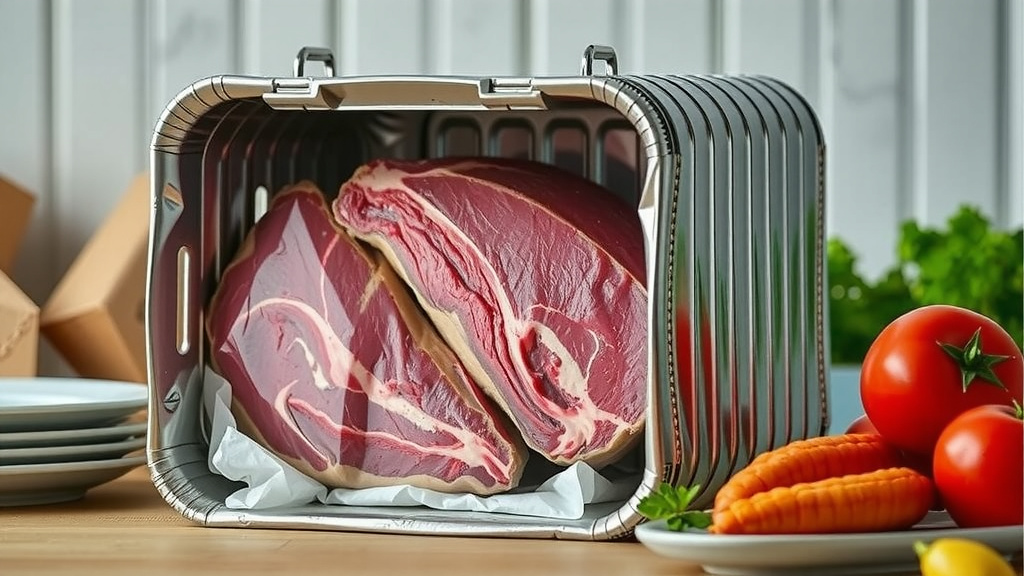
When Vacuum Sealed Meat Needs Immediate Refrigeration or Freezing
Once you bring your vacuum sealed meat home, its time at room temperature should be as brief as possible. The moment you’re done with any necessary prep or repackaging, it’s time to get it cold.
Storing in the Refrigerator
For short-term storage, your refrigerator is the place to be. The USDA recommends keeping your refrigerator at 40°F (4°C) or below. This significantly slows down bacterial growth.
Vacuum sealed meat can last quite a while in the fridge compared to unwrapped meat, often several weeks, depending on the type of meat and its freshness when sealed. However, always check the packaging for any “use-by” dates.
Storing in the Freezer
If you plan to store your meat for longer than a few days, the freezer is your best friend. Freezing meat at 0°F (-18°C) or below halts bacterial growth almost entirely. Vacuum sealing is excellent for freezer storage, as it helps prevent freezer burn.
Properly frozen, vacuum sealed meat can retain its quality for months, sometimes even a year or more, depending on the type of meat. This makes it a fantastic way to buy in bulk and save money.
Safe Handling Checklist for Vacuum Sealed Meat
To make sure you’re always on the safe side with your vacuum sealed meats, keep this simple checklist in mind:
- Unpack promptly: Get your groceries put away as soon as you get home.
- Observe the 2-hour rule: Never leave perishable meat out longer than two hours at room temp.
- Watch the heat: If it’s over 90°F, reduce that time to one hour.
- Refrigerate immediately: Store raw or cooked meats at 40°F or below.
- Freeze for longer storage: Aim for 0°F or below for extended shelf life.
- When in doubt, throw it out: If you’re unsure about how long something has been out, it’s better to be safe.
Conclusion
You’ve learned that vacuum sealing is a fantastic tool for preserving meat, but it’s not a magic bullet against spoilage at room temperature. Remember, vacuum sealed meat is only safe out of refrigeration for a maximum of two hours, or just one hour if your kitchen is over 90°F. This simple rule protects you from bacteria that thrive in the danger zone. Always prioritize getting your meat back into a cold environment – your refrigerator or freezer – as soon as possible after purchasing or preparing it. Take action now by checking your fridge temperature and ensuring your meat is properly stored!
Frequently Asked Questions
Can vacuum sealed meat be left out overnight?
Absolutely not. Leaving vacuum sealed meat out overnight, or even for extended periods beyond the two-hour window, is unsafe. Bacteria multiply rapidly in the temperature danger zone, and vacuum sealing only slows this process, it doesn’t stop it.
Does vacuum sealing make meat last longer on the counter?
Vacuum sealing slows bacterial growth by removing oxygen, which is crucial for many spoilage bacteria. However, it doesn’t eliminate all bacteria, and the meat is still perishable and unsafe at room temperature for long durations.
What’s the difference in safety between vacuum sealed and regular packaged meat left out?
While vacuum sealing offers some protection by reducing oxygen, both vacuum sealed and conventionally packaged raw meat are subject to the same two-hour room temperature rule. Neither should be left out for extended periods because bacterial growth will still occur.
Can I smell or look at vacuum sealed meat to tell if it’s still safe after being out?
Relying on smell or appearance isn’t a safe method. Harmful bacteria can multiply to dangerous levels without producing noticeable odors or visible signs of spoilage. Always stick to the time limits, regardless of how the meat looks or smells.
If the vacuum seal is still intact, is the meat safe to eat after being out?
An intact vacuum seal does not guarantee safety if the meat has been left at room temperature for too long. Bacteria can still grow within the package, even if the seal remains unbroken. Food safety guidelines are based on time and temperature, not just package integrity.
![7 Best Cordless Stick Vacuum For Hair [2026]](https://bathroomexplorer.com/wp-content/uploads/2026/05/7-best-cordless-stick-vacuum-for-hair-2026-featured-768x432.jpg)
![7 Best Dyson Vacuum For Hardwood And Carpet [2026]](https://bathroomexplorer.com/wp-content/uploads/2026/05/7-best-dyson-vacuum-for-hardwood-and-carpet-2026-featured-768x432.jpg)
![7 Best Lightweight Vacuums For Elderly [2026]](https://bathroomexplorer.com/wp-content/uploads/2026/06/7-best-lightweight-vacuums-for-elderly-2026-featured-768x432.jpg)