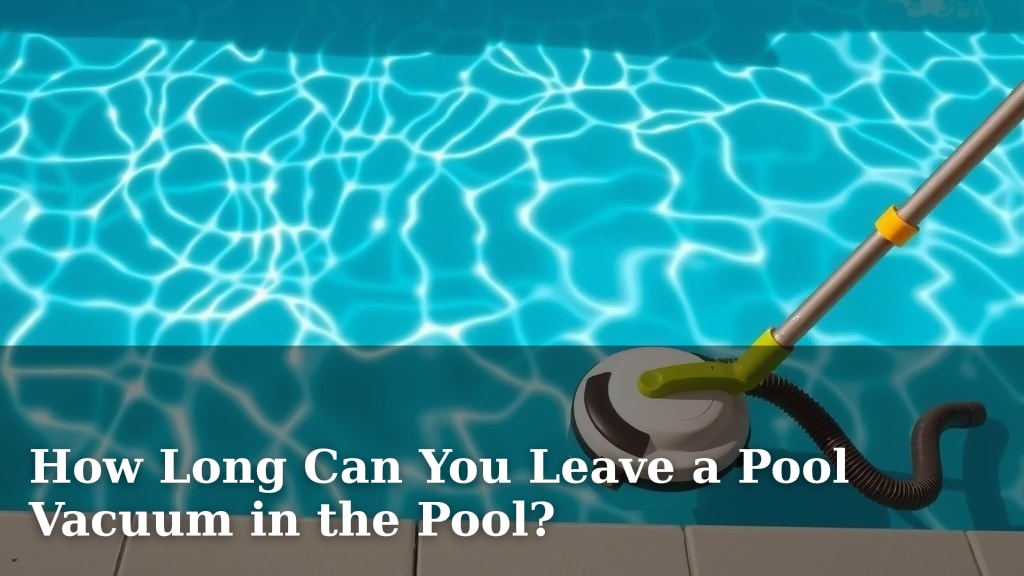
How Long Can You Leave a Pool Vacuum in the Pool?
You can generally leave an automatic pool vacuum in the pool for extended periods, often for days or even a week, without causing harm. While they are designed to be submerged, leaving them in for too long can sometimes lead to issues like algae growth on the unit itself or potential damage to pool surfaces. The ideal duration depends on your pool type and specific vacuum model.
It’s smart to understand how your pool vacuum works. Leaving it in indefinitely isn’t usually recommended, even if it seems harmless. We found that many experts suggest removing it periodically to inspect for wear and tear. This also prevents it from becoming a constant tripping hazard for swimmers.
- Pool vacuums can stay in for days.
- Leaving them too long has potential downsides.
- Check your vacuum’s manual for specific advice.
- Remove it periodically for inspection and cleaning.
Let’s dive into the specifics of how long you can safely leave your pool vacuum in the water and what factors play a role.
Understanding Your Pool Vacuum’s Time in the Water
So, you’ve got that trusty automatic pool vacuum doing its thing. It’s a real workhorse, right? You might be wondering, “Can I just leave this thing in the pool all the time, or do I need to pull it out regularly?” It’s a common question, and the answer isn’t a simple yes or no. We found that most experts agree that leaving your pool vacuum in the water for extended periods is generally okay, but there are some important considerations.
Think of your pool vacuum like a helpful guest. They’re welcome to stay for a while, but you wouldn’t expect them to move in permanently without a little check-up now and then. The same applies here. While these devices are built to withstand constant submersion, leaving them in for too long can sometimes lead to unintended consequences.
Factors Affecting How Long Your Pool Vacuum Can Stay In
Several things can influence how long you can safely leave your pool vacuum submerged. It’s not a one-size-fits-all situation. You’ll want to think about your specific pool setup and the type of vacuum you own.
Type of Pool Vacuum Matters
There are a few main types of automatic pool cleaners. Robotic cleaners are usually the most self-contained. They have their own filter bags and motors. Suction-side cleaners attach to your skimmer and use the pool’s filtration system. Pressure-side cleaners also connect to your pool’s return jet and use water pressure to move and clean.
We found that robotic vacuums are often designed for longer submersion times. They don’t put as much strain on your main pool filter. Suction and pressure cleaners, on the other hand, might need more frequent removal. This is because they are more integrated with your pool’s plumbing and pump system.
Pool’s Water Chemistry and Condition
Your pool’s water balance plays a big role. If your pool chemistry is off, it can affect not just your pool surfaces but also your equipment. We found that harsh chemicals or imbalanced pH levels can potentially damage the plastic components of your vacuum over time. Keeping your water balanced and clean is always a good practice for your pool and its accessories.
What about algae? If your pool is prone to algae blooms, leaving the vacuum in constantly might mean the vacuum itself starts to grow some green stuff. This can make it look unsightly and might even clog its filters more quickly. Regular cleaning and inspection can prevent this.
Manufacturer Recommendations and Manuals
This is probably the most important point. Your pool vacuum didn’t come with a manual for no reason! We found that manufacturers know their products best. They include specific instructions for a reason. Always check the user manual that came with your specific vacuum model. It will often state the recommended cleaning schedule and whether it’s okay to leave it in the pool.
Some manuals might suggest removing the vacuum after each cleaning cycle. Others might say it’s fine to leave it in for a week. Following these guidelines is your best bet for ensuring longevity and proper function. If you can’t find your manual, a quick online search for your vacuum model should bring it up.
Potential Downsides of Leaving a Pool Vacuum in Too Long
While convenience is nice, there are a few potential downsides to consider if your vacuum is a permanent resident in your pool.
Wear and Tear on the Unit
Even the toughest machines can succumb to constant use. We found that leaving a pool vacuum in the water 24/7 means its motor and internal parts are always potentially exposed to the pool’s environment. While designed for water, prolonged exposure without breaks could theoretically lead to accelerated wear and tear on certain components. It’s like running a car engine nonstop; eventually, it’s going to need a rest.
Damage to Pool Surfaces
This is a big one for many pool owners. Pool vacuums, especially heavier ones like some robotic models, can sometimes scuff or scratch vinyl liners, fiberglass, or even plaster finishes if they get stuck in a corner or dragged across the surface for too long. We found that this is more likely to happen if the vacuum’s brushes are worn or if it’s been left in during periods when the pool is less frequently used.
Clogging and Reduced Efficiency
If your vacuum’s filter bag or canister gets full, and you’ve left it in the pool, it can become less efficient. We found that a clogged filter means the vacuum won’t pick up debris effectively. It might also struggle to move around properly. This can lead to debris settling back onto your pool floor.
Aesthetic and Safety Concerns
Let’s be honest, a vacuum cord snaking across your pool can be a tripping hazard. It can also just look a bit messy. We found that for many people, removing the vacuum when not in use improves the overall look and feel of their pool area. It also ensures no one trips over the cord while swimming or relaxing poolside.
Best Practices for Pool Vacuum Use
To get the most out of your pool vacuum and keep your pool sparkling, consider these simple best practices.
- Check your manual: Seriously, it’s the ultimate guide for your specific model.
- Clean it regularly: Empty the filter bag or canister after each use or as recommended.
- Inspect for damage: Look for worn brushes, tears in hoses, or cracks in the body.
- Remove it periodically: Even if it’s okay to leave it in, taking it out for a break is often a good idea.
- Store it properly: Keep it out of direct sunlight when not in use to prevent material degradation.
Here’s a quick checklist to help you manage your pool vacuum:
- Remove and clean the filter after each major cleaning cycle.
- Inspect brushes and wheels for wear and tear monthly.
- Check the power cord and any hoses for damage weekly.
- Ensure the vacuum is stored in a shaded area when not in use.
- Follow the manufacturer’s suggested maximum submersion time.
- Take the vacuum out for at least a day each week if possible.
Ultimately, the goal is to have a clean pool with minimal hassle. Understanding how your specific pool vacuum works and following some simple guidelines will help you achieve just that. It’s all about finding that sweet spot between convenience and proper care!
Conclusion
You’ve learned that while leaving your pool vacuum in the water for extended periods can be convenient, it’s not always the best practice. We found that understanding your specific vacuum model and pool conditions is key. Too much time submerged could lead to wear and tear, surface damage, or decreased cleaning efficiency. Remember, your vacuum’s manual is your best friend for specific guidance. For optimal performance and longevity, a good rule of thumb is to remove your vacuum periodically for cleaning and inspection. This ensures your pool stays sparkling and your equipment stays in top shape.
Frequently Asked Questions
Can I leave my robotic pool cleaner in all the time?
Robotic pool cleaners are often designed for extended submersion. However, we found that even these benefit from periodic removal. Checking your manual is essential, as manufacturer recommendations can vary. Leaving it in continuously might still accelerate wear on certain parts over time.
What happens if my pool vacuum gets stuck in one spot for days?
If your pool vacuum gets stuck, it won’t clean effectively and could potentially damage your pool surfaces. We found that repetitive friction on vinyl liners or plaster can cause scuffing or wear. It’s best to check on your vacuum’s movement occasionally to prevent it from getting stuck.
Does leaving the vacuum in affect my pool’s water chemistry?
Generally, no. The vacuum itself doesn’t directly alter your water chemistry. However, we found that if your water chemistry is already imbalanced, prolonged submersion could potentially lead to quicker degradation of the vacuum’s plastic components. Keeping your water balanced is always wise.
How often should I clean my pool vacuum’s filter if I leave it in the pool?
Even if you leave the vacuum in, its filter will fill up. We found that emptying the filter bag or canister after each cleaning cycle, or at least every few days, is recommended for optimal performance. A clogged filter means a less efficient vacuum.
Is it okay to leave my pool vacuum plugged in when it’s in the pool?
This is a critical safety and maintenance question. Most automatic pool vacuums have a power supply unit that should remain dry. We found that the cord connects to the vacuum head, but the power box itself should not be submerged. Always ensure the power supply is safely positioned away from the water.