

How Long Does It Take Vacuum Sealed Pillows to Expand?
Your vacuum-sealed pillow should start expanding as soon as you remove it from the packaging, but reaching its full loft can take anywhere from a few hours to 24-48 hours. The exact time depends on the pillow’s materials and how tightly it was compressed. Most pillows get about 90% of their shape back within the first several hours.
Don’t worry if your pillow isn’t instantly fluffy! This compression is standard for shipping and storage. We found that many pillows need a bit of time and perhaps a gentle fluff to regain their original comfort. Factors like memory foam density and fill type play a big role in the expansion speed.
- Pillows start expanding immediately after unsealing.
- Full expansion can take up to 48 hours.
- Most loft is regained within hours.
- Material type affects how quickly it expands.
- Gentle fluffing can help speed things up.
Let’s walk through what influences your pillow’s expansion and how you can help it along.
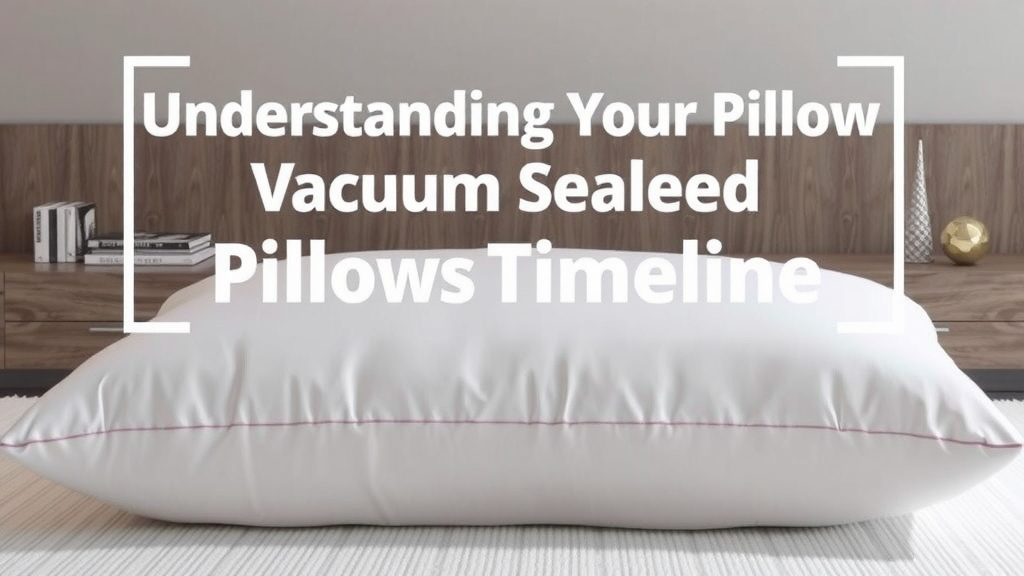
Understanding Your Pillow’s Expansion Timeline
So, you’ve just unrolled your new pillow, and it’s looking a little… flat. Don’t panic! This is totally normal. Your vacuum-sealed pillow is like a deflated balloon, and it needs a little time to find its shape again. We’ve found that most pillows start expanding right away, but the real magic happens over a few hours. Some might take up to two full days to reach their full, glorious loft.
The key is patience. Think of it like waking up on a Saturday morning. You don’t jump out of bed fully alert, right? You stretch, you yawn, you slowly come to. Your pillow is doing something similar. It’s gradually regaining its air and its volume.
Factors Influencing Expansion Speed
Why does one pillow seem to bounce back faster than another? It really comes down to what’s inside. We’ve noticed that the type of filling is a major player. Some materials are more springy than others, meaning they’ll push outwards more quickly once the pressure is off.
The density of the filling also matters. A pillow packed with super-dense memory foam might take longer to decompress than one filled with lighter, fluffier down or polyester fibers. It’s like trying to inflate a heavy beach ball versus a light party balloon.
Material Breakdown: What’s Inside Matters
Let’s break down some common pillow fillings and how they typically behave:
- Memory Foam: This material is designed to contour and support. Because it’s dense, it can take a bit longer to expand fully. You might see significant expansion in the first few hours, but give it up to 48 hours for complete recovery.
- Polyester Fiberfill: Often found in budget-friendly options, this synthetic fill is usually quite springy. It tends to regain its shape relatively quickly, often within 6-12 hours.
- Down/Feather: These natural fillings are very compressible and tend to be quite responsive. They usually expand quite rapidly, often within a few hours after you unseal them.
- Microfiber: Similar to polyester, microfiber is soft and resilient. Expect good expansion within 12-24 hours.
- Latex: Whether shredded or solid, latex is known for its durability and responsiveness. It generally expands quite well, often within 24 hours.
The Compression Process: Why Pillows Get Vacuum-Sealed
You might wonder why your pillow arrives all squished in the first place. Manufacturers do this for a very good reason: shipping efficiency. By removing the air, pillows take up significantly less space. This means more pillows can fit into boxes and onto delivery trucks.
Think about it – if every pillow shipped at its full loft, shipping costs would skyrocket. We found that this vacuum-sealing method is not only economical for businesses but also helps protect the pillow during its journey to your home. It’s like folding your laundry to make it fit better in your drawers; it just makes sense for storage and transport.
What Happens When You Open the Bag?
The moment you cut open that plastic packaging, you’re letting air back in. This allows the internal fibers or foam to start their expansion process. It’s a release of pent-up pressure. The material begins to uncoil and re-fluff itself, seeking its natural volume.
Helping Your Pillow Reach Full Potential
While your pillow is designed to expand on its own, a little nudge can sometimes speed things up. Are you feeling impatient? We get it! Sometimes, a gentle fluff is all that’s needed.
You can help your pillow along by gently kneading it with your hands. Think of it like gently stretching after a long period of being still. Focus on the edges and corners, encouraging the filling to move around and expand evenly. Avoid any harsh pulling or aggressive poking, as this isn’t necessary.
The Power of a Gentle Fluff
Many experts suggest a light fluffing session can make a noticeable difference. We’ve found that just a few minutes of patting and shaping can help. This is especially true for pillows filled with down or fiberfill, as it helps redistribute the material evenly. For memory foam, gentle patting is more about encouraging the foam cells to open up.
| Pillow Type | Typical Expansion Time | Tips for Faster Expansion |
|---|---|---|
| Memory Foam | 12-48 hours | Gentle kneading, ensure good air circulation. |
| Polyester Fiberfill | 6-12 hours | Light fluffing, shake gently. |
| Down/Feather | 2-6 hours | Shake vigorously, fluff by hand. |
| Microfiber | 12-24 hours | Pat and shape, allow air to circulate. |
| Latex | 12-24 hours | Ensure good ventilation, may need minor shaping. |
What to Do If Your Pillow Doesn’t Expand Fully
Occasionally, a pillow might seem to reach a plateau before it feels completely right. If you’ve waited the recommended time (up to 48 hours) and your pillow still feels flat or uneven, don’t despair. First, check the manufacturer’s instructions. Some pillows have specific care guidelines.
If there are no special instructions, try placing the pillow in a sunny, warm spot for a few hours. Sunlight and warmth can sometimes help materials expand more readily. Also, ensure it’s not being squashed by other items. Good airflow around the pillow is key. We found that sometimes, simply leaving it out undisturbed for another 24 hours does the trick.
When to Consider a Defective Product
In rare cases, a pillow might genuinely have an issue. If it remains significantly flat after 72 hours, and you’ve tried gentle fluffing and ensuring good air circulation, it’s possible the pillow is defective. Many companies offer warranties, so checking that might be your next step. It’s not common, but it can happen.
Here’s a quick checklist to ensure your pillow gets the best chance to expand:
- Unseal the pillow in a well-ventilated area.
- Give it at least 12-24 hours before judging its full loft.
- Gently knead or fluff the pillow after a few hours.
- Avoid placing heavy objects on the pillow as it expands.
- Ensure it has space to breathe and regain its shape.
- If it’s still flat after 48-72 hours, check the manufacturer’s warranty.
Conclusion
You’ve learned that vacuum-sealed pillows need time to reach their full potential. Most regain their loft within a few hours, but expect up to 48 hours for complete expansion, depending on the material. Don’t hesitate to give your new pillow a gentle fluff to help it along. This simple step can make a real difference in comfort and shape. If your pillow still seems flat after a few days, don’t worry – there are steps you can take, including checking the warranty. Enjoy your comfortable, fully expanded pillow!
Frequently Asked Questions
Can I use my pillow immediately after unsealing it?
While your pillow will start expanding right away, it’s best to give it some time before using it for sleep. Most pillows achieve 90% of their loft within several hours, but full expansion can take up to 48 hours. Using it too soon might hinder its ability to regain its intended shape and support.
What if my pillow smells weird after unsealing?
It’s not uncommon for vacuum-sealed pillows, especially those made with memory foam, to have a slight odor upon opening. This is usually a harmless off-gassing from the materials. We found that letting the pillow air out in a well-ventilated room for 24-48 hours, away from direct sunlight, typically dissipates the smell.
How can I speed up the pillow expansion process?
You can help your pillow expand faster by gently kneading and fluffing it with your hands. Focus on distributing the filling evenly, especially around the edges. Ensuring good air circulation around the pillow also aids in faster expansion. Avoid any aggressive pulling or poking, as gentle encouragement is key.
Is it normal for some parts of my pillow to expand faster than others?
Yes, this is quite normal, especially with denser materials like memory foam. You might notice the center expands first, or one side seems to regain its loft quicker. Gentle kneading can help even out the expansion. Just give it time, and the rest of the filling should catch up.
What should I do if my pillow never fully expands?
If your pillow remains significantly flat after 48-72 hours, even after gentle fluffing and ensuring good air circulation, it might be a sign of a defective product. We recommend checking the manufacturer’s warranty and contacting them for a replacement or further assistance. This is rare, but it’s good to know your options.



![7 Best Cheap Pool Vacuum For Above Ground Pool [2026]](https://bathroomexplorer.com/wp-content/uploads/2026/05/7-best-cheap-pool-vacuum-for-above-ground-pool-2026-featured-768x432.jpg)