
How to Change Your Central Air Conditioner Filter
Changing your central air conditioner filter is a simple DIY task you can do yourself. You just need to know where to find the filter and the correct replacement. Doing this regularly can improve your home’s air quality and help your AC run more efficiently.
Keeping your air conditioner running smoothly is important, especially during hot weather. A dirty filter can make your system work harder, costing you more on energy bills and potentially leading to costly repairs. We found that many homeowners overlook this simple maintenance step.
- Locate your air filter.
- Turn off your AC unit.
- Remove the old filter.
- Insert the new filter.
- Turn your AC back on.
Let’s walk through exactly how to change your AC filter step by step to keep your system in top shape.
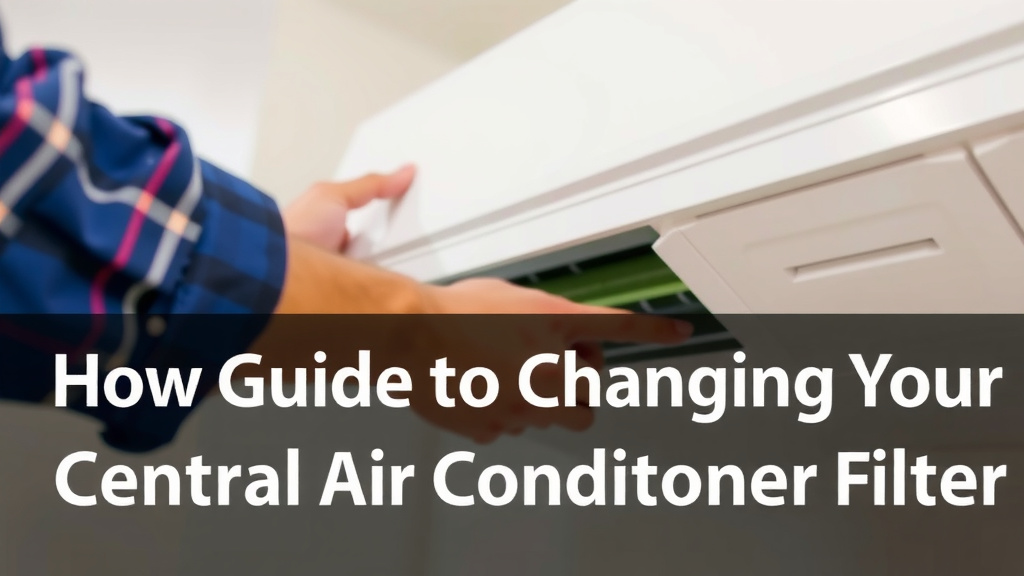
Your Guide to Changing Your Central Air Conditioner Filter
This simple DIY task can save you money and keep your home’s air fresh. You’re just a few steps away from a cleaner, more efficient system.
Locating Your Air Conditioner’s Filter
The first step is finding where your AC unit hides its filter. This is often the trickiest part for many homeowners. Don’t worry, it’s usually in a pretty accessible spot.
Common Filter Locations
Most central air systems have a filter located either:
- In the return air duct, near the air handler.
- Within the air handler itself, often behind a removable panel.
- In a wall, ceiling, or floor vent that pulls air back into the system.
You’ll typically see a vent cover for the return air. Sometimes, this cover is also the filter holder. Many experts recommend checking the manual for your specific HVAC system if you can’t find it.
What to Look For
The filter is usually a flat or pleated rectangular panel. It will be labeled with its size and MERV (Minimum Efficiency Reporting Value) rating. This information is super important for buying the right replacement.
Turning Off Your Air Conditioner
Before you touch anything, safety first! You absolutely must turn off your AC unit. This prevents dust from getting sucked into the system and protects you from injury.
Why It’s Crucial
Running the system while the filter is out can pull dust and debris deeper into your AC’s delicate components. This can cause expensive damage down the road.
How to Safely Shut Down Your AC
Locate your thermostat. Most digital thermostats have an “Off” setting for the fan and cooling. Set both to “Off.” If you’re unsure, you can also turn off the power to the unit at your home’s breaker box. Look for a breaker labeled “AC,” “Air Conditioner,” or “HVAC.”
Removing the Old Filter
Once the system is off, you’re ready to remove the old filter. This is where you might encounter a bit of dust, so be prepared!
Handling a Dirty Filter
You’ll likely see a buildup of dust, pet hair, and other debris on the old filter. This is exactly why you’re changing it! Many sources, including the Environmental Protection Agency (EPA), suggest cleaning your home’s air filters regularly to improve indoor air quality.
The Removal Process
If the filter is in a slot, it usually slides out. There might be clips or latches to release. If it’s behind a vent, you’ll need to remove the vent cover first. Some covers are screwed on, while others simply snap into place. Gently pull the filter out.
Important Tip: Notice the direction of the airflow arrow on the old filter before you remove it. This will tell you which way to insert the new one.
Choosing the Right Replacement Filter
You can’t just grab any filter off the shelf. Using the wrong size or type can harm your system and reduce efficiency.
Filter Size Matters
Filters come in standard sizes like 1x20x20, 1x20x25, or 4x20x20. The dimensions are usually printed on the side of the old filter. If not, you can measure the opening where the filter fits. Measure the height, width, and depth.
Understanding MERV Ratings
MERV ratings range from 1 to 20. Higher MERV ratings mean the filter captures smaller particles, offering better air filtration. However, higher MERV filters can also restrict airflow more.
For most homes, a MERV rating between 8 and 13 is recommended. This provides a good balance between air cleaning and airflow (Cleveland Clinic). If you have allergies or pets, you might consider a slightly higher MERV rating.
| MERV Rating | What It Captures |
|---|---|
| 1-4 | Larger particles like lint, carpet fibers, and dust mites. |
| 5-8 | Pollen, mold spores, and finer dust. |
| 9-12 | Pet dander, smoke particles, and bacteria. |
| 13+ | Very fine particles like viruses and smog. |
Installing the New Filter
Now for the satisfying part – putting in the fresh filter! It’s much easier than you think.
Orientation is Key
Remember that airflow arrow we talked about? Make sure it points in the direction of the air moving into your AC unit. Usually, this means the arrow points towards the air handler or furnace. If you’re unsure, check your system’s manual or look for clues on the unit itself.
Securing the Filter
Slide the new filter into place. It should fit snugly without being forced. If it’s too tight, double-check that you have the correct size. Ensure it’s fully seated and secure. If it was behind a vent, reattach the vent cover.
Restarting Your Air Conditioner
Almost there! It’s time to turn your AC back on and enjoy the cleaner air.
Powering Up
Go back to your thermostat and set the fan and cooling to their desired settings. If you turned off the breaker, flip it back on. You should hear your AC unit kick on shortly after.
Listen and Feel
Give your system a few minutes to run. Listen for any unusual noises. You should also feel cool air coming from your vents. If anything seems off, turn the system off again and recheck your work or consult a professional.
Filter Change Checklist
Here’s a quick rundown to make sure you didn’t miss a step:
- Found the filter location.
- Turned off the AC unit.
- Noted the old filter’s airflow arrow.
- Bought the correct size and MERV rating filter.
- Inserted the new filter correctly.
- Restarted the AC system.
Many sources, like the Department of Energy, recommend changing your air filter every 1-3 months. This frequency can vary based on your filter type, household pets, and air quality. Checking it monthly is a good habit to get into!
Conclusion
You’ve now learned how simple it is to change your central air conditioner filter. This regular maintenance is key to cleaner air and a more efficient AC system. We found that taking just a few minutes can save you money on energy bills and prevent costly repairs. Don’t let this easy task slip your mind. Make it a habit to check your filter monthly and replace it as needed. Your lungs and your wallet will thank you for it!
Frequently Asked Questions
How often should I really change my air filter?
Most experts and organizations like the Department of Energy recommend changing your filter every 1-3 months. However, this can vary. If you have pets or live in a dusty area, you might need to change it more often, perhaps even monthly.
What happens if I use the wrong size filter?
Using a filter that’s the wrong size can cause problems. If it’s too small, air can bypass the filter, meaning it won’t clean your air effectively. If it’s too large, it might be difficult to install properly and could even damage your system.
Can I just vacuum my old filter instead of replacing it?
While some older, thicker filters might be designed for cleaning, most modern pleated filters are designed for single use. Vacuuming may not remove all the trapped particles, and you risk damaging the filter material, making it less effective or even causing it to break down.
My new filter doesn’t seem to fit snugly. What should I do?
If your new filter doesn’t fit snugly, double-check the size printed on the filter itself and compare it to the size of the opening. Ensure there are no obstructions. A slightly loose filter might allow unfiltered air to pass through, so it’s best to get the correct size for a proper seal.
How do I know if my filter is really dirty?
Visually inspecting your filter is the best way to tell. If it’s covered in a thick layer of dust, dirt, pet hair, or other debris, it’s time for a change. You might also notice your AC system isn’t cooling as effectively as it used to, or your energy bills are higher.

![7 Best Dual Zone Mini Split Air Conditioner [2026]](https://bathroomexplorer.com/wp-content/uploads/2026/06/7-best-dual-zone-mini-split-air-conditioner-2026-featured-768x432.jpg)
![7 Best Commercial Window Air Conditioner [2026]](https://bathroomexplorer.com/wp-content/uploads/2026/06/7-best-commercial-window-air-conditioner-2026-featured-768x432.jpg)