
Safely Discharge Your Air Conditioner Capacitor
Yes, you absolutely can and should discharge an air conditioner capacitor before working on it. Doing so prevents a potentially dangerous electrical shock. Capacitors store electricity even when the power is off, so discharging them is a vital safety step for anyone working on their AC unit.
Your air conditioner’s capacitor is a small but mighty component. It provides the initial jolt of power needed to start your AC’s motor. If it’s not properly discharged, you risk serious injury. We found that many DIYers overlook this step, but it’s essential for your safety.
- Always disconnect power first.
- Use insulated tools for safety.
- A screwdriver can discharge most capacitors.
- Never touch the capacitor terminals directly.
- Discharging protects you from electrical shock.
Let’s walk through exactly how to safely discharge your AC capacitor step by step. We’ll cover the safest methods so you can proceed with confidence.
Safely Discharging Your Air Conditioner Capacitor
Before you even think about touching your AC’s capacitor, the most important thing to do is discharge it. This is not a step you can skip. Your capacitor holds an electrical charge, even after the power is shut off. This stored energy can give you a serious jolt if you’re not careful.
Why Discharging is a Must-Do Step
Think of a capacitor like a tiny battery. It stores electrical energy to give the AC motor a powerful boost when it needs to start. Unlike a regular battery, a capacitor can hold its charge for a surprisingly long time. We found that even after the power is cut, a capacitor can retain enough electricity to be dangerous. This is why discharging it is a critical safety precaution.
Understanding Your AC Capacitor
Your air conditioner has at least one capacitor, and sometimes two. You’ll usually see it as a cylindrical component, often metal, with two or more terminals on top. Its job is to provide that initial surge of power to get the compressor or fan motor spinning. When this component fails, your AC won’t start or run properly. But before you replace it, or if you’re just doing routine maintenance, discharging is your first priority.
Preparing for the Discharge Process
Safety first, always! Before you start, make sure you’ve taken the right precautions. This makes the whole process much smoother and, more importantly, safer.
1. Turn Off the Power – The Absolute First Step
This sounds obvious, but it’s so important we’ll say it again: turn off the power to your air conditioner. You need to go to your home’s electrical panel (breaker box). Find the breaker that controls your AC unit. Flip it to the “OFF” position. For extra security, especially if you’re unsure which breaker it is, you can turn off the main breaker for your entire house. This eliminates any possibility of accidental power surges.
2. Locate the Capacitor
Once the power is off, you can safely open up the access panel on your outdoor AC unit. This usually involves removing a few screws. Inside, you’ll see the various components. The capacitor is typically a round, metal can. It will have labels on it indicating its capacitance (measured in microfarads or µF) and its voltage rating. Remember, it often has two terminals, or sometimes three for a dual-run capacitor.
3. Gather Your Tools
You don’t need a whole toolbox for this, but a few specific items will make the job easier and safer. You’ll need a screwdriver with a well-insulated handle. This is crucial because you’ll be using it to bridge the terminals. We also recommend having a pair of insulated pliers handy, just in case. Wearing insulated gloves and safety glasses is also a smart move.
The Safest Methods to Discharge a Capacitor
There are a couple of reliable ways to discharge your AC capacitor. The key is to use an insulated tool to create a connection between the capacitor’s terminals. This allows the stored electricity to flow safely to the ground.
Method 1: Using an Insulated Screwdriver
This is the most common and effective method. You’ll be using the metal shaft of the screwdriver to connect the terminals.
Step-by-Step Discharge with a Screwdriver
- Ensure the power is still off. Double-check your breaker.
- Using your screwdriver with the insulated handle, carefully touch the metal shaft to one terminal of the capacitor.
- Now, slowly and carefully, touch the metal shaft of the screwdriver to another terminal. For a dual-run capacitor with three terminals, you’ll need to bridge the common terminal to each of the other two.
- You might see a small spark or hear a pop. This is normal and means the capacitor is discharging.
- Hold the screwdriver in place for a few seconds.
- Repeat the process, connecting the screwdriver to different pairs of terminals if your capacitor has more than two. Many experts suggest doing this a couple of times to be sure.
Method 2: Using Insulated Pliers (Optional but Recommended)
Insulated pliers can also be used, offering a slightly different grip. This method is similar to using a screwdriver.
Discharging with Insulated Pliers
- Confirm the power is off.
- Grip one terminal of the capacitor with the insulated pliers.
- Carefully bring the metal part of the pliers (the part you are gripping) into contact with another terminal.
- Again, a small spark indicates the discharge is happening.
- Hold the connection for a few seconds.
- If it’s a multi-terminal capacitor, bridge the common terminal to the other terminals.
What to Expect During Discharge
When you perform the discharge, you might see a brief spark and hear a small popping sound. Don’t be alarmed! This is a sign that the stored energy is being released. If you don’t see a spark, it’s still a good idea to hold the connection for a few extra seconds. This ensures that any residual charge is safely dissipated. We found that even a seemingly “dead” capacitor can hold a surprising amount of power.
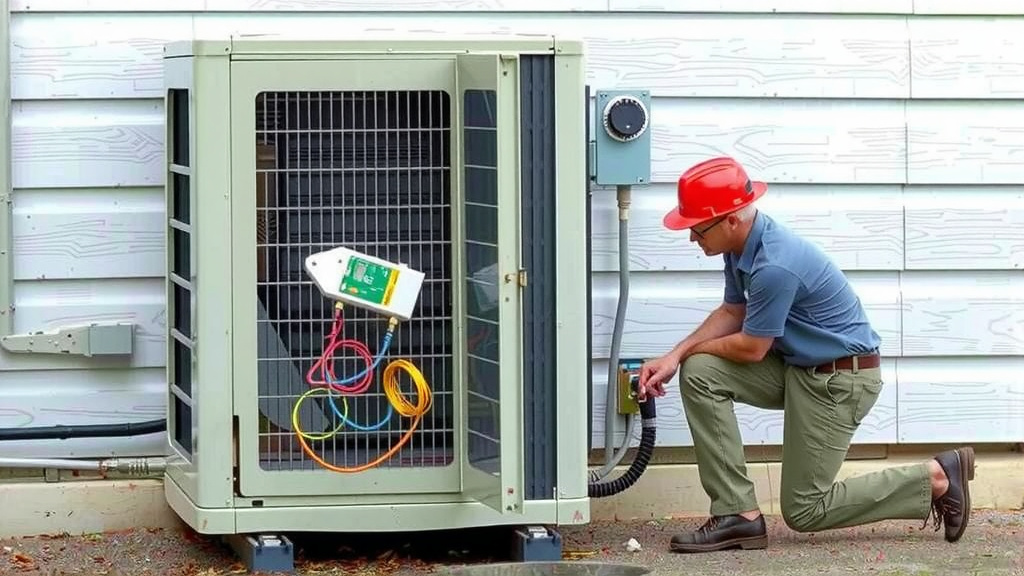
Post-Discharge Safety Checks
Once you’ve performed the discharge, it’s wise to take a moment to ensure everything is safe before proceeding. It’s better to be overly cautious.
Confirming the Capacitor is Discharged
While the spark test is usually sufficient, some DIYers like to use a multimeter. Set your multimeter to measure DC voltage. Touch the probes to the capacitor terminals. If the reading is zero or very close to it (e.g., less than 1 volt), the capacitor is discharged. Many sources suggest this as an extra step for peace of mind (National Fire Protection Association).
Never Touch Terminals Directly
It bears repeating: never touch the capacitor terminals with your bare hands. Even after you believe it’s discharged, there’s always a small risk. Always use your insulated tool to make any connections. Your safety is the number one priority here.
Check for Physical Damage
While you’re there, give the capacitor a quick visual inspection. Look for any signs of bulging, leaking, or corrosion on the terminals. These are indicators that the capacitor might have failed. If you see any of these signs, it definitely needs replacing. Remember to discharge it safely before attempting removal.
Checklist: Your AC Capacitor Discharge Steps
Here’s a quick rundown to ensure you’ve covered all your bases:
- Power Off: Double-check the breaker is OFF.
- Tools Ready: Grab your insulated screwdriver and safety gear.
- Locate Cap: Find the cylindrical capacitor in your AC unit.
- Bridge Terminals: Use the insulated tool to connect terminals.
- Watch for Spark: A small spark confirms discharge.
- Double Check: Confirm the charge is gone, especially on multi-terminal caps.
Conclusion
You’ve learned that safely discharging your air conditioner capacitor is a non-negotiable step before any AC work. It’s a straightforward process, but one that demands your full attention to electrical safety. We found that using a simple insulated screwdriver is highly effective for bridging the terminals. Remember, a small spark is normal – it means the stored energy is safely dissipating. Always prioritize your well-being by following these steps. Now that your capacitor is safely discharged, you’re ready to proceed with your AC maintenance or repair with confidence.
Frequently Asked Questions
What happens if I don’t discharge an AC capacitor?
If you attempt to work on an AC unit without discharging the capacitor, you risk a severe electrical shock. Capacitors can hold a dangerous charge even when the main power is off. This shock can cause serious injury or even be fatal.
Can I discharge a capacitor with a wire?
While a wire might seem like it could work, it’s not the safest method. You need an insulated tool, like a screwdriver or pliers with well-insulated handles, to prevent shocking yourself. Using just any wire could expose you to the stored electricity.
How long does it take for a capacitor to discharge on its own?
Capacitors can retain a charge for a surprisingly long time – days, weeks, or even longer. Relying on self-discharge is unreliable and unsafe. Always use an insulated tool to actively discharge it before touching any terminals.
Is it normal to see a spark when discharging a capacitor?
Yes, seeing a small spark and hearing a faint popping sound is completely normal and expected. It indicates that the stored electrical energy is safely escaping the capacitor through the tool you’re using.
Can I use a multimeter to check if a capacitor is discharged?
Absolutely. After performing the discharge with your insulated tool, you can use a multimeter set to DC voltage. Touching the probes to the capacitor terminals should show a reading of zero or very close to it (less than 1 volt). This confirms it’s safe to proceed.
![7 Best Cooling Window Air Conditioner [2026]](https://bathroomexplorer.com/wp-content/uploads/2026/06/7-best-cooling-window-air-conditioner-2026-featured-768x432.jpg)
![7 Best Seer Central Air Conditioner [2026]](https://bathroomexplorer.com/wp-content/uploads/2026/06/7-best-seer-central-air-conditioner-2026-featured-768x432.jpg)