How Many KW Does Your Air Conditioner Use
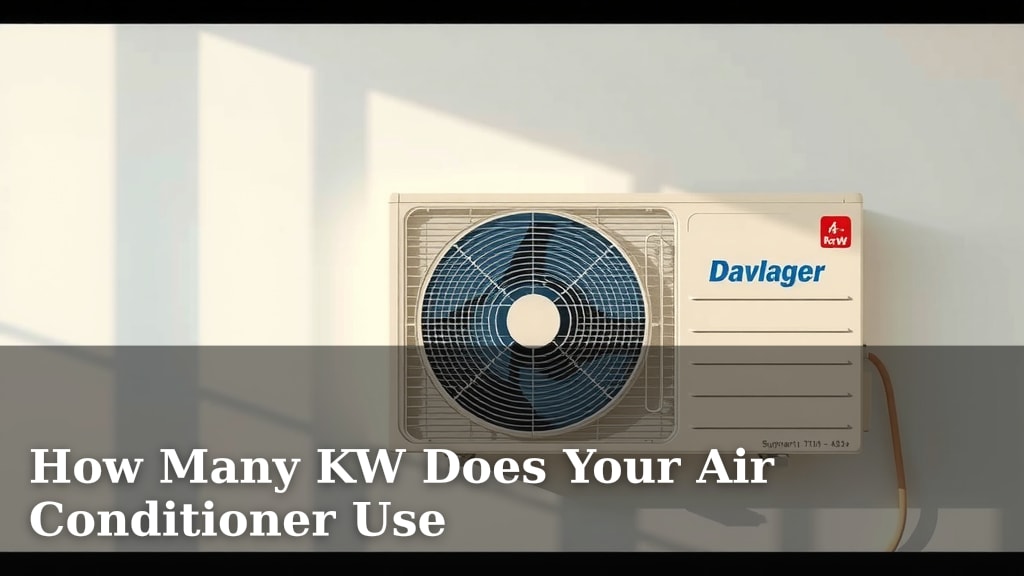
So, how many kilowatts (kW) does an air conditioner actually use? You can expect a typical central air conditioner to use between 3 kW and 5 kW. Smaller window units might use as little as 0.5 kW, while larger systems can go much higher. The exact number depends on its size, efficiency, and how hard it’s working to cool your home.
Understanding your AC’s energy usage is key to managing your electricity bills. Factors like the SEER rating (Seasonal Energy Efficiency Ratio) and the age of your unit play a big role. Older, less efficient models will definitely consume more power than newer, ENERGY STAR certified ones. Think of it like driving an old gas-guzzler versus a fuel-efficient hybrid!
- The average central AC uses 3 to 5 kW.
- Smaller window units use less, larger ones use more.
- AC energy use depends on size, efficiency (SEER rating), and runtime.
- Newer, ENERGY STAR units are more efficient and use less power.
Let’s dive into the details and figure out what your air conditioner’s power consumption really looks like.
Understanding Your Air Conditioner’s Wattage Needs
So, you’re curious about how much power your air conditioner draws in kilowatts (kW). It’s a smart question to ask! Knowing this helps you understand your electricity bills. We’ve found that most air conditioners aren’t just a single power number. It really depends on the AC’s size and type.
What Exactly is a Kilowatt?
Before we dive deeper, let’s quickly clarify what a kilowatt is. A kilowatt (kW) is simply 1,000 watts. Think of watts as the basic unit of power. Your AC needs a certain amount of this power to run its compressor and fan. Kilowatts give us a way to measure that power usage on a larger scale, making it easier to track how much electricity your appliance consumes over time.
Typical Power Consumption Ranges
We found that the wattage of an air conditioner can vary quite a bit. For a standard central air conditioning system, you’re generally looking at a range of 3 kW to 5 kW. This is for the whole system that cools your entire house. For smaller, portable units, like window ACs or mini-split systems, the numbers are much lower.
Window Air Conditioners
A smaller window unit, often used for a single room, might use as little as 0.5 kW to 1.5 kW. These are designed for smaller cooling jobs. They are a good option if you only need to cool one specific area of your home and don’t want to run your central system.
Central Air Conditioning Systems
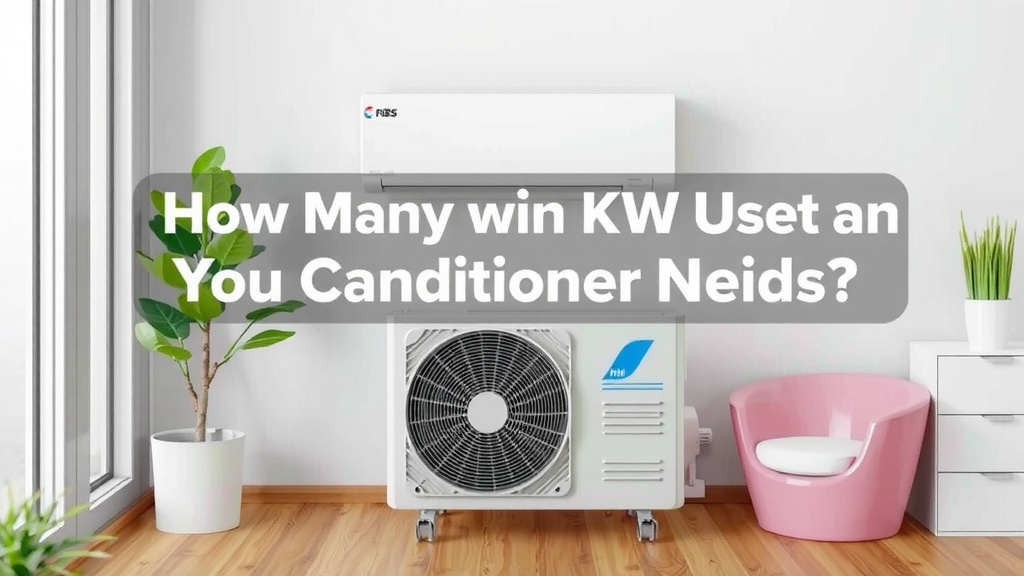
Larger, central air conditioning units are powerhouses. They typically range from 3 kW to 5 kW. Some very large homes or systems designed for extreme heat might even push this higher, sometimes reaching 7 kW or more. These systems have a lot more work to do, cooling much larger spaces.
Ductless Mini-Split Systems
Ductless mini-split systems offer a flexible solution. Their power usage varies based on the number of indoor units and their size. Generally, a single-zone mini-split might use between 0.8 kW and 2.5 kW. Multi-zone systems will use more, depending on how many indoor units are connected. They can be a great balance of efficiency and targeted cooling.
Factors Influencing Your AC’s Energy Use
You might be wondering why there’s such a range in power consumption. Several factors play a big role in how much energy your air conditioner uses. It’s not just about turning it on; it’s about how and when you use it.
Size Matters: Matching Your AC to Your Space
One of the biggest factors is the size of your air conditioner. This is often measured in BTUs (British Thermal Units). An AC that’s too small for your space will run constantly, trying to catch up. An AC that’s too large will cycle on and off too frequently. This short cycling is inefficient and hard on the unit. It also doesn’t dehumidify the air effectively, leaving your home feeling cool but clammy. Experts often recommend selecting an AC size that is appropriately matched to your room or home’s square footage.
Efficiency Ratings: SEER and ENERGY STAR
Air conditioner efficiency is measured by its SEER rating (Seasonal Energy Efficiency Ratio). Higher SEER ratings mean the unit uses less energy to produce the same amount of cooling. Older units might have SEER ratings as low as 8 or 10. Modern units typically have SEER ratings of 13 or higher. You can find ENERGY STAR certified models, which meet strict energy efficiency guidelines set by the U.S. Environmental Protection Agency. These units can be 10-20% more efficient than standard models.
Runtime: How Long Does It Run?
The actual kW usage is also affected by how long your air conditioner runs. If you live in a very hot climate, your AC will naturally work harder and run for longer periods. Even on a milder day, if you set your thermostat very low, the unit will run more. We found that thermostat settings are a key user-controlled factor in runtime. A few degrees can make a noticeable difference in both comfort and energy consumption.
Age and Maintenance of Your Unit
Like any appliance, air conditioners degrade over time. An older unit will likely be less efficient than when it was new. Furthermore, poor maintenance can significantly impact performance. Dirty filters, clogged coils, and low refrigerant levels force the AC to work harder. Regular check-ups and cleaning can help keep your unit running at its best. Think of it like changing the oil in your car; it keeps everything running smoothly.
Estimating Your AC’s Monthly kW Usage
To get a rough idea of your monthly energy usage in kilowatt-hours (kWh), you can do a simple calculation. Multiply the AC’s wattage (in kW) by the number of hours it runs per day, and then by the number of days in the month. For example, a 4 kW unit running for 8 hours a day for 30 days would use: 4 kW * 8 hours/day * 30 days = 960 kWh per month. Remember, this is an estimate, as runtime varies daily. Many utility companies offer online tools to help you estimate usage based on appliance type.
Tips for Managing Your AC’s Power Consumption
Understanding your AC’s needs is the first step. The next is managing them effectively. Here are some practical tips to help keep your energy bills in check:
- Set your thermostat wisely: Aim for 78°F (26°C) when you’re home, as recommended by the U.S. Department of Energy.
- Use a programmable or smart thermostat: These allow you to automatically adjust temperatures when you’re away or asleep.
- Regularly change your air filter: A clean filter allows for better airflow and reduces strain on your unit.
- Ensure proper insulation and sealing: Prevent cool air from escaping your home.
- Use fans: Ceiling or portable fans can help circulate cool air, allowing you to set your thermostat a few degrees higher.
- Consider shade: Use blinds or curtains to block direct sunlight during the hottest parts of the day.
Conclusion
You’ve learned that your air conditioner’s kilowatt (kW) usage isn’t a fixed number. It depends on its size, SEER rating, and how often it runs. While central ACs typically use 3-5 kW, window units are much lower. Newer, ENERGY STAR models offer better efficiency, helping you save money. By understanding these factors and implementing simple tips like smart thermostat use and regular maintenance, you can effectively manage your AC’s energy consumption. Take the next step by checking your unit’s SEER rating and considering these energy-saving habits for a cooler, more affordable summer.
Frequently Asked Questions
How can I find out the exact kW usage of my specific air conditioner?
You can often find your air conditioner’s power consumption details on its nameplate or label. This label, usually located on the side of the unit, will list its electrical specifications, including amperage and voltage, which you can use to calculate wattage (Watts = Volts x Amps). For a quick kW estimate, divide that wattage by 1,000.
Will my AC use the same amount of kW on a cloudy day as on a hot day?
No, your AC will use significantly less power on a cooler, cloudy day than on a hot, sunny day. When the outdoor temperature is lower, your air conditioner doesn’t have to work as hard to cool your home. This means the compressor and fan will run less, resulting in lower kW usage during milder weather.
Does an older air conditioner use more kW than a newer one?
Generally, older air conditioners tend to use more kW than newer models with similar cooling capacities. Over time, components can become less efficient, and older units may not meet current energy efficiency standards. Newer units, especially those with higher SEER ratings or ENERGY STAR certification, are designed to consume less electricity.
What is the difference between kW and kWh for air conditioners?
kW (kilowatt) measures the rate of power consumption at a given moment, essentially how much electricity your AC is drawing right now. kWh (kilowatt-hour) measures the total energy consumed over time. Your electricity bill is calculated based on kWh used (kW usage multiplied by the hours it runs).
Can a dirty air filter increase my AC’s kW usage?
Yes, a dirty air filter can indeed increase your AC’s kW usage. A clogged filter restricts airflow, forcing the unit’s fan motor to work harder to circulate air. This increased strain on the motor leads to higher energy consumption. Regularly changing your air filter is a simple maintenance task that helps keep your AC running efficiently.

![7 Best Window Air Conditioner For Garage [2026]](https://bathroomexplorer.com/wp-content/uploads/2026/07/7-best-window-air-conditioner-for-garage-2026-featured-768x432.jpg)