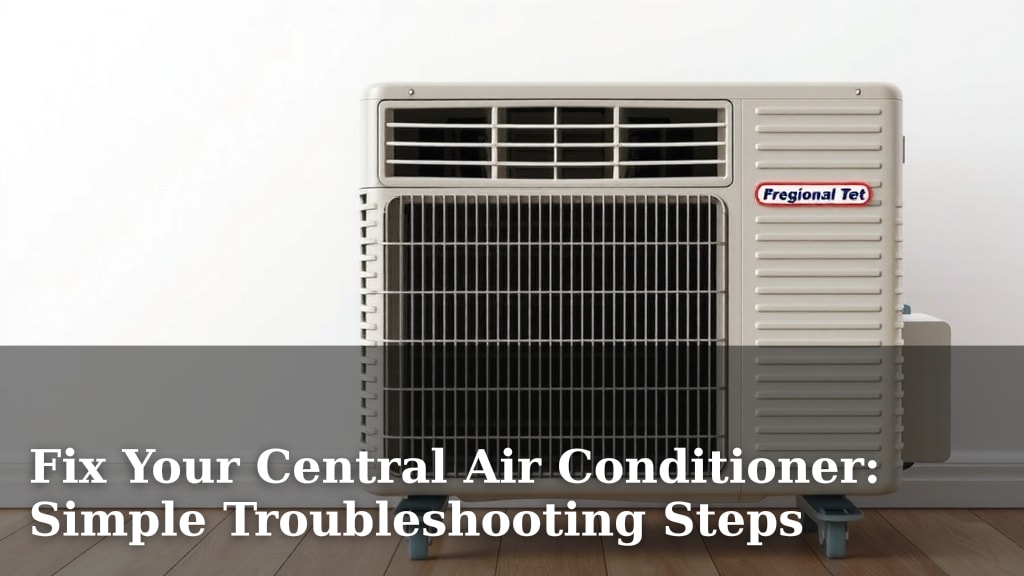
Fix Your Central Air Conditioner: Simple Troubleshooting Steps
Yes, you can often fix common central air conditioner problems yourself with a few simple steps. Many AC issues stem from clogged air filters, frozen evaporator coils, or tripped circuit breakers. Addressing these can get your cool air flowing again without a service call.
When your AC isn’t cooling, it’s easy to panic. But research shows that a surprising number of breakdowns are preventable or fixable by homeowners. Understanding basic maintenance and troubleshooting can save you money and a lot of discomfort, especially on a hot day.
- Check your air filter first.
- Look for ice on the AC unit.
- Ensure your circuit breaker hasn’t tripped.
- Reset your thermostat if needed.
Let’s walk through how to tackle these common AC issues step by step, so you can hopefully get your system back up and running.
Troubleshooting Common Central AC Problems Yourself
Is your central air conditioner blowing warm air? Don’t sweat it just yet! Many common AC issues are surprisingly simple to fix. You might be able to get your cool air back without calling a technician. Let’s walk through some of the most frequent culprits and how you can tackle them.
The Mighty Air Filter: Your First Line of Defense
This is where most AC problems begin. A dirty air filter can restrict airflow, making your system work harder. This can lead to poor cooling and even freeze-ups.
Why Air Filters Matter
Think of your air filter like the lungs of your AC system. When it’s clogged, it’s hard for the system to breathe. Research from Energy.gov suggests that regularly changing your filter can improve efficiency and reduce energy bills by up to 15%.
How to Check and Change Your Air Filter
Locate your air filter. It’s usually near your indoor air handler or furnace.
- Slide out the old filter.
- Note its size and MERV rating.
- Insert a new, clean filter, making sure the airflow arrow points in the correct direction.
Frozen Evaporator Coils: A Chilling Problem
If your AC isn’t cooling effectively and you feel weak airflow, you might have frozen evaporator coils. This often happens because of restricted airflow, usually from a dirty filter.
Identifying Frozen Coils
Look for ice buildup on the copper lines connected to your indoor air handler. You might also notice that water is dripping excessively around your indoor unit.
Thawing and Preventing Frozen Coils
First, turn your AC system OFF at the thermostat. Then, turn the fan setting to “ON” to help circulate room air and speed up the thawing process. This can take several hours. Once the ice has melted, replace your air filter if it’s dirty. Running the system with a clean filter should prevent future freezing.
Electrical Issues: Breakers and Fuses
Sometimes, the problem isn’t with the AC unit itself but with the power supply. A tripped circuit breaker is a common, easily fixable issue.
Checking Your Electrical Panel
Locate your home’s electrical panel. You’ll need to find the breaker that controls your air conditioning system. Breakers are usually labeled. Look for a switch that is in the “OFF” position or halfway between “ON” and “OFF.”
Resetting a Tripped Breaker
If you find a tripped breaker, firmly push it to the “OFF” position first. Then, push it back to the “ON” position. If the breaker trips again immediately, there might be a more serious electrical problem, and it’s best to call a qualified electrician or HVAC professional.
Thermostat Troubles: Simple Resets and Settings
Your thermostat is the brain of your AC system. Sometimes, it just needs a quick reset or a check of its settings.
Basic Thermostat Checks
Ensure your thermostat is set to “Cool” and the temperature is set lower than the current room temperature. Many programmable thermostats can be set to specific schedules. Make sure there isn’t a schedule overriding your desired temperature. Check the batteries if your thermostat has them; low batteries can cause erratic behavior.
Resetting Your Thermostat
If your thermostat seems unresponsive, you can try resetting it. Some digital thermostats have a small reset button. Others can be reset by temporarily removing the batteries or by turning off the power to the unit at the breaker for a few minutes and then turning it back on. We found that this simple step often resolves minor glitches.
When to Call a Professional HVAC Technician
While these DIY steps can fix many common AC problems, there are times when you’ll need expert help. If you’ve tried the basics and your AC still isn’t working, or if you suspect a more serious issue, it’s time to call in the pros.
Signs You Need Professional Assistance
Consider calling an HVAC technician if you notice any of the following:
- Persistent electrical problems, like breakers that keep tripping.
- Strange noises coming from your outdoor unit or air handler.
- Unusual smells, such as burning or musty odors.
- Refrigerant leaks (often indicated by a hissing sound or an oily residue on pipes).
- Your AC unit is more than 10 years old and experiencing frequent issues.
Key Takeaways for Basic AC Maintenance
Getting your AC back in working order is often within reach. Here’s a quick rundown:
- Always start with the air filter.
- Check for ice on the coils and thaw if necessary.
- Verify your circuit breaker hasn’t tripped.
- Ensure your thermostat settings are correct.
- Don’t hesitate to call a professional when needed.
By understanding these common issues, you can save yourself time, money, and a whole lot of discomfort on a hot day. Happy cooling!
Conclusion
You’ve got the power to tackle many common central AC problems yourself! We’ve shown you how checking your air filter, defrosting icy coils, resetting your breaker, and adjusting your thermostat can bring back cool air. These simple steps can save you money and a lot of hot-day misery. Don’t let a warm house get you down. Try these fixes first. If your AC still acts up after these steps, remember it’s always okay to call a qualified HVAC professional for the more complicated jobs.
Frequently Asked Questions
How often should I change my central air conditioner filter?
You should check your air filter monthly. For most homes, replacing it every 1-3 months is ideal. If you have pets or allergies, you might need to change it more frequently to maintain good airflow and system efficiency.
What should I do if my AC is blowing warm air even after changing the filter?
If changing the filter didn’t help, check for ice on your indoor evaporator coils. If you see ice, turn your AC off at the thermostat and set the fan to “ON” to let it thaw. Ensure your thermostat is set correctly and the breaker hasn’t tripped. If it continues to blow warm air, professional help may be needed.
My circuit breaker keeps tripping. What does this mean?
A breaker that repeatedly trips usually indicates an electrical issue that your system cannot resolve on its own. This could be a short circuit or an overloaded system. It’s important to call a qualified electrician or HVAC technician to diagnose and fix the problem safely.
Can I add Freon to my AC if it’s low?
Adding Freon (refrigerant) is not a DIY task for most homeowners. If your system is low on refrigerant, it typically means there’s a leak that needs professional repair. Refrigerant handling requires special tools and certification, and a leak can harm your system if not properly addressed.
My AC unit is making strange noises. Should I be worried?
Yes, unusual noises from your AC unit often signal a problem that needs attention. Grinding, squealing, or banging sounds could indicate worn-out parts, motor issues, or other mechanical failures. It’s best to turn off the unit and call an HVAC professional to prevent further damage.