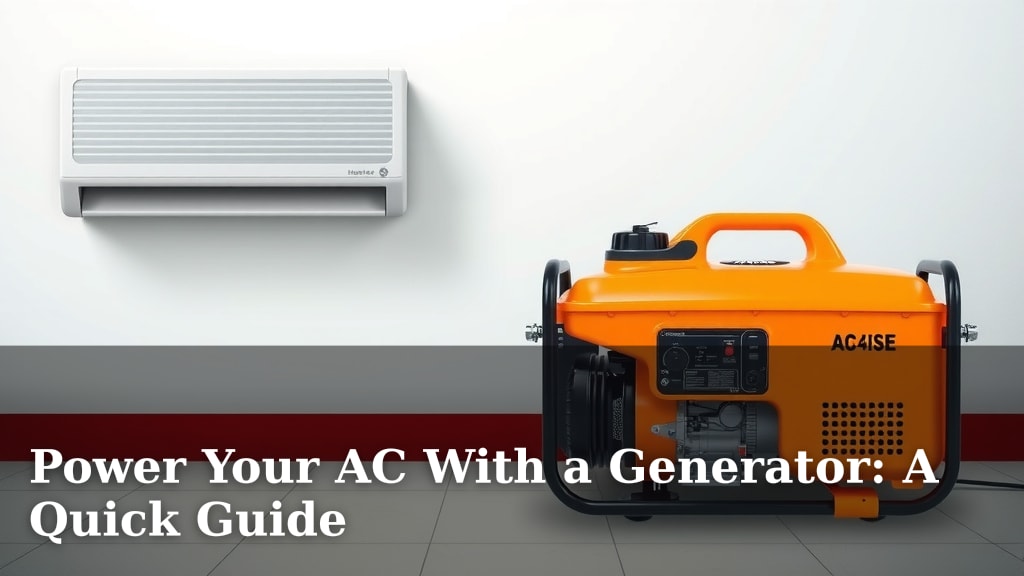
Power Your AC With a Generator: A Quick Guide
Yes, you absolutely can power your air conditioner with a generator, but it requires careful planning. You need a generator with enough wattage to handle your AC’s starting and running needs. Undersized generators will struggle or fail to start your air conditioner, leading to frustration and potential damage.
We’ve found that many people wonder about this when facing power outages. Running an AC unit efficiently means understanding both its power requirements and your generator’s capabilities. Getting this right ensures you stay cool and comfortable during unexpected blackouts.
- Generators can power air conditioners.
- Calculate your AC’s wattage needs.
- Compare that to your generator’s capacity.
- Start-up wattage is higher than running wattage.
- Proper setup prevents damage and keeps you cool.
Below, we’ll guide you through exactly how to make sure your generator can keep your air conditioner humming.
Running Your Air Conditioner Off a Generator: What You Need to Know
Yes, powering your air conditioner with a generator is totally doable. Many people turn to this solution when the power grid decides to take a break. It’s not as simple as just plugging it in, though. You need to make sure your generator has the right muscle to handle your AC’s demands. We’ve found that getting this setup right prevents a lot of headaches.
Your air conditioner needs two types of power: the initial surge to get going and a steady supply to keep running. It’s like giving your car a jump start versus cruising down the highway. Both require different amounts of energy. We’ll break down exactly how to figure out what your AC needs and what your generator can give.
Calculating Your Air Conditioner’s Power Needs
This is the most important step. Underestimating your AC’s needs is a common mistake. It can lead to the generator shutting down or, worse, damaging your air conditioner. We’ve seen folks get frustrated when their generator sputters and dies right when they need cool air the most. Let’s avoid that!
Finding Your AC’s Wattage Requirements
Your air conditioner will have a label on it that lists its power consumption. You’re looking for two numbers here: starting wattage and running wattage. Sometimes these are listed as “surge watts” and “continuous watts.” The starting wattage is the big one, the initial jolt your AC needs to kick on its compressor. This can be 2 to 3 times higher than the running wattage.
Where to Find This Information
The best place to find these numbers is on the nameplate of your air conditioner. It’s usually a sticker or metal plate attached to the side or back of the unit. If you can’t find it, check your owner’s manual. Sometimes, you can even find this information on the manufacturer’s website by searching for your AC model number.
Understanding the Numbers
Let’s say your AC lists a running wattage of 1,500 watts. Its starting wattage might be around 3,000 to 4,500 watts. This means your generator needs to be able to supply at least 4,500 watts for a brief moment and then sustain 1,500 watts continuously. We found that most people overlook the starting wattage, which is a critical mistake.
Other Appliances to Consider
Remember, your generator likely won’t be powering *just* the air conditioner. What else will be running at the same time? You might have a refrigerator, some lights, a fan, or even a microwave. Each of these adds to the total wattage your generator needs to provide. We always recommend making a list of everything you want to power simultaneously.
Here’s a quick way to estimate: add up the running wattage of all your desired appliances. Then, add your AC’s starting wattage to that total. This gives you a rough idea of the maximum wattage your generator might need to produce at any given moment. Many experts suggest adding a buffer of about 10-20% to this number for safety.
Choosing the Right Generator for Your Air Conditioner
Once you know your AC’s power needs, you can start looking for a generator. It’s not a one-size-fits-all situation. The generator’s wattage capacity is king here. Think of it like trying to fill a small bucket with a fire hose – you’ll make a mess and probably spill most of it. You need a good match.
Matching Generator Wattage to AC Needs
Look at the generator’s specifications. It will list its peak (or surge) wattage and running (or continuous) wattage. You need a generator whose peak wattage is higher than your AC’s starting wattage. You also need its running wattage to be greater than the combined running wattage of your AC and any other appliances you plan to use.
We found that many portable generators are rated in watts. For instance, a 5,000-watt generator might have a running wattage of 4,000 watts and a surge wattage of 5,000 watts. If your AC needs 3,500 starting watts and 1,500 running watts, this generator could work, but you’d need to be mindful of other loads. You wouldn’t want to run a toaster and a vacuum cleaner at the same time as the AC on this generator.
Inverter Generators: A Quieter, More Efficient Option
When it comes to powering sensitive electronics like your AC, inverter generators are often a preferred choice. Why? They produce cleaner, more stable power. This is measured by “total harmonic distortion” (THD). Traditional generators can have higher THD, which might not be ideal for some AC units. Inverters typically have a THD of less than 3%, while conventional generators can be 5% or higher (U.S. Department of Energy).
Inverter generators are also generally quieter and more fuel-efficient. They adjust their engine speed based on the power demand. So, if your AC is just running and not starting up, the generator doesn’t have to work as hard. We found that for comfort and efficiency, an inverter generator is often worth the extra investment for powering home appliances.
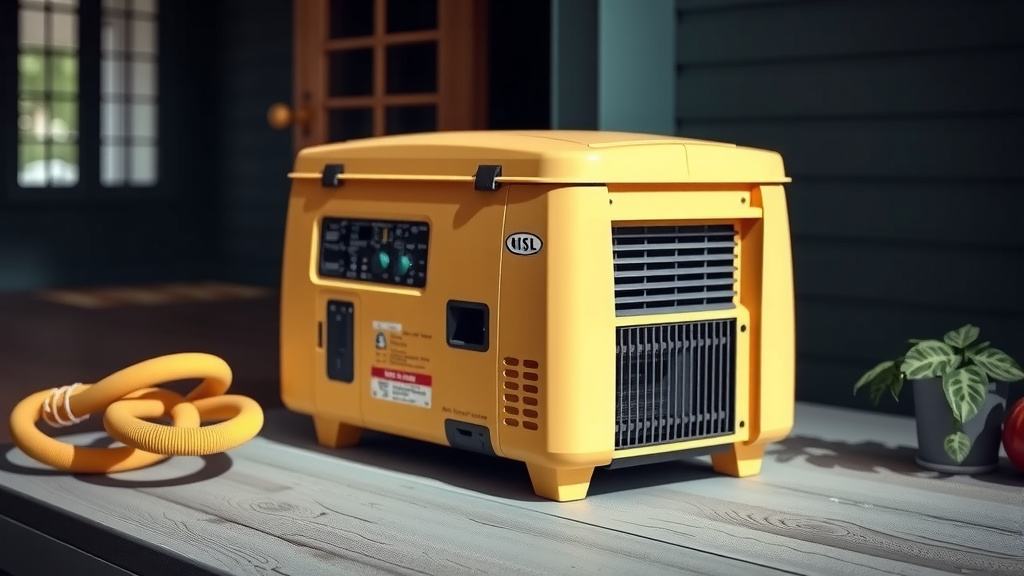
Step-by-Step: Connecting Your AC to the Generator Safely
Now that you have the right generator and know your AC’s needs, let’s get it hooked up safely. Safety is always our top priority. Improper setup can be dangerous for you and your appliances. We’ve put together a simple checklist to guide you through the process.
Pre-Connection Checklist
- Ensure generator is on a level surface, outdoors, and away from windows and doors.
- Check generator’s fuel and oil levels.
- Verify generator’s wattage capacity is sufficient for your AC and other planned loads.
- Turn off your air conditioner unit completely before connecting.
- Inspect the generator’s outlets and your AC’s power cord for any damage.
The Connection Process
First, make sure your generator is running and has reached stable operating speed. Then, turn the AC unit off at its thermostat or power switch. Plug your AC’s power cord directly into the appropriate outlet on the generator. Never use extension cords that are not rated for the heavy load your AC requires.
We found that many people try to use standard household extension cords. This is a big no-no. You need heavy-duty, outdoor-rated cords with the correct gauge (thickness) to handle the amperage. A cord that’s too small can overheat and become a fire hazard. It can also cause voltage drop, which is bad for your AC.
Starting Up: The Right Order Matters
This is where many go wrong! To minimize strain on the generator and your AC, always start the generator first, let it stabilize, and then turn on your air conditioner. If you’re powering multiple items, start the highest wattage items first (after the AC’s surge), or items that don’t have a surge load, like lights or fans.
When you’re ready to shut things down, turn off the air conditioner first. Let the generator run for a few minutes with no load to cool down before shutting it off. This process helps protect the generator’s engine and ensures a longer lifespan for both your generator and your air conditioner.
Important Considerations and Best Practices
There are a few more things to keep in mind to make sure everything runs smoothly. Think of these as the “little things” that make a big difference in keeping you cool and your equipment safe.
Fuel Management
Generators run on fuel, of course. Make sure you have enough on hand, especially if you anticipate a long outage. Store fuel safely and according to manufacturer recommendations. Rotate your fuel supply every 6 months to ensure it stays fresh. Old fuel can clog your generator’s carburetor.
Maintenance is Key
Just like your car, generators need regular maintenance. Check the oil, air filter, and spark plug. Many manufacturers recommend an oil change after the first 20 hours of use and then every 100-200 hours after that. A well-maintained generator is a reliable generator. We found that a little bit of preventative care goes a long way.
Listen to Your Generator
Pay attention to any unusual noises or smells. If your generator starts sputtering, making clunking sounds, or smelling like burning oil, shut it down immediately. Don’t try to push it beyond its limits. Many experts say that listening to your equipment is the first line of defense against costly damage.
Conclusion
Powering your air conditioner with a generator is a smart way to stay comfortable during outages. You’ve learned how vital it is to calculate your AC’s specific starting and running wattage needs. Comparing these requirements to your generator’s capacity ensures it won’t be overloaded. Remember, starting wattage is often double or triple the running wattage!
Choosing the right generator, especially an inverter model for cleaner power, makes a big difference. Always follow safe connection and startup procedures, prioritizing generator first, then AC. With proper planning and maintenance, you can confidently keep your cool when the power goes out.
Frequently Asked Questions
What’s the biggest mistake people make when powering an AC with a generator?
The most common error is underestimating the AC’s starting wattage. This initial surge can be much higher than the running wattage. Failing to account for this can cause the generator to shut down or prevent the AC from starting.
Can I use a regular extension cord to connect my AC to the generator?
No, you absolutely should not use a standard household extension cord. You need a heavy-duty, outdoor-rated extension cord with the correct gauge for the amperage. Using the wrong cord can lead to overheating, fire hazards, and voltage drop, which harms your AC.
How do I know if my generator is powerful enough for my AC?
You need to compare your AC’s starting wattage and running wattage (plus any other appliances you’ll run) to your generator’s peak and running wattage ratings. Your generator’s peak wattage must exceed your AC’s starting wattage, and its running wattage must cover your AC’s running needs plus other devices.
Is an inverter generator really necessary for an air conditioner?
While not always strictly necessary, an inverter generator is highly recommended for sensitive electronics like air conditioners. They produce cleaner power with lower total harmonic distortion (THD), which is safer for your AC’s components and can prevent damage.
What’s the correct order for starting things up when using a generator for my AC?
Always start the generator first and let it reach stable operating speed. Then, ensure your air conditioner is turned off at its thermostat or switch before plugging it in. Finally, turn on your air conditioner. This sequence minimizes strain on both the generator and the AC unit.


![7 Best Air Conditioner For Small Room [2026]](https://bathroomexplorer.com/wp-content/uploads/2026/07/7-best-air-conditioner-for-small-room-2026-featured-768x432.jpg)