
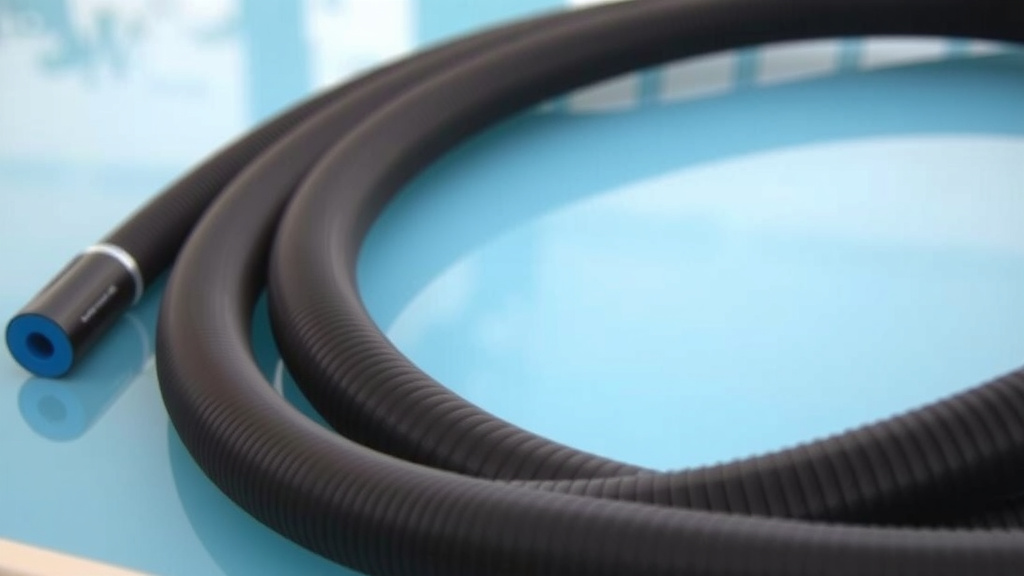
What Pool Vacuum Hose Length Do You Need
Choosing the right pool vacuum hose length is simpler than you think. You generally need a hose that is **1.5 to 2 times the longest dimension** of your swimming pool. This ensures your automatic cleaner can reach every corner without getting tangled. Don’t guess; measure your pool first to avoid a hose that’s too short or too long.
A hose that’s too short will leave parts of your pool dirty. It might also pull your cleaner off course. A hose that’s excessively long can be a tripping hazard and tangle easily. Finding the perfect length means less work for you and a cleaner pool for everyone to enjoy.
TL;DR:
- Measure your pool’s longest dimension.
- Add 1.5 to 2 times that length for your hose.
- Too short? Missed spots. Too long? Tangled mess.
- A properly sized hose makes cleaning easy.
Let’s walk through exactly how to figure out the ideal pool vacuum hose length for your specific needs.
Determining the Right Pool Vacuum Hose Length
Figuring out the correct pool vacuum hose length is pretty straightforward. You need a hose that lets your cleaner reach every nook and cranny of your pool. A hose that’s too short won’t clean your entire pool. A hose that’s too long can become a tangled mess and a tripping hazard.
The Simple Formula for Success
The general rule of thumb is to **measure the longest dimension** of your pool. Then, multiply that measurement by 1.5 to 2. This gives you a great starting point for your ideal hose length. For example, if your pool is 30 feet long, a hose between 45 and 60 feet should work well.
Why Multiply?
Why the extra length? Your automatic pool cleaner needs room to maneuver. It needs to glide along the bottom and sides. It can’t do that efficiently if the hose is just barely long enough. This buffer prevents the cleaner from getting stuck or struggling to move. We found that a hose that’s too short often leads to frustration and incomplete cleaning.
Understanding Your Pool’s Shape and Size
Most pools fall into common shapes like rectangular, oval, or kidney. Your pool’s dimensions are key. You’ll need to know the length and the width. For irregularly shaped pools, focus on the absolute longest measurement from one end to the other.
Rectangular Pools
For a rectangular pool, measure its total length. This is the most critical dimension. Don’t worry too much about the width in this specific calculation. The length will guide the cleaner across the longest path.
Oval Pools
Oval pools require you to measure their length. This is typically the longest distance across the pool. Imagine drawing a straight line from one end of the oval to the other at its widest point. That’s your measurement.
Round Pools
For round pools, you’ll need to measure the diameter. The diameter is the distance straight across the center of the circle. If you’re unsure, measure the circumference and divide by pi (approximately 3.14). However, measuring across the widest part is usually simpler.
Freeform or Irregularly Shaped Pools
These can be a bit trickier. The best approach is to find the **absolute longest straight-line distance** within your pool. Think about the longest possible path a vacuum head could reasonably travel. If you have a very winding pool, add a little extra length just to be safe.
Factors Beyond Basic Dimensions
While the length calculation is crucial, a few other things can influence your decision. Think about your pool cleaner’s movement style. Some cleaners are more agile than others. Also, consider any special features in your pool.
Pool Cleaner Type and Movement
Different types of automatic pool cleaners move in distinct ways. Suction-side cleaners, for example, often move in a more random pattern. Pressure-side cleaners might follow a more predictable path. We found that cleaners with more complex movements might benefit from a slightly longer hose.
Steps, Benches, and Obstacles
Do you have wide steps, a tanning ledge, or a built-in bench? These features can add to the total area your cleaner needs to cover. If these areas are significant, you might want to lean towards the higher end of the recommended hose length. Ensure the hose can reach around these obstacles without restriction.
The Importance of Flexibility
A hose that’s too stiff can kink easily. This restricts water flow and hampers your cleaner’s performance. We recommend looking for hoses that are described as **flexible and durable**. This makes them easier to handle and less prone to tangling.
What Happens If Your Hose is the Wrong Length?
We’ve touched on this, but it’s worth reinforcing. The consequences of a poorly sized hose are quite clear.
Too Short: The Frustrating Reality
A hose that’s too short is perhaps the most common problem. Your cleaner will constantly pull against the hose. It may even get stuck in one area. This means you’ll have untouched patches of dirt and debris. You’ll likely spend more time manually cleaning those spots. It’s like trying to vacuum your living room with a cord that barely reaches the center of the room.
Too Long: The Tangled Nightmare
On the flip side, an excessively long hose can cause its own set of issues. It’s more prone to getting twisted and tangled. This can impede your cleaner’s movement and even damage the hose over time. Furthermore, a super long hose can be a tripping hazard around your pool deck. It’s difficult to store and manage.
Making the Final Choice: A Quick Checklist
Before you buy, run through this quick checklist. It will help you feel confident in your decision:
- Have you measured the longest dimension of your pool?
- Are you aiming for 1.5 to 2 times that measurement?
- Does your pool have any unusual shapes or obstacles?
- Consider how your specific pool cleaner moves.
- Do you prefer a bit of extra length for maneuverability?
- Is the hose material flexible and durable?
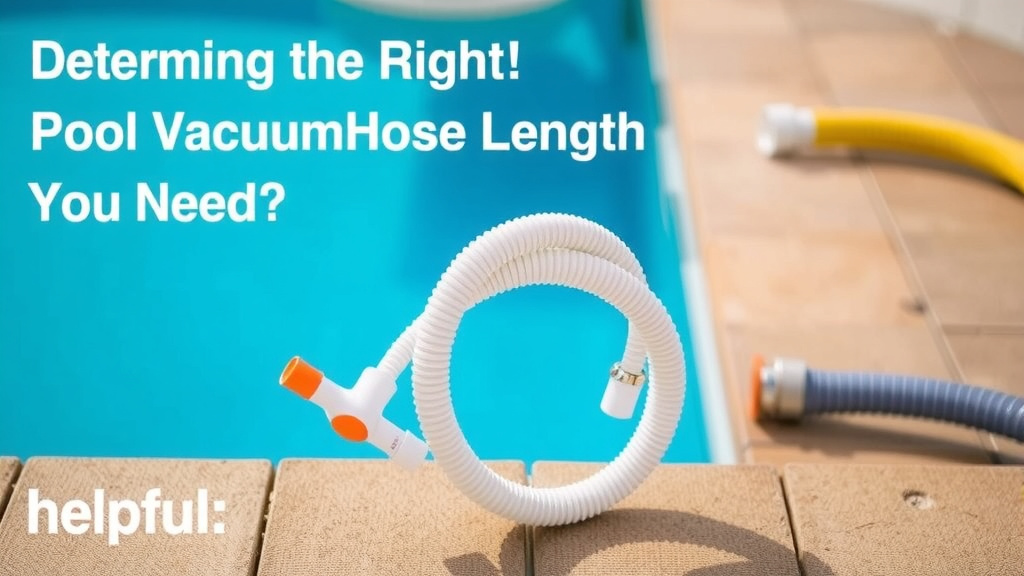
Conclusion
You’ve got this! Choosing the right pool vacuum hose length boils down to a simple measurement. Remember to multiply your pool’s longest dimension by 1.5 to 2. This ensures your automatic cleaner can reach every spot without getting tied up. We’ve found that this little bit of effort prevents frustration later. Take that measurement, grab the correct hose, and get back to enjoying your sparkling clean pool. Your next cleaning session will be a breeze!
Frequently Asked Questions
What if my pool is an unusual shape?
For irregular or freeform pools, find the single longest straight-line distance within your pool. Think about the path your cleaner would take. It’s best to add a little extra length if your pool has many curves or obstacles to ensure full coverage.
Can I just buy the longest hose available to be safe?
While it might seem like a good idea, an excessively long hose can actually cause problems. It’s more likely to tangle and create a tripping hazard around your pool deck. Stick to the 1.5 to 2 times rule for the best results and easiest handling.
Do different types of pool cleaners need different hose lengths?
Generally, the 1.5 to 2 times rule applies to most automatic cleaners. However, some cleaners with more complex movement patterns might benefit from a hose closer to the 2x length. Your cleaner’s manual might offer specific recommendations.
What if I have a very large pool?
For larger pools, it’s even more critical to get the length right. A hose that’s too short will leave vast areas unclean. Use the same formula: measure the longest dimension and multiply by 1.5 to 2. You may need to purchase extension hoses if a single standard length isn’t long enough.
How do I know if my hose is too stiff?
A stiff hose will kink easily, restricting water flow and hindering your cleaner’s movement. When shopping, look for hoses described as flexible and durable. You’ll want a hose that lies relatively flat and is easy to coil and uncoil without fighting it.
![7 Best Cordless Vacuum For Dogs [2026]](https://bathroomexplorer.com/wp-content/uploads/2026/05/7-best-cordless-vacuum-for-dogs-2026-featured-768x432.jpg)
![7 Best Compact Vacuum For Rv [2026]](https://bathroomexplorer.com/wp-content/uploads/2026/05/7-best-compact-vacuum-for-rv-2026-featured-768x432.jpg)
![7 Best Lightweight Vacuum For Hair [2026]](https://bathroomexplorer.com/wp-content/uploads/2026/06/7-best-lightweight-vacuum-for-hair-2026-featured-768x432.jpg)