How Long to Run Your Vacuum Pump: A Complete Guide
The ideal run time for a vacuum pump depends on its purpose and the specific task you’re performing. Generally, you should run a vacuum pump until your system reaches the desired vacuum level, which can range from a few minutes to over an hour. Factors like pump size, system volume, and leak tightness all play a big role.
Understanding your pump’s capabilities is key. For instance, running a pump for too long without proper setup can sometimes be less efficient than a targeted run. We found that many users benefit from knowing the typical vacuum depths for common applications. This helps you avoid overworking your equipment and ensures you achieve the best results for your project.
- Vacuum pump run time varies by application.
- Aim for the desired vacuum level, not a set time.
- Pump size and system leaks affect duration.
- Check your system’s gauge for completion.
Let’s walk through the different scenarios and how to determine the right amount of time for your vacuum pump to run.
Determining Your Vacuum Pump’s Ideal Run Time
So, you’ve got your vacuum pump fired up. Now, how long should it run? It’s a question many of us ask, and the answer isn’t a simple number. We found that the key is to focus on reaching your target vacuum level, not just running the pump for a predetermined amount of time. Think of it like baking a cake – you don’t bake it for exactly 30 minutes; you bake it until a toothpick comes out clean.
Your vacuum pump is essentially a tool to remove air. The goal is to remove enough air to achieve the specific pressure your project requires. We’ve seen that this can vary wildly, from needing a near-perfect vacuum for sensitive scientific experiments to just a light pull for a simple seal. Understanding what level of vacuum you need is your first step.
Factors Influencing Vacuum Pump Duration
Several factors will dictate how long your pump needs to work to achieve that desired vacuum. It’s not just about flipping a switch and walking away.
System Volume: The Bigger the Space, The Longer It Takes
Imagine trying to empty a swimming pool with a teacup versus a bucket. The same principle applies here. A larger system volume will naturally take more time for the vacuum pump to evacuate air from compared to a smaller one. We found that if you’re dealing with large tanks or extensive piping, you’ll need to be patient.
Pump Size and Capacity: A Matter of Horsepower
Just as important as the space you’re trying to vacuum is the pump you’re using. A small, low-capacity pump will take considerably longer to reach a deep vacuum in a given volume than a larger, more powerful one. We’ve observed that manufacturers often provide pump performance charts. These charts can help you estimate the time it takes for a specific pump to reach certain vacuum levels in different volumes.
Leak Tightness: The Enemy of Vacuum
This is arguably one of the most critical factors. Your vacuum system should ideally be as leak-tight as possible. Any leaks, no matter how small, allow air to continuously enter the system. This means your pump has to work harder and longer to maintain the vacuum, or it might never reach your target level at all. We found that meticulously checking for and sealing leaks before starting your pump can save you a lot of time and frustration.
Desired Vacuum Depth: How “Empty” Do You Need It?
This goes back to the purpose. Are you trying to achieve a deep vacuum, like those needed for freeze-drying or certain industrial processes, or just a moderate vacuum for a quick seal? The deeper the vacuum you need, the longer the pump will typically run. We’ve seen that many applications have standard vacuum requirements. For instance, a basic vacuum bagging operation might only need a few minutes, while a high-vacuum distillation could require much longer.
Typical Run Times for Common Applications
While there’s no universal answer, we can look at some common scenarios. This can give you a ballpark idea of what to expect. Remember, these are general guidelines, and your specific setup might differ.
Vacuum Bagging and Laminating
For processes like vacuum bagging composite parts or laminating, the goal is usually to pull the bag tightly around the mold. We found that this typically requires a moderate vacuum. Often, the pump needs to run only for 5 to 15 minutes to achieve a stable pull. Once the bag is sealed and the material is conforming, you might only need to maintain the vacuum, not continuously pump down.
Refrigeration System Evacuation
Evacuating a refrigeration or air conditioning system to remove moisture and non-condensable gases is a critical step. Experts recommend reaching a specific deep vacuum level, often measured in microns. We’ve researched this, and it can take anywhere from 30 minutes to over an hour, depending on the system size, pump capacity, and how well the system has been cleaned and dried previously. The focus here is on achieving a very low pressure to ensure system longevity (ASHRAE).
Industrial Sealing and Packaging
For sealing food products or other items in vacuum packaging, the process needs to be efficient. The pump typically runs until the package is visibly compressed and sealed. We found that for most consumer-grade vacuum sealers, this is a rapid process, often taking just 10 to 30 seconds per package. Industrial machines might be slightly longer but are designed for speed.
Laboratory and Scientific Use
This category is vast. A chemistry lab might need to pull a vacuum for filtration or distillation, requiring a few minutes to half an hour. On the other hand, a research facility working with high-vacuum chambers for material science could be running pumps for several hours to achieve the ultra-high vacuum needed. It really comes down to the specific experiment’s requirements and the equipment’s specifications.
Monitoring Your Vacuum Pump’s Performance
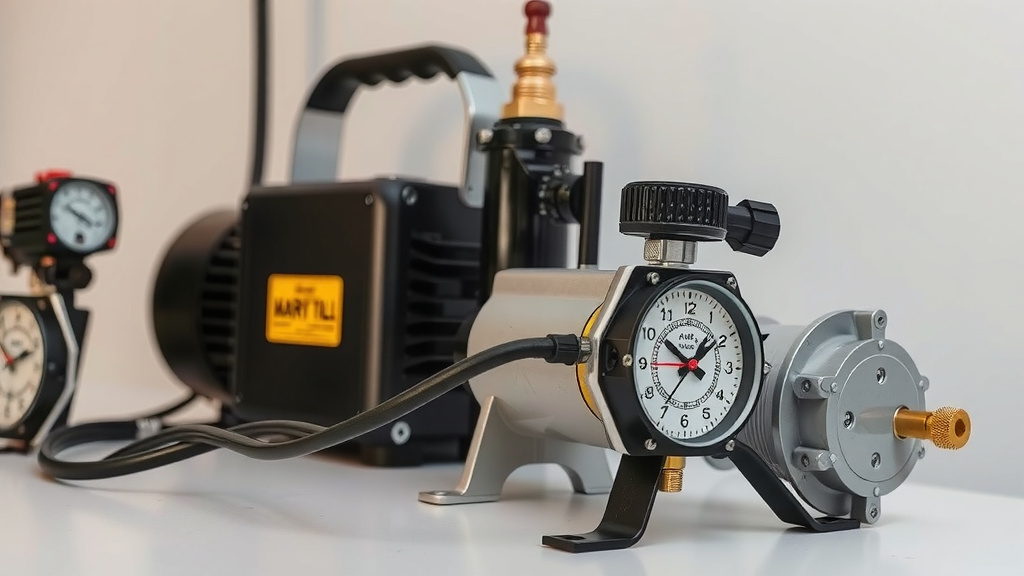
How do you know when to stop? The most reliable indicator is your vacuum gauge. This is your dashboard for vacuum levels. Many pumps come with a built-in gauge, or you might have a separate one attached to your system.
Reading the Gauge is Key
As your pump runs, you’ll see the pressure on the gauge decrease. You’re looking for it to reach and hold steady at your target pressure. We found that if the pressure is still dropping significantly, your pump still has work to do. If it has reached your desired level and stays there, even with minor fluctuations, it’s likely time to stop or switch to a holding mode if your pump offers it.
When to Consider Stopping Early
Sometimes, you might need to stop the pump sooner than you expect. If you’ve checked for leaks and your gauge indicates you’re not reaching your target vacuum, or the vacuum is dropping rapidly after the pump stops, it’s a sign that your system isn’t holding pressure. Continuing to run the pump in such a scenario might be unproductive. We’ve seen that addressing the leak issue is usually the best next step.
Best Practices for Efficient Vacuum Pump Use
To get the most out of your vacuum pump and ensure you’re not running it longer than necessary, consider these tips. They can make a real difference in efficiency and equipment longevity.
- Know your target: Always determine the required vacuum level for your specific task before you start.
- Inspect your system: Thoroughly check for leaks before and during operation.
- Use the right pump: Ensure your pump is adequately sized for the volume and the desired vacuum depth.
- Monitor the gauge: Don’t guess; watch your vacuum gauge to know when your goal is met.
- Follow manufacturer guidelines: Always consult your pump’s manual for specific recommendations.
- Don’t over-pump: Once you’ve reached your target vacuum, stop or switch to a holding mode if available.
Conclusion
Ultimately, the run time for your vacuum pump isn’t about a clock; it’s about achieving your project’s specific needs. We’ve seen that by understanding your system’s volume, the pump’s capacity, and how leak-tight everything is, you can accurately estimate how long it will take. Always keep an eye on your vacuum gauge – it’s your best indicator of progress.
Don’t just guess or set a timer. Focus on reaching that target vacuum level. The next time you fire up your pump, take a moment to assess these factors and monitor your gauge. You’ll save time, energy, and likely get better results for your efforts.
Frequently Asked Questions
How do I know if my vacuum pump is working efficiently?
You’ll know your vacuum pump is working efficiently if it consistently reaches your desired vacuum level within a reasonable timeframe, based on the factors we discussed. Watch your vacuum gauge; if it steadily drops to your target and holds, your pump is doing its job well. If it struggles to reach the target or the vacuum drops quickly after shutoff, there might be an efficiency issue.
Can running a vacuum pump for too long damage it?
In most cases, running a vacuum pump longer than necessary to reach your target vacuum won’t directly damage it, especially modern ones. However, it can lead to unnecessary wear and tear on components like seals and the motor, consuming extra electricity. For some pumps, especially oil-sealed ones, running too long without the system reaching a deep vacuum might prevent proper moisture evacuation, potentially affecting the oil.
What’s the difference between vacuum depth and run time?
Vacuum depth refers to how low the pressure is in your system, measured in units like inches of mercury (inHg) or microns. Run time is simply the duration the pump operates. You run the pump until you reach the desired vacuum depth; the time it takes is the run time. A deeper vacuum generally requires a longer run time.
Should I let my vacuum pump run until it’s completely silent?
No, you should not rely on silence as an indicator. Your vacuum pump is designed to operate continuously until it achieves the target pressure. The sound of the pump doesn’t directly correlate with reaching a specific vacuum level. Always use a vacuum gauge to determine when you’ve met your goal.
What should I do if my vacuum pump isn’t reaching the desired vacuum level?
If your vacuum pump isn’t reaching the desired vacuum level, the most common culprit is leaks in your system. Thoroughly inspect all connections, hoses, and seals for any potential air ingress. If you can’t find obvious leaks, the pump itself might be undersized for the volume or the required vacuum depth, or it may require maintenance.
![7 Best Miele Vacuum For Carpets [2026]](https://bathroomexplorer.com/wp-content/uploads/2026/06/7-best-miele-vacuum-for-carpets-2026-featured-768x432.jpg)