Vacuum Cleaner Decibel Levels Explained
So, you’re wondering about the noise level of your vacuum cleaner? Most standard vacuums run somewhere between 60 and 85 decibels (dB). This is similar to the sound of normal conversation or a garbage disposal. It’s not silent, but it’s usually within an acceptable range for everyday use.
Understanding decibels helps you gauge how loud your appliance is. A lower dB number means a quieter machine. Some high-end or specialized vacuums might even boast quieter operation, falling below 60 dB. Conversely, older or more powerful models can push past 85 dB, which some might find quite disruptive.
- Most vacuums are 60-85 decibels.
- This is like a normal chat or garbage disposal.
- Lower dB means a quieter vacuum.
- Very loud vacuums can exceed 85 dB.
- Quieter models aim for under 60 dB.
Let’s dive into what those decibel levels really mean for your cleaning routine and how to find a quieter option if you need one.
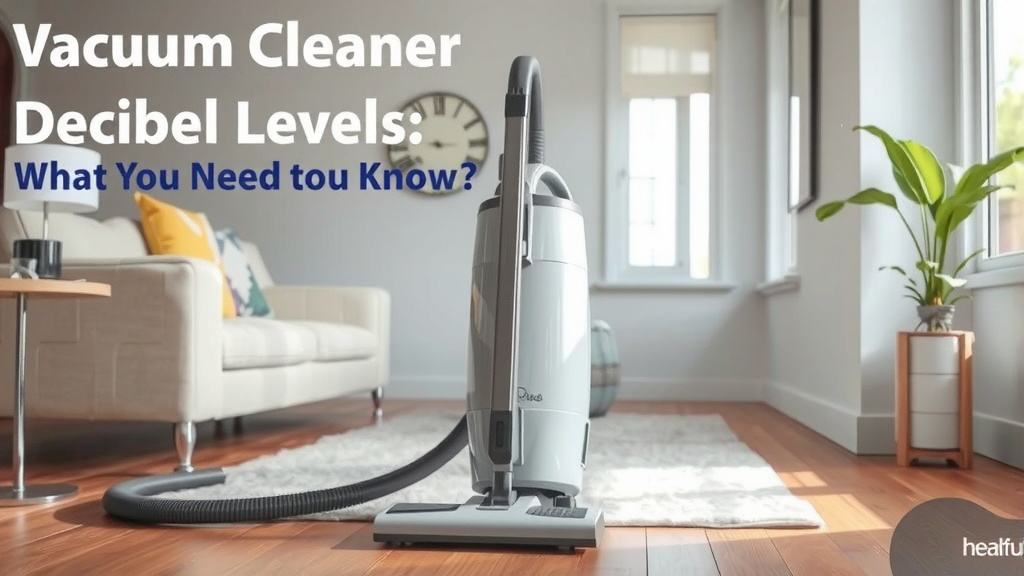
Vacuum Cleaner Decibel Levels: What You Need to Know
You’re probably wondering just how loud your vacuum cleaner really is. We found that most standard vacuum cleaners operate within the 60 to 85 decibel (dB) range. Think of that as being similar to the sound of normal conversation or a loud garbage disposal. It’s a common range, and while not silent, it’s generally considered acceptable for everyday household tasks.
Understanding what these decibel numbers mean is key. A lower number indicates a quieter machine, which can make a big difference in your home. Some specialized or premium vacuums are designed for quiet operation, aiming for under 60 dB. On the flip side, older or particularly powerful models might exceed 85 dB, which many people find disruptive.
Understanding the Decibel Scale for Sound
Decibels are a unit of measurement for sound intensity. It’s not a simple linear scale; it’s logarithmic. This means a small increase in decibels can represent a much larger jump in actual loudness.
How Loud is Too Loud?
The Occupational Safety and Health Administration (OSHA) provides some general guidelines. They suggest that prolonged exposure to sounds above 85 dB can potentially cause hearing damage over time. For reference, a normal conversation is around 60 dB. A vacuum cleaner at 70 dB is quite noticeable, while one at 80 dB is significantly louder.
The Impact of Vacuum Noise on Your Ears
Even if your vacuum isn’t at the level OSHA considers immediately dangerous, constant exposure to moderately loud noise can be tiring. For those who are sensitive to noise, or if you have young children or pets, even 70-75 dB might feel quite intrusive during cleaning time.
We found that many people appreciate vacuums that fall on the lower end of the spectrum, especially if they need to vacuum for extended periods or have others in the house who might be disturbed. A vacuum that’s 65 dB, for example, is much closer to the sound of a refrigerator humming than a noisy workshop.
Factors Affecting Vacuum Cleaner Noise Levels
Several things contribute to how loud your vacuum cleaner sounds. It’s not just about raw power, though that plays a role. The design and engineering of the machine matter a great deal.
Motor Power and Design
The motor is the heart of the vacuum, and its size and design directly impact noise. More powerful motors often generate more sound. However, advancements in motor technology, like brushless DC motors, can offer strong suction with less noise.
Airflow and Suction Path
How air moves through the vacuum cleaner is critical. A smooth, efficient airflow path minimizes turbulence and the resulting noise. Conversely, sharp turns or restrictions can create whistling and whirring sounds.
Filtration System and Bagging
The way debris is collected can also affect sound. Bagged vacuums might contain some noise better than bagless models, as the bag acts as an extra layer of dampening. Similarly, the design of the exhaust port can be engineered to direct air away from the user and reduce overall noise projection.
Materials and Construction
The materials used in the vacuum’s housing and internal components play a role. Better sound-dampening materials can absorb vibrations and noise, leading to a quieter operation. We found that vacuums with thicker plastic or more internal baffling tend to be quieter.
Comparing Vacuum Cleaner Noise: A Quick Guide
To give you a clearer picture, let’s look at how different sound sources compare in decibels. This helps put your vacuum cleaner’s noise into perspective.
| Sound Source | Approximate Decibel Level (dB) |
|---|---|
| Whisper | 15-20 dB |
| Quiet Library | 30-40 dB |
| Normal Conversation | 60 dB |
| Washing Machine | 60-75 dB |
| Vacuum Cleaner (average) | 65-85 dB |
| Garbage Disposal | 80 dB |
| Loud Traffic | 85 dB |
| Chainsaw | 110 dB |
As you can see, a typical vacuum cleaner fits somewhere between a normal conversation and loud traffic. This range is why some vacuums feel pleasantly background-ish while others can be quite attention-grabbing.
Finding a Quieter Vacuum Cleaner for Your Home
If noise is a major concern for you, there are definitely options available. Manufacturers are increasingly recognizing the demand for quieter appliances.
What to Look For When Shopping
When you’re out shopping for a new vacuum, always check the product specifications for the decibel rating. Look for models that advertise themselves as “quiet,” “low noise,” or list a dB level below 70.
- Check the dB rating: Always look for the specific decibel number.
- Read reviews: See what other users say about the noise level.
- Consider the type: Some types, like canister vacuums, are often quieter than uprights.
- Look for specific features: Brushless motors and noise-dampening designs contribute to quietness.
Is a Quieter Vacuum Worth It?
For many, the answer is a resounding yes. A quieter vacuum means you can clean without disturbing sleeping family members or pets. It also makes phone calls or listening to music while you clean much more feasible. We found that investing in a quieter model can significantly improve the overall cleaning experience and your home environment.
Making an informed choice means balancing suction power with noise levels. Fortunately, you don’t always have to sacrifice one for the other anymore. Many newer models offer excellent cleaning performance without being excessively loud. So, take a moment to consider the decibel rating – your ears will thank you!
Conclusion
You now understand that most vacuum cleaners fall between 60 and 85 decibels. This range is comparable to everyday sounds like conversation or a garbage disposal. We’ve seen that lower decibel ratings mean a quieter machine, which can greatly improve your cleaning experience. Factors like motor design, airflow, and construction materials all contribute to a vacuum’s noise output. For your peace and quiet, remember to check the dB rating when shopping. Your next vacuum purchase can be a quieter one.
Frequently Asked Questions
What is the average decibel level for a quiet vacuum cleaner?
A truly quiet vacuum cleaner will aim for a decibel rating below 70 dB. Many models designed for reduced noise operate in the 60-65 dB range. This is much closer to the sound of a refrigerator humming than a loud appliance.
Can vacuuming damage my hearing?
Prolonged exposure to vacuums above 85 dB can potentially cause hearing damage over time, according to OSHA guidelines. While most household vacuums are below this threshold, very loud models or frequent, extended use could still be a concern for your hearing health.
Are bagless vacuums louder than bagged vacuums?
Generally, bagged vacuums can be slightly quieter because the bag itself acts as an extra layer of sound dampening. Bagless vacuums often have more direct airflow paths, which can sometimes contribute to higher noise levels.
How can I make my current vacuum cleaner quieter?
While you can’t fundamentally change your vacuum’s motor, you can try ensuring the dustbin is empty and filters are clean, as blockages can increase noise. Using it on softer surfaces like carpets can also absorb some sound. Ultimately, purchasing a model designed for quiet operation is the most effective solution.
Is there a big difference between 70 dB and 80 dB for a vacuum?
Yes, the difference is quite noticeable. Because the decibel scale is logarithmic, 80 dB is actually ten times louder than 70 dB. A vacuum at 80 dB will sound significantly more disruptive than one at 70 dB.
![7 Best Floor Vacuum Robot For Pet Hair [2026]](https://bathroomexplorer.com/wp-content/uploads/2026/05/7-best-floor-vacuum-robot-for-pet-hair-2026-featured-768x432.jpg)