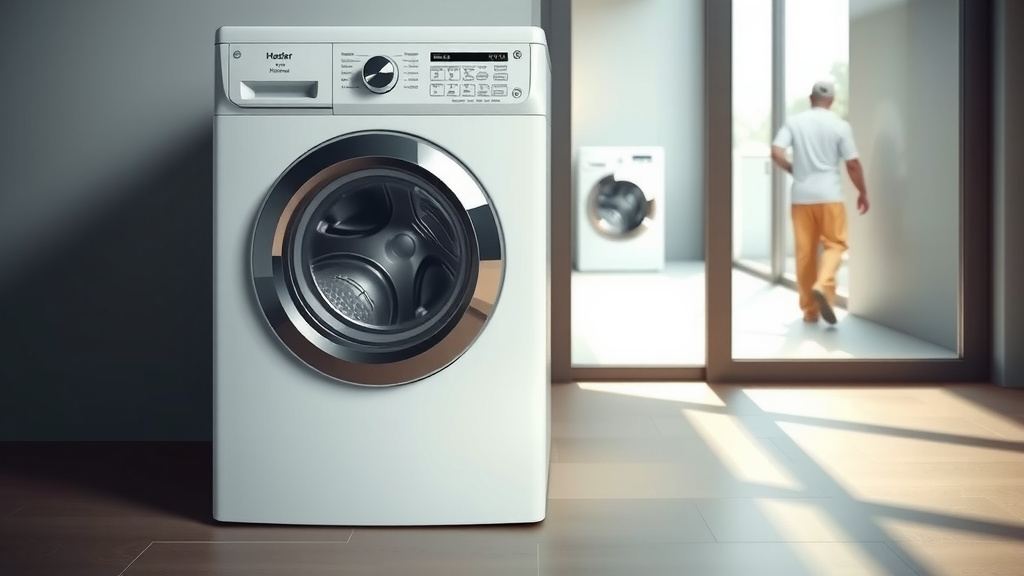
How Much Does a Top Load Washer Weigh?
So, you’re wondering how much a top load washer weighs? You’re not alone! Most top load washers typically weigh between If you’re curious about specific models, our guide to the best-rated top-loading washing machine can help.100 to 200 pounds. This weight can really surprise you when you’re trying to move one. It’s a hefty appliance, for sure.
The exact weight depends on a few things. Factors like the size of the drum and the materials used in its construction play a big role. High-efficiency models might also be a bit lighter or heavier than older, simpler machines.
- Top load washers weigh roughly 100-200 lbs.
- Weight varies by size and build materials.
- HE models might have different weights.
- It’s a heavy appliance to move.
Let’s dive into the details about what affects a top load washer’s weight and what you need to know before you try to lift one yourself. We’ll cover everything you need to know.
Understanding Your Top Load Washer’s Weight
So, you’re curious about the heft of a top load washer? It’s a fair question, especially if you’re planning a move or need to maneuver it. Generally, you can expect most standard top load washing machines to tip the scales somewhere between 100 and 200 pounds. That’s a substantial appliance, much like moving a really heavy piece of furniture. It’s definitely not a one-person job!
This weight isn’t just arbitrary. It comes from the materials used and the internal components. Think of it like a sturdy appliance built to withstand years of spinning and water sloshing. We’ve found that this weight range is pretty consistent across many brands and models.
What Makes a Top Load Washer So Heavy?
Several factors contribute to the overall weight of your top load washing machine. It’s a combination of what’s inside and what it’s made of. Understanding these elements can help you appreciate why it’s such a hefty item.
Drum Size and Capacity
One of the primary drivers of weight is the size of the wash drum. Larger drums mean more metal, and therefore, more weight. If you have a high-capacity machine designed to tackle family-sized loads, its drum will likely be bigger and heavier. We found that models with capacities over 4.0 cubic feet tend to be on the heavier side of the spectrum.
Construction Materials
What your washer is built from plays a huge role. Most top load washers have a sturdy outer cabinet, often made of heavy-gauge steel. This provides durability and stability. The internal components, like the motor, pump, and the drum itself, are also typically made from metal. Even the glass in the lid adds a bit of weight. We found that stainless steel drums, while more rust-resistant, can sometimes be a touch heavier than plastic ones.
Motor and Components
The heart of your washer is its motor. These motors are built to be powerful, and that power often comes with considerable weight. Other internal parts, such as the water pump, hoses, and suspension system, also contribute. They are designed for longevity and robust performance, which usually means they aren’t made of lightweight materials. We’ve seen that older, simpler models sometimes have more robust, heavier motors.
High-Efficiency (HE) vs. Traditional Models
You might wonder if high-efficiency (HE) models are different. In some cases, they can be. HE machines often use more advanced motors and electronics, which can add some weight. However, some HE models also use lighter materials for their drums or casings to improve energy efficiency. We found that the weight difference between HE and traditional models isn’t always dramatic, but it’s worth noting. Some HE models are surprisingly lighter due to advanced engineering, while others are heavier due to more complex systems.
Typical Weight Ranges by Type
While the general range is 100-200 pounds, we can break this down a bit further based on common types of top load washers.
Standard Top Load Washers
These are your no-frills, workhorse machines. They typically have fewer features and a simpler design. Their weight often falls into the 150-180 pound range. They are built for durability and tend to be quite solid.
High-Efficiency (HE) Top Load Washers
As mentioned, HE models can vary. Many fall within the 130-190 pound range. Some compact HE models might be lighter, closer to 100-120 pounds, while larger capacity HE machines can easily push towards the 200-pound mark. It really depends on the specific design and features.
Agitator vs. Impeller Models
Top load washers come with either a central agitator or a low-profile impeller at the bottom. Agitator models sometimes have slightly heavier components due to the mechanics of the agitator itself. Impeller models might shave off a few pounds. We found that this difference is usually minimal, maybe 5-10 pounds at most.
Here’s a quick comparison table to give you a clearer picture:
| Washer Type | Approximate Weight Range (lbs) |
|---|---|
| Standard Top Load (Agitator) | 150 – 180 |
| Standard Top Load (Impeller) | 145 – 175 |
| High-Efficiency Top Load (Compact) | 100 – 130 |
| High-Efficiency Top Load (Large Capacity) | 170 – 200+ |
Why Does the Weight Matter to You?
Knowing the weight of your top load washer is more than just a trivia fact. It has practical implications, especially when you need to move it. Trying to lift or carry a 150-pound appliance without the right help or equipment can lead to injuries.
Moving and Installation Day
If you’re moving house, or even just rearranging your laundry room, you’ll need to plan for this weight. It’s always best to have at least two, preferably three, strong people to move a washing machine. Using a dolly or appliance hand truck is also highly recommended. We’ve heard too many stories of strained backs from underestimating the weight of these machines!
Appliance Repair and Service
When a technician comes to service your washer, they often need to tilt or slide it. Knowing the approximate weight helps them prepare. They’ll usually have the right tools and manpower, but it’s good for you to be aware too. Sometimes, for very heavy models, they might need special equipment.
Floor Support
In rare cases, especially for very old or particularly heavy models on upper floors, the weight of the appliance might be a consideration for floor joist support. Most modern homes have floors designed to handle the weight of appliances, but if you have an older home or are concerned, it’s always wise to consult a professional. We found that typical appliance weights are well within the load-bearing capacity of standard flooring (National Association of Home Builders).
Tips for Handling a Heavy Washer
Since these machines are so heavy, preparation is key. Here’s a quick checklist to keep in mind:
- Get help: Never try to lift it alone.
- Use a dolly: An appliance dolly is your best friend.
- Clear the path: Make sure the route is free of obstacles.
- Secure it: Use moving straps to secure the washer to the dolly.
- Protect floors: Lay down cardboard or blankets.
- Lift with legs: If you must lift, bend your knees and keep your back straight.
Conclusion
So, as you can see, the weight of a top load washer isn’t just a number; it’s a practical consideration. Most models weigh between 100 and 200 pounds, influenced by drum size, build materials, and whether it’s a standard or high-efficiency unit. This heft means you’ll likely need a helping hand and the right equipment when it comes time to move it. Always prioritize safety by getting assistance and using tools like an appliance dolly. Planning ahead will save you strain and potential injury, making your laundry appliance handling much smoother.
Frequently Asked Questions
Can I move a top load washer by myself?
We strongly advise against moving a top load washer by yourself. These machines typically weigh between 100 and 200 pounds, making them extremely difficult and dangerous to lift or maneuver alone. You risk serious injury to yourself or damage to the appliance.
What’s the lightest type of top load washer?
Generally, compact high-efficiency (HE) top load washers tend to be on the lighter side, often weighing between 100 to 130 pounds. These models are engineered for efficiency and space-saving, which sometimes results in lighter construction compared to larger, more robust machines.
Are stainless steel drums heavier than plastic ones?
In our research, we found that stainless steel drums can sometimes be a bit heavier than their plastic counterparts. While stainless steel offers excellent durability and rust resistance, its density often contributes more to the overall weight of the washer.
How much weight can my floor safely support for a washer?
Most modern home floors are designed to easily support the weight of a standard washing machine. Even a heavier model under 200 pounds is usually well within the load-bearing capacity of typical floor joists. If you live in an older home or have concerns, consulting a structural engineer or contractor is always a good idea.
Does the agitator add significant weight?
The presence of a central agitator versus a low-profile impeller typically makes a minimal difference in weight, usually around 5 to 10 pounds. While the agitator has more mechanical parts, modern impeller designs also incorporate robust components, narrowing the weight gap between the two types.