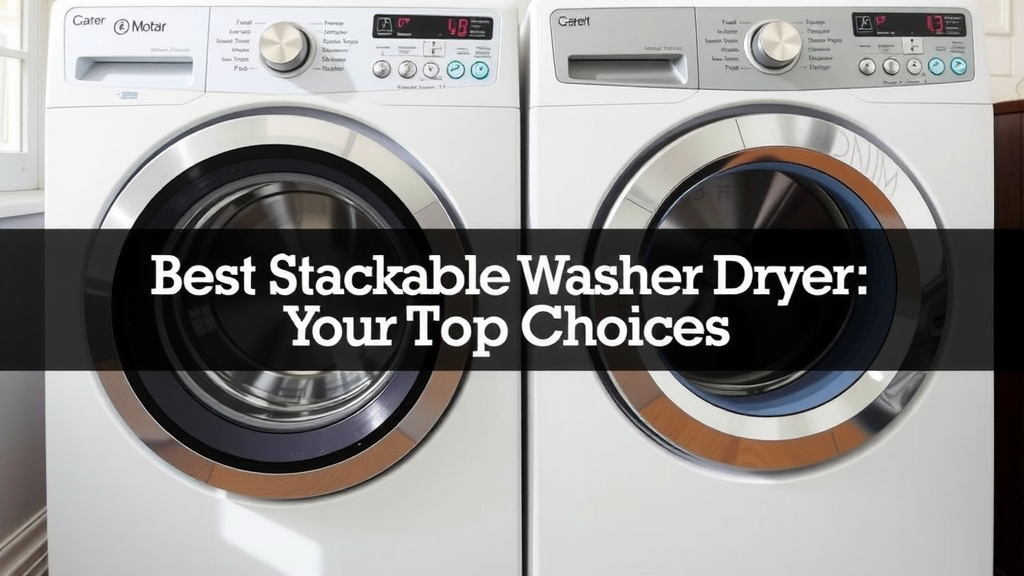
Best Stackable Washer Dryer: Your Top Choices
The best stackable washer and dryer for your home is one that perfectly balances your space limitations with your laundry needs. Many models offer excellent cleaning power in a slim footprint. We’ve found that looking for energy efficiency and sufficient capacity is key.
Stackable units are a fantastic solution when floor space is tight. They allow you to wash and dry clothes vertically. This design is ideal for apartments, condos, or small homes. Many are also energy-efficient, saving you money on utility bills over time.
- Stackable units save valuable floor space.
- Look for models with good energy ratings.
- Consider the capacity needed for your household.
- Ensure easy access to controls and maintenance.
Let’s walk through exactly what makes a stackable washer and dryer a great choice for your home.
Choosing Your Ideal Stackable Washer and Dryer Combo
Finding the best stackable washer and dryer means looking at how well it fits your space and your life. You want something that cleans effectively but doesn’t take up too much room. We’ve researched what makes these units shine, and it often comes down to a few key features. Think about your laundry habits and the size of your household. These factors will guide you to the perfect match for your home.
Key Features to Consider
Capacity: How Much Laundry Do You Tackle?
The first big question is: how much laundry do you do? Stackable units are known for their slim profile, but their capacity can vary. Most compact units offer a drum size of around 1.5 to 2.5 cubic feet. This is often enough for singles or couples. Larger families might need to look for models with slightly bigger drums, perhaps closer to 3.0 cubic feet.
Consider your typical wash load. Do you wash king-size comforters? If so, a standard compact unit might not be the best fit. We found that many people underestimate their laundry needs. It’s wise to size up if you’re on the fence. More capacity means fewer loads, saving you time and energy.
Energy and Water Efficiency: Saving Green
Running your washer and dryer can add up on utility bills. Many modern stackable units are designed with energy efficiency in mind. Look for the ENERGY STAR label. This certification means the appliance meets strict energy performance standards set by the U.S. Environmental Protection Agency.
We found that ENERGY STAR certified washers use less water and less energy than older models. This is good for your wallet and for the planet. Some models even have advanced features like load sensors. These sensors adjust the water level based on the size of your wash. This prevents using more water than necessary.
Washer and Dryer Types Within the Stackable Unit
When you’re looking at stackable washer and dryer sets, you’ll usually find a few common combinations for the dryer type.
Vented Dryers
These are the most common type. They require a vent to the outside of your home. This vent releases moist air and lint. Vented dryers are generally faster at drying clothes. They are also often less expensive upfront.
Ventless Dryers
Ventless dryers don’t need an external vent. They work by condensing moisture from the air. This makes them ideal for apartments or homes where venting isn’t possible. They tend to be more energy-efficient but can take longer to dry clothes. Condensation dryers also require occasional cleaning of a condenser unit.
Washer-Dryer Combos (All-in-One)
These are single units that wash and dry clothes in the same drum. They are the ultimate space-savers. However, their capacity is typically smaller than separate stacked units. Drying cycles can also be quite long. They are best suited for very small households or those with minimal laundry needs.
Cycle Options and Smart Features
Think about the types of clothes you wash. Do you need special cycles for delicates, heavy-duty items, or sanitizing? Many stackable units offer a good range of cycles. You’ll find options like quick wash, steam clean, and allergen removal.
Some high-end models even come with smart features. These allow you to control your washer and dryer remotely using a smartphone app. You can start, stop, or monitor cycles from anywhere. They might also send notifications when a load is done. This can be incredibly convenient for busy schedules.
Installation and Maintenance Considerations
Installation Requirements: Are You Ready to Connect?
Stackable units have specific installation needs. You’ll need appropriate water hookups and drainage for the washer. For the dryer, you’ll need a power outlet and, if it’s a vented model, an exhaust vent. Ensure your space can accommodate these connections.
We found that proper installation is key to a unit’s performance and longevity. If you’re not comfortable with plumbing or electrical work, hiring a professional is a smart move. They can ensure everything is connected safely and correctly. Check your manufacturer’s guidelines before you buy.
Maintenance for Longevity
Like any appliance, stackable washer and dryers need a little care. Regular cleaning of the drum and seals prevents mold and odors. For vented dryers, cleaning the lint filter after every use is essential. This improves drying efficiency and is a fire safety measure.
For ventless models, you’ll need to clean the condenser periodically. This ensures optimal performance. Checking hoses for leaks or wear is also a good practice. Following the manufacturer’s maintenance schedule will help your unit last longer and perform better.
Making the Final Choice: A Checklist
To help you narrow down your options, here’s a quick checklist. Use this to guide your decision-making process:
- Assess Your Space: Measure carefully where the unit will go.
- Determine Capacity Needs: How much laundry do you do weekly?
- Prioritize Efficiency: Look for ENERGY STAR ratings.
- Choose Dryer Type: Vented, ventless, or all-in-one?
- Review Cycles and Features: Do they match your laundry habits?
- Consider Installation and Budget: Factor in potential professional help.
By thinking through these points, you’ll be well on your way to finding a stackable washer and dryer that perfectly suits your home and laundry routine.
Conclusion
Finding the best stackable washer and dryer means carefully matching the unit to your specific needs and space. You’ve learned that considering capacity, energy efficiency, dryer type, and available cycles is key. Don’t forget the importance of proper installation and regular maintenance for longevity. By following the checklist we provided, you’re well-equipped to make a confident choice. Now, take those measurements and start your search for laundry day bliss!
Frequently Asked Questions
Are stackable washer and dryer sets really worth the investment?
Yes, they are often a great investment, especially if you have limited floor space. They provide the convenience of a full-sized laundry setup without taking up extra room. Many are also energy-efficient, saving you money on utility bills over time.
How do I know what capacity is right for my household?
Consider your typical laundry habits. For singles or couples, a compact unit around 1.5 to 2.5 cubic feet is usually sufficient. Larger families might need to look for models closer to 3.0 cubic feet to handle bigger loads and reduce the number of cycles needed.
What’s the difference between vented and ventless dryers in a stackable unit?
Vented dryers require an external vent to expel moist air and are typically faster. Ventless dryers don’t need a vent and work by condensing moisture, making them ideal for apartments but often taking longer to dry. Some people find ventless models more energy-efficient.
Can I use a standard washer and dryer and just stack them myself?
No, it’s generally not recommended or safe to stack standard washers and dryers unless they are specifically designed and sold as a stackable pair. Stackable units are engineered to connect securely and safely, with specific mounting kits and weight distribution in mind.
How much maintenance do stackable washer and dryers typically require?
Maintenance is usually straightforward. You’ll want to clean the lint filter after every use for vented dryers, and regularly wipe down the drum and door seals to prevent mold. Ventless models require periodic cleaning of the condenser unit. Always follow the manufacturer’s specific care instructions.