Front vs Top Loader Washers Which Is Best For You
When choosing a washing machine, it really comes down to convenience and efficiency. Front-loading washers generally use less water and energy, making them a more eco-friendly and cost-effective choice over time. Top-loaders, especially those with an agitator, can sometimes clean clothes faster and are easier to load without bending over. Your best bet depends on what matters most to you.
We’ve researched the differences extensively. Many people prefer front-loaders for their gentle cleaning action and better spin speeds, which extract more water. Top-loaders, particularly high-efficiency models without agitators, offer a good balance of capacity and performance. Think about your laundry habits and what features will make your chore less of a hassle.
- Front-loaders save water and energy.
- Top-loaders are easier to load and often faster.
- Front-loaders offer gentler fabric care.
- High-efficiency top-loaders are a strong middle ground.
- Your personal preference is key.
Let’s break down the pros and cons of each so you can make the perfect choice for your home.
Deciding Between Front-Load and Top-Load Washers
Picking the right washing machine can feel like a big decision. You want something that gets your clothes clean without being too hard on them or your wallet. We’ve looked into the main differences between front-loading and top-loading machines to help you figure out which one fits your laundry room and your life best. Let’s break it down, so you can feel confident in your choice.
Understanding Top-Loading Washing Machines
Top-loaders have been a staple in homes for a long time. They’re known for their ease of use and often a faster wash cycle. You simply lift the lid and toss your clothes in. This is a big plus for many people who find bending down difficult.
Agitator vs. Impeller Top-Loaders
Within the top-loader category, there are two main types: those with an agitator and those with an impeller. This distinction really matters when it comes to how your clothes are washed.
The Agitator Model
These are the traditional top-loaders you might remember from your childhood. They have a central post, the agitator, that twists and turns. This action helps to move clothes around in the water. We found that this can lead to cleaner clothes for tough stains. However, it can also be a bit rougher on fabrics. Think of it like a vigorous scrub. These machines often use more water to fill the tub completely.
The Impeller Model
Impeller models, also known as high-efficiency (HE) top-loaders, are newer. Instead of a central post, they have a cone-shaped or disc-like device at the bottom. This impeller spins, creating currents that move the clothes. Many experts say this method is gentler on your laundry. They also tend to use less water than agitator models because they don’t need to fill the entire tub. You can usually fit more clothes in these, too.
Pros of Top-Loaders
So, what makes a top-loader a good choice for you? Well, they are generally easier to load. No need to bend over, which is great for your back. Plus, you can usually add a forgotten item mid-cycle without a problem. We also found that many people appreciate the faster wash times compared to some front-loaders. If you’re in a hurry, this can be a big advantage.
Cons of Top-Loaders
However, top-loaders aren’t perfect for everyone. Agitator models, in particular, can be tough on clothes over time. We also noted that they tend to use more water and energy than front-loaders. Even HE top-loaders can use more water than their front-loading counterparts. And, while they clean well, they might not spin water out as effectively, potentially leading to longer drying times.
Exploring Front-Loading Washing Machines
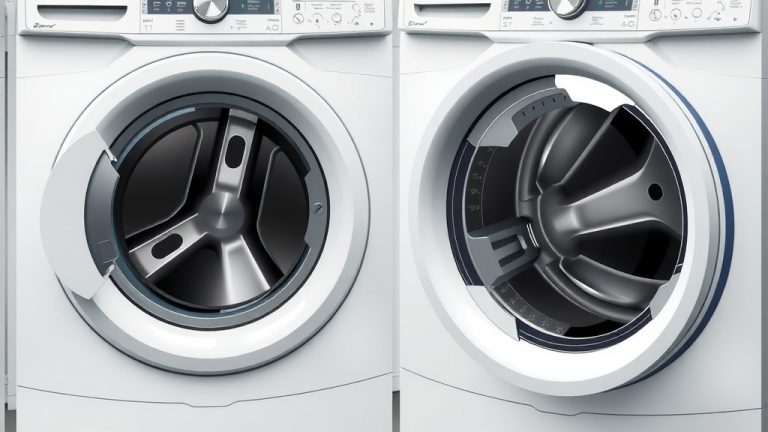
Front-loaders have gained popularity for their efficiency and gentle cleaning. They operate by tumbling clothes from the bottom of the drum to the top. This method is often cited as being kinder to fabrics. You’ll often find these machines in more modern homes.
How Front-Loaders Work
In a front-loader, clothes are lifted and then dropped back into the water and detergent. This tumbling action is effective at removing dirt without harsh scrubbing. Many guidelines point to this method as being more effective at stain removal without damaging delicate items (Good Housekeeping Institute). They also tend to have higher spin speeds. This means more water is extracted from your clothes before they go into the dryer.
Pros of Front-Loaders
The benefits of front-loaders are quite appealing. For starters, they are incredibly water and energy efficient. This can lead to significant savings on your utility bills over the life of the machine. We found that they generally offer a deeper clean and are better for people with allergies, as they can often use steam cycles. The gentler wash action is also a big win for keeping your clothes looking newer for longer. Plus, that high spin speed means shorter drying times, saving even more energy.
Cons of Front-Loaders
On the flip side, front-loaders do have a few drawbacks. They are typically more expensive upfront than top-loaders. Loading them requires bending down, which can be uncomfortable for some. If you forget an item, you’ll have to wait until the next load. We also found that some front-loaders can develop mold or odors around the door seal if not properly maintained. This usually means wiping the seal down after each use and leaving the door ajar between washes.
Key Differences at a Glance
To help you visualize the comparison, here’s a quick rundown of the main points we’ve discussed. This should make it easier to see which features align with your needs.
| Feature | Front-Loader | Top-Loader (Agitator) | Top-Loader (Impeller/HE) |
|---|---|---|---|
| Water Usage | Lowest | Highest | Medium |
| Energy Usage | Lowest | Highest | Medium |
| Fabric Care | Gentlest | Harshest | Gentle |
| Cleaning Power (Tough Stains) | Excellent | Very Good | Good |
| Loading Convenience | Requires Bending | Easiest | Easy |
| Typical Cost | Higher Upfront | Lower Upfront | Mid-Range |
Making Your Choice: A Quick Checklist
To help you solidify your decision, ask yourself these questions:
- Do you have back or knee issues that make bending difficult?
- Is water and energy efficiency a top priority for saving money and the environment?
- How often do you wash heavily soiled items that need a vigorous clean?
- Are you looking for the gentlest way to care for your clothes?
- What’s your budget for a new washing machine?
- Do you tend to forget clothes after starting a load?
Conclusion
Choosing between a front-load and a top-load washer boils down to your personal priorities. Front-loaders often win for energy efficiency and gentle fabric care, saving you money on utilities over time. Top-loaders, especially impeller models, offer a convenient, easier loading experience and faster cycles. Consider your budget, physical comfort, and how you treat your clothes. Think about what will make your laundry routine smoother and more efficient.
Take a moment to review your laundry habits and home needs. This will help you pick the machine that best fits your lifestyle. Your perfect washer is out there, ready to simplify your chores!
Frequently Asked Questions
Can I add clothes mid-cycle to a front-loader?
Generally, you cannot add clothes to a front-loader once the cycle has begun. The door locks for safety and to prevent leaks. You’ll likely have to wait for the current cycle to finish or drain before adding forgotten items.
Which type of washer is better for large families?
For large families, capacity and efficiency are key. Both types can have large capacities, but front-loaders often wash more clothes at once due to their design. They also tend to use less water and energy, which can make a difference with frequent, large loads.
How do I prevent mold and odors in a front-loader?
To prevent mold and odors in your front-loader, we recommend wiping down the rubber door seal after each use. Leaving the door slightly ajar between washes allows for better air circulation. Running a cleaning cycle with a washing machine cleaner periodically also helps.
Are impeller top-loaders really gentler than agitator models?
Yes, research and found that impeller top-loaders are generally gentler on clothes. The impeller uses water currents to move clothes, whereas the agitator’s central post physically twists and turns them. This can cause less wear and tear on fabrics.
Which washer type is more likely to require repairs?
Both types of washers can require repairs, but front-loaders, with their more complex electronic controls and door locking mechanisms, might have a slightly higher chance of certain issues over their lifespan. Regular maintenance for either type can help minimize repair needs.