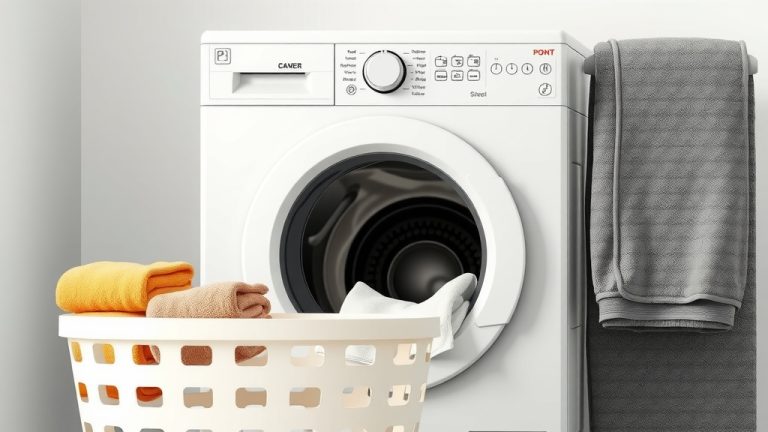
What Does Cycle Signal Mean on a Washer?
The cycle signal on your washer is the beep or tone it plays to let you know a wash cycle has finished. It’s a simple alert system designed to grab your attention, so you can move clothes to the dryer promptly and avoid musty smells. This handy feature is standard on most modern washers, from top-loaders to high-efficiency front-loaders.
You might also see it called an “end-of-cycle signal,” “buzzer,” or “chime.” The signal is not just a convenience; it’s a practical tool. We found that many experts say using this alert helps prevent wrinkles and mildew by reminding you to unload the machine right away. You can usually adjust the volume or turn it off completely through the machine’s control panel.
- Purpose: It’s an audio alert that tells you the wash cycle is done.
- Adjustable: You can typically change the volume or turn the sound off.
- Prevents Mildew: A prompt reminder helps you avoid leaving wet clothes in the drum.
- Location: The setting is usually found in the machine’s control panel or settings menu.
- Not an Error: It is not a warning light; it means the job is finished.
Below, we break down exactly how this feature works, how to change it, and what to do if your washer isn’t beeping when it should. Let’s walk through the simple steps to get your washer’s alert system working perfectly for you.
Decoding Your Washer’s Cycle Signal Feature
Your washer’s cycle signal is that little beep or chime at the end of a wash. It is a built-in notification system. The machine uses sound to tell you, “Hey, I am done here.”
This feature is more useful than many people realize. We found that a simple audio cue can save you from rewashing loads. It also keeps your laundry smelling fresh. You do not need to keep checking the machine. The washer does the watching for you.
Why the Signal Matters for Fresh Laundry
Leaving wet clothes sitting in the drum is a recipe for trouble. Bacteria love warm, damp places. According to the Environmental Protection Agency, indoor humidity from wet fabrics can also contribute to musty odors. The beep is your first line of defense.
We found that the longer wet clothes sit, the more likely they are to develop a sour smell. The cycle signal helps you beat the clock. You can move the load to the dryer right away. This simple action prevents mildew growth and keeps your towels fluffy.
The Science of the “Sour” Smell
That unpleasant odor is not just dirt. It is bacteria multiplying on wet fabric. Research from the NIH shows that certain bacteria thrive in wet textiles. A quick reminder from your washer helps you avoid this biological problem. You save time, water, and energy by not having to rewash a stinky load.
Plus, the signal is a great help for busy families. You can start a load and walk away. You do not have to stand there watching the timer. The washer will call you when it is time to act.
How the Cycle Signal Works on Different Washers
Every washer brand does this a little differently. You might have a mechanical buzzer or a digital chime. Newer machines use melodic tunes. Older top-loaders often use a loud, mechanical buzz. The goal is always the same: get your attention.
The signal usually plays at the very end of the cycle. Some machines also beep for other reasons. For example, they might beep if the door is locked or if you press a button. The end-of-cycle chime is usually the loudest and longest.
Standard Features on Front-Load and Top-Load Models
Front-load washers typically have more settings. You can often choose the volume level. You might even be able to select a specific tone. Top-loaders are simpler. Many just have a fixed buzzer that you can turn on or off.
High-efficiency (HE) washers use different signals. They often play a little melody when the wash is done. We found that this is very common on LG and Samsung models. You can usually find the settings in the digital display menu. It is worth checking your manual to see what your specific model offers.
Reading the Control Panel Icons
Look for a small icon that looks like a speaker or a bell. It might be labeled “Signal,” “Buzzer,” or “End Sound.” On some models, you press a button to scroll through options. On others, you hold the button down to change the volume. If you are unsure, the user manual is your best friend. Many manufacturers also have videos online that show you exactly where the setting is.
Adjusting the Volume and Tone to Your Preference
Maybe the default beep is too loud. Or maybe it is too quiet to hear from the living room. You can usually customize this setting. It takes less than a minute to change. You just need to know where to look.
Most digital washers have a “Settings” or “Preferences” menu. You scroll to the sound option. Then you select your preferred volume. Some models offer levels like “Mute,” “Low,” “Medium,” and “High.” We recommend starting with “Medium” if you are unsure.
Turning the Chime Completely Off
Do you find the beep annoying? You are not alone. Many people turn it off, especially at night. You can usually mute it through the same menu. This is handy if the washer is in a hallway near bedrooms.
But think twice before you mute it completely. Without the signal, you will have to guess when the cycle is done. This can lead to wrinkled clothes. It can also cause mildew if you forget about the load for several hours. We found that a lower volume is often the best compromise.
Step-by-Step Guide for Most Modern Machines
- Press the Power button to turn the washer on.
- Look for a “Settings” or “Sound” button on the panel.
- Press it until the display shows “Signal” or “Buzzer.”
- Use the Cycle dial or + / – buttons to adjust volume.
- Select “Off” if you want to silence it completely.
- Press Start to save your new preference.
Remember that every brand is different. Some require you to press and hold two buttons at once. Check your quick-start guide if this does not work. It is a simple fix that makes a big difference in your daily routine.
Troubleshooting a Washer That Is Not Beeping
Sometimes the signal stops working. This can be confusing. Did you accidentally mute it? Is there a technical issue? Do not panic. There are a few common reasons why your washer is silent at the end of a cycle.
We found that the most common cause is user error. The sound setting might have been turned off by accident. It could also be that the machine is in a “Sleep” or “Demo” mode. Check the display panel for a small speaker icon with a slash through it. That means the sound is disabled.
Checking the Basic Settings First
Start with the easiest fix. Go into your settings menu. Look for the sound options. Make sure the volume is not set to “Mute.” Sometimes, a power surge can reset the machine to factory defaults. If you had muted it before, the reset might turn the sound back on. Or it might turn it off. Checking the menu is the fastest way to diagnose the problem.
Also, check if you have a “Delay Start” enabled. If the wash is set to finish later, the timer might be off. The machine will beep when the countdown ends, not when the drum stops spinning. Always ensure the cycle is fully complete before you blame the buzzer.
When to Call for Professional Help
If the settings are correct and you still hear nothing, the buzzer hardware might be broken. This is rare, but it happens. The speaker or the wiring harness could have failed. If your washer is still under warranty, contact the manufacturer. If it is older, a local appliance repair technician can fix it easily.
You can test the buzzer quickly. Look for a “Test” mode in the diagnostics menu. Every brand has a secret code to enter this mode. You can usually find it in your manual or online. If the test mode does not produce a sound, the speaker is likely dead. This is a straightforward repair for a professional.
Using the Signal to Optimize Your Laundry Routine
The cycle signal is not just a bell. It is a tool for efficiency. You can use it to time your chores better. Start a load before you clean the kitchen. The beep reminds you to switch over to the dryer while you are in the middle of other tasks. This keeps your workflow smooth.
We found that many families use the signal as a productivity timer. It helps you stay on track. You can also use it to remind kids to do their own laundry. Teach them what the beep means. They will learn to manage their own clothes without you having to nag them.
Combining the Signal with Other Washer Features
Modern washers have more than just a beep. Some have “Smart” notifications that send a push alert to your phone. This is great if you are in the basement or garage. The app will tell you the cycle is done, even if you are outside. You do not have to rely on hearing the chime.
Other machines have a “Steam” cycle that reduces wrinkles. If you miss the beep, you can use the “Refresh” cycle to fix wrinkled clothes. But the best strategy is to listen for the signal. It saves you from having to iron. A quick response to the beep means less work for you later.
A Quick Checklist for Better Laundry Habits
- Set the signal volume to a level you can hear from other rooms.
- Keep the sound on for daytime loads to prevent mildew.
- Mute the signal only for overnight or away-from-home runs.
- Unload the washer within 30 minutes of the final beep.
- Check your settings after any power outage or firmware update.
- Use the app notifications if your washer supports smart features.
These simple habits keep your clothes looking great. They also extend the life of your washer. A little beep goes a long way in keeping your home running smoothly. So, the next time you hear that chime, you will know exactly what it means and why it is there for you.
| Sound Setting | Best Use Case | Potential Downside |
|---|---|---|
| High Volume | Busy homes with lots of background noise | Can be startling in quiet evenings |
| Low Volume | Open floor plans where you are nearby | Might miss it if you are in another room |
| Mute / Off | Nighttime washing or nursery areas | Risk of mildew and wrinkled clothes |
Conclusion
The cycle signal is a simple feature that does a lot of heavy lifting. It keeps your laundry fresh, prevents wrinkles, and saves you from rewashing forgotten loads. You can adjust the volume or mute it entirely, but we recommend keeping it on during the day.
Take a minute to check your washer’s sound settings today. Find the volume that works for your home. You will save time and avoid musty towels. A quick beep is a small price for clean, fresh clothes every time.
Frequently Asked Questions
Why does my washer beep multiple times at the end of the cycle?
Most washers play a short melody or a series of beeps to get your attention. This is intentional. It helps you hear the alert from another room or over the sound of a TV.
Some models also beep to signal that the door is unlocked or that the drum has stopped spinning. Check your manual if the pattern seems unusual. It is likely just a standard notification.
Can I change the cycle signal sound on my washer?
Yes, many newer washers let you pick from a few different tones. You will usually find this option in the settings or sound menu on the control panel. LG, Samsung, and Whirlpool models often offer this feature.
Older machines may only have one fixed buzzer. If your model does not have tone options, you can still adjust the volume or turn it off completely.
Does the cycle signal use extra electricity?
No, the cycle signal uses a tiny amount of power. It only activates for a few seconds at the end of the cycle. The speaker draws negligible energy compared to the motor and heating elements.
You do not need to worry about your energy bill. The convenience and freshness benefits far outweigh any minimal power use.
Why does my washer beep even when it is turned off?
Some washers beep when you press buttons or open the door. This is a control feedback sound, not the cycle signal. It confirms that the machine registered your action.
If it beeps randomly while off, you may have a control board issue. Unplug the machine for a minute and plug it back in. If it continues, contact a technician.
Can I add a cycle signal to an older washer that does not have one?
It is not recommended to install a buzzer yourself. That would require opening the machine and wiring a new component. This could void your warranty and create a safety risk.
A safer option is to use a smart plug with a timer. You can set an alarm on your phone for when the cycle should end. This gives you a similar reminder without any modifications.