Baby Mattress Safety: 7 Rules Every Parent Must Know
Yes, a safe baby mattress is one of the most important purchases you will make, and the rules are simple: it must be firm, flat, and fit snugly in the crib. We found that a firm mattress is the single best way to reduce the risk of suffocation and SIDS. You need a mattress that does not sink when your baby lies on it.
Your baby will spend up to 16 hours a day on their mattress, so getting this right matters. We looked at current safety guidelines and research to separate facts from old-wives’ tales. Age matters a lot, and so does the type of crib you pair the mattress with.
- Always choose firm: Press down on the center and edges; your hand should leave no indentation.
- Check the fit: You should not be able to fit more than two fingers between the mattress and the crib side.
- Skip the extras: No pillows, bumpers, or soft bedding for babies under 12 months.
- New is best: Avoid used mattresses unless you know their full history and condition.
- Look for certifications: Search for GREENGUARD Gold or similar labels to confirm low chemical emissions.
Below, we break down the exact safety standards, material options, and what to avoid when you are shopping. Let us walk you through the process so you can feel confident and get some peaceful sleep.
Choosing a Safe Mattress for Your Baby’s Crib
When you start shopping, you will see dozens of options. It is easy to feel overwhelmed. We found that the safest choice is usually the simplest one. A basic, firm mattress is what pediatricians recommend. You do not need fancy features or high-tech materials.
Your main job is to create a flat, firm sleeping surface. Think of it like a workout mat, not a cloud. The firmer the surface, the lower the risk of your baby sinking in and struggling to breathe (CDC).
The Two-Finger Test for a Snug Fit
A gap between the mattress and the crib is a classic danger zone. A tiny arm or leg can slip into that space and get stuck. In the worst cases, a baby’s face can press into the gap, blocking airflow.
So, how do you check the fit? We recommend the two-finger test. Slide two fingers between the mattress and the crib side. If they fit snugly, the mattress is fine. If you can wiggle your fingers around easily, the mattress is too small.
You should check this at every corner. Also, check along the sides. A proper fit leaves no space wider than two finger widths at any point.
Firmness Levels and What They Mean
You will see terms like “firm,” “extra firm,” and “plush.” Ignore the word plush. For a baby under 12 months, plush is a safety hazard. The Consumer Product Safety Commission (CPSC) actually banned the sale of soft and plush mattresses because of the suffocation risk.
Here is a quick way to test it at the store or at home.
- Press the center of the mattress with your palm.
- Press down hard for about 10 seconds.
- Release your hand and look at the surface.
- If you see a handprint or an indentation, it is too soft.
- If the surface springs right back with no trace, it is firm enough.
Many experts say that a firm mattress should not compress more than a quarter of an inch under a baby’s weight. That is very little give. Your baby’s head should stay in a straight line with their body, with no sinking.
Decoding Mattress Materials and Certifications
Parents often worry about chemicals and off-gassing. It is a real concern. Babies breathe faster than adults, and they spend many hours on their mattress. You want to limit their exposure to volatile organic compounds (VOCs) and other toxins.
The good news is that the market has responded. Many brands now make safe, low-emission mattresses. The best thing you can do is look for third-party certifications. This takes the guesswork out of material safety.
GREENGUARD Gold and Other Third-Party Labels
You will see two main certifications. The first is GREENGUARD Gold. The second is CertiPUR-US. Both are excellent markers of low chemical emissions.
GREENGUARD Gold is the stricter of the two. It tests for over 10,000 chemicals and requires very low emission levels. This certification ensures the mattress is safe for sensitive groups, like babies and the elderly.
CertiPUR-US focuses specifically on foam. It ensures the foam is free from heavy metals, flame retardants, and ozone depleters. We found that looking for at least one of these labels is a smart move. It gives you peace of mind that the materials are safe.
Innerspring vs. Foam vs. Organic
There are three main mattress types on the market. Each has pros and cons. Let’s break them down simply so you can decide what fits your needs and budget.
Innerspring mattresses are the classic choice. They use steel coils for support and are wrapped in a layer of padding. They are very firm and durable. They also tend to be more breathable, which helps with temperature regulation.
Foam mattresses are lightweight and affordable. They are made from polyurethane foam or memory foam. The key is to ensure they are not too soft. Look for high-density foam that is labeled “firm.” Check that they hold their shape and do not sag.
Organic mattresses use natural materials like organic cotton, wool, and natural latex. They are allergen-friendly and biodegradable. However, they come with a higher price tag. If you choose this route, verify the organic label. Look for GOTS (Global Organic Textile Standard) or GOLS (Global Organic Latex Standard).
| Type | Pros | Cons | Best For |
|---|---|---|---|
| Innerspring | Very firm, durable, breathable | Heavier, can be noisier | Parents wanting a classic, long-lasting option |
| Foam | Lightweight, affordable, quiet | Can trap heat, risk of being too soft | Budget-conscious parents |
| Organic | Nontoxic, hypoallergenic, eco-friendly | Expensive, needs extra care | Eco-conscious families |
Navigating the Used Mattress Debate
We get it. Baby gear is expensive, and a used mattress can save you a lot of money. However, we strongly urge caution here. A used mattress might seem fine on the outside, but hidden issues could be lurking inside.
The biggest worry is the risk of sagging. You cannot tell by looking whether the foam has broken down inside. A mattress that looks firm might actually be soft in the center. That softness creates a suffocation hazard you cannot see.
When a Used Mattress Is Acceptable
There is one scenario where a used mattress is okay. That is if you get it from a trusted friend or family member. You need to know the full history of the mattress. It should never have been in a house with smokers. It should never have been used for a baby who had a contagious illness.
You should also check the manufacture date. The AAP recommends replacing a mattress after 8 years of use. If the used mattress is near that age, skip it. Safety is not worth the money you save.
If you do buy a used mattress, inspect it like a hawk. Look for stains, tears, or rips in the cover. Smell it for any musty odors. Check for any visible sagging. If you see any red flags, walk away.
Setting Up the Crib Mattress the Right Way
Once you have the perfect mattress, the work isn’t over. How you set it up matters just as much as the mattress itself. A safe mattress in an unsafe setup is still a danger. Let’s go step-by-step through the correct setup process.
Positioning and Support Layers
First, always place the mattress directly on the crib base. Never put it on top of pillows, blankets, or foam toppers. Many cribs have a mattress support board. That board is the only foundation you need.
If you use a bumper pad, think again. The American Academy of Pediatrics (AAP) recommends against them. They block airflow and can cause suffocation. The same goes for soft bedding like pillows and quilts.
Checking Support Board Integrity
You should also check the support board itself. It should be sturdy and level. If it is loose or broken, the mattress could tilt or sag. That instability is a fall risk. Tighten any screws and call the manufacturer if something seems off.
Putting On the Fitted Sheet
Use only a tightly fitting crib sheet. The sheet should not be able to be pulled up easily. If you can lift the sheet and see the mattress pad, the fit is too loose. An ill-fitting sheet can bunch up, creating a loose fabric surface. That is another suffocation risk.
Firmness at Each Stage of Growth
You may wonder if your toddler needs a softer mattress. The answer is no. Research and guidance from organizations like the NIH show that firm mattresses are safest through the toddler years. Your child does not need a “big kid” mattress until they move to a bed.
Keep the mattress firm even as your child grows. The transition to a soft mattress happens when they are ready for a twin bed. That usually occurs around age 3 or older. Until then, keep the crib environment bare and firm.
Your Safe Mattress Checklist
You have a lot on your mind as a new parent. We want to make this easy for you. Use this quick checklist every time you put your baby down to sleep.
- ✓ The mattress is firm and leaves no indentation when pressed.
- ✓ No space wider than two fingers fits between the mattress and crib.
- ✓ The fitted sheet is snug and cannot be pulled up easily.
- ✓ The mattress is not a used one with unknown history or age.
- ✓ No pillows, bumpers, blankets, or stuffed animals are in the crib.
- ✓ The mattress is certified low-emission (like GREENGUARD Gold).
Walk through this checklist each night. It takes less than a minute. That minute gives you total peace of mind.
Common Mistakes and How to Avoid Them
Even well-meaning parents make errors. We want you to sidestep the most common pitfalls we see in the store and online. Knowing what to look for keeps your baby safe and helps you sleep better.
Buying a Mattress Without Checking a Return Policy
You cannot always tell if a mattress is right until it is in your home. Some mattresses compress during shipping. Others have a smell that bothers you. Always check the return policy before you buy. Many online retailers have generous 100-day trial periods. Take advantage of that safety net.
Ignoring the Manufacturer’s Instructions
Each mattress has specific care instructions. Some need airing out before use. Others require specific cleaning products. Read the manual. It contains warnings and best practices specific to your model. Following these instructions ensures you are using the mattress safely.
Letting Your Baby Sleep on the Floor
We have seen parents try to save space by placing a crib mattress on the floor. This is a bad idea. The floor can be dusty, cold, and drafty. More importantly, a mattress on the floor can slip and trap your baby between it and a wall. Keep the mattress inside the crib frame or use a play yard approved for infant sleep.
These small errors are easy to make. Now that you know what they are, you can avoid them. You have the knowledge to create a safe sleep environment. Trust your instincts. If something feels off, it probably is. Check your setup and make adjustments as needed.
Conclusion
You now have a clear picture of what makes a baby mattress safe. The core rule is simple: keep it firm, flat, and snug. You know to skip the soft bedding and avoid used mattresses with unknown histories. Checking for certifications like GREENGUARD Gold takes the guesswork out of material safety.
Your baby’s sleep space does not need to be complicated. A bare crib with a tight fitted sheet is the gold standard. Before you lay your little one down tonight, run through your checklist one time. Press the mattress, check the fit, and confirm the sheet is snug. That sixty seconds gives you total confidence and helps everyone sleep a little easier.
Frequently Asked Questions
How often should I replace my baby’s mattress?
You should plan to replace a crib mattress every 5 to 8 years. The American Academy of Pediatrics recommends swapping it out after 8 years of use at the latest. Wear and tear can break down the foam and support materials over time. Even if it looks fine, the internal structure may have lost its firmness.
Can I use a mattress topper to make my baby’s crib more comfortable?
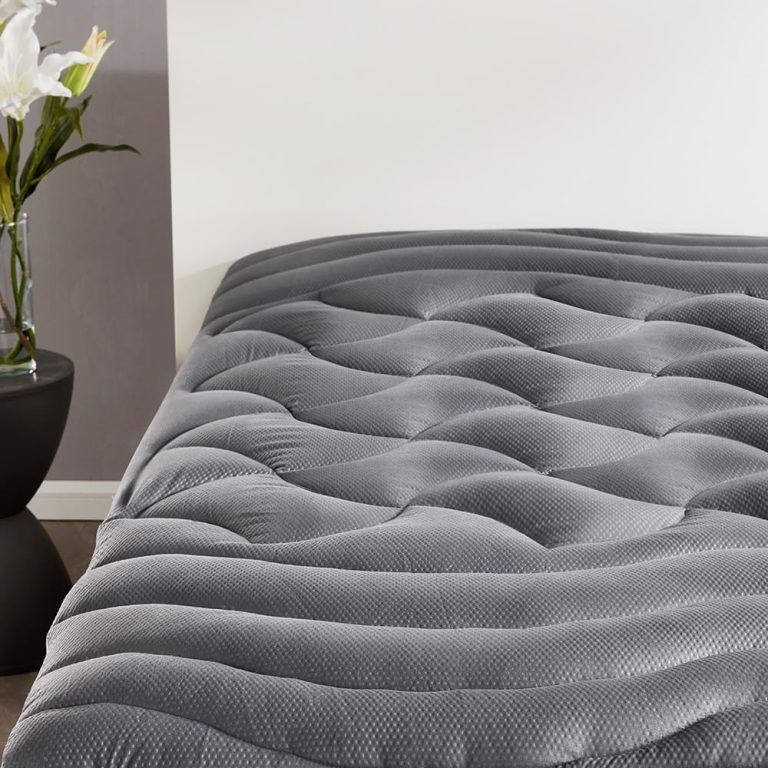
No, you should never add a mattress topper to a baby’s crib. Any extra layer creates a soft surface that raises the risk of suffocation. The crib mattress needs to stay exactly as it was manufactured. If your baby seems uncomfortable, remember that firm is the safe and recommended choice for infants.
What is the best way to clean a baby mattress safely?
Spot clean stains with a mild soap and warm water solution. You can also use a baby-safe disinfectant spray that is free from harsh chemicals. Always let the mattress dry completely before putting the sheet back on. For a deeper clean, check the manufacturer’s label for specific instructions.
Does my baby need a waterproof mattress cover?
A waterproof cover is a smart layer of protection against spills and accidents. Just make sure it fits tightly and does not add any plushness. Your cover should be thin, breathable, and specifically designed for a crib mattress. Avoid quilted or padded covers that change the firmness of the surface.
Is an organic mattress worth the extra cost for safety?
Organic mattresses can be worth it if you want to limit your baby’s exposure to certain chemicals. Look for GOTS or GOLS certification to verify the organic claims. They are not required for safety, though. A standard mattress with GREENGUARD Gold certification is also a solid and safe choice.