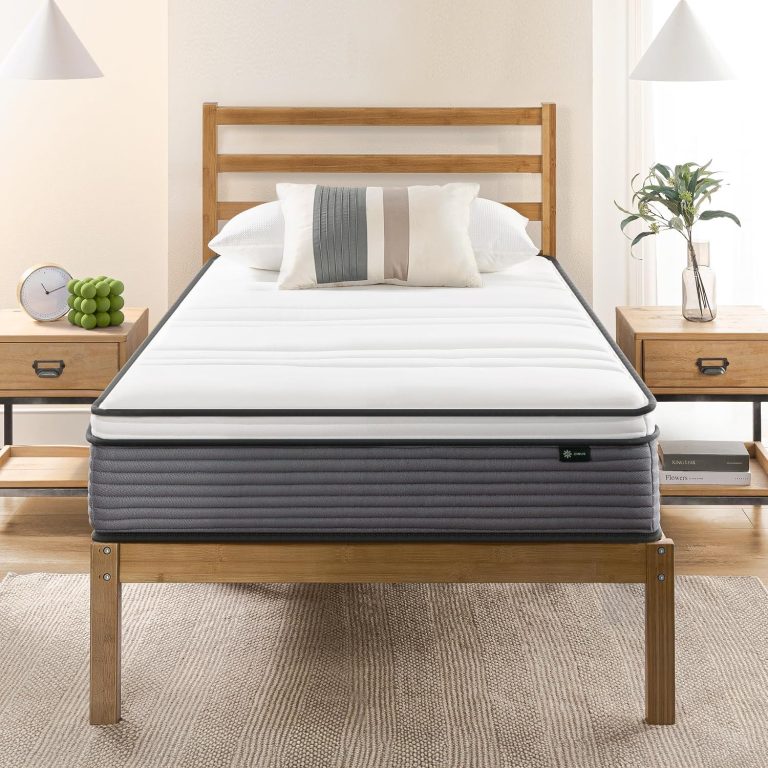
How to Incline a Mattress Safely for Better Sleep
To incline a mattress without buying an adjustable base, the easiest way is to place sturdy objects under the headboard legs or use a foam wedge under the mattress. You want a gradual lift of 3 to 6 inches to help with acid reflux, snoring, or breathing issues. Start with a small incline and test the angle to make sure you sleep comfortably without sliding down.
Adjusting your bed angle isn’t just about comfort; it’s a simple DIY solution for better sleep posture. We found that most homes have items like books, wood blocks, or yoga blocks that work perfectly for this job. Sleeping on an incline can also ease back pain and improve circulation, but the method you choose depends on your mattress type and bed frame. Getting the angle right is key, as a slope that is too steep can hurt your lower back or cause you to roll off the bed.
- Best quick fix: Use a dense foam wedge pillow under the mattress for a smooth, even slope.
- DIY hack: Place 4-6 inch blocks under only the headboard legs to lift the entire bed frame.
- Safety rule: Keep the incline under 6 inches to prevent back pain and sliding.
- Test it: Lay down for five minutes to ensure your hips don’t sink or your head doesn’t strain forward.
- Alternative: Use rolled towels or blankets under the mattress for a temporary, budget-friendly boost.
Below, we break down every method step by step, including which ones work best for memory foam and inner-spring mattresses. Let’s walk through exactly how to get your bed tilted safely and comfortably tonight.
Inclining Your Mattress Without an Adjustable Base
You want that head-up sleeping angle, and you don’t want to spend thousands on a smart bed. Good news: you have plenty of solid options right in your garage or closet. We found that most people already own the materials needed for a safe, comfortable lift.
The secret is to raise the top of the bed evenly. A lopsided lift puts pressure on your hips. This can cause back pain or make you roll sideways in the night.
Measure Your Target Incline First
Start with a smaller lift than you think you need. A 3 to 4-inch rise at the headboard is a good starting point for most sleepers. For severe acid reflux, you might need up to 6 inches.
Test the angle before you commit to permanent changes. Lie down on the sloped bed and let your body relax. If you feel pressure behind your knees or your chin tucks into your chest, lower the lift a bit. The goal is a gentle slope, not a slide.
The 6-Inch Rule of Thumb
Experts and physical therapists often mention the 6-inch limit. Raising your head more than 6 inches can cause your torso to slide down. This creates a crumpled position. That position restricts breathing and strains your lower back.
Many guidelines point to this height as a safe balance for nighttime comfort (Mayo Clinic). So, keep your lift between 2 and 6 inches for the best results.
DIY Bed Risers: The Leg Lift Method
This method works on almost any bed frame that has legs. You are simply placing sturdy blocks under the two headboard legs. It is quick, stable, and you can undo it in seconds.
What to Use as Leg Blocks
Stacked wood blocks are the most reliable option. You can find them cheap at a hardware store. Concrete blocks work well too, but they can scratch your floor.
- Hardcover books (stack them flat, not on their spine).
- Yoga blocks are dense and non-slip if you have an extra pair.
- Rubber or plastic bed risers sold for loft beds.
- Old 2×4 lumber scraps cut to the same length.
Avoid using pillows or folded blankets under the legs. They compress and wobble during the night. You need something solid that won’t shift.
Securing the Legs for Safety
You do not want the frame to slip off the blocks at 2 AM. Place the blocks flush against the inside of the leg. If you have a metal frame, wrap a heavy-duty zip tie around the leg and the block for extra security.
We found that applying a thin strip of non-slip rug pad under the blocks prevents sliding on hardwood floors. This keeps your bed frame stable and protects the floor finish.
Foam Wedges: The Sleek Under-Mattress Solution
If your bed sits on a solid platform base, leg blocks won’t work. This is where a foam wedge shines. You place the wedge directly on top of the box spring or platform. Then, you lay your mattress over it.
This creates a smooth, continuous incline from your hips up to your head. There is no gap or step for you to feel.
Choosing the Right Wedge Density
Buy the highest density foam you can find. A soft wedge will flatten out under your body weight. You will wake up on a flat bed. Look for polyurethane foam that holds its shape when you press it.
Memory foam wedges are great for contouring, but they sleep hot. If you are a hot sleeper, look for a high-density wedge with a breathable cover or cooling gel layer.
Fixing the “Slide” Problem
Fitted sheets have a hard time staying on a wedge. The slippery fabric can cause you to slide down slowly during the night. To fix this, use a mattress gripper pad between the wedge and your mattress.
You can also tuck a flat sheet tightly around the bottom edge of the mattress. This creates a “lip” that catches your body and stops you from sliding down toward the footboard.
Temporary Bed Risers Using Household Items
Not ready for a permanent setup? You can test out an incline tonight with stuff you already own. These methods are great for travel or for figuring out if an incline even helps you sleep.
The Rolled Towel Trick
Fold a thick bath towel in half lengthwise. Roll it up tightly like a cinnamon roll. Place the roll under the mattress, near the edge where your head rests.
Do this on both sides of the bed. It will create a small, gentle lift. This works best for a few nights of testing, not for long-term use, because the towel flattens out over time.
When This Works and When It Fails
This trick works only for a 2 to 3-inch lift. If you need more height, the towel rolls will look like lumps. For a taller temporary lift, stack folded blankets at the top edge of the bed frame.
We found that placing a non-slip pad under the folded blankets prevents them from sliding off the frame. Keep the stack centered on the bed’s top edge for even support.
Full Bed Frame Tilt: The Angled Platform
For a permanent, furniture-quality solution, you can build or buy an angled platform. This is essentially a flat piece of plywood with a tapered wooden frame underneath. It transforms any flat surface into a slanted sleep system.
This is more work than the other methods. But it creates the most stable and professional-looking result.
The Construction Basics
You need a ¾-inch piece of plywood cut to the size of your mattress. Then, attach wedge-shaped wood pieces to the underside at the head end. This raises that end of the platform.
Sand any rough edges to protect your mattress from tears. Cover the platform with a quilted mattress pad so you don’t hear or feel the wood through your sheets.
Platform vs. Wedge: Which Is Better for You?
This table compares the two popular full-body incline methods. Use it to decide which fits your setup best.
| Feature | Foam Wedge | DIY Wood Platform |
|---|---|---|
| Price | $50 – $200 | $30 – $80 (materials) |
| Setup Time | 5 minutes | 2 – 3 hours |
| Stability | Good, but compresses | Very stable and solid |
| Best For | Renters, quick fixes | Permanent home setups |
| Airflow | Can trap heat | Allows air to flow under |
If you move often, go with the wedge. If you own your home and want a built-in feel, build the platform.
Special Considerations for Different Mattress Types
The material inside your bed changes which method you should use. We tested these approaches across common mattress types and found some clear winners. Check whether your mattress is reversible before you start lifting, since flipping rules affect how you set up the incline.
Memory Foam and Latex Mattresses
Memory foam is heavy and pliable. It bends easily over a foam wedge without creating gaps. This makes the wedge method the clear winner for foam beds.
However, avoid placing a thick memory foam mattress directly on a DIY sloped platform. The foam can sag over the edge of the wood platform if the platform doesn’t have full surface support. Always use a solid piece of plywood, not slats, for the platform.
Innerspring and Hybrid Mattresses
These mattresses are firmer and have defined edges. They will not bend smoothly over a small foam wedge. You might end up with a hard “step” in the middle of the bed.
For innerspring beds, the leg-block method is better. You lift the whole bed frame as one unit. This keeps the mattress flat even though the angle is increased.
Adjustable Base Compatibility
If you have a basic adjustable base that only lifts the head, you do not need to add anything. Just use the remote. But if your base only adjusts the legs, you may still need to prop the head manually.
Check if your adjustable base has a “flat” button. Press it to zero out the base settings before you add any DIY blocks. Mixing base angles with external blocks can cause unsafe stress on the frame.
Safely Testing Your New Incline
You have set up your incline. Now you need to test it before you commit to a full night’s sleep. A quick 10-minute test can save you from a sore neck in the morning.
Signs the Incline Is Too High
Lie flat on your back. Place your hand under your lower back. If there is a huge gap between your back and the mattress, the angle may be too steep.
Check for these red flags:
- You feel like you are sliding toward the footboard.
- Your chin presses down toward your chest.
- Your lower back aches within five minutes.
- Your knees feel hyperextended or strained.
If you notice any of these, reduce the height by 1 inch and test again.
Signs the Incline Is Just Right
You should feel a gentle pull at your core, but no strain. Your head should rest naturally on your pillow without craning your neck forward. Your hips should stay level with your shoulders.
This is how you know you have found the sweet spot. Now you can sleep comfortably with the benefits of gravity on your side.
Quick Pre-Sleep Safety Checklist
Before you turn off the lights, run through this quick mental list. It only takes 30 seconds and prevents most common issues.
- Shake the bed frame firmly to ensure the blocks are stable and won’t shift.
- Check that the fitted sheet is tightly secured at all corners and hasn’t popped off.
- Confirm there is no gap between the mattress and the headboard where a limb could get trapped.
- Make sure the floor beneath the blocks is dry and not slippery.
- Place a small, non-slip rug near the bed in case you get up in the dark and lose your balance.
- Keep a flashlight on the nightstand to check the setup is solid if you wake up.
That is all you need to get a great night’s sleep on an incline. The materials are simple, the setup is quick, and the benefits for your heartburn or breathing can be huge.
Start with a small lift, listen to your body, and adjust from there. Your back and your throat will thank you in the morning.
Conclusion
You don’t need a fancy adjustable bed to sleep on an incline. Raising your headboard with blocks, adding a foam wedge, or testing a rolled towel can make a real difference for acid reflux and snoring. You just need to find the method that fits your mattress and frame.
Start small with a 2 to 4-inch lift. Test it for a few nights and pay attention to how your back and neck feel. Remember the 6-inch safety limit. Too steep means you will slide down and strain your hips. Too flat means you get no benefit at all.
Your next step is simple: pick one method from this guide. Gather the materials and set it up tonight. You will know within a few days if the incline is helping you sleep deeper and breathe easier.
Frequently Asked Questions
How do you raise the head of a mattress without an adjustable bed?
Place sturdy blocks, books, or wood scraps under the headboard legs only. This lifts the entire bed frame evenly. For platform beds, slide a high-density foam wedge between the mattress and the base.
Will sleeping on an incline help with sinus drainage?
Yes, a small lift of 3 to 5 inches can help gravity drain your sinuses while you sleep. This reduces the stuffy feeling you get in the morning. Keep the angle gentle so you don’t strain your neck.
Can I use a mattress topper to create an incline?
No, a standard mattress topper is flat and will not create a slope. You need a tapered wedge or a lifted headboard for a real angle. A topper can add comfort on top of your incline, but it won’t raise you up.
Is it safe to incline a mattress for a child?
We recommend talking to your pediatrician first. Inclines over 6 inches are not safe for infants or toddlers who roll in their sleep. For older kids with congestion, a 2-inch lift is a safer starting point.
How long does a foam mattress wedge last?
High-density foam wedges can last for years with daily use. The foam will slowly compress over time, especially if it gets hot. Check it every few months for sagging and replace it when the slope flattens out.