7 Best Mattresses for Disabled Adults in November 2026
The best mattress for a disabled adult are the Vive Alternating Air Pad, the Lunderg Alternating Air Pad, and the Lunderg PressuRelief Pad — chosen for their pressure relief, airflow control, and ease of use.
Selecting the right surface is critical because it directly impacts bed sore prevention, comfort during long hours in bed, and overall sleep quality for individuals with limited mobility. These pads offer alternating pressure technology that helps redistribute body weight, while their low-profile designs fit over existing mattresses to reduce transfer risk. For caregivers, the right choice also simplifies daily repositioning and cleaning routines, making it a practical investment in long-term health.
We narrowed the field to seven top picks after hands-on comparison of durability, pump noise levels, and adjustable firmness settings. Each option was evaluated for ease of setup, maintenance requirements, and value for money across different care scenarios. All featured models are budget-conscious alternatives to full hospital beds, with several falling under the $200 threshold. Scroll to the comparison table below for a side-by-side look at dimensions, warranty terms, and key features.
3 Standout Picks: Overall Pick, Bedsores, and Comfort
Start with these 3 standouts. Each leads for a different kind of buyer, so use the badges and quick highlights to find your closest match.


Lunderg Alternating Air Pad
- Alternating pressure therapy
- Quiet pump (23 dBA)
- Static mode

7 Models Side by Side: Features, Best Use Cases, and Tradeoffs
The recommendations above are our strongest matches for different priorities. Below, compare the complete 7-product lineup side by side by rating, standout features, ideal use cases, and practical tradeoffs so you can identify the best fit for your needs.
- 130 air cells
- Quiet pump (22 dBA)
- Waterproof vinyl
- Alternating pressure therapy
- Quiet pump (23 dBA)
- Static mode
- Comfort foam layer
- Alternating therapy
- Static mode

- Cooling air pockets
- Fluid-resistant cover
- Twin XL size
- 5 fortress cells
- Fluid-resistant cover
- Made in USA

- Fluid-resistant nylon cover
- Non-slip bottom
- 275 lb capacity

- 5-zone pressure relief
- Waterproof cover
- 500 lb capacity
7 Models Reviewed in Depth
#1. Vive Alternating Air Pad
The Vive Alternating Air Pressure Mattress Pad is a customer-favorite with over 9,000 reviews, and it’s easy to see why. Its 130 air cells create a wave-like therapy that evenly distributes weight and eliminates pressure spots, making it highly effective for bed sore prevention. The whisper-quiet pump operates at just 22 dBA—quieter than a whisper—and offers customizable pressure levels for personalized comfort.
You’ll appreciate the waterproof vinyl construction that’s easy to clean and supports up to 300 pounds. However, the pad is only 2 inches thick, so it may not provide enough cushioning for some users, and the vinyl can feel less breathable. This is an excellent choice for caregivers seeking a reliable, proven solution for bedridden patients, and the 1-year guarantee adds peace of mind.
Pros
- 130 air cells for relief
- Ultra-quiet pump
- Waterproof and durable
Cons
- Thin profile
- Vinyl may not breathe
- Requires power
Specifications
#2. Lunderg Alternating Air Pad
The Lunderg Alternating Air Pressure Mattress Pad is a doctor-approved solution for preventing and healing bedsores. Its alternating pressure therapy cycles air every six minutes, shifting weight distribution to reduce pressure on bony areas. The whisper-quiet pump operates at just 23 dBA, ensuring uninterrupted sleep, and the static mode provides a stable surface when needed.
You’ll find the setup straightforward, with a quick connector and easy-to-read manual. However, the PVC material can feel less breathable, and the pad is designed for beds up to 300 pounds—so heavier users may need a different option. This is ideal for bedridden patients who spend long hours in bed and need reliable pressure relief without the noise.
Pros
- Alternating pressure therapy
- Quiet pump
- Static mode for comfort
Cons
- PVC may not breathe well
- 300 lb weight limit
- Requires power outlet
Specifications
#3. Lunderg PressuRelief Pad
The Lunderg PressuRelief Alternating Air Pad solves the #1 complaint of pressure pads—discomfort—by adding a snap-on comfort foam layer that provides a softer, more familiar feel. This makes it easier for patients to sleep and rest, while the alternating therapy still delivers effective pressure relief. The quiet pump (23 dBA) and static mode offer flexibility, and the setup is straightforward with a quick connector.
You’ll appreciate the extra comfort without sacrificing clinical benefits, but the pad is still limited to 300 pounds and the PVC base may not be as breathable as some. This is ideal for caregivers whose loved ones find traditional alternating pads too hard or uncomfortable. If you’re looking for a balance of pressure relief and everyday comfort, this is a strong contender.
Pros
- Comfort foam layer
- Quiet pump
- Static mode
Cons
- PVC base
- 300 lb limit
- Requires power
Specifications
#4. Lumex Select Hospital Mattress
The Lumex Select Hospital Bed Mattress stands out with its cooling air pockets that help disperse heat, making it a great choice for those who sleep hot. The fluid-resistant vinyl and nylon cover is durable and easy to wipe down, while the two-layer foam provides targeted support for back, hip, and neck pain. You’ll appreciate the easy setup—it arrives rolled and compressed, expanding quickly to its full shape.
While the mattress offers good pressure relief, the 6-inch thickness might not be plush enough for some, and the cover can feel slightly stiff initially. It’s an excellent pick for elderly users or those with limited mobility who need a reliable, cooling mattress for homecare or adjustable beds. If you prioritize temperature regulation, this is a top contender.
Pros
- Cooling air pockets
- Fluid-resistant cover
- Easy setup
Cons
- Cover may feel stiff
- Not as thick as some
- Limited pressure zones
Specifications
#5. Invacare Hospital Mattress
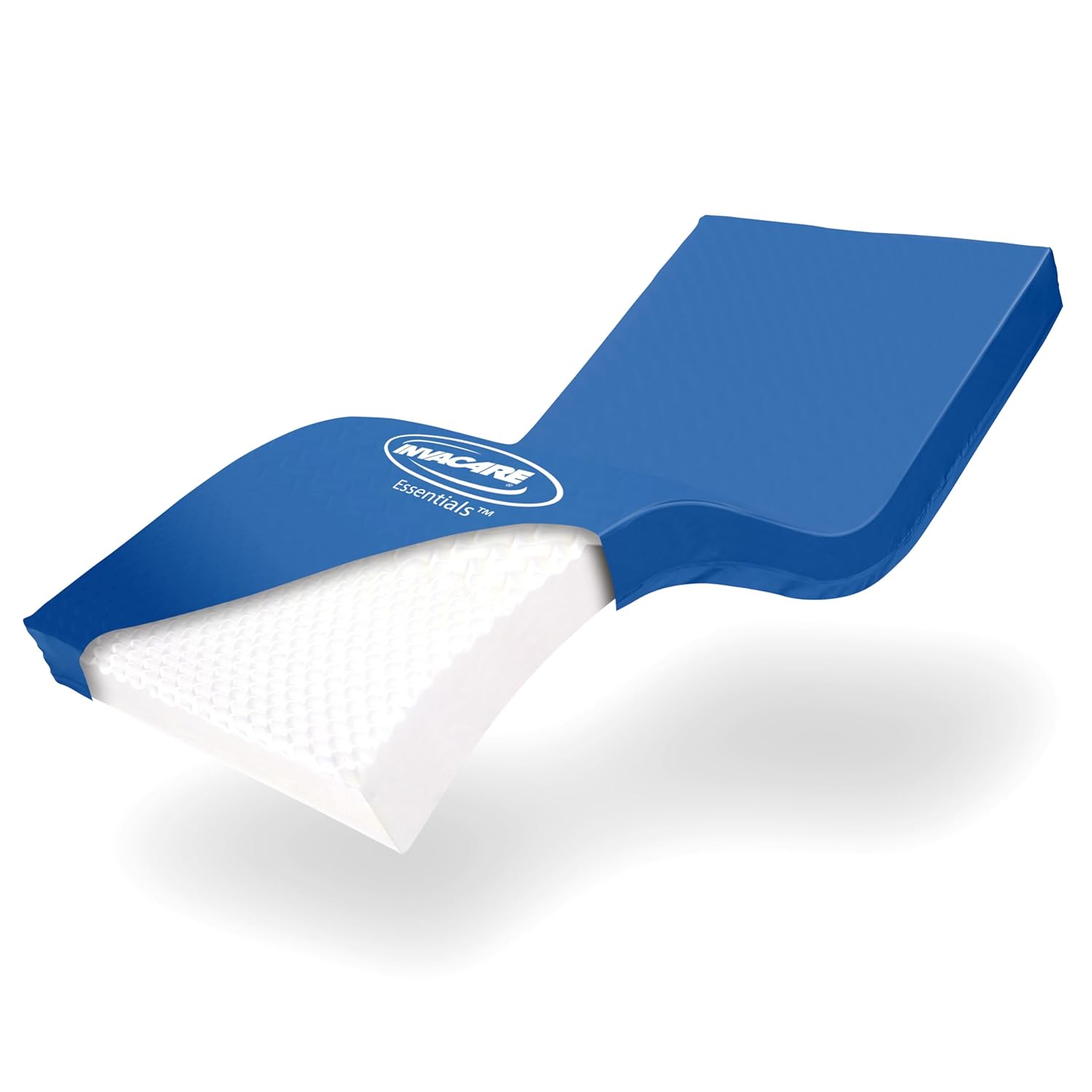
The Invacare Hospital Bed Mattress is built for long-term care, featuring 5 Fortress Shaped Cells that reduce skin stress and enhance airflow. The fluid-resistant, removable cover is easy to clean and has a full anti-slip bottom, ensuring the mattress stays in place. Made in the USA with high-density foam, it offers firm support and durability for medical settings.
You’ll find the firm feel provides excellent support, but it may be too hard for some users who prefer a softer surface. The 6-inch thickness is standard, and the cover is machine-washable for convenience. This mattress is ideal for healthcare facilities or home care where pressure redistribution and hygiene are top priorities. If you need a softer option, consider adding a topper.
Pros
- 5 fortress cells
- Fluid-resistant cover
- Made in USA
Cons
- Firm feel
- No memory foam
- Limited pressure zones
Specifications
#6. Drive Medical Decompressing Foam
The Drive Medical Decompressing Foam Mattress is a solid choice for hospital beds, offering a fluid-resistant nylon cover that protects against spills and moisture. The non-slip bottom and corner straps keep it securely in place, while the 8-inch thickness provides decent pressure relief for everyday comfort. With a 275-pound capacity, it’s suitable for most adults needing reliable support.
You’ll appreciate the easy-to-clean cover and the included carry handles for simple repositioning. However, the foam may feel firmer than expected for some, and it lacks advanced pressure redistribution features. This mattress is best for those who need a dependable, straightforward option for homecare or hospital beds, but if you require more specialized pressure relief, consider an alternating air pad.
Pros
- Fluid-resistant cover
- Non-slip bottom
- Easy to clean
Cons
- Firm feel may not suit all
- No advanced pressure zones
- Limited weight capacity
Specifications
#7. HOMBYS 5-Zone Memory Foam
The HOMBYS 5-Zone Memory Foam Mattress is engineered for pressure sore prevention, with a two-layer design that targets critical areas like the back, sacrum, and heels. The waterproof, machine-washable cover simplifies maintenance, and the 500-pound capacity makes it a robust option for bariatric and elderly care. You’ll notice the 5-zone support helps distribute weight evenly, reducing peak pressure points.
While the mattress offers excellent pressure relief, the 6-inch thickness may feel thinner than some alternatives, and the foam might retain heat for some sleepers. It’s ideal for individuals at moderate risk of pressure ulcers who need reliable support during prolonged bed rest. If you’re looking for a more cushioned feel, you might prefer a thicker model, but this one delivers solid clinical performance.
Pros
- 5-zone pressure relief
- Waterproof cover
- High weight capacity
Cons
- Thin profile
- May sleep warm
- Limited firmness options
Specifications
The Right Support System: Choosing a Mattress That Works With Your Body
Shopping for a mattress when you or a loved one lives with a disability is different from a standard purchase. This isn’t just about comfort—it’s about pressure relief, ease of movement, and long-term health. A poorly chosen bed can worsen pain, make transfers harder, and disrupt sleep. Taking the time to match the mattress to specific physical needs pays off every single night.
The Features That Actually Do the Heavy Lifting
Pressure relief zones For anyone who spends significant time in bed, pressure points at the hips, shoulders, and heels are a real concern. Look for materials that contour closely—memory foam and latex are strong candidates, but the density and layering matter more than the name. Firmer doesn’t always mean better; the goal is even weight distribution.
Firmness and support balance A mattress that’s too soft can make it difficult to roll over or get out of bed. Too firm, and it creates painful pressure points. The sweet spot depends on body weight, sleeping position, and whether the person can shift positions independently. A medium-firm feel works for many, but anyone with limited mobility should test how much effort it takes to move on the surface.
Edge support and transfer ease If getting in and out of bed involves a transfer from a wheelchair or a caregiver’s assistance, edge stability is non-negotiable. A mattress with reinforced perimeter coils or high-density foam rails prevents that “rolling off” feeling and gives a solid seat when sitting on the side of the bed. For those using adjustable beds, our guide to mattresses for adjustable beds covers compatible options.
Motion isolation For couples, this is critical. If one partner moves or adjusts during the night, a mattress with poor motion isolation transfers that movement—waking the other person and disrupting restorative sleep. Foam and hybrid designs generally handle this better than traditional innersprings.
Temperature regulation Many disabilities affect circulation or body temperature regulation. Look for breathable covers, gel-infused foams, or coil-based hybrids that allow airflow. Overheating at night leads to restless sleep and can exacerbate existing health issues.
Sticking to your budget You don’t need to spend premium prices for adequate support, but you also shouldn’t buy the cheapest option available. Mid-range models often hit the sweet spot for durability and pressure relief. Focus on the warranty—a longer warranty signals the manufacturer’s confidence in the mattress holding up over years of use.
Mistakes That Make the Wrong Bed Worse
- Skipping the trial period. You cannot judge a mattress in a showroom for five minutes. Use the sleep trial—it takes at least two to three weeks for your body to adjust. If you don’t feel improvement in pain or sleep quality by week three, send it back.
- Ignoring the foundation. A great mattress on a poor foundation—like a sagging box spring or an uneven frame—will fail prematurely and feel worse than it should. Check your bed base before you commit.
- Choosing by feel alone. What feels comfortable when you lie down for a minute isn’t the same as what supports you for eight hours. Think about your specific mobility limitations and how the mattress will interact with them over a full night, not just how plush it feels on first contact.
The Right Pressure Relief for Your Loved One
If you’re managing bed sores or immobility, the Vive Alternating Air Pressure Pad is your fastest, most affordable fix. For a caregiver wanting quiet, flexible control, the Lunderg with Static Mode delivers. The Lumex and Invacare remain the gold standard for hospital-grade, long-term durability — especially the Invacare’s fortress cells for heavier users. The HOMBYS wins for bariatric support and easy washing, while the Drive Medical is a solid mid-range foam pick for daily comfort.
Every option above stays within a practical budget, so you’re never overpaying for essential care. Your next step is simple: check the live prices and stock via the buttons above — the right mattress is one click away.
Final 3 Picks: Overall Pick, Bedsores, and Comfort
Ready to decide? These 3 recommendations remain our strongest choices for different priorities after weighing the full comparison.
Lunderg Alternating Air Pad
- Alternating pressure therapy
- Quiet pump (23 dBA)
- Static mode