
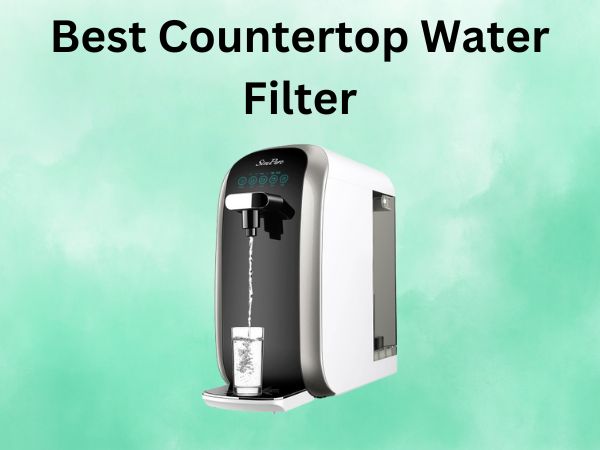
10 Best Countertop Water Filter [In 2026]
Clean drinking water is essential for health, yet tap water often contains harmful contaminants. Countertop water filters offer an efficient, installation-free solution to purify your water instantly. This comprehensive guide reviews the 10 best countertop water filters, helping you choose the perfect system for pure, safe drinking water at home.
Our Top 6 Picks


Quick Selection Guide
1. Choose SimPure Y7P-BW if: you need NSF/ANSI 58 certified protection with industry-leading 4:1 water efficiency, want UV sterilization that eliminates 99.99% of bacteria without chemicals, and prefer fast 418 GPD flow rate for busy households—perfect for families who value comprehensive filtration with zero installation hassles and versatile placement options for homes, offices, or RVs.
2. Choose Aigerri Portable UV if: you want the highest 5:1 pure-to-drain ratio for maximum water conservation, need large 5L capacity for family use, and prefer eco-friendly filtration with UV light plus remineralization—ideal for environmentally-conscious households seeking sustainable hydration without installation requirements.
3. Choose VonWater CT910 if: you need comprehensive NSF 372/53/42/58 multi-standard certification, want smart LED touch screen with real-time TDS monitoring and five customizable volume options, and prefer 7-stage advanced filtration with 12-month filter life—perfect for tech-savvy users who appreciate convenience with the removable 1.2L pitcher for bedroom, kitchen, or camping versatility.
4. Choose Dreo WF511 if: you want sophisticated 7-layer SGS-tested filtration with dual pitcher design for continuous water availability, need real-time TDS monitoring with child safety lock, and prefer impressive 1,050-gallon capacity that saves 8,000 plastic bottles—ideal for families prioritizing safety features and food-grade PCTG materials with 24/7 customer support.
5. Choose Bluevua RO100ROPOT-UV if: you prefer premium high borosilicate glass carafe over plastic containers, want 6-stage filtration including UV and remineralization for balanced taste, and need WQA/NSF certified protection with impressive 2:1 pure-to-drain ratio—perfect for health-conscious individuals seeking ClimatePartner certified sustainability with 12-24 month filter lifespan.
6. Choose Waterdrop WD-A2 if: you need instant hot water (up to 203℉) and cold water (down to 59℉) with six temperature settings, want smart touch screen that memorizes your preferences with five volume options, and prefer NSF/ANSI 372 certified filtration with 40oz portable pitcher—ideal for households wanting all-in-one convenience for coffee, tea, and cold refreshment without separate appliances.
7. Choose iSpring RCD100HCG if: you want alkaline filtration for pH-balanced mineral-rich water, need nine temperature options with dual-pitcher design for continuous availability, and prefer thermoelectric cooling that uses less power with quieter operation—perfect for health enthusiasts seeking 100 GPD capacity with real-time TDS monitoring, child safety lock, and no-plumbing installation for homes, offices, or RVs.

8. Choose AquaTru Carafe Smart if: you want app-connected WiFi monitoring for filter life tracking and water quality alerts, need IAMPO/NSF certified removal of 84 specific contaminants including PFOA/PFOS, and prefer compact 14″L design with 64oz glass carafe—ideal for tech enthusiasts who appreciate smart home integration with quick-change insert & snap filters and capability to handle challenging water up to 2,000 PPM TDS.

9. Choose Brita Hub if: you want instant 0.5 GPM flow rate without reverse osmosis complexity, need lightweight 6.42-pound portability with straightforward 6-month filter replacement, and prefer carbon block filtration for 70+ contaminants at affordable pricing—perfect for renters or those primarily concerned with chlorine, lead, and taste improvement who want to replace 1,800 plastic bottles yearly with minimal investment.

10. Choose Bluevua RO100ROPOT-Lite(UV) if: you need comprehensive 7-stage filtration including UV and remineralization in compact space-saving design, want annual filter replacement (once yearly) at only $0.22 per day, and prefer innovative fruit infuser for flavored water with timeline hydration tracking—ideal for 1-2 person households in apartments or small kitchens who appreciate high-end glass carafe aesthetics with WQA/NSF certified protection.

Top 10 Best Countertop Water Filters Reviewed
1. SimPure Y7P-BW UV Countertop Reverse Osmosis Water Filter
The SimPure Y7P-BW stands as a powerhouse in countertop water purification, combining cutting-edge UV technology with robust reverse osmosis filtration. This NSF/ANSI 58 certified system eliminates 99.99% of over 1,000 contaminants including PFAS, heavy metals like lead and arsenic, chlorine, fluoride, and nitrates. The 5-stage filtration process paired with UV purification ensures chemical-free sterilization without by-products. What truly distinguishes this model is its market-leading 4:1 pure-to-drain ratio, saving approximately 1500% more water than traditional under-sink systems. With a 418 GPD flow rate, you’ll have purified water in just 15 seconds, making it exceptionally convenient for busy households or offices.
Pros:
- Industry-leading 4:1 pure-to-drain water efficiency
- NSF/ANSI 58 certified for safety and performance
- UV sterilization eliminates 99.99% bacteria without chemicals
- No installation required—plug and play convenience
- 528-gallon filter capacity replaces approximately 6,000 plastic bottles
- Fast 418 GPD flow rate delivers water in 15 seconds
- Versatile placement options for homes, offices, RVs, and camping
Cons:
- Room temperature water only—no heating or cooling functions
- 18-pound weight makes it less portable than lighter models
- Requires minimum 22 inches vertical clearance when lid is open
- Some customers report occasional leakage issues from bottom
- Higher upfront cost compared to standard pitcher filters
2. Aigerri Portable UV Countertop Reverse Osmosis Water Filter
Aigerri’s portable UV countertop system impresses with its exceptional 5:1 pure-to-drain ratio, currently the highest water utilization rate among RO systems. This 5-stage filtration powerhouse meets NSF/ANSI 58 standards, effectively reducing heavy metals, chlorine, sediments, PFAS, and TDS from tap or well water with TDS under 500 ppm. The system features generous capacity with a 5-liter raw water tank and 2-liter purified tank, while including two filter cartridges that provide 529 gallons of purified water—equivalent to roughly 6,000 water bottles. UV purification technology eliminates contaminants chemically-free, and the remineralization filter enriches water with essential minerals for balanced taste and health benefits. Its zero-installation design offers ultimate flexibility for any space with power access.
Pros:
- Highest 5:1 pure-to-drain ratio maximizes water conservation
- Large 5L capacity perfect for family use
- UV light plus remineralization for safety and taste
- Compact at 16.4″L x 7.4″W x 16.2″H dimensions
- Two filter cartridges included provide 529 gallons
- No installation or plumbing required
- Works under cabinets or on open countertops
Cons:
- Lighter 13.9-pound weight may feel less substantial
- Limited brand recognition compared to established competitors
- Must use genuine Aigerri replacement filters exclusively
- No hot or cold water temperature options
- Mixed customer feedback on long-term durability
3. VonWater CT910 7-Stage Countertop Reverse Osmosis Water Filter System
The VonWater CT910 distinguishes itself with comprehensive NSF certification across multiple standards (372, 53, 42, 58), ensuring verified removal of 99.99% harmful contaminants. This 7-stage all-in-one filter system purifies water to 0.0001μm, effectively eliminating TDS, PFOA, PFOS, fluoride, lead, chromium, iron, nitrates, and chlorides. The 3:1 pure-to-drain ratio conserves three times more water than traditional purifiers, while the 528-gallon capacity saves over 4,000 plastic bottles, significantly reducing both environmental impact and bottled water expenses. Smart features include a real-time TDS display with LED touch screen, filter life status monitoring, and five volume settings (4oz, 8oz, 12oz, 17oz, unlimited) with auto water production technology. The removable 1.2L pitcher adds versatility for bedroom, kitchen, office, or camping use.
Pros:
- Comprehensive NSF 372, 53, 42, 58 multi-standard certification
- 7-stage advanced filtration with all-in-one filter design
- Smart LED touch screen with real-time TDS monitoring
- Five customizable volume options for convenience
- 1.2L detachable pitcher for portable use
- 12-month filter life (3x longer than many competitors)
- Twist-and-lock filter replacement takes only 3 seconds
- Auto water production technology
Cons:
- 3:1 pure-to-drain ratio less efficient than top competitors
- Compact 1.2L pitcher may require frequent refills for larger families
- Mixed reviews on functionality and reliability
- Charcoal gray color may not match all kitchen aesthetics
- Relatively higher price point for features offered
4. Dreo WF511 Reverse Osmosis Water Filter Countertop
Dreo’s WF511 impresses with its sophisticated 7-layer filtration system featuring a 0.0001μm RO membrane that removes 99.99% of 1,000+ contaminants tested by SGS. This installation-free system offers remarkable convenience with its dual BPA-free pitcher design—one for immediate use and one that auto-refills, ensuring continuous access to purified water. Real-time smart monitoring displays TDS readings and filter life tracking, while auto-flushing and child lock features ensure safe, effortless operation. The sustainable 3:1 pure-to-drain ratio minimizes waste, and the system’s capacity is impressive: one RO filter plus two PPC filters purify up to 1,050 gallons, potentially saving 8,000 plastic bottles. Food-grade PCTG pitchers and ABS tank construction provide worry-free drinking water protection for the entire family.
Pros:
- Advanced 7-layer filtration system with SGS testing
- Dual pitcher design allows one for immediate use, one auto-refilling
- Real-time TDS monitoring with smart display
- Impressive 1,050-gallon total capacity saves 8,000 bottles
- Child lock and auto-flushing for safety
- Food-grade materials (PCTG pitchers, ABS tank)
- 24/7 customer support availability
- Compact dimensions fit most countertops
Cons:
- Some customers report leakage problems
- 3:1 pure-to-drain ratio less efficient than newer models
- Mixed reviews on overall functionality
- No heating or cooling capabilities
- Tank capacity receives mixed customer feedback
- 14.56 pounds may be heavy for frequent moving
5. Bluevua RO100ROPOT-UV Reverse Osmosis System Countertop Water Filter
Bluevua’s RO100ROPOT-UV elevates countertop filtration with its premium 6-stage system featuring a 0.0001μm RO membrane, UV light sterilization, and added remineralization filter. WQA certified against NSF/ANSI/CAN 372 for lead-free and SGS tested, this system effectively reduces TDS, PFOA, PFOS, chlorine, fluoride, arsenic, lead, and more while enriching water with essential minerals for balanced taste and health benefits. The standout feature is its high borosilicate glass carafe instead of traditional plastic, reducing secondary pollution risks and elevating the overall quality experience. Power-saving automatic standby mode reduces consumption when idle, while the impressive 2:1 pure-to-drain ratio helps conserve water for household purposes. Filter life spans 12-24 months, with the monitor display tracking replacement needs and water quality status.
Pros:
- Premium high borosilicate glass carafe reduces plastic contact
- 6-stage filtration including UV and remineralization
- WQA certified against NSF/ANSI/CAN 372, SGS tested
- Impressive 2:1 pure-to-drain ratio for water conservation
- Long 12-24 month filter life reduces maintenance frequency
- Power-saving automatic standby mode
- Filter life monitor with water quality display
- ClimatePartner Certification for sustainability commitment
Cons:
- 23.2-pound weight makes it heaviest in category
- Takes 2-3 minutes to produce 1.7L filtered water
- Some customers wish tank and pitcher were larger
- Glass carafe requires more careful handling than plastic
- Premium materials result in higher price point
- Limited to room temperature water only
6. Waterdrop WD-A2 Countertop Reverse Osmosis System
The Waterdrop WD-A2 revolutionizes countertop filtration by combining purification with instant hot and cold water dispensing. Its 5-stage filtration system with 0.0001μm RO membrane reduces TDS, PFOA, PFOS, chlorine, fluoride, arsenic, lead, nitrate, chromium-VI, copper, sediment, and salt. The game-changing feature is adjustable temperature control from 59℉ to 203℉ across six settings, meeting all hydration needs from ice-cold refreshment to instant hot beverages. Smart touch control screen memorizes water preferences with five adjustable volume options for ultimate convenience. The 3:1 pure-to-drain ratio saves 1200% water compared to traditional systems while reducing plastic bottle waste. The 40oz portable pure water pitcher enables easy hydration anywhere—kitchen, living room, office, or RV. Easy-to-replace composite filters reduce long-term costs while maintaining efficiency.
Pros:
- Unique instant hot (up to 203℉) and cold (down to 59℉) water capability
- Six temperature settings and five volume options
- Smart touch screen memorizes favorite settings
- 40oz portable pitcher for flexible hydration
- 3:1 pure-to-drain saves 1200% water
- No installation required—fits any countertop
- NSF/ANSI 372 certified filtration
- Easy composite filter replacement
Cons:
- Mixed reviews on temperature control consistency
- Lifespan concerns—some report system doesn’t last 2 years
- Produces loud noises during operation according to customers
- Value for money receives mixed feedback
- Higher power consumption due to heating/cooling functions
- More complex system means more potential failure points
7. iSpring RCD100HCG Hot & Cold Reverse Osmosis System Countertop
iSpring’s RCD100HCG combines alkaline filtration with hot and cold dispensing for premium hydration experiences. This advanced system eliminates over 99% of 1,000+ harmful contaminants including PFAS, vinyl chloride, chlorine, fluoride, lead, arsenic, asbestos, calcium, and sodium, while alkaline filtration ensures pH-balanced, great-tasting water. The thermoelectric cooling technology operates with limited noise and consumes less power than traditional compressor systems. Nine temperature options and six dispensing volume options provide unmatched customization for different preferences. The innovative dual-pitcher design ensures continuous access—one pitcher stores in the fridge while the other operates in the system. Real-time monitoring displays source and filtered water TDS levels, temperature, and low water reminders. The 100 GPD capacity with 2.5:1 pure-to-drain ratio efficiently meets various household needs. Child safety lock and 10-second auto-flush process add safety and extend filter lifespan.
Pros:
- Alkaline filtration for pH-balanced, mineral-rich water
- Nine temperature options and six dispensing volumes
- Dual-pitcher design ensures continuous filtered water availability
- Thermoelectric cooling uses less power, produces less noise
- Real-time TDS monitoring for both source and filtered water
- 100 GPD capacity suitable for larger households
- Child safety lock for family safety
- 10-second auto-flush extends filter life
- No plumbing required—perfect for homes, offices, RVs
Cons:
- Mixed functionality reviews—some units stop working unexpectedly
- 22-pound weight makes it one of heavier options
- Requires 20-30 minutes initial cooling time
- More complex system with more maintenance requirements
- Higher price point due to hot/cold features
- 2.5:1 pure-to-drain less efficient than some competitors
8. AquaTru Carafe Smart Countertop Water Purifier
AquaTru’s Carafe Smart stands out with app-connected intelligence and independently certified performance. IAMPO certified to NSF standards, it removes 84 specific contaminants including forever chemicals (PFOA/PFOS), lead, fluoride, and chlorine. The WiFi-enabled system connects to the AquaTru app for comprehensive tracking of filter life, water quality monitoring, and replacement alerts—bringing smart home technology to water purification. The 4-stage ultra reverse osmosis filtration provides multi-stage purification that removes toxins, heavy metals, and dissolved solids for exceptionally clean water. The 64oz glass carafe offers a space-saving, compact countertop design while providing substantial capacity for each cycle. Quick-change ‘insert & snap’ filters simplify maintenance with intuitive replacement processes. The system supports up to 2000 PPM TDS, making it suitable for challenging water conditions.
Pros:
- App-connected smart monitoring with filter life tracking
- IAMPO certified to NSF standards for 84 contaminants
- 64oz glass carafe reduces plastic contact
- 4-stage ultra reverse osmosis filtration
- Compact 14″L x 7.5″W x 13″H design saves counter space
- Quick-change insert & snap filter replacement
- Handles high TDS up to 2000 PPM
- Modern WiFi-enabled technology integration
Cons:
- Some units stop working properly after extended use
- Expensive price point compared to competitors
- Mixed reviews on filtration speed—some find it slow
- Durability concerns with reports of breaking after one year
- 13-pound weight still substantial for compact size
- Requires WiFi connection for full smart features
- Limited to room temperature water only
9. Brita Hub Compact Instant Powerful Countertop Water Filter System
The Brita Hub represents a different approach—focusing on instant filtration rather than reverse osmosis. Brita’s best filter ever reduces 70+ contaminants including lead, chlorine, and microplastics using carbon block technology. The system delivers 0.5 gallons per minute flow rate for quick access to filtered water. Each filter lasts an impressive 6 months while filtering 120 gallons, reducing maintenance frequency compared to pitcher filters. The 9-cup removable reservoir provides ample capacity for households, while the straightforward setup requires no installation or tools—just insert filter, fill reservoir, plug in, and flush twice. Simple push-button dispensing offers press-and-hold or double-press continuous flow options. The compact design fits glasses and water bottles up to 12 inches tall. At only 6.42 pounds, it’s the lightest option reviewed, making it extremely portable. One filter can replace up to 1,800 single-use plastic bottles annually.
Pros:
- Lightweight 6.42 pounds—most portable option reviewed
- Fast 0.5 GPM flow rate for instant water access
- 6-month filter life (120 gallons) reduces replacement frequency
- Straightforward setup in minutes—no tools required
- Compact design with 9-cup capacity
- Push-button dispensing with continuous flow option
- Fits bottles up to 12 inches tall
- Replaces 1,800 plastic bottles per year
- Affordable compared to RO systems
Cons:
- Carbon block filtration less comprehensive than RO systems
- Mixed functionality reviews—some report improper operation
- Customers report leakage issues
- Very loud noise level during operation
- Produces cloudy water according to some users
- No TDS reduction or removal of dissolved solids
- Limited to 70+ contaminants vs 1,000+ in RO systems
- Supports only up to 1,500 PPM TDS
10. Bluevua RO100ROPOT-Lite(UV) Reverse Osmosis System Countertop Water Filter
Bluevua’s RO100ROPOT-Lite(UV) offers comprehensive 7-stage purification in a compact, space-saving design ideal for 1-2 people. The system includes a 5-in-1 filter, UV light sterilization, and remineralization filter that enriches water with essential minerals while ensuring purity. WQA certified against NSF/ANSI/CAN 372 for lead-free and SGS tested, it provides verified water quality assurance. The high borosilicate glass carafe eliminates secondary pollution concerns while the one-touch LED control panel simplifies operation with smart filter alerts and real-time water quality visualization. The improved design achieves 375% better efficiency than traditional models with a 3:1 filtered-to-waste ratio. Annual filter replacement (just once per year) costs only $0.22 daily with simple 3-second twist installation. The innovative fruit-infused water feature includes a glass infuser for creating delicious, healthy beverages, while the carafe’s timeline feature encourages proper hydration habits.
Pros:
- Comprehensive 7-stage filtration including UV and remineralization
- Premium high borosilicate glass carafe for safety
- Annual filter replacement (only once yearly) simplifies maintenance
- Ultra-low $0.22 per day operating cost
- 3-second twist filter installation
- Innovative fruit infuser for flavored water creation
- Timeline feature promotes healthy hydration habits
- Compact design perfect for small kitchens and 1-2 people
- One-touch LED control with smart alerts
- Attractive, high-end appearance
Cons:
- Smaller capacity suited only for 1-2 people
- 3:1 pure-to-drain ratio less efficient than some competitors
- Limited brand awareness compared to established names
- Glass components require careful handling
- May need frequent refilling for larger households
- No temperature control options
- Premium materials increase price point
Why Choose a Countertop Water Filter?
Think of countertop water filters as your personal water guardian—standing watch on your kitchen counter, ready to deliver pristine water whenever you need it. But why are they becoming increasingly popular?
Convenience is king. These systems require zero installation expertise. No calling plumbers, no drilling holes in your cabinets, no permanent changes to your home. Simply unbox, plug in, and enjoy purified water within minutes. This makes them ideal for renters who can’t make permanent modifications or anyone who values simplicity.
Health benefits matter. Municipal water treatment doesn’t remove everything. Many systems reduce up to 99.99% of contaminants including lead, arsenic, chlorine, fluoride, and emerging threats like PFAS (forever chemicals). You’re essentially getting bottled-water quality from your tap—but without the environmental guilt or recurring costs.
Financial sense prevails. While the upfront investment might seem significant, consider this: the average American household spends over $500 annually on bottled water. A quality countertop filter pays for itself within months while providing years of service. Some filters last 12-24 months before replacement, costing mere pennies per gallon.
Environmental responsibility counts. Every countertop filter can replace thousands of plastic bottles annually. If sustainability matters to you, these systems align your hydration habits with your environmental values.
How Countertop RO Systems Work
Ever wondered how these compact devices transform questionable tap water into crystal-clear refreshment? Let’s demystify the process.
Most premium countertop filters use reverse osmosis (RO) technology—the same method used by bottled water companies. Here’s the fascinating science: water is forced through an incredibly fine membrane (typically 0.0001 microns) that blocks virtually everything except pure water molecules. Imagine trying to push a basketball through a chain-link fence—that’s essentially what contaminants face.
The process typically involves multiple stages:
Stage 1: Pre-filtration removes larger particles like sediment, rust, and debris that could clog the RO membrane.
Stage 2-3: Carbon filtration eliminates chlorine, bad tastes, and odors while protecting the delicate RO membrane.
Stage 4: RO membrane performs the heavy lifting, removing dissolved solids, heavy metals, and microscopic contaminants.
Stage 5-7: Post-filtration may include UV light sterilization (killing bacteria and viruses), remineralization (adding healthy minerals back), and final polishing for taste.
The result? Water so pure you can actually taste the difference—or rather, taste the absence of everything that shouldn’t be there.
Key Features to Consider Before Buying
Choosing the right countertop water filter isn’t about finding the most expensive option—it’s about matching features to your specific needs. Let’s break down what really matters.
Filtration stages and technology: More isn’t always better, but generally, 5-7 stage systems provide comprehensive purification. Look for RO membranes, UV sterilization, and remineralization if you want the gold standard.
Pure-to-drain ratio: This number reveals efficiency. A 3:1 ratio means for every 3 gallons of pure water, you waste 1 gallon. Better ratios (4:1 or 5:1) save water and money while helping the environment.
Tank capacity and flow rate: Consider your household size. A 2-liter capacity might suffice for one or two people, but families need larger reservoirs. Flow rates determine how quickly you get filtered water—important if you’re filling large containers or have multiple users.
Certifications matter: NSF/ANSI certifications aren’t marketing fluff—they’re independent verification that the system actually removes what it claims. Look for NSF 58 (RO systems), NSF 53 (health contaminants), and NSF 42 (aesthetic quality).
Smart features and monitoring: Real-time TDS (total dissolved solids) displays, filter life indicators, and temperature controls add convenience. Some systems even connect to smartphone apps for monitoring and alerts.
Size and portability: Measure your counter space and cabinet clearance. Most units need 16-22 inches of vertical space. If you plan to move it between locations, weight matters too.
Comparison: RO vs Standard Filtration
Understanding the difference between reverse osmosis and standard filtration helps clarify why some systems cost more—and why that investment might be worthwhile.
Standard filtration (like the Brita Hub) uses activated carbon and other media to absorb contaminants. Think of it like a sponge soaking up specific pollutants. It’s excellent for removing chlorine, improving taste and odor, and capturing larger particles and some chemicals. However, it cannot remove dissolved solids, heavy metals comprehensively, or microscopic contaminants. It’s faster, cheaper, and requires less water waste, making it perfect for those primarily concerned with taste and basic purification.
Reverse osmosis filtration takes purification to another level entirely. By forcing water through a 0.0001-micron membrane, RO systems remove virtually everything—heavy metals, dissolved solids, pharmaceuticals, PFAS, fluoride, arsenic, and even some viruses and bacteria. It’s the difference between cleaning your windows and removing the glass entirely. RO systems produce water quality comparable to premium bottled water.
The trade-off? RO systems require power, produce some wastewater (though modern systems have dramatically improved efficiency), and work slower than instant carbon filters. They’re also more expensive upfront. However, for comprehensive protection—especially if you have well water, suspect contamination, or have health concerns—RO represents the gold standard in home water purification.
Installation and Maintenance Tips
Getting the most from your countertop filter requires understanding a few key setup and maintenance principles.
Initial setup matters. When you first receive your system, resist the urge to immediately drink the water. Most manufacturers recommend flushing the system 2-3 times to remove any carbon fines or manufacturing residues. This takes just 15-30 minutes but ensures optimal taste from the first real glass.
Placement is strategic. Consider these factors: proximity to sink for easy refilling, adequate vertical clearance for lid operation (usually 22+ inches), stable, level surface, and nearby electrical outlet. Avoid direct sunlight which can promote algae growth in tanks, and keep away from heat sources that might damage plastic components.
Filter replacement isn’t optional. Filters don’t suddenly stop working—they gradually become less effective. Follow manufacturer recommendations religiously. Most systems have indicators that remove guesswork, but mark your calendar as backup. When filters become saturated, they can release trapped contaminants back into your water—defeating the entire purpose.
Regular cleaning prevents problems. Wipe down exteriors weekly, clean water tanks monthly with mild soap, and sanitize components according to manufacturer instructions quarterly. This prevents biofilm buildup and maintains optimal performance.
Water quality monitoring tells the truth. If your system has TDS monitoring, check it periodically. Sudden increases indicate filter saturation or system problems. Keep records—it helps establish patterns and predict maintenance needs.
Cost Analysis: Long-Term Savings
Let’s talk money—because while countertop filters require upfront investment, the long-term economics are compelling.
Initial costs range from $150 for basic systems to $500+ for premium models with hot/cold features. Replacement filters add $50-150 annually depending on the system and usage. At first glance, that might seem steep.
Bottled water expenses paint a different picture. The average American family purchasing bottled water spends $500-800 annually—every year, forever. A quality countertop filter pays for itself in 6-18 months, then provides essentially free water (minus electricity and filter replacements) for years.
The math is simple: Let’s say you invest $400 in a quality system plus $100 annually for filters. Over five years, that’s $900 total. Compare this to $500 yearly for bottled water—$2,500 over the same period. You’ve saved $1,600 while enjoying better-tasting water and helping the environment.
Health savings are harder to quantify but potentially significant. Reducing exposure to contaminants might lower long-term health risks and associated medical costs. That’s value that transcends simple dollars.
Property value considerations: For homeowners, a quality water filtration system adds appeal when selling, though countertop models obviously move with you unlike installed systems.
Environmental Impact and Sustainability
The environmental case for countertop filters is overwhelming—but it’s important to understand both benefits and limitations.
Plastic bottle replacement represents the most obvious impact. Americans consume roughly 50 billion plastic water bottles annually, with recycling rates around 30%. The remaining 35 billion bottles end up in landfills or oceans, where they persist for centuries. A single countertop filter can replace 4,000-8,000 bottles over its filter lifetime. Multiply that across millions of households, and the impact becomes staggering.
Water conservation has improved dramatically. Older RO systems wasted 3-10 gallons for every gallon purified. Modern countertop units achieve 2:1 to 5:1 ratios, with some systems recycling “waste” water back for additional processing. While they still use more water than standard filters, the gap has narrowed significantly.
Carbon footprint reduction extends beyond bottles. Bottled water companies transport massive quantities of water across vast distances—burning fossil fuels the entire way. Your countertop filter purifies water already in your home, eliminating transportation emissions entirely.
Manufacturing and disposal do create environmental impact. Filters contain plastics and filter media that require energy to produce and must eventually be disposed of. However, this impact pales compared to continuous bottled water consumption. Some manufacturers now offer recycling programs for spent filters—look for these options when possible.
Energy consumption varies by system. Basic RO units use minimal power (5-15 watts), while hot/cold systems consume more (100-500 watts when actively heating/cooling). Still, this represents a fraction of the energy required for bottled water production and transportation.
Common Problems and Solutions
Even quality systems occasionally experience issues. Understanding common problems helps you respond effectively rather than panic.
Slow water flow often indicates filter saturation. Solution: Replace filters according to schedule, even if the indicator hasn’t triggered. Low water pressure or clogged pre-filters can also cause this—check and clean pre-filters monthly.
Unusual taste or odor suggests filter exhaustion or bacterial growth. Solution: Replace filters immediately. Sanitize tanks and water contact surfaces with diluted white vinegar solution (1:3 ratio). Never use harsh chemicals that might contaminate your water.
Leaking ranks among the most reported problems. Solution: First, check all connections—most leaks result from improper assembly. Ensure O-rings are properly seated and tanks are fully engaged. If leaks persist, contact manufacturer support immediately as continued use risks water damage.
Low TDS reduction means the RO membrane isn’t working effectively. Solution: Check that pre-filters aren’t clogged (they protect the RO membrane). If pre-filters are fresh but TDS remains high, the RO membrane likely needs replacement—these typically last 12-24 months.
System won’t start usually indicates power issues. Solution: Verify outlet functionality with another device. Check that water tanks are properly seated—many systems have safety interlocks preventing operation without proper tank installation. Consult troubleshooting guide for error codes if displayed.
Noise during operation is normal to a degree, but excessive noise suggests problems. Solution: Ensure the unit sits on a stable, level surface. Check for loose components vibrating during operation. Some noise from pumps is expected, especially in RO systems with booster pumps.
Frequently Asked Questions (FAQs)
Q1: How often do I need to replace filters in countertop water filter systems?
Filter replacement frequency varies significantly by system and usage. Most RO membranes last 12-24 months, while pre-filters and post-filters typically need replacement every 6-12 months. Carbon block filters in non-RO systems usually last 6 months or 120 gallons. Many modern systems include smart indicators that monitor filter life based on actual water processed rather than just time elapsed. Always follow manufacturer recommendations, as using filters beyond their lifespan can reduce effectiveness and potentially release trapped contaminants back into your water. Keep records of replacement dates and set calendar reminders to ensure timely maintenance.
Q2: Are countertop water filters better than pitcher filters or under-sink systems?
Each type serves different needs. Countertop filters offer the best balance of performance, convenience, and portability—they provide RO-quality filtration without installation, making them perfect for renters or those who move frequently. Pitcher filters are most affordable and portable but offer limited filtration (primarily taste and odor improvement). Under-sink systems provide seamless integration and don’t occupy counter space but require professional installation and permanent plumbing modifications. If you want comprehensive filtration without commitment to a single location, countertop systems are ideal. They’re also easier to maintain since all components remain accessible.
Q3: Do countertop reverse osmosis systems waste a lot of water?
Modern countertop RO systems have dramatically improved water efficiency compared to older models. Traditional under-sink RO systems often waste 3-10 gallons for every gallon of purified water produced. Today’s countertop units achieve impressive ratios from 2:1 to 5:1 (pure to drain), with some systems like the Aigerri reaching 5:1—meaning only 1 gallon wasted for every 5 gallons purified. While they do produce some wastewater (necessary for the RO process to flush contaminants), the “waste” water isn’t actually dirty—it’s just concentrated with removed minerals and can be used for plants, cleaning, or other household purposes. The water savings compared to bottled water transportation and production far outweigh the minimal drain water.
Q4: Can countertop water filters remove forever chemicals (PFAS) from drinking water?
Yes, most quality countertop RO systems effectively remove PFAS (per- and polyfluoroalkyl substances), commonly called “forever chemicals.” Reverse osmosis membranes rated at 0.0001 microns can remove 99%+ of PFOA and PFOS—the most common PFAS compounds. Look for systems with NSF/ANSI 58 certification or independent testing specifically verifying PFAS reduction. Products like the SimPure Y7P-BW, Aigerri UV, VonWater CT910, and others in our review are certified for PFAS removal. Standard carbon filters (like the Brita Hub) provide some PFAS reduction but aren’t as comprehensive as RO systems. If PFAS contamination is a primary concern in your area, invest in a certified RO system rather than basic carbon filtration.
Q5: Do I need to add minerals back to RO water, and is it safe to drink long-term?
Reverse osmosis removes virtually all minerals from water, creating very pure H2O. While some people prefer remineralized water for taste and believe it provides health benefits, drinking pure RO water is completely safe. Your body obtains minerals primarily from food, not water—a balanced diet provides far more minerals than water ever could. That said, many people find remineralized water tastes better, slightly less “flat” than pure RO water. Several systems in our review (Bluevua models, iSpring RCD100HCG) include remineralization filters that add back beneficial minerals like calcium and magnesium. If you prefer the added minerals and slightly improved taste, choose a system with this feature. If you’re primarily concerned with purity and removing contaminants, standard RO water is perfectly healthy for long-term consumption.